How to Create a Secret Workshop or Hobby Room in Your Garage Without Losing Parking Space
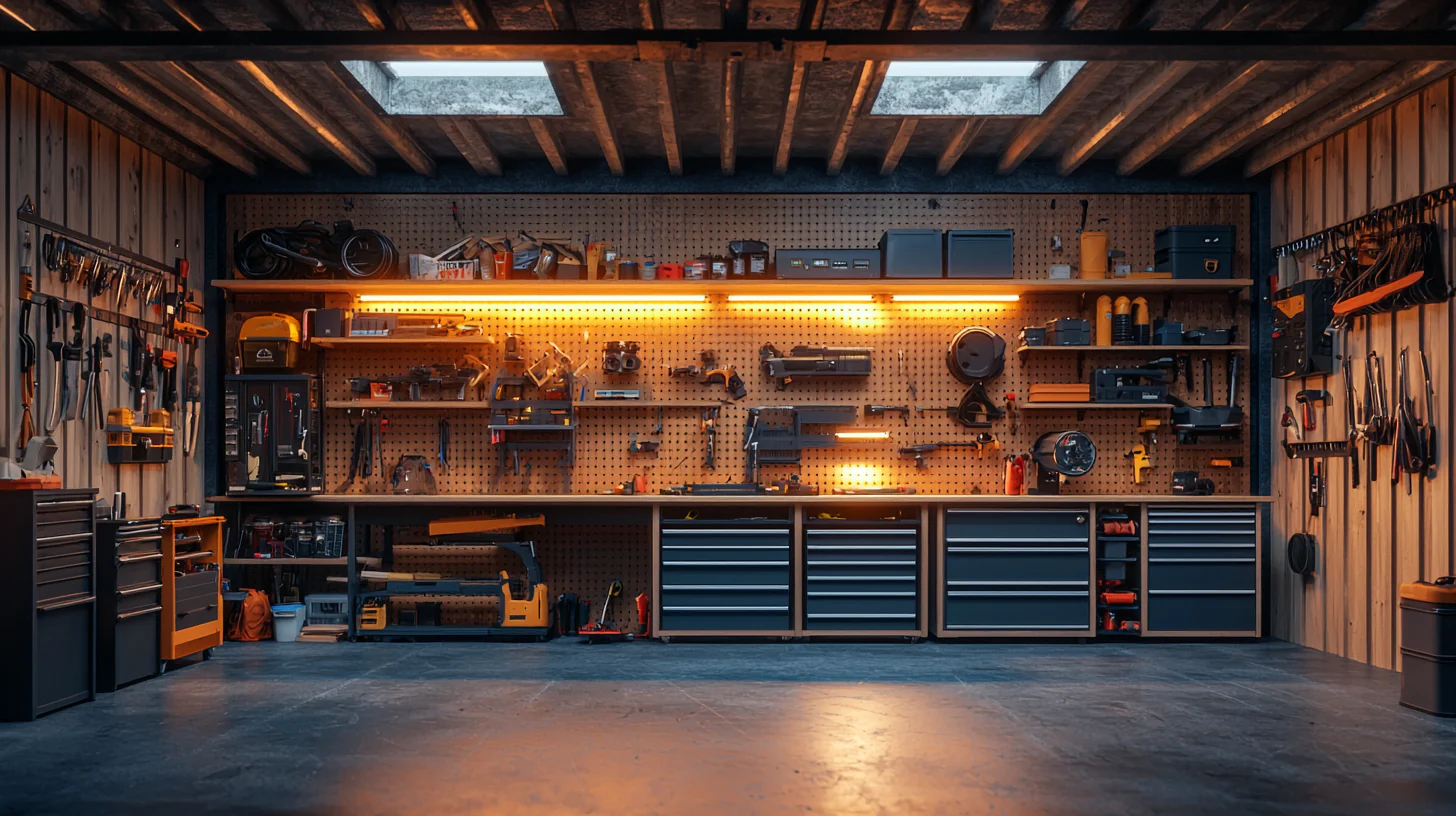
Table of Contents
- Introduction: The Garage Dilemma
- Planning Your Secret Workshop: The Blueprint Behind the Magic
- The Wall Is Your Greatest Ally: Vertical Storage Solutions
- Folding and Retractable Workstations: Here Today, Gone Tonight
- Lighting, Ventilation, and Safety: The Non-Negotiables
- Insulation and Climate Control: Keeping Your Workshop Comfortable Year-Round
- Smart Technology Integration: The Future of the Garage Workshop
- Maintenance and Long-Term Care: Keeping Your Workshop Running Smoothly
- Conclusion: Your Garage, Reimagined
Introduction: The Garage Dilemma
There is a moment most homeowners know all too well — that Sunday morning when you open the garage door, stare at the cluttered mess of boxes, gardening tools, old bicycles, and forgotten projects, and think to yourself: “I wish I had a real workshop in here.” But the thought quickly fades because, of course, you need that space to park your car. It is the classic garage dilemma, and for decades, people have accepted it as an unavoidable trade-off. Either you have a workshop, or you have parking. Never both.
But what if that trade-off is not actually inevitable? What if the real problem was never a lack of space, but rather a lack of imagination in how that space could be used? This is exactly the revelation that a growing community of homeowners, makers, and DIY enthusiasts have begun to embrace over the past few years. According to a 2024 survey conducted by the National Association of Realtors, approximately 68 percent of homeowners in the United States use their garage primarily for storage rather than for parking, a trend that has only accelerated as remote work and personal hobby culture have surged. Yet among those same homeowners, nearly 75 percent reported feeling frustrated by the lack of a dedicated workspace in their home.
Before delving into the details of the article, watch this video and see how the garage was converted into a workshop with a car inside for work :
The numbers tell a story of unmet potential. Garages in the average American home measure between 400 and 600 square feet, a surprisingly generous footprint that, when properly designed, can accommodate both a fully functional workshop and enough room to park one or even two vehicles. The secret lies not in expanding the space, but in rethinking how it is organized, built, and used throughout the day. Imagine waking up in the morning, backing your car out of a clean, unobstructed garage, and then returning home at the end of the day to a workspace that quietly unfolds itself — folding workbenches flip down, tool panels swing open, and overhead storage racks slide into position — all within minutes.
This is not a fantasy pulled from a science fiction movie. It is a practical, achievable reality that thousands of homeowners have already implemented, often on surprisingly modest budgets. The key ingredients are smart design, modular furniture, and a disciplined approach to organization. Throughout this article, we are going to walk you through every step of the process, from the initial planning and layout design to the installation of folding workstations, vertical storage systems, and even smart technology integration. Whether you are a seasoned carpenter, a weekend woodworker, or someone who simply wants a quiet corner to paint, build, or tinker, this guide will show you exactly how to create your own secret workshop without sacrificing a single parking spot.
The journey begins, as all great projects do, with a plan. But before we get to blueprints and measurements, it helps to understand why the garage is such a uniquely powerful space for this kind of transformation. Unlike attics, basements, or spare bedrooms, garages offer something that no other room in the house can — raw, unfinished space with high ceilings, concrete floors, and direct access to the outdoors. The concrete floor can withstand heavy equipment without complaint. The high ceiling allows for overhead storage and tall machinery. And the large garage door provides natural ventilation and easy material flow. All of these factors come together to create an environment that is ripe for transformation, if only you know how to approach it correctly.
What makes this project especially exciting is the element of concealment. A secret workshop is not just a functional upgrade — it is a psychological one. There is something deeply satisfying about having a hidden creative sanctuary, a space that reveals itself only when you want it to. When the garage door closes at the end of the day, the workshop disappears, leaving behind nothing but a clean, orderly space ready for tomorrow’s commute. It is the kind of elegant design solution that, once you experience it, makes you wonder why you did not think of it sooner.
Shop on AliExpress via link: wholesale-garage-workshop-tool-storage

Planning Your Secret Workshop: The Blueprint Behind the Magic
Every great workshop begins with a plan, and the garage workshop is no exception. But planning a dual-purpose garage — one that serves as both a workshop and a parking area — requires a slightly different mindset than planning a dedicated workspace. You are not just designing a room; you are designing a system. A system that can shift from one configuration to another quickly, reliably, and without leaving traces of the transition. Think of it as designing a space with two personalities, one that wakes up in the morning and another that goes to sleep at night.
The first step in planning your garage workshop is taking an accurate inventory of your space. This means measuring not just the length and width of your garage floor, but also the ceiling height, the position of existing electrical outlets and light fixtures, the location of the garage door mechanism, and any fixed elements like water heaters, HVAC units, or support columns. A standard two-car garage is typically 20 feet wide by 20 feet deep, offering 400 square feet of total floor space. A single-car garage, by comparison, usually measures around 12 feet by 20 feet, or 240 square feet. Even the smaller of these two dimensions is enough to work with, provided you approach the design with creativity and discipline.
Once you have your measurements, the next critical step is deciding on your workshop zone. In a dual-purpose garage, the workshop zone is the area of the floor that will be dedicated to your workspace during the day but returned to open parking space at night. The most common and effective approach is to dedicate one side or one wall of the garage to the workshop zone. This means that your car will park on the opposite side, leaving the workshop side free during the day. The division between the two zones does not need to be a physical wall — in fact, a physical wall would defeat the purpose — but rather a clearly defined boundary marked by the placement of your workstations and storage systems.
Choosing the right wall for your workshop is more important than it might seem. Ideally, you want to select a wall that has easy access to an electrical panel or outlet, is away from the main traffic path of the garage door, and receives natural light if possible. A wall with a window is a bonus, as natural light reduces your dependence on artificial lighting and improves the overall atmosphere of the space. If your garage has a side door, positioning the workshop near that door can also provide an additional source of ventilation and a secondary exit in case of emergency.
The planning phase is also the time to think about your tool inventory. Not every tool you own needs to live in the garage workshop. In fact, for a dual-purpose garage, a curated collection of the most-used tools will serve you far better than a sprawling arsenal that takes up valuable floor space. Think about the projects you do most often and build your tool list around those activities. If you are primarily a woodworker, a table saw, a miter saw, a drill press, and a workbench might form the core of your setup. If you are more of a general tinkerer, a combination of hand tools, a cordless drill, a soldering station, and a small workbench might be all you need. The goal is to create a workshop that is comprehensive enough to handle your needs but compact enough to coexist peacefully with your car.
Budget planning is another vital consideration during this phase. A garage workshop can range from a few hundred dollars for a basic DIY setup to several thousand dollars for a more polished and fully equipped space. The most cost-effective approach is to prioritize the structural elements first — the workbench, the storage systems, and the lighting — and then add tools and accessories gradually over time. Investing in a high-quality folding workbench and a solid vertical storage system upfront will give you a strong foundation to build upon, and you can expand your tool collection and refine your setup as your skills and projects evolve. When comparing the long-term costs of a traditional versus a smart home setup, the initial investment in modular, adaptable furniture and smart devices tends to pay for itself over time through increased efficiency and reduced waste of space.
Understanding the financial implications of integrating smart technology into your home — including your garage workshop — is an important part of the decision-making process. A thorough smart home versus traditional home cost comparison laid out over a projected five-year period can help you make informed choices about where to invest and where to save.

The Wall Is Your Greatest Ally: Vertical Storage Solutions
If there is one single principle that will make or break your garage workshop, it is this: when floor space is at a premium, go vertical. The walls and ceiling of your garage are among the most underutilized surfaces in your entire home, and in a dual-purpose garage, they become absolutely essential. Every tool, supply, or piece of material that you can move off the floor and onto a wall or ceiling mount is one less obstacle standing between your car and its parking spot.
The most versatile and popular vertical storage solution for garage workshops is the pegboard system. A pegboard is a flat panel with evenly spaced holes that allow you to hang a variety of hooks, pegs, and shelves. When mounted on the wall at a convenient height — typically between three and five feet off the ground — a pegboard creates an instantly accessible, highly customizable tool display. You can hang anything from screwdrivers and wrenches to power tools and spray cans, and you can rearrange the layout at any time to match your changing needs. A standard 4-foot by 8-foot pegboard costs as little as $20 to $40 at most hardware stores, and with a handful of hooks and pegs, it can transform a bare wall into a fully functional tool station.
Beyond pegboards, wall-mounted shelving systems offer another powerful solution for vertical storage. These systems typically consist of a series of brackets or rails mounted to the wall studs, with adjustable shelves that can be raised or lowered to accommodate items of different sizes. They are particularly useful for storing containers of screws and nails, paint cans, adhesives, and other supplies that you reach for frequently. When choosing a shelving system for your garage, look for one rated to support at least 50 pounds per shelf, as workshop supplies can add up quickly in weight.
Overhead ceiling storage is the third and perhaps most dramatic vertical storage solution available to garage workshop builders. Ceiling-mounted storage racks and platforms are designed to take advantage of the vertical space above your car when it is parked in the garage. These systems are typically installed at a height of 7 to 9 feet, well above the roofline of most vehicles, and can hold anywhere from 50 to 200 pounds of material. They are ideal for storing seasonal items, bulky supplies, or rarely used tools that do not need to be within arm’s reach at all times. The installation of overhead storage racks requires careful attention to the strength of your ceiling joists and should be done in accordance with the manufacturer’s specifications to ensure safety — a point that the Consumer Product Safety Commission has emphasized repeatedly in its guidance on garage storage products, particularly after several recalls of overhead rack systems that failed due to inadequate mounting.
For those who want to take their vertical storage to the next level, a wall-mounted tool cabinet offers a sleek, enclosed alternative to the open pegboard. These cabinets, often made of steel or heavy-duty plastic, feature multiple drawers, compartments, and sometimes even built-in power strips. They keep your tools hidden from view when the garage door is open, adding an element of security and tidiness that open storage systems cannot match. When paired with a locking mechanism, a wall-mounted cabinet also protects your investment in tools from theft.
Magnetic tool strips represent another clever vertical storage solution that is particularly well-suited for small metallic tools like screwdrivers, wrenches, drill bits, and nails. A magnetic strip can be mounted anywhere on the wall — above a workbench, beside a power outlet, or even on the side of a cabinet — and it holds tools securely in place without the need for hooks or pegs. The visual simplicity of a magnetic strip is also appealing, as it creates a clean, organized look that is easy to maintain.
One important consideration when planning your vertical storage layout is accessibility. Tools and supplies that you use every day should be stored at a comfortable height and within easy reach of your primary work area. Items that are used less frequently can be placed higher up or in overhead storage. This principle of tiered accessibility not only saves time during your work sessions but also reduces clutter at the ground level, keeping your floor clear for parking and movement.

Folding and Retractable Workstations: Here Today, Gone Tonight
The folding workbench is the single most important piece of furniture in a dual-purpose garage workshop. It is the element that makes the entire concept of a secret workshop possible, because it is the element that can disappear. When the workday is done and the car needs to come back into the garage, the workbench folds flat against the wall, taking up no more than a few inches of depth. When the morning comes and the car leaves, it flips down into position, offering a sturdy, spacious work surface ready for whatever project awaits.
Designing or purchasing the right folding workbench is therefore one of the most critical decisions you will make during this project. There are several styles available, and each has its own strengths depending on your specific needs and the dimensions of your garage. The simplest and most common design is the single-panel flip-down bench, which consists of a flat board mounted to the wall on a pair of heavy-duty hinges. When folded up, the panel rests flush against the wall. When folded down, it rests on a pair of support legs or chains that hold it at a comfortable working height — typically 34 to 36 inches off the ground. This design is easy to build, inexpensive, and takes up virtually no space when not in use.
For those who need more work surface area, the L-shaped folding bench is an excellent upgrade. This design consists of two panels that fold down at right angles to each other, creating a corner workstation that offers significantly more surface area than a single panel. The L-shape also allows you to set up different types of work in each direction — for example, cutting on one side and assembly on the other — without having to relocate your materials. When folded up, both panels tuck neatly against the wall, occupying only slightly more space than a single-panel bench.
The accordion-style workbench is perhaps the most versatile of all folding designs. In this configuration, multiple panels are connected by a series of hinges and support brackets, allowing the bench to expand and contract like an accordion. When fully extended, it can provide a work surface of 6 feet or more. When fully collapsed, it takes up less than a foot of depth against the wall. This design is particularly popular among homeowners who need a large work surface for occasional big projects but want to minimize the footprint of their workshop the rest of the time.
Regardless of the style you choose, the quality of the hinges and locking hardware is critical to the performance and safety of your folding workbench. Heavy-duty piano hinges or industrial-grade folding hinges are the standard choice, as they can support significant weight without bending or loosening over time. A locking mechanism — such as a pin, a latch, or a chain — is also essential to prevent the bench from folding unexpectedly while you are working on it. Always test the load capacity of your bench before placing heavy tools or materials on it, and never exceed the rated weight limit specified by the manufacturer or the structural calculations of your design.
If you prefer to skip the DIY route and purchase a pre-made folding workbench, there are numerous options available from both local hardware stores and online retailers. When shopping for a folding workbench, pay attention to the material of the work surface — hardwood or marine-grade plywood offers the best combination of durability and workability — and the overall weight rating of the unit. Some premium folding workbenches also come with built-in storage compartments, pegboard backs, and even integrated power strips, making them a one-stop solution for a compact workshop setup. For those looking to explore a wide range of affordable options, browsing wholesale garage workshop tool storage options can reveal a surprising variety of workbench and storage solutions at competitive prices.
The positioning of your folding workbench within the garage is equally important. Place it close to your primary power outlet and your vertical storage systems, so that your tools and supplies are always within reach. If possible, position it near a window or door for natural light and ventilation. Leave enough clearance on all sides — at least three feet on the open sides — to allow you to move freely around the bench while working.

Lighting, Ventilation, and Safety: The Non-Negotiables
A workshop without proper lighting, ventilation, and safety measures is not just inconvenient — it is dangerous. These three elements are the non-negotiable foundations of any functional workspace, and they are especially critical in a garage environment, where the risks of poor air quality, inadequate visibility, and fire are all present. Investing in these areas early on will protect not only your health and safety but also the safety of your family, your pets, and the structural integrity of your home.
Lighting is the first area to address. A garage workshop requires significantly more light than a standard garage, because you will be performing tasks that demand precision and attention to detail. The best approach is a layered lighting system that combines overhead ambient lighting with task-specific lighting at the workbench level. LED shop lights are the gold standard for garage workshops, offering bright, energy-efficient illumination that lasts for tens of thousands of hours. For overhead lighting, install a row of LED shop light panels along the ceiling, spaced evenly to eliminate shadows. For task lighting, a gooseneck LED desk lamp or a swivel-arm workshop lamp mounted above your workbench will provide the focused light you need for detailed work. Aim for a color temperature of around 5000K, which mimics daylight and makes it easy to distinguish between similar colors and materials.
Ventilation is the second critical element, and it becomes especially important if your workshop activities involve paints, stains, solvents, adhesives, or any other chemical-based materials. A poorly ventilated garage can quickly fill with toxic fumes, leading to headaches, dizziness, and in extreme cases, serious respiratory damage. The most effective way to ventilate a garage workshop is to install a wall-mounted exhaust fan that vents directly to the outdoors. The EPA recommends that residential garages use a fan rated at a minimum of 100 cfm (cubic feet per minute) for ducted systems, or 80 cfm for un-ducted systems, to ensure adequate airflow. If your garage has a side door or window, opening these while working can supplement the exhaust fan and create cross-ventilation, further improving air quality.
The EPA has published detailed guidance on insulating and air-sealing floors over unconditioned garages, which highlights not only energy savings but also the importance of preventing pollutants — including carbon monoxide and paint fumes — from migrating into the living spaces of your home. Following these EPA garage safety recommendations is a straightforward way to ensure that your workshop meets the highest standards of indoor air quality.
Fire safety is the third pillar of workshop safety, and it should never be treated as an afterthought. Garages are naturally prone to fire hazards due to the presence of flammable liquids like gasoline, paint, and solvents, as well as the electrical equipment and power tools that generate sparks. The first line of defense is a properly rated fire extinguisher, mounted in an easily accessible location near the entrance to the workshop zone. A minimum ABC-rated extinguisher is recommended for garage use. In addition, smoke detectors and carbon monoxide detectors should be installed in or near the garage, particularly if you plan to run any combustion engines or use gas-powered tools. The building codes in most jurisdictions require a minimum of half-inch gypsum board on the walls and ceiling separating an attached garage from the living space of the home, creating a fire barrier that can contain a fire for up to 30 minutes — enough time for occupants to evacuate safely. This requirement exists for good reason, and any modifications you make to the garage walls or ceiling should preserve this fire separation.
The National Fire Protection Association’s fire codes are the most widely adopted fire safety standards in the United States, and they provide clear guidance on detector placement, fire separation requirements, and the handling of flammable materials in residential structures. Familiarizing yourself with the relevant NFPA fire prevention codes before finalizing your workshop layout is a wise precaution that can protect both your property and your peace of mind.
The Consumer Product Safety Commission has a long history of monitoring garage-related hazards, particularly those involving automatic garage door openers and overhead storage systems. Reviewing CPSC garage door safety guidelines before installing or modifying any garage door mechanism is a sensible step that can prevent injuries and keep your family safe.
Electrical safety is another area that deserves careful attention. A workshop relies heavily on electrical power, and the garage environment — with its concrete floors, potential moisture, and heavy foot traffic — can create conditions that increase the risk of electrical shock or fire. All electrical work in your garage workshop should be performed by a licensed electrician, or at the very least, should comply with the National Electrical Code (NEC) and your local building codes. Use ground-fault circuit interrupter (GFCI) outlets in any area where water or moisture might be present, and never daisy-chain extension cords or overload power strips. If your workshop requires more power than your existing electrical panel can provide, consult with an electrician about adding a dedicated circuit or sub-panel.
Personal protective equipment (PPE) is the final piece of the safety puzzle. Depending on the type of work you plan to do in your workshop, you may need safety glasses, hearing protection, a dust mask or respirator, gloves, and even a face shield. Keep your PPE stored in a visible, easily accessible location — such as a hook near the entrance to the workshop zone — so that you are always reminded to use it before starting a project. The principles that govern workplace safety in professional settings, as outlined in OSHA’s woodworking safety standards, are just as applicable to home workshops as they are to commercial ones, and adopting them proactively can prevent injuries before they happen.
OSHA’s dedicated woodworking safety resources cover everything from machine guarding and dust control to proper respiratory protection, and while these standards were originally developed for commercial and industrial settings, the principles they outline translate directly to home workshop environments. Taking the time to familiarize yourself with these OSHA woodworking standards is one of the smartest things you can do before firing up a power tool in your garage.
Insulation and Climate Control: Keeping Your Workshop Comfortable Year-Round
One of the most common complaints among garage workshop enthusiasts is temperature. In the summer, the garage turns into an oven. In the winter, it becomes a freezer. Working in extreme temperatures is not only uncomfortable — it is unproductive. Cold hands make precise work difficult, and excessive heat causes fatigue and increases the risk of mistakes. Proper insulation and climate control are therefore essential investments for any garage workshop that you plan to use year-round.
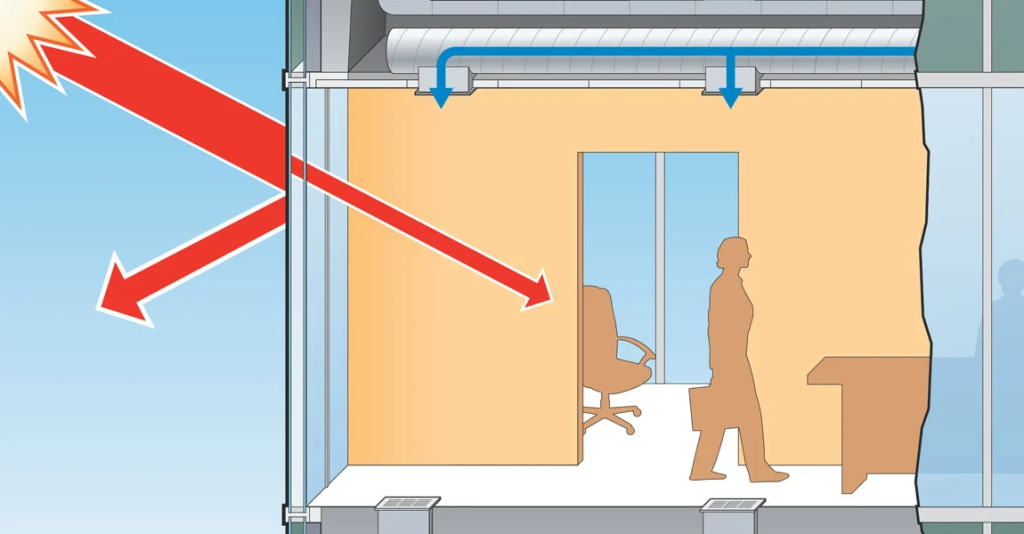
The U.S. Department of Energy’s Energy Saver program has long been one of the most authoritative resources on home insulation, and its guidance is particularly relevant to garage environments. According to the DOE, heat flows from warmer to cooler areas until there is no longer a temperature difference — a process that affects every surface of your home, including the walls, ceiling, and floor of your garage. In the winter, heat escapes from the heated living spaces of your home into the unheated garage and ultimately to the outdoors, driving up your heating bills. In the summer, the process reverses, and heat from the outdoors flows into your garage, making it uncomfortably hot. Insulating the garage walls, ceiling, and especially the garage door can dramatically reduce this heat transfer and make the space significantly more comfortable throughout the year.
The U.S. Department of Energy maintains a comprehensive resource on insulation types, R-values, and climate zone recommendations that is invaluable for any homeowner planning a garage upgrade. Consulting the official Energy.gov insulation guide before purchasing materials can help you select the most appropriate and cost-effective option for your specific situation.
Spray foam insulation is widely regarded as the most effective option for garages because it adheres directly to the surface and seals air gaps simultaneously. Closed-cell spray foam, in particular, offers a high R-value per inch of thickness — typically around R-6 to R-7 — and also acts as a vapor barrier, protecting the walls from moisture damage. Open-cell spray foam is a more affordable alternative with a lower R-value but still significantly better performance than no insulation at all. If spray foam is beyond your budget, fiberglass batt insulation is a solid and widely available option, though it requires a separate vapor barrier to be installed to prevent moisture from accumulating behind it.
The garage door itself is often the single largest source of heat loss in a garage. An uninsulated garage door is essentially a giant opening to the outdoors, and in cold climates, it can allow drafts and cold air to pour into the space with alarming ease. Upgrading to an insulated garage door — one with a polyurethane foam core and an R-value of at least R-12 — can make a noticeable difference in the temperature of your garage, sometimes reducing heat loss through the door by as much as 50 percent. When evaluating insulation materials and R-values for your garage, it is worth exploring the comparison between traditional insulation and newer smart glass technologies, which offer unique benefits in terms of both thermal performance and light management.
One of the lesser-known benefits of upgrading your garage insulation is that certain improvements may qualify for a federal tax credit under the Energy Efficient Home Improvement Credit. Checking the Energy Star insulation tax credit guidelines can help you determine whether your planned upgrades are eligible, potentially saving you a meaningful amount of money on an already worthwhile investment.
For active climate control, a portable electric heater is the simplest and most affordable option for warming a garage workshop in the winter. Infrared heaters are particularly well-suited to garage environments because they heat objects and surfaces directly, rather than warming the air, which makes them highly efficient in a space with poor insulation and high air exchange. In the summer, a portable dehumidifier combined with a small window air conditioner or a portable evaporative cooler can help bring the temperature down to a workable level. If your garage is attached to your home and shares a wall with your living space, you may also be able to extend your home’s HVAC system to cover the garage, though this is a more significant investment that requires professional installation.
One often-overlooked aspect of garage climate control is the floor. Concrete floors retain cold in the winter and radiate heat in the summer, and spending hours on your feet on bare concrete can be draining. A simple solution is to install anti-fatigue mats or rubber flooring in your workshop zone. These mats not only insulate your feet from the cold concrete but also reduce the physical strain of standing for extended periods. For a more permanent solution, consider installing a thin layer of insulating flooring — such as interlocking foam tiles or vinyl plank — over the concrete in your workshop area.

Smart Technology Integration: The Future of the Garage Workshop
The garage workshop is evolving. What was once a purely analog space — a workbench, some tools, and a bare light bulb — is now increasingly being enhanced by smart technology that automates routine tasks, improves safety, and brings a new level of convenience to the workshop experience. From automated ventilation systems to app-controlled power strips and smart lighting, the integration of technology into the garage workshop is not a luxury — it is a natural extension of the way we live and work in 2026.
Smart lighting is one of the easiest and most impactful upgrades you can make to your garage workshop. Wi-Fi-enabled LED bulbs and panels can be controlled from your smartphone, programmed to turn on and off at specific times, and even adjusted in brightness and color temperature based on the task at hand. Imagine walking into your garage in the morning and having the workshop lights automatically brighten to full intensity as you approach the workbench, and then dimming themselves when you leave for the day. This kind of automation is not only convenient — it saves energy and extends the life of your lighting fixtures. Smart bulbs from brands like Philips Hue, IKEA Tradfri, and Google Home are widely compatible and surprisingly affordable, making them an accessible upgrade for workshops of all sizes.
Automated ventilation is another area where smart technology shines in the garage workshop. A standard exhaust fan operates manually — you flip a switch, and it runs until you flip it again. A smart exhaust fan, by contrast, can be programmed to activate automatically when air quality sensors detect elevated levels of particulate matter or volatile organic compounds (VOCs). This kind of automated response ensures that your workshop is always adequately ventilated, even if you forget to turn on the fan manually. Some smart ventilation systems also integrate with weather apps, adjusting their operation based on outdoor conditions to maximize the efficiency of your ventilation setup. The technology behind these devices is advancing rapidly, and the range of smart home devices worth purchasing in 2026 now includes a number of options specifically designed for workshop and garage environments.
Choosing the right smart devices for your garage workshop can feel overwhelming, given the sheer number of options available on the market today. A curated guide to the best smart home devices worth buying in 2026 cuts through the noise and highlights the most reliable, most innovative, and most cost-effective products that can genuinely transform the way you work in your garage.
Smart power management is yet another dimension of technology that can enhance your garage workshop. A smart power strip — one equipped with Wi-Fi connectivity and individual outlet control — allows you to monitor the power consumption of each tool and device in your workshop, turn individual outlets on and off remotely, and even schedule devices to activate at specific times. This is particularly useful for devices that draw significant power, such as dust collectors, shop vacuums, and compressors, as it allows you to manage your electrical load and prevent circuit overloads.
Security is also a consideration for garage workshops, especially for those who have invested in expensive tools and equipment. Smart security cameras, motion-activated lights, and app-controlled locks can all be integrated into your garage workshop to provide peace of mind whether you are at home or away. Some homeowners pair their garage security system with a smart lock on the side door, creating a seamless layer of protection that can be monitored and controlled from anywhere. The evolution of smart lock technology, including models that use optical charging and never require battery replacement, represents one of the more exciting developments in home security for garage and workshop spaces.
The integration of smart technology into your garage workshop does not have to happen all at once. A phased approach — starting with smart lighting and adding other devices gradually — is often the most practical and budget-friendly way to bring your workshop into the future. As each new device is added, it integrates with the others through a central hub or app, creating an increasingly sophisticated and responsive environment that adapts to the way you work.
Maintenance and Long-Term Care: Keeping Your Workshop Running Smoothly
A garage workshop is not a set-it-and-forget-it project. Like any tool or piece of equipment, it requires regular maintenance to keep it functioning at its best. The good news is that the maintenance required for a well-designed workshop is minimal — a few hours a month of attention will keep your space clean, organized, and safe for years to come. The bad news is that neglecting this maintenance can lead to a rapid deterioration of both the workshop and the tools within it.
Cleaning is the most fundamental maintenance task, and it should be performed at the end of every work session, not just once a week or once a month. Sawdust, metal shavings, paint residue, and other debris accumulate quickly in a workshop, and they create hazards if left unchecked. Sawdust, in particular, is highly flammable and can create a dangerous explosion risk if it accumulates in large quantities near a spark source. A shop vacuum is the single most useful cleaning tool in a garage workshop, and keeping one within arm’s reach of your workbench is a wise investment. Sweeping the floor, wiping down surfaces, and disposing of waste materials at the end of each session are all essential habits that will keep your workshop safe and inviting. For a more thorough approach to workshop cleanliness, exploring innovative cleaning solutions and gadgets can reveal surprisingly effective tools that make the job faster and easier than you might expect.
Tool maintenance is equally important. Dull blades, worn-out drill bits, and poorly maintained power tools not only produce inferior results — they also pose a safety risk, as they require more force and are more likely to slip or bind. Take the time to sharpen, clean, and inspect your tools regularly. Store them properly — in cases, on hooks, or in drawers — to prevent damage and keep them organized. If a tool is beyond repair, replace it rather than continuing to use it in a compromised state.
The structural elements of your workshop — the folding workbench, the pegboard, the overhead storage racks — also require periodic inspection. Check the hinges, brackets, and mounting hardware for signs of wear, loosening, or corrosion. Tighten any loose screws or bolts, and replace any hardware that shows signs of damage. A folding workbench that wobbles or a storage rack that creaks under load is a potential safety hazard, and addressing these issues early on can prevent accidents and costly repairs down the road.
Moisture management is another ongoing maintenance concern in the garage workshop. Condensation, humidity, and occasional water intrusion can all contribute to rust on metal tools, warping of wooden surfaces, and the growth of mold and mildew. Running a dehumidifier during the wetter months, ensuring adequate ventilation, and keeping an eye on the concrete floor for cracks or water stains are all important steps in the long-term care of your workshop. If you notice persistent moisture issues, it may be worth investing in a more thorough waterproofing solution for your garage floor or walls. Adapting your workshop setup to the changing seasons — for example, adjusting insulation and heating systems between winter and summer — is a practical strategy that many experienced workshop owners swear by.
The way you configure your garage workshop will inevitably shift as the seasons change, and having a clear plan for these transitions can save you time and prevent unnecessary discomfort. A detailed guide on adjusting your winter and summer home setup covers many of the same principles that apply to garage workshop seasonal maintenance, from insulation tuning to ventilation adjustments.
Finally, take the time to periodically reassess your workshop layout and organization. As your projects evolve and your tool collection grows, the needs of your workshop will change. What worked perfectly six months ago may no longer be the most efficient arrangement today. A quick review of your layout — perhaps once a season — can reveal opportunities to improve workflow, add new storage solutions, or reconfigure existing ones to better suit your current projects. This kind of ongoing refinement is what separates a good workshop from a great one, and it is one of the most rewarding aspects of the garage workshop experience. The principles of rapid construction and modular design that underpin modern building technologies can be applied directly to workshop setup, allowing you to adapt your space quickly and efficiently as your needs change.
Conclusion: Your Garage, Reimagined
The garage has long been one of the most underestimated spaces in the modern home. For decades, it has served as little more than a dumping ground for boxes, seasonal decorations, and forgotten projects, while the car that it was originally designed to shelter has been relegated to the driveway or the street. But as we have seen throughout this article, the garage is capable of so much more — and the concept of the secret workshop proves it beyond any doubt.
Creating a dual-purpose garage that functions as both a workshop and a parking space is not about magic or unlimited budgets. It is about smart design, thoughtful planning, and a willingness to think beyond the conventional layout. Wall-mounted storage systems reclaim the vertical space that most people ignore. Folding workbenches provide a sturdy, spacious work surface that vanishes when it is no longer needed. Proper lighting, ventilation, and insulation transform a cold, dark, poorly ventilated space into a comfortable, productive, and safe environment. And smart technology, integrated thoughtfully, brings a new level of convenience and efficiency to the workshop experience.
Shop on AliExpress via link: https://www.aliexpress.com/w/wholesale-garage-workbench-folding.html

The beauty of this project is that it can be scaled to fit almost any budget or skill level. A basic setup — a single folding workbench, a pegboard, and a shop light — can be put together for a few hundred dollars and assembled in a single weekend. A more advanced setup — with an L-shaped folding bench, a full wall of organized storage, smart lighting, and automated ventilation — might cost a few thousand dollars and take a month or two to complete, but the result will be a workshop that rivals anything you might find in a dedicated studio or professional space. The key is to start somewhere and build from there, adding layers of functionality and refinement as your skills, your projects, and your enthusiasm grow.
Perhaps the most important takeaway from this entire journey is that the garage workshop is not a luxury reserved for professionals or wealthy hobbyists. It is a practical, achievable improvement that any homeowner can make, and the rewards — a dedicated space for creativity, a sense of ownership over your projects, and the quiet satisfaction of a well-organized workspace — are priceless. So the next time you open your garage door and stare at that empty wall, that unused corner, or that forgotten ceiling space, remember: this is not just a garage. It is the beginning of something extraordinary.
Frequently Asked Questions
Question 1: Can I really build a workshop in my garage without giving up parking space?
Answer 1: The answer is a resounding yes, and the secret lies in modular, retractable design. The entire concept of the dual-purpose garage workshop is built around the principle that your workspace should be able to transition from active use to a neutral, unobstructive state quickly and reliably. Wall-mounted workbenches that fold flat against the wall, overhead storage racks that sit well above the roofline of your vehicle, and vertical tool storage systems that occupy only a few inches of depth are all designed specifically for this purpose. The key is to plan your workshop zone carefully, designating a specific area of the garage floor for your workspace and ensuring that the rest of the floor remains clear for parking. With the right combination of folding furniture and vertical storage, you can create a fully functional workshop that disappears in minutes, leaving behind nothing but a clean, open garage ready for your car. The planning phase is the most critical step, as it sets the foundation for everything that follows.
Question 2: What are the best folding workbench designs for a garage workshop?
Answer 2: There are three main folding workbench designs that are particularly well-suited for garage workshops: the single-panel flip-down bench, the L-shaped folding bench, and the accordion-style expanding bench. The single-panel design is the simplest and most affordable, offering a straightforward work surface that folds up against the wall when not in use. The L-shaped design provides significantly more surface area by creating a corner workstation, which is ideal for multitasking or working on larger projects. The accordion-style bench is the most versatile, expanding to provide up to six feet or more of work surface and collapsing to less than a foot of depth. Regardless of the style you choose, prioritize heavy-duty hinges, a sturdy locking mechanism, and a work surface made from hardwood or marine-grade plywood. These materials and components ensure that your workbench is both safe and durable, capable of handling the weight and wear of daily workshop use over many years.
Question 3: How much does it cost to set up a garage workshop on a budget?
Answer 3: The cost of setting up a garage workshop varies enormously depending on the scope of the project and the quality of the materials and tools involved. At the most basic level, a functional workshop can be assembled for as little as $300 to $500, using a DIY folding workbench made from reclaimed lumber, a pegboard for tool storage, and a set of LED shop lights. A mid-range setup, with a purchased folding workbench, a full wall of organized storage, and basic power tools, will typically run between $1,000 and $2,000. A premium setup that includes smart technology, high-end insulation, professional-grade tools, and custom cabinetry can cost $3,000 or more. The most cost-effective strategy is to invest in the structural elements first and add tools and accessories over time. Buying used or refurbished tools can also significantly reduce costs without compromising quality or performance.
Question 4: Is it safe to work in a garage workshop with chemicals and paints?
Answer 4: Working with chemicals and paints in a garage is safe, provided you take the proper precautions. Ventilation is the single most important factor — an exhaust fan rated at a minimum of 100 cfm should be installed and run continuously whenever you are working with volatile materials. Store all flammable liquids in approved, tightly sealed containers and keep them away from ignition sources such as power tools, space heaters, and electrical outlets. A properly rated fire extinguisher should be mounted in an easily accessible location near the entrance to your workshop zone. Wear appropriate personal protective equipment, including a respirator, safety glasses, and gloves, whenever you are handling chemicals. Finally, never run a combustion engine — including a car, lawnmower, or generator — inside a closed garage, as the carbon monoxide produced can quickly reach dangerous levels. Following these basic safety guidelines will allow you to work with chemicals and paints confidently and without risk.
Question 5: What kind of lighting works best for a garage workshop?
Answer 5: LED shop lights are the undisputed best choice for garage workshops, and the reasons are numerous. They are energy-efficient, consuming significantly less power than fluorescent or incandescent alternatives. They produce bright, even light with minimal flicker, reducing eye strain and improving visibility for detail work. They last for 25,000 to 50,000 hours, meaning you will rarely need to replace them. And they are available in a wide range of color temperatures, from warm whites to daylight whites. For a garage workshop, aim for a color temperature of around 5000K, which closely mimics natural daylight and makes it easy to distinguish between similar colors and materials. A layered lighting approach — combining overhead LED panels for ambient light with a gooseneck or swivel-arm lamp for task lighting at the workbench — provides the best overall illumination and flexibility.
Question 6: Do I need a building permit to convert part of my garage into a workshop?
Answer 6: Whether you need a building permit depends on the extent of the modifications you plan to make and the specific regulations in your local jurisdiction. In general, a simple workshop setup that involves only movable furniture, portable tools, and minor electrical additions — such as a few new outlets on an existing circuit — does not require a permit in most areas. However, if your plans include adding a new electrical sub-panel, hardwiring permanent lighting, making changes to the garage’s ventilation system, or altering the structural layout of the space, a permit is likely required. The best way to find out is to contact your local building department or planning office and describe your intended modifications. They can advise you on the specific requirements and help you navigate the permitting process if it is necessary.
Question 7: How can I keep my garage workshop organized and clutter-free?
Answer 7: Keeping a garage workshop organized is an ongoing process, but it becomes second nature once you establish the right systems and habits. The foundation of good workshop organization is the principle of “everything has a place.” Every tool, supply, and material in your workshop should have a designated home — a hook on the pegboard, a drawer in the cabinet, a bin on the shelf — and it should be returned to that home at the end of every work session. Vertical storage is your greatest ally, as it keeps tools visible and accessible without cluttering the floor or the workbench. Labeling is also essential — clearly marking bins, drawers, and shelves makes it easy to find what you need and to return items to the correct location. Finally, a regular decluttering session — perhaps once a month — will help you identify items that are no longer needed and remove them from the workshop, keeping the space lean and efficient.
Question 8: What is the best insulation option for a garage workshop?
Answer 8: The best insulation option for a garage workshop depends on your budget, climate, and the specific areas you plan to insulate. For walls, spray foam insulation — particularly closed-cell spray foam — is widely considered the most effective option, offering high R-values per inch and excellent air-sealing properties. Fiberglass batt insulation is a more affordable alternative, though it requires a separate vapor barrier to prevent moisture issues. For the garage door, a polyurethane-insulated door with an R-value of R-12 or higher is the recommended upgrade, as the door is typically the largest single source of heat loss in the garage. The U.S. Department of Energy recommends consulting your local climate zone to determine the appropriate R-value for your walls, ceiling, and floor, as the ideal level of insulation varies significantly depending on your geographic location and local weather patterns.
Question 9: Can I install smart home devices in my garage workshop?
Answer 9: Absolutely. Smart home devices are increasingly popular additions to garage workshops, and for good reason. Smart lighting allows you to control the brightness and color temperature of your workshop lights from your phone or a voice assistant, and can be programmed to activate automatically based on your schedule or motion sensors. Smart power strips let you monitor and control the power consumption of individual tools and devices, reducing energy waste and preventing circuit overloads. Automated ventilation fans can be linked to air quality sensors, ensuring that your workshop is always properly ventilated without the need for manual intervention. Smart security cameras and app-controlled locks add a layer of protection to your workshop and the tools within it. The best part is that most of these devices are compatible with popular smart home ecosystems like Google Home, Amazon Alexa, and Apple HomeKit, making integration simple and seamless.
Question 10: How do I prevent moisture damage in my garage workshop?
Answer 10: Moisture damage is one of the most persistent threats to a garage workshop, and preventing it requires a multi-pronged approach. Ventilation is the first line of defense — running an exhaust fan or opening windows and doors regularly helps remove humid air from the garage and replace it with drier air. A portable dehumidifier is an excellent supplement, particularly during the wetter months of the year. Sealing the concrete floor with a moisture-resistant epoxy or sealant can prevent water from seeping up through the slab, and applying moisture-resistant paint to the walls adds another layer of protection. Keeping tools and materials off the ground — using shelves, hooks, and elevated storage — minimizes their exposure to ground-level moisture. Finally, addressing any external water intrusion sources — such as cracks in the foundation, poor guttering, or inadequate grading around the property — is essential for long-term moisture control.
Articles related:













Tags
📧 Get More Articles Like This
Subscribe to receive product reviews and buying guides in your inbox!
We respect your privacy. Unsubscribe at any time.