Robotaxi Services: Waymo vs Zoox vs Baidu Apollo vs Tesla Compared – Practical Autonomous Taxi Comparison
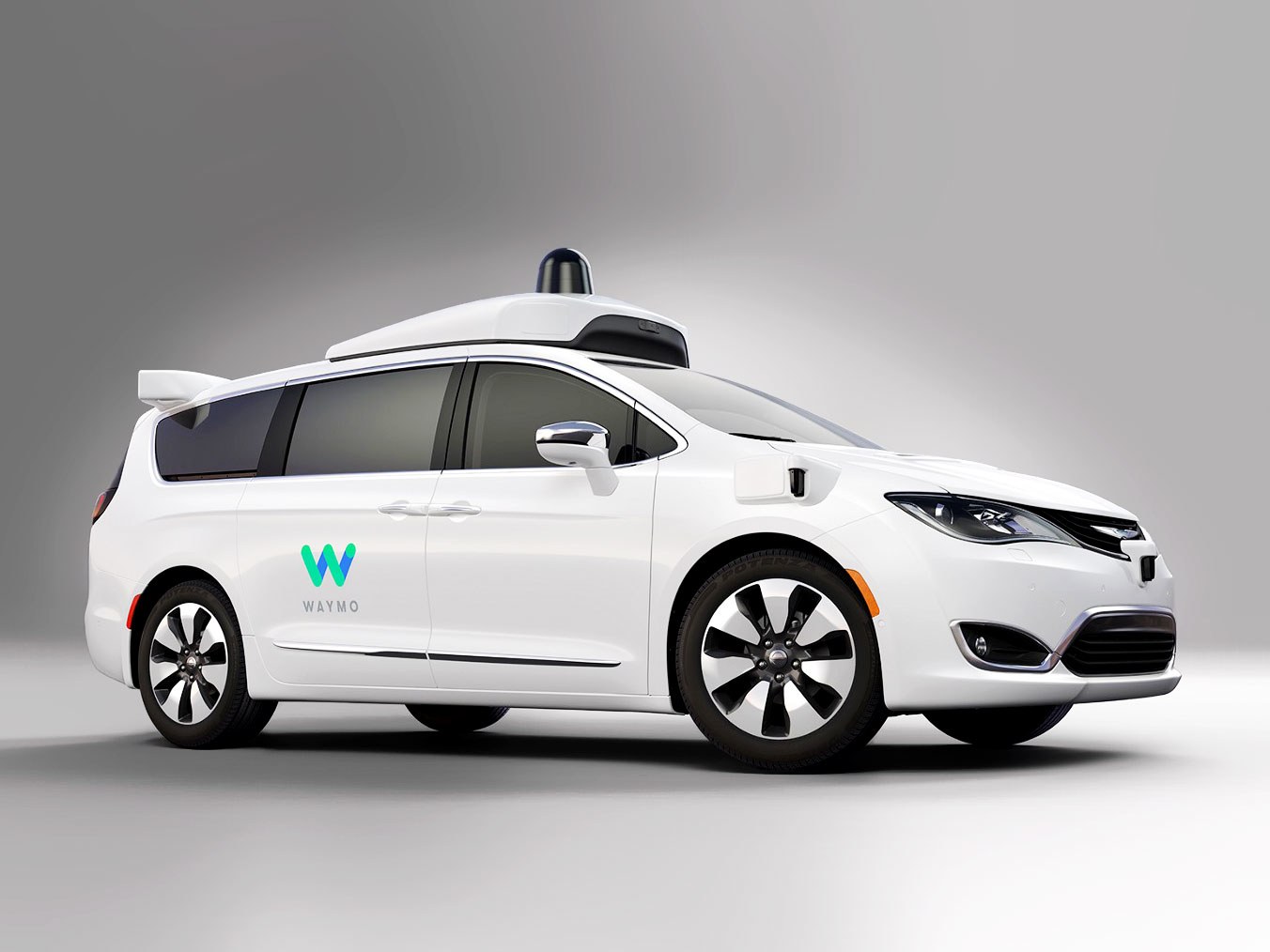
Table of Contents
- Introduction: The Robotaxi Revolution of 2026
- Waymo’s Multi-Sensor Approach: The Current Market Leader
- Zoox Purpose-Built Robotaxis: Amazon’s Unique Vision
- Baidu Apollo Go: Dominating the Chinese Market
- Tesla’s Vision-Only System: The Disruptive Challenger
- Safety Records and Real-World Performance
- Cost Structure and Economic Viability
- Regulatory Environment and Expansion Plans
- Practical Recommendations for Users and Investors
- Frequently Asked Questions
Introduction: The Robotaxi Revolution of 2026
Standing at a San Francisco intersection on a foggy January morning in 2026, I watched something remarkable unfold. A white-domed Waymo vehicle glided smoothly through the intersection, its sensors constantly scanning the environment while pedestrians crossed in front of it. Moments later, a boxy Zoox robotaxi with no visible front or back maneuvered through a tight parking maneuver, while a Tesla Model Y marked “Robotaxi” navigated downtown streets with a safety monitor still seated inside. This scene would have been science fiction just five years ago, but today it represents the new reality of urban transportation.
The year 2026 marks a pivotal moment in automotive history as autonomous robotaxis transition from experimental technology to practical reality on city streets worldwide. Four major players have emerged at the forefront of this revolution: Waymo, Zoox, Baidu Apollo Go, and Tesla. Each pursues distinct technological approaches and business strategies that will shape how millions of people move through urban environments in the coming decades. The competition represents not merely a race for market dominance but fundamentally different visions of how artificial intelligence should navigate the complex challenges of real-world driving.
Before delving into the article, watch this video which highlights an amazing experience inside Los Angeles’ first fully self-driving taxi :
Maria Rodriguez, a Phoenix resident, remembers her first Waymo ride in late 2024 with vivid clarity. She approached the vehicle hesitantly, uncertain about trusting her safety to a computer. As the steering wheel turned itself through busy intersections and the vehicle smoothly navigated around cyclists and pedestrians, her initial fear transformed into fascination. By early 2026, Maria had taken over 200 robotaxi trips and now prefers the service for late-night rides home, appreciating the privacy and predictable behavior compared to human drivers. Her experience multiplies across hundreds of thousands of riders monthly, generating massive datasets that continuously improve autonomous driving algorithms.
The National Highway Traffic Safety Administration reported in January 2026 that autonomous vehicles had logged over 250 million miles on American roads, with safety data suggesting significant improvements over human driving performance in certain conditions. Federal safety standards continue evolving to address autonomous vehicle requirements through comprehensive regulatory frameworks. Government agencies analyze crash data and operational metrics to establish evidence-based policies protecting public safety while enabling innovation. Transportation officials emphasize that modernized regulations must account for vehicles designed without traditional driver controls, requiring new approaches to safety certification and ongoing oversight. Federal safety standards continue evolving to address autonomous vehicle requirements through comprehensive regulatory frameworks. Government agencies analyze crash data and operational metrics to establish evidence-based policies protecting public safety while enabling innovation. Transportation officials emphasize that modernized regulations must account for vehicles designed without traditional driver controls, requiring new approaches to safety certification and ongoing oversight. Yet the technology remains highly controversial, with critics pointing to incidents where robotaxis blocked emergency vehicles, created traffic congestion, or exhibited erratic behavior in construction zones.
Economic stakes reach into the hundreds of billions of dollars as major technology and automotive companies bet their futures on autonomous transportation. Waymo alone has reportedly invested over $10 billion in developing its technology since spinning out from Google’s self-driving car project in 2016. Amazon acquired Zoox for $1.2 billion in 2020, betting that purpose-built robotaxis would revolutionize urban mobility. Tesla CEO Elon Musk has staked much of his company’s valuation on the promise of a future robotaxi network. Baidu has positioned autonomous driving as a strategic priority for China’s technological advancement, benefiting from coordinated government support.
The U.S. Department of Transportation launched a comprehensive regulatory framework in 2025 aimed at balancing innovation with public safety, recognizing that autonomous vehicles could eventually save tens of thousands of lives annually by eliminating human error from the driving equation. The Department of Transportation’s automated vehicle initiatives focus on creating unified national standards that replace fragmented state regulations while maintaining safety priorities. Recent policy developments streamline exemption processes for vehicles without conventional controls and establish clear pathways for commercial deployment. Federal coordination helps autonomous vehicle companies navigate regulatory requirements efficiently across multiple jurisdictions. The Trump administration’s innovation agenda accelerated approval processes that had previously created obstacles for robotaxi deployment, fundamentally reshaping the competitive landscape.
Understanding the technical and operational differences between Waymo, Zoox, Baidu Apollo, and Tesla requires examining their divergent approaches to sensors, vehicle design, business models, and deployment strategies. Industry standardization efforts through organizations like SAE International establish common terminology and automation level definitions that enable consistent communication across technical and policy domains. The widely referenced SAE J3016 standard provides taxonomy for driving automation ranging from no automation to full autonomy under all conditions. These technical standards help manufacturers, regulators, and consumers understand capabilities and limitations of various autonomous systems through clear categorical frameworks. Waymo’s multi-sensor redundancy contrasts sharply with Tesla’s camera-only vision. Zoox’s purpose-built vehicle philosophy differs fundamentally from retrofitting existing cars. Apollo Go’s integration with Chinese transportation infrastructure follows a different regulatory pathway than American competitors navigate.

Waymo’s Multi-Sensor Approach: The Current Market Leader
Waymo’s technological foundation rests on sensor redundancy and conservative engineering principles that prioritize safety over rapid deployment. The company’s sixth-generation Waymo Driver hardware system incorporates 13 cameras providing comprehensive visual coverage, four lidar units generating precise three-dimensional maps of the environment up to 500 meters away, six radar sensors detecting objects in poor weather conditions, and external audio receivers that capture emergency vehicle sirens and other critical sounds. This sensor fusion creates overlapping fields of view where multiple systems independently verify the same information, dramatically reducing the risk of catastrophic failures from single sensor malfunctions or environmental conditions that might impair one sensing modality.
The engineering philosophy behind Waymo’s redundant architecture stems from aerospace industry practices where safety-critical systems require multiple independent backups. Advanced technical standards development addresses safety-related assumptions and foreseeable scenarios that autonomous driving systems must handle reliably. Organizations like IEEE Standards Association work with global experts to create technology-neutral frameworks enabling consistent safety evaluation across different automated vehicle approaches. These collaborative standardization efforts help establish consumer confidence while providing clear benchmarks for manufacturers developing autonomous systems. If one camera becomes obstructed by dirt or glare, other cameras maintain visibility of the same area. When heavy rain degrades camera performance, radar and lidar continue functioning effectively.
The current Waymo fleet exceeds 1,500 vehicles operating across five major metropolitan areas including Phoenix, Los Angeles, San Francisco, Austin, and Miami. The company has announced aggressive expansion plans for 2026, targeting more than 20 cities globally including San Diego, Detroit, Las Vegas, Minneapolis, Tampa, New Orleans, and international markets like Tokyo and London. Weekly ride volume surpassed 250,000 trips in mid-2025, with Alphabet CEO Sundar Pichai projecting that Waymo will become financially meaningful to the parent company’s results by 2027-2028 as utilization rates improve and operational costs decline.
Waymo’s operational deployment strategy emphasizes methodical geographic expansion through carefully staged phases. When entering a new city, the company begins with months of detailed mapping and data collection using manually driven vehicles equipped with sensor arrays. This initial phase creates high-definition maps marking lane boundaries, traffic signals, signs, road markings, and other infrastructure features with centimeter-level precision. University research programs advance autonomous vehicle technology through fundamental studies on navigation, control systems, and artificial intelligence applications. Stanford’s pioneering work in autonomous driving laid groundwork for modern self-driving systems through projects demonstrating feasibility of computer-controlled vehicle operation. Academic contributions continue shaping technical approaches and safety methodologies adopted across the autonomous vehicle industry.
Vehicle partnerships represent a critical component of Waymo’s scaling strategy as the company does not manufacture its own automobiles. The current fleet primarily consists of modified Jaguar I-PACE electric SUVs, with plans to add 2,000 additional units through 2026. Waymo has also partnered with Chinese automaker Zeekr to develop purpose-built robotaxis that eliminate steering wheels and pedals. The company’s technology platform can theoretically be integrated into various vehicle types, providing flexibility to adapt to different market segments and use cases.

Zoox Purpose-Built Robotaxis: Amazon’s Unique Vision
Zoox pursued a radically different development path by designing its robotaxi from the ground up with no concessions to human driving requirements. The resulting vehicle resembles no conventional automobile, featuring a symmetrical box shape that can drive equally well in either direction without needing to turn around. Four passengers sit facing each other in two rows similar to subway train configurations, with sliding doors on both sides providing easy entry and exit. The absence of a steering wheel, pedals, dashboard, or any driver-oriented controls maximizes interior space for passengers while creating a fundamentally social riding experience.
The technical advantages of purpose-built design extend beyond interior layout to fundamental vehicle architecture and sensor integration. Zoox engineered its robotaxi with sensors positioned at all four corners plus roof-mounted arrays, creating 360-degree coverage without blind spots. The vehicle’s battery pack was sized specifically for all-day operation without mid-day recharging, a critical factor in maximizing revenue-generating time. Redundant computing systems, actuators, and safety mechanisms were integrated during the design phase rather than added as afterthoughts. The bidirectional driving capability eliminates time spent maneuvering in tight spaces.
Amazon’s acquisition of Zoox in 2020 for $1.2 billion provided crucial financial backing and strategic resources to a company that had consumed substantial capital developing proprietary vehicle designs and manufacturing capabilities. The partnership grants Zoox access to Amazon’s logistics expertise, cloud computing infrastructure, and potentially its vast delivery network, though the robotaxi subsidiary has focused primarily on passenger transport. Amazon already operates autonomous delivery robots and invests heavily in last-mile logistics automation separately from Zoox.
Zoox’s commercial deployment timeline has lagged behind Waymo’s rapid expansion, reflecting the additional complexities of manufacturing custom vehicles and obtaining regulatory approvals for automobiles that deviate significantly from conventional designs. The company launched its first public robotaxi service in Las Vegas in September 2025, initially offering free rides through a dedicated smartphone app. Plans call for beginning paid rides in Las Vegas in early 2026 and San Francisco in the latter half of the year. The current fleet numbers approximately 50 vehicles split between Las Vegas and San Francisco.
Co-founder and CTO Jesse Levinson articulates Zoox’s competitive positioning through emphasis on passenger experience and operational efficiency rather than rushing to achieve first-mover advantages in multiple cities. The company’s vision involves creating a whole new category of transportation optimized specifically for moving people through urban environments. Whether this longer-term strategic bet succeeds depends on Zoox’s ability to execute manufacturing at scale while competing against established players already serving hundreds of thousands of riders monthly.
Shop on AliExpress via link: wholesale-automotive-diagnostic-tools

Baidu Apollo Go: Dominating the Chinese Market
Baidu’s Apollo Go robotaxi service has achieved deployment scale in China that matches or exceeds any competitor globally, benefiting from coordinated government support for autonomous vehicle development as a strategic national priority. By early 2026, Apollo Go operates in 16 major Chinese cities including Beijing suburbs, the entire city of Wuhan, and major metropolitan areas like Shenzhen and Shanghai. The fleet has surpassed 1,000 autonomous vehicles logging over 149 million fully driverless miles, with weekly ride volume reaching 250,000 trips comparable to Waymo’s performance in the United States.
China’s regulatory environment for autonomous vehicles differs substantially from Western approaches, featuring more direct government involvement in infrastructure preparation, standardized testing protocols, and coordinated urban planning that accelerates deployment timelines. Chinese cities actively compete to attract autonomous vehicle companies through favorable policies, designated testing zones, and public investment in smart road infrastructure that communicates with passing vehicles. This supportive ecosystem enabled Apollo Go to progress from limited pilots to mass deployment more rapidly than would have been possible navigating the fragmented American regulatory landscape.
Baidu’s technical approach combines sophisticated sensor systems similar to Waymo with aggressive cost reduction strategies aimed at achieving economic viability sooner than Western competitors. Apollo vehicles utilize lidar, radar, camera, and computing systems developed through partnerships with Chinese component suppliers, benefiting from manufacturing economies of scale in the world’s largest automotive market. The company has publicly stated goals to reduce vehicle costs below $100,000 per unit through volume production and simplified designs optimized for Chinese road conditions.
International expansion represents Apollo Go’s next strategic phase, with partnerships announced for Middle Eastern and European markets that could establish the company as the first Chinese technology giant to operate autonomous vehicle services globally. Agreements with ride-hailing platform Lyft aim to launch Apollo Go robotaxis in the United Kingdom and Germany during 2026, while operations commenced in Abu Dhabi and Dubai. These international deployments will test whether Baidu’s systems perform effectively in different regulatory environments and traffic patterns.
The competitive threat posed by Apollo Go to American robotaxi companies should not be underestimated given China’s historical success manufacturing and exporting advanced technology products globally. If Baidu achieves significant cost advantages through scale production and government support, it could potentially undercut Western competitors in international markets. American policymakers have expressed concerns about Chinese autonomous vehicle companies accessing American roads and data, potentially limiting Apollo Go’s expansion in the United States even as the company pursues opportunities in Europe, Asia, and other regions.
Tesla’s Vision-Only System: The Disruptive Challenger
Tesla’s autonomous vehicle strategy diverges radically from every competitor through exclusive reliance on cameras and neural networks without radar, lidar, or ultrasonic sensors that other companies consider essential for safe operation. CEO Elon Musk has consistently argued that human drivers navigate roads using only their eyes and brains, suggesting that artificial intelligence should achieve similar or superior performance using camera inputs and powerful computing. Critics note that most of this data comes from supervised driving where humans remain responsible for the vehicle, making it fundamentally different from the challenges of unsupervised autonomous operation where no human can intervene during critical moments. Consumer privacy protection remains crucial as connected autonomous vehicles collect vast amounts of personal data including precise location tracking and behavioral patterns. Federal regulatory agencies monitor data collection practices to ensure companies implement appropriate safeguards against unauthorized access and misuse. Privacy frameworks balance innovation benefits with individual rights as autonomous transportation systems generate unprecedented information volumes.
Tesla’s Full Self-Driving software represents the culmination of billions of miles of data collected from customer vehicles operating in diverse conditions globally. Unlike competitors who develop their technology using relatively small fleets of dedicated test vehicles, Tesla leverages every customer car equipped with FSD sensors as a data collection platform continuously feeding information back to the company’s neural networks. This distributed development approach potentially provides exposure to rare edge cases and unusual scenarios that purpose-built robotaxi fleets might not encounter during controlled testing.
The robotaxi pilot program Tesla launched in Austin during late 2025 represents the company’s first attempt at operating a commercial autonomous ride-hailing service, albeit under significantly more restricted conditions than competitors like Waymo. Tesla initially used modified Model Y vehicles with safety monitors seated in the front to observe system performance and take control when necessary. The service operates in limited geographic zones during specific hours. Regulatory requirements in Texas mandate human safety drivers for autonomous vehicles. Plans to remove safety monitors from some vehicles were announced in January 2026.
The highly anticipated Cybercab represents Tesla’s vision for a purpose-built robotaxi launching production in late 2026 according to Musk’s projections. The vehicle features no steering wheel or pedals in a futuristic design emphasizing passenger comfort and efficiency. Like Zoox, Cybercab optimizes interior space and functionality specifically for ride-hailing rather than private ownership. However, Tesla’s camera-only sensor approach carries over to Cybercab, setting it apart from every other purpose-built robotaxi design.
Tesla’s competitive advantages center on manufacturing scale, brand recognition, and software development capabilities rather than operational robotaxi experience. The company produces over 1.5 million vehicles annually with established supply chains and global distribution networks. Tesla owners represent a built-in customer base familiar with the brand. Over-the-air software update capabilities enable continuous improvement of autonomous driving systems deployed across millions of vehicles simultaneously.

Safety Records and Real-World Performance
Evaluating autonomous vehicle safety requires comparing performance against human drivers while acknowledging that robotaxis currently operate under more limited conditions than the full spectrum of driving scenarios. Waymo’s published safety data demonstrates substantial improvements across multiple metrics, with 91 percent fewer severe-injury crashes, 79 percent fewer airbag deployments, and 80 percent fewer injury-causing collisions compared to human drivers across similar routes in Phoenix, San Francisco, Los Angeles, and Austin. Waymo’s published statistics from over 100 million autonomous miles show 91 percent fewer severe-injury crashes, 79 percent fewer airbag deployments, and 80 percent fewer overall injury-causing collisions compared to human drivers navigating similar routes in Phoenix, San Francisco, Los Angeles, and Austin. Independent testing organizations evaluate automated driving systems through comprehensive assessment programs examining both technological capabilities and driver engagement mechanisms. Consumer Reports testing methodologies analyze how well vehicles maintain driver attention while providing assistance features. These evaluations help consumers understand practical differences between marketing claims and real-world performance across various automation systems.
Vulnerable road user safety shows even more dramatic improvements, with 92 percent fewer pedestrian-injury crashes, 78 percent fewer cyclist-injury crashes, and 89 percent fewer motorcycle-injury crashes. These statistics come from over 100 million autonomous miles driven through early 2026, providing statistically significant sample sizes though still representing a fraction of the trillions of miles humans drive annually.
The National Highway Traffic Safety Administration requires autonomous vehicle operators to report crashes involving automated driving systems, creating public databases that researchers and policymakers analyze for safety trends. These reports reveal that while serious autonomous vehicle crashes remain relatively rare, they do occur under circumstances that raise questions about system limitations. Waymo vehicles have been involved in incidents including rear-ending stopped vehicles, minor collisions during maneuvers, and situations where the autonomous system made decisions that human observers considered suboptimal.
Zoox’s safety record remains limited given the company’s recent commercial launch and relatively small fleet size. The robotaxis completed one million autonomous miles by late 2025 without major reported incidents, though this milestone represents far less real-world validation than Waymo’s extensive operational history. Amazon has not published detailed safety statistics comparable to Waymo’s transparency, making independent assessment difficult.
Baidu Apollo Go’s safety data presents challenges for Western analysis given differences in Chinese reporting requirements and limited independent verification of company claims. Apollo Go publicly states adherence to rigorous safety protocols and continuous system refinement based on millions of autonomous miles driven across Chinese cities. The company has faced incidents including traffic disruptions and minor collisions that attracted media attention.
Tesla’s safety record for Full Self-Driving technology remains controversial and difficult to evaluate independently given the supervised nature of the system where human drivers bear ultimate responsibility for vehicle operation. Tesla publishes quarterly safety reports showing lower crash rates for vehicles using Autopilot or FSD compared to vehicles without these systems engaged, but critics argue these statistics suffer from selection bias.
Cost Structure and Economic Viability
The economic sustainability of robotaxi services depends on achieving operating costs per mile substantially lower than human-driven alternatives while maintaining acceptable safety and user experience standards. Current robotaxi fares generally exceed traditional ride-hailing prices, reflecting high capital costs for specialized vehicles, expensive sensor and computing hardware, substantial engineering investments, and operational expenses including vehicle maintenance, remote monitoring staff, cleaning services, and charging infrastructure.
Labor cost elimination represents the most significant long-term economic advantage for autonomous ride-hailing compared to services like Uber and Lyft where driver compensation constitutes the largest operational expense. Industry analysis suggests that removing driver costs could reduce ride-hailing expenses by 50-60 percent once robotaxi technology matures and fleets achieve sufficient utilization rates. However, autonomous vehicles introduce new cost categories including remote assistance operators who monitor fleets, specialized maintenance technicians who service complex sensor and computing systems, and charging infrastructure that costs substantially more than conventional refueling.
Tesla’s vision-only approach could potentially deliver dramatic cost advantages if the technology proves reliable enough for commercial deployment without additional sensors. Electric vehicle technology platforms provide the foundation for most robotaxi deployments due to advantages including lower operational costs, reduced emissions, and simplified maintenance compared to internal combustion engines. Companies choosing between different EV models consider factors like battery range, charging infrastructure compatibility, and total cost of ownership. Understanding these comparisons helps fleet operators optimize their autonomous vehicle selections for specific operational requirements and market conditions. Eliminating lidar units costing tens of thousands of dollars per vehicle and reducing computing requirements could make autonomous capability affordable as a standard feature in consumer vehicles.
Baidu Apollo Go’s focus on cost reduction through Chinese manufacturing scale and government support creates potential for economic sustainability sooner than Western competitors might achieve. The company’s stated goal of reducing vehicle costs below $100,000 represents roughly half the reported expenses of current Waymo robotaxis. Chinese labor costs for remote monitoring and maintenance also trend lower than American equivalents.
Investor perspectives on robotaxi economics remain divided between optimists who view autonomous vehicles as inevitable and eventually profitable at massive scale versus skeptics questioning whether the technology will mature sufficiently to eliminate safety drivers. Alphabet has invested over $10 billion in Waymo without achieving profitability, though CEO Sundar Pichai projects financial significance by 2027-2028. The net economic advantage depends on achieving scale that spreads fixed costs across high vehicle utilization rates. Economic considerations significantly influence autonomous vehicle adoption timelines and market penetration rates. Fleet operators analyze various cost factors including vehicle acquisition, energy expenses, maintenance requirements, and operational overhead when evaluating robotaxi business viability. Comprehensive understanding of electric vehicle economics helps stakeholders make informed decisions about technology investments and deployment strategies in competitive markets where cost efficiency determines long-term sustainability.

Regulatory Environment and Expansion Plans
The regulatory framework for autonomous vehicles underwent significant evolution during 2025-2026 as the Trump administration prioritized technological innovation and streamlined approval processes that had previously created obstacles for robotaxi deployment. The Automated Vehicle Exemption Program expansion represents significant regulatory progress enabling domestic manufacturers to demonstrate purpose-built robotaxis on public roads. Previously restricted to imported vehicles, the modernized program provides American companies equal access to streamlined exemption procedures. This policy shift accelerates innovation by reducing unnecessary barriers while maintaining essential safety requirements through ongoing federal oversight and performance monitoring. The Department of Transportation’s new Automated Vehicle Framework established three core principles: prioritizing ongoing operational safety on public roads, unleashing innovation by removing unnecessary regulatory barriers, and enabling commercial deployment.
NHTSA announced plans to propose three new rulemakings by spring 2026 modernizing Federal Motor Vehicle Safety Standards written decades before autonomous vehicles existed, focusing particularly on requirements for steering wheels, pedals, windshield equipment, and other features designed assuming human drivers. The expanded Automated Vehicle Exemption Program represents perhaps the most significant regulatory change, opening fast-track approval processes to domestically produced autonomous vehicles after previously limiting the program to imported AVs.
State-level regulation continues playing crucial roles in autonomous vehicle deployment as individual states maintain authority over vehicle registration, insurance requirements, traffic enforcement, and operational permits within their territories. California requires detailed safety reporting and permits for both supervised and driverless testing. Texas granted Tesla permission to operate a transportation networking company using automated driving systems. Nevada’s early adoption of autonomous vehicle testing frameworks helped establish Las Vegas as a key deployment city.
International expansion plans for American robotaxi companies face additional regulatory challenges navigating foreign safety standards, data localization requirements, and market access restrictions. Waymo’s announced plans to launch services in London and Tokyo during 2026 will test the company’s ability to operate under European and Japanese regulatory frameworks. Baidu Apollo Go’s partnerships with Lyft for European expansion demonstrate Chinese willingness to compete internationally.
The broader policy debate surrounding autonomous vehicles encompasses questions beyond immediate deployment logistics, including liability frameworks when crashes occur without human drivers, cybersecurity standards to prevent hacking, accessibility requirements ensuring robotaxis serve disabled and elderly populations, labor displacement concerns, and urban planning implications. These complex policy questions will influence regulatory evolution over coming years as autonomous vehicle deployment scales from thousands to potentially millions of vehicles.
Practical Recommendations for Users and Investors
Consumers considering whether to use robotaxi services should approach the technology with informed awareness of both capabilities and current limitations. In cities where Waymo operates commercially, the service generally provides reliable transportation for trips within established coverage areas under normal weather conditions during standard operating hours. Users should download the dedicated smartphone app, complete identity verification, understand the payment structure, and familiarize themselves with emergency procedures before the first ride.
Potential investors evaluating robotaxi company stocks or private placements face highly uncertain valuations dependent on technology achieving promised capabilities at projected timescales. Waymo represents the most operationally mature autonomous vehicle service but remains privately held within Alphabet without separate financial reporting. Publicly traded alternatives include Tesla, where robotaxi promises significantly influence stock prices despite limited commercial deployment, and Chinese companies like Baidu and Pony.ai offering exposure to potentially faster-growing Asian markets.
Automotive industry professionals and traditional transportation providers should treat autonomous vehicles as inevitable technological trends requiring strategic responses rather than distant theoretical possibilities. Auto manufacturers face decisions about whether to develop proprietary autonomous systems, partner with technology companies like Waymo or Aurora, or risk obsolescence if autonomous ride-hailing reduces personal vehicle ownership. Taxi and ride-hailing companies must determine whether to compete against robotaxis or collaborate by integrating autonomous vehicles into their platforms.
Policymakers balancing innovation promotion against public safety and other societal concerns should recognize that autonomous vehicles present both opportunities and risks requiring thoughtful regulation. The safety improvements demonstrated by Waymo suggest that well-designed autonomous systems can genuinely reduce crashes and injuries. However, insufficient oversight could enable premature deployment of immature technology. Appropriate policy frameworks establish clear safety standards, require transparent reporting, protect consumer privacy, address liability and insurance questions, and provide mechanisms for ongoing oversight.
Urban planners preparing for possible robotaxi proliferation should consider how autonomous vehicles might reshape transportation infrastructure, parking requirements, traffic patterns, and urban development more broadly. If robotaxis partially replace private car ownership, cities might convert parking facilities to alternative uses, redesign streets prioritizing pedestrians and cyclists, and rethink zoning requirements. The transition to autonomous transportation will likely occur gradually over decades, providing time for adaptive planning.
Shop on AliExpress via link: wholesale-professional-vehicle-camera-systems

Frequently Asked Questions
Question 1: What is a robotaxi and how does it work?
Answer 1: A robotaxi represents an autonomous vehicle that operates without human drivers, relying instead on sophisticated artificial intelligence systems, advanced sensors, and comprehensive mapping data to navigate roads safely and efficiently. The technology combines multiple sensing modalities including cameras that provide visual information similar to human sight, radar systems that detect objects through electromagnetic waves even in poor weather conditions, and in most cases lidar sensors that create precise three-dimensional maps of the environment using laser pulses. These sensor inputs feed into powerful onboard computers running machine learning algorithms trained on millions of miles of driving data, enabling the vehicle to recognize pedestrians, other vehicles, traffic signals, road markings, and countless other elements of the driving environment. The artificial intelligence system processes this constant stream of information to make split-second decisions about steering, acceleration, and braking, executing smooth, safe maneuvers that transport passengers from pickup locations to destinations without requiring any human intervention. Passengers summon robotaxis through smartphone apps similar to conventional ride-hailing services, with automated fare calculation and payment processing. The vehicles communicate with remote operations centers where human supervisors can monitor fleet performance and provide guidance when autonomous systems encounter unusual situations.
Question 2: Which company currently leads the robotaxi industry in 2026?
Answer 2: Waymo, the autonomous vehicle subsidiary of Alphabet, dominates the robotaxi market in the United States and arguably globally based on operational scale, technology maturity, and commercial deployment across multiple cities. The company operates a fleet exceeding 1,500 autonomous vehicles providing more than 250,000 paid rides weekly across five major metropolitan areas including Phoenix, Los Angeles, San Francisco, Austin, and Miami, with aggressive expansion plans targeting over 20 cities worldwide during 2026. Waymo has logged over 100 million autonomous miles in real-world conditions, substantially more than any competitor, while publishing safety data demonstrating significant improvements over human driving performance across multiple metrics. The company achieved regulatory approval for truly driverless operations without safety monitors in vehicles, a critical milestone no other American robotaxi service has matched at comparable scale. In China, Baidu’s Apollo Go represents the dominant player with operations in 16 cities and weekly ride volumes matching Waymo’s performance, though concentrated primarily within Chinese markets. Apollo Go has logged over 149 million fully driverless miles and handles millions of ride orders quarterly, benefiting from coordinated government support and favorable regulatory environments. Both companies have demonstrated sustainable commercial operations at meaningful scale, distinguishing them from competitors like Zoox and Tesla that remain in earlier deployment phases.
Question 3: How do Waymo’s robotaxis differ from Tesla’s approach?
Answer 3: The fundamental technological difference between Waymo and Tesla centers on sensor architecture and safety philosophy, with Waymo employing extensive sensor redundancy across multiple modalities while Tesla relies exclusively on camera vision and neural networks. Waymo’s vehicles incorporate 13 cameras, 4 lidar units, 6 radar sensors, and external audio receivers creating overlapping coverage where multiple independent systems verify the same environmental information, ensuring that single sensor failures or environmental conditions impairing one sensing type do not compromise overall vehicle awareness. This conservative engineering approach draws from aerospace industry practices prioritizing safety through redundant systems but increases vehicle costs substantially compared to simpler sensor configurations. Tesla’s vision-only approach eliminates expensive lidar and radar systems, arguing that human drivers navigate successfully using only eyes and brains, suggesting that sufficiently advanced artificial intelligence should achieve similar or superior performance using camera inputs and powerful neural networks trained on billions of miles of driving data. Beyond sensor differences, the companies pursue contrasting deployment strategies with Waymo operating purpose-built or heavily modified vehicles in dedicated robotaxi fleets under controlled commercial operations, while Tesla plans to leverage its existing consumer vehicle fleet for distributed robotaxi services. Waymo has achieved regulatory approval for fully driverless operations without safety monitors across multiple cities, demonstrating technology maturity through years of commercial service accumulating over 100 million autonomous miles. Tesla’s robotaxi pilot in Austin continues requiring human safety monitors and operates under substantially more restricted conditions, reflecting earlier deployment stages despite extensive data collection from consumer vehicles.
Question 4: What makes Zoox’s robotaxis unique compared to competitors?
Answer 4: Zoox pursued the most radical design approach among major robotaxi developers by creating a purpose-built autonomous vehicle from scratch rather than retrofitting existing cars with autonomous driving systems. The resulting vehicle features no steering wheel, no pedals, no dashboard, and no conventional front or back, instead presenting a symmetrical box shape capable of driving equally well in either direction without requiring traditional turning maneuvers. This bidirectional capability eliminates time wasted maneuvering in tight spaces as the vehicle simply proceeds forward in whichever direction it faces when passengers board, potentially improving operational efficiency and revenue-generating time. The interior configuration seats four passengers facing each other in two rows similar to subway train layouts, creating social riding experiences fundamentally different from traditional forward-facing car seating arrangements. Sliding doors on both sides provide convenient entry and exit from either curb, while the absence of driver-oriented controls maximizes available interior space for passenger comfort and amenities including wireless phone chargers, personal climate controls, and entertainment screens. Zoox’s engineering team designed the vehicle’s sensor architecture with coverage at all four corners plus roof-mounted arrays, creating comprehensive 360-degree environmental awareness without blind spots. The custom battery pack was sized specifically for all-day operation without mid-day recharging requirements, addressing operational challenges where vehicle utilization depends on minimizing downtime. Amazon’s acquisition provided substantial financial resources and corporate infrastructure necessary to develop proprietary vehicle designs and establish manufacturing capabilities.
Question 5: How does Baidu Apollo Go compare to American robotaxi services?
Answer 5: Baidu Apollo Go has achieved deployment scale in China comparable to or exceeding Waymo’s American operations, operating in 16 major Chinese cities with a fleet surpassing 1,000 autonomous vehicles providing approximately 250,000 weekly rides by late 2025. The service logged over 149 million fully driverless miles and handled 17 million robotaxi ride orders through the third quarter of 2025, demonstrating operational maturity matching Western competitors despite receiving substantially less international media attention. Apollo Go benefits from uniquely supportive Chinese government policies treating autonomous vehicle development as a strategic national priority, with coordinated infrastructure investments, standardized testing protocols, and city-level competition to attract robotaxi deployments. Chinese cities actively prepare road infrastructure with smart traffic signals and vehicle communication systems that assist autonomous navigation, while regulatory frameworks enable faster progression from testing to commercial operations compared to the fragmented American approach. This supportive ecosystem enabled Apollo Go to achieve mass deployment more rapidly than would have been possible navigating Western regulatory environments. Baidu’s technical approach combines sophisticated sensor systems similar to Waymo with aggressive cost reduction strategies leveraging Chinese manufacturing scale, with stated goals to reduce per-vehicle costs below $100,000 representing roughly half the reported expenses of current Western robotaxis. International expansion partnerships announced with Lyft aim to launch Apollo Go services in the United Kingdom and Germany during 2026, while operations in Abu Dhabi and Dubai establish presence in Middle Eastern markets, testing whether Baidu’s systems perform effectively under different regulatory requirements and traffic patterns.
Question 6: Are robotaxis safer than human-driven vehicles?
Answer 6: Current safety data from Waymo demonstrates that well-designed autonomous systems can achieve substantial safety improvements over human drivers under comparable conditions, though important caveats limit generalizing these results across all robotaxi services and driving scenarios. Waymo’s published statistics from over 100 million autonomous miles show 91 percent fewer severe-injury crashes, 79 percent fewer airbag deployments, and 80 percent fewer overall injury-causing collisions compared to human drivers navigating similar routes in Phoenix, San Francisco, Los Angeles, and Austin. Safety improvements for vulnerable road users appear even more pronounced with 92 percent fewer pedestrian-injury crashes, 78 percent fewer cyclist-injury crashes, and 89 percent fewer motorcycle-injury crashes, suggesting that autonomous systems may handle interactions with pedestrians and bicyclists more reliably. However, these impressive statistics come from operations conducted under specific conditions where Waymo maintains comprehensive mapping, operates primarily during reasonable weather, and concentrates service in geographic areas where the technology has been extensively tested and refined. Human crash rates include all driving scenarios including rural highways, severe weather conditions, unfamiliar roads without detailed mapping, impaired driving, and countless other circumstances where autonomous vehicles either do not currently operate or would likely struggle. Zoox’s safety record remains limited with roughly one million autonomous miles completed by late 2025 without major reported incidents. Baidu Apollo Go’s safety data presents evaluation challenges given limited transparency and differences in Chinese reporting requirements. Tesla’s safety record for Full Self-Driving technology remains controversial given the supervised nature requiring human drivers to maintain attention, with published statistics showing lower crash rates though critics argue selection bias undermines comparisons.
Question 7: What are the current costs of robotaxi rides compared to Uber or Lyft?
Answer 7: Robotaxi fares in 2026 generally exceed prices for comparable human-driven Uber and Lyft rides, reflecting high capital costs and operational expenses that robotaxi companies currently absorb while building scale and refining technology before achieving economic sustainability. Precise fare comparisons vary significantly by city, distance, time of day, and demand patterns, though independent pricing analysis consistently shows Waymo rides commanding premium prices compared to human-driven alternatives in the same markets. The higher current pricing stems from multiple cost factors including expensive specialized vehicles incorporating sensor packages and computing systems costing hundreds of thousands of dollars per unit, substantial engineering investments in software development and testing, operational expenses for remote monitoring staff, specialized maintenance by technicians familiar with complex autonomous systems, frequent cleaning to maintain passenger experience standards, and extensive charging infrastructure. These costs currently exceed labor expenses for human drivers even though eliminating driver compensation represents the fundamental long-term economic advantage autonomous vehicles theoretically provide. Industry analysts project that robotaxi pricing will decline substantially as fleets scale from hundreds to thousands of vehicles and operational efficiencies improve through experience optimizing maintenance schedules, charging patterns, vehicle utilization rates, and remote monitoring processes. Companies may choose to subsidize rides during initial deployment phases to encourage adoption and gather additional real-world data. Tesla’s vision-only approach could potentially deliver dramatically lower costs if the technology proves reliable, as eliminating expensive lidar sensors might enable autonomous capability as an affordable feature in consumer vehicles. Consumer decisions about using robotaxis versus human-driven alternatives currently involve tradeoffs between potentially higher costs versus benefits including greater privacy, predictable vehicle condition, and novelty experience.
Question 8: Where are robotaxis currently available for public use?
Answer 8: Waymo operates the most extensive robotaxi service network in the United States as of early 2026, providing paid autonomous rides to the general public in five major metropolitan areas including Phoenix where the company first launched commercial operations, Los Angeles and San Francisco covering extensive areas across Southern and Northern California respectively, Austin Texas where service began in 2025, and Miami where operations commenced in late 2025. The company recently announced aggressive expansion plans targeting more than 20 cities globally during 2026, with confirmed launches planned for San Diego, Detroit, and Las Vegas in the United States, plus international markets including Tokyo, London, Minneapolis, Tampa, and New Orleans. Waymo’s service areas within cities typically begin with limited geographic zones during initial launches, gradually expanding to encompass larger regions as the company accumulates operational experience. Zoox offers robotaxi services in Las Vegas following a September 2025 launch initially providing free rides through a dedicated smartphone app, with plans to begin charging for rides in early 2026 pending regulatory approvals. The Amazon-owned company is preparing to launch commercial service in San Francisco during the latter half of 2026, having operated a test fleet while gathering operational data. Zoox maintains significantly smaller current operations compared to Waymo with approximately 50 vehicles split between Las Vegas and San Francisco. Tesla’s limited robotaxi pilot operates in specific zones of Austin using modified Model Y vehicles that currently require human safety monitors despite plans to remove oversight from some vehicles during 2026. The Tesla service remains restricted to invited participants rather than open to general public booking. Baidu Apollo Go dominates the Chinese autonomous vehicle market with operations across 16 major cities including Beijing suburbs, the entire city of Wuhan, and major metropolitan areas like Shenzhen and Shanghai, providing hundreds of thousands of rides weekly. Apollo Go is expanding internationally with operations in Abu Dhabi and Dubai, plus partnerships with Lyft targeting launches in the United Kingdom and Germany during 2026.
Question 9: What regulatory approvals do robotaxis need to operate?
Answer 9: Robotaxis require multiple layers of regulatory approval spanning federal vehicle safety standards, state-level testing and commercial permits, and local municipal authorizations before operating legally on public roads with paying passengers. The National Highway Traffic Safety Administration oversees federal vehicle safety standards originally written assuming human drivers, creating challenges for autonomous vehicles lacking steering wheels, pedals, or other conventional controls mandated by existing regulations. Companies seeking to operate truly driverless vehicles must obtain NHTSA exemptions from specific Federal Motor Vehicle Safety Standards, submitting detailed applications demonstrating how their alternative designs achieve equivalent or superior safety compared to conventional vehicles. The Automated Vehicle Exemption Program historically limited fast-track approvals to imported vehicles but expanded in 2025 to include domestically produced autonomous vehicles, benefiting American companies like Tesla and Zoox by providing streamlined pathways to exemption approvals. Zoox received its first NHTSA exemption in August 2025 enabling public road demonstrations of purpose-built robotaxis without traditional controls, though the company still requires separate commercial deployment authorization. State departments of transportation maintain authority over vehicle testing and commercial operations within their jurisdictions, requiring robotaxi companies to obtain permits before conducting any autonomous vehicle operations on state roads. California operates one of the most comprehensive state regulatory programs requiring detailed safety reporting, separate permits for supervised versus driverless testing, and Public Utilities Commission authorization for commercial ride-hailing services. Texas granted Tesla permission to operate a transportation networking company using automated driving systems. Nevada’s early adoption of autonomous vehicle testing frameworks helped establish Las Vegas as a deployment city. Local municipalities may impose additional requirements including traffic management plans, emergency response protocols, insurance documentation, and public engagement processes. The Trump administration’s 2025-2026 regulatory reforms aimed to streamline approval processes and establish more unified national standards.
Question 10: What is the future timeline for widespread robotaxi availability?
Answer 10: Industry projections and company statements suggest that robotaxis will achieve meaningful commercial scale and financial sustainability during the 2027-2028 timeframe in leading markets, with gradual rather than explosive expansion to broader geographic areas through the following decade as technology matures, costs decline, and regulatory frameworks evolve to accommodate autonomous vehicles. Alphabet CEO Sundar Pichai indicated to employees in late 2025 that Waymo would become meaningful in financials by 2027-2028, suggesting the parent company’s leadership believes the robotaxi service will transition from loss-making operations to substantial revenue generation within that timeframe as fleet sizes increase from current levels of approximately 1,500 vehicles to many thousands while utilization rates improve and operational costs decrease through experience and scale. Wall Street analysts project varying timelines with some optimistic forecasts suggesting robotaxis could represent 25 percent of ride-hailing trips in major American cities by the early 2030s, while conservative analysts question whether autonomous vehicles will achieve cost parity with human-driven alternatives until well into the next decade. Goldman Sachs published research forecasting 1.9 million robotaxis operating in China by 2035, accounting for one-quarter of all ride-hailing vehicles in the country, reflecting China’s supportive regulatory environment and aggressive deployment by companies like Baidu Apollo Go. Geographic expansion will likely proceed unevenly with dense urban areas in supportive regulatory jurisdictions attracting early deployment while suburban, rural, and regions with challenging weather conditions waiting substantially longer. Technology companies including Waymo, Zoox, and Baidu Apollo appear positioned to achieve broader deployment sooner than Tesla given their operational experience and regulatory approvals, though Tesla’s eventual entry with potentially lower-cost vehicles could accelerate market growth. Expert consensus suggests that robotaxis will exist alongside rather than completely replacing human-driven vehicles for many years, with gradual market share gains as technology improves, costs decline, public acceptance grows, and regulatory frameworks mature. The transition to autonomous transportation will likely occur gradually over decades rather than suddenly.
Articles related:
Tags
📧 Get More Articles Like This
Subscribe to receive product reviews and buying guides in your inbox!
We respect your privacy. Unsubscribe at any time.