LiDAR vs GPS vs Wire-Based Robotic Lawn Mowers: Best Yard Tech
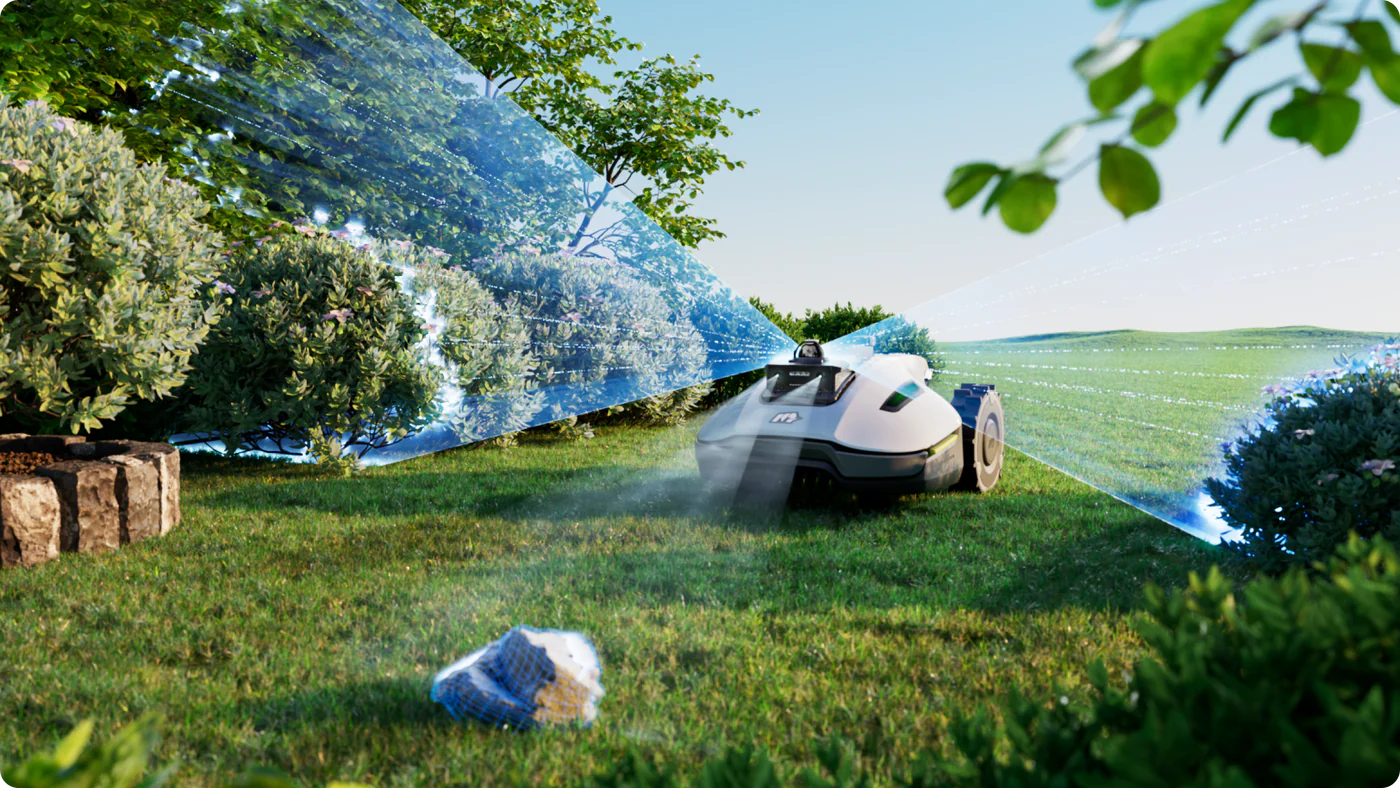
Table of Contents
- Introduction: The Saturday Morning Revolution
- Understanding Wire-Based Navigation: The Original Technology
- GPS-RTK Navigation: Satellite Precision Comes to Your Lawn
- LiDAR SLAM Technology: The Newest Game Changer
- Head-to-Head Performance Comparison
- Cost Analysis: Investment vs Long-Term Value
- Environmental Impact and Safety Considerations
- Real-World User Experiences and Case Studies
- Choosing the Right System for Your Yard
- Conclusion: The Future of Autonomous Lawn Care
- Frequently Asked Questions
Introduction: The Saturday Morning Revolution
I still remember the Saturday morning that changed my perspective on lawn care forever. My neighbor Mike, a self-proclaimed tech skeptic who had spent every weekend for twenty years behind a gas-powered Toro, stood in his driveway with his arms crossed, watching a small robotic device methodically traverse his half-acre yard. No noise except a gentle hum. No gasoline fumes. No blisters on his hands. Just systematic, autonomous precision that would have seemed like science fiction a decade ago. “I got my Saturdays back,” he told me with a grin that betrayed both pride and disbelief. That conversation sparked a journey into understanding robotic lawn mower technology that revealed an industry experiencing its own navigation revolution.
The transformation happening in autonomous lawn care mirrors the evolution we’ve witnessed in self-driving cars, warehouse robots, and delivery drones. But unlike those high-profile technologies that capture headlines, robotic lawn mowers have quietly infiltrated American suburbs, European estates, and Asian residential complexes with minimal fanfare. The global robotic lawn mower market, valued at approximately 1.48 billion dollars in 2021, is projected to reach 4.04 billion dollars by 2028, representing a compound annual growth rate that outpaces most consumer robotics categories. This explosive growth stems not from marketing hype, but from a fundamental shift in navigation technology that has finally made these devices practical, reliable, and genuinely useful.
Before delving into the details of the article, watch this video for an in-depth review of the robotic lawnmower revolution and modern laser technologies:
Three distinct navigation systems dominate today’s robotic lawn mower market, each representing a different evolutionary stage in autonomous outdoor navigation. Wire-based systems, the technology that launched the category in the late 1990s, use buried electromagnetic cables to define boundaries and guide mower movements. GPS-RTK systems leverage satellite positioning enhanced with real-time kinematic correction to achieve centimeter-level accuracy without physical infrastructure. LiDAR SLAM technology, the newest arrival that debuted commercially in 2023, employs laser-based simultaneous localization and mapping to navigate with unprecedented environmental awareness. Understanding the strengths, limitations, and ideal applications of each system has become essential for anyone considering the transition from manual mowing to autonomous maintenance.
The stakes extend far beyond mere convenience. According to data compiled by the United States Environmental Protection Agency, gas-powered lawn equipment accounts for approximately five percent of the nation’s total air pollution. A 2011 EPA study found that gasoline-powered lawn and garden equipment emitted roughly 26.7 million tons of air pollutants annually, representing between 24 and 45 percent of all nonroad gasoline emissions across the United States. One hour of operation with a gas-powered lawn mower can produce as much pollution as driving a modern car for 100 miles. The environmental case for electric robotic alternatives grows more compelling as concerns about air quality, climate change, and sustainable land management intensify. But environmental benefits mean nothing if the technology doesn’t work reliably in real-world conditions.
Consumer adoption patterns reveal fascinating geographic and cultural divisions. European markets, particularly in Germany, Sweden, and the United Kingdom, embraced robotic lawn mowers years before American consumers showed significant interest. By 2025, approximately 18 percent of European households with lawns owned robotic mowers compared to just 6 percent of American households. This disparity stems partially from differences in yard size and complexity, but also reflects varying attitudes toward automation, labor-saving devices, and acceptable lawn aesthetics. European consumers generally tolerate the more natural, less manicured appearance that results from frequent robotic cutting, while American preferences historically favored the striped, golf-course look achieved through weekly manual mowing. Navigation technology improvements, particularly GPS and LiDAR systems capable of producing systematic mowing patterns, are gradually bridging this aesthetic gap.
The decision between wire-based, GPS-RTK, and LiDAR navigation systems ultimately depends on factors that extend beyond raw technological capability. Yard topology, satellite visibility, obstacle density, budget constraints, installation willingness, and aesthetic preferences all influence which system delivers optimal performance for specific situations. A suburban quarter-acre lot with clear sky visibility and minimal obstacles presents entirely different challenges than a wooded property with mature trees, a mountainside estate with steep slopes, or an urban courtyard surrounded by tall buildings that block satellite signals. Understanding how each navigation technology performs across diverse real-world conditions transforms the selection process from bewildering to methodical.
This comprehensive analysis examines every critical dimension of robotic lawn mower navigation technology. We’ll explore the mechanical principles underlying each system, dissect accuracy and reliability under varying conditions, compare setup complexity and ongoing maintenance demands, analyze total cost of ownership over typical product lifespans, evaluate environmental and safety implications, and synthesize real-world user experiences from thousands of installations. The goal isn’t to crown a universal winner, because no single system excels in every scenario. Instead, we’ll equip you with the knowledge to confidently select the navigation technology that transforms your specific lawn care burden into an automated background task that happens whether you’re home, at work, or on vacation.
The revolution Mike experienced in his driveway represents more than technological novelty. It embodies a fundamental reconsideration of how we interact with outdoor spaces, allocate time to maintenance tasks, and balance convenience against environmental responsibility. Robotic lawn mowers have evolved from expensive toys for early adopters into practical tools that deliver genuine value, but only when matched appropriately to yard conditions and user expectations. The navigation system forms the brain of these autonomous machines, determining whether they operate as reliable partners or frustrating disappointments. Let’s dive deep into the three competing technologies reshaping how grass gets cut in the modern world.

Understanding Wire-Based Navigation: The Original Technology
The Electromagnetic Boundary System Explained
Wire-based robotic lawn mowers pioneered autonomous residential mowing when they first appeared commercially in the late 1990s. The fundamental principle remains elegantly simple: a low-voltage wire creates an electromagnetic field that the mower’s onboard sensors detect and follow. Installation requires physically laying boundary wire around the perimeter of the mowing area and any exclusion zones like flower beds, trees, or garden features. The wire connects to the charging station, which generates a weak electrical current that flows through the closed loop. As the mower approaches the wire, sensors detect the electromagnetic field and trigger directional changes that keep the machine within the defined boundaries.
Most wire-based systems use random navigation patterns rather than systematic coverage. The mower drives in straight lines until encountering an obstacle or boundary wire, then turns at a semi-random angle and continues. This approach, borrowed from early robotic vacuum cleaners, ensures complete coverage over multiple mowing sessions through statistical probability rather than intelligent planning. While inefficient by modern standards, the simplicity means fewer points of failure and lower manufacturing costs. The mower doesn’t need to understand yard topology, remember previous paths, or process complex environmental data. It simply detects boundaries, avoids obstacles through bump sensors, and randomly explores the defined space.
Wire installation represents the primary challenge and time investment for these systems. Proper installation requires mapping your entire yard on paper, planning wire routes that include all mowing areas while excluding obstacles, physically laying the wire along the planned route, and securing it with stakes every 2-3 feet until grass grows over it. Some installers prefer burying the wire 2-4 inches underground using specialized cable-laying machines or edge trimmers, which provides better protection against damage but increases installation complexity. The entire process typically consumes 4-8 hours for a standard quarter-acre residential lot, longer for properties with complex boundaries or numerous obstacles.
Advantages of Wire-Based Navigation
The primary advantage of wire-based systems lies in their predictable reliability and lower cost. Once properly installed, the electromagnetic boundary provides consistent guidance regardless of weather conditions, time of day, or environmental obstacles like trees and buildings. Unlike GPS systems that can lose accuracy under tree cover or LiDAR sensors that might struggle in heavy rain, electromagnetic wire detection functions identically in all conditions. This reliability made wire-based systems the default choice for early adopters willing to invest installation effort for dependable performance.
Cost represents another compelling advantage. Entry-level wire-based mowers from reputable manufacturers start around $400-$600, compared to $1,500-$2,000 for basic GPS models and $2,000-$3,500 for LiDAR-equipped alternatives. The price differential stems from simpler electronics, less sophisticated sensors, and lower computational requirements. A wire-based mower needs only to detect electromagnetic fields and implement basic collision avoidance, while GPS and LiDAR systems require satellite receivers or laser sensors, powerful processors, and complex software algorithms. For budget-conscious consumers with straightforward yards, wire-based systems deliver autonomous mowing at accessible price points.
Wire-based navigation excels in yards with poor satellite visibility where GPS systems struggle. Properties heavily shaded by mature trees, surrounded by tall buildings, or located in steep valleys often experience GPS signal interference that disrupts positioning accuracy. The electromagnetic wire method operates independently of satellite availability, making it the most reliable option for challenging GPS environments. Similarly, yards with highly reflective surfaces like metal fences or large windows might confuse LiDAR sensors, whereas wire-based systems remain unaffected by such environmental factors.
Limitations and Challenges
The random navigation pattern employed by most wire-based mowers creates significant efficiency disadvantages. Studies comparing autonomous navigation systems have found that random-pattern coverage requires approximately 3-5 times longer to complete the same area compared to systematic parallel-stripe patterns. A wire-based mower might need 8-10 hours to fully cover a quarter-acre yard that a GPS or LiDAR mower completes in 2-3 hours using optimized paths. This extended runtime translates to increased wear on mechanical components, higher electricity consumption, and greater time exposure to weather conditions that might necessitate interrupting mowing sessions.
Wire maintenance presents ongoing challenges that GPS and LiDAR systems avoid entirely. Buried or surface-mounted boundary wire remains vulnerable to damage from landscape maintenance activities, burrowing animals, ground frost heave, and simple aging. A single wire break anywhere in the loop disables the entire system, and locating breaks in buried wire often requires specialized wire-tracing equipment or systematic testing. Seasonal yard changes like garden expansion, tree planting, or hardscape additions necessitate wire route modifications. Each modification requires physically relocating wire sections, a task many users find tedious compared to the virtual boundary adjustments possible with wireless systems.
The lack of intelligent navigation means wire-based mowers cannot optimize cutting patterns, avoid repeated passes over the same areas, or adapt to changing yard conditions. They don’t learn yard topology over time, can’t prioritize areas with faster grass growth, and offer no mechanism for creating striped patterns that many homeowners prefer aesthetically. Modern GPS and LiDAR mowers remember completed areas and systematically cover remaining sections, while wire-based mowers might pass over the same spot multiple times while leaving other areas temporarily unmown. This randomness works eventually but lacks the efficiency and predictability of planned navigation.
Modern Wire-Based Mower Capabilities
Contemporary wire-based systems have evolved considerably from their 1990s predecessors, incorporating features that narrow the performance gap with wireless alternatives. Many current models include sophisticated obstacle detection using ultrasonic sensors, bump sensors, and tilt sensors that improve navigation around complex landscaping. Some premium wire-based mowers offer multiple zone management, allowing users to define separate mowing areas that the mower accesses through narrow passages defined by guide wires. These guide wires lead the mower from the charging station through restricted spaces like side yards to reach disconnected mowing zones.
Advanced wire-based models now include smartphone connectivity, enabling remote control, schedule adjustments, and status monitoring through dedicated apps. Users can start or pause mowing sessions remotely, receive notifications about completion or problems, and adjust cutting height without physically accessing the mower. These digital interfaces modernize the user experience while maintaining the fundamental wire-based navigation approach. Some manufacturers have implemented edge mode programming that directs the mower to follow boundary wires closely during dedicated edge-cutting passes, addressing criticism about the unkempt appearance at lawn perimeters.
Security features have improved dramatically across wire-based systems. Modern models include PIN code protection, lift sensors that trigger loud alarms if the mower is picked up unexpectedly, and GPS tracking modules that enable location monitoring if theft occurs. The irony of adding GPS for security while using wire-based navigation doesn’t diminish the effectiveness of these anti-theft measures. According to data from manufacturers and law enforcement agencies, robotic lawn mowers equipped with PIN codes and alarms experience theft rates approximately 85 percent lower than unprotected models.
Shop on AliExpress via link: wholesale-robotic-lawn-mower-replacement-blades

GPS-RTK Navigation: Satellite Precision Comes to Your Lawn
Real-Time Kinematic Positioning Explained
GPS-RTK technology represents the first major evolutionary leap beyond wire-based navigation, eliminating physical infrastructure while achieving positioning accuracy that seemed impossible with consumer-grade equipment just a decade ago. The system combines signals from Global Navigation Satellite Systems with a stationary reference station that broadcasts real-time correction data to the mower. Standard GPS positioning achieves accuracy of 1-5 meters, entirely inadequate for lawn mowing applications where centimeter-level precision is required to create efficient cutting patterns and avoid obstacles. RTK correction reduces this error to 2-3 centimeters, transforming GPS from vaguely directional to precisely navigational.
The technical process works through differential signal analysis. The reference station, typically positioned near the charging dock, knows its exact location through survey-grade GPS or user calibration. It continuously receives signals from the same satellites the mower accesses, calculates the difference between the satellite-indicated position and its known true position, and broadcasts these corrections to the mower via radio link. The mower applies these corrections to its own satellite signals, effectively canceling out atmospheric interference, satellite orbit variations, and other error sources that plague standard GPS. This correction process happens in real-time, dozens of times per second, maintaining consistent accuracy as the mower navigates.
GPS-RTK mowers employ systematic coverage patterns rather than random exploration. During initial setup, users manually drive the mower around the yard perimeter using a smartphone app or handheld controller, recording the boundary as GPS coordinates. The mower’s software then generates an optimal mowing path, typically consisting of parallel stripes with efficient turning patterns at each end. Some systems allow users to define multiple zones with different cutting schedules, create keep-out areas for flower beds or delicate landscaping, and specify preferred mowing directions for aesthetic stripe creation. This intelligent path planning dramatically improves efficiency compared to random navigation.
Performance Advantages of GPS-RTK Systems
The most immediately apparent advantage of GPS-RTK navigation lies in setup simplicity. Instead of spending hours physically installing and burying boundary wire, users position the reference station, drive the perimeter once to map boundaries, and the system is operational. Total setup time for a typical residential lot ranges from 30 to 90 minutes, depending on yard complexity and user familiarity with the smartphone interface. This dramatic reduction in installation effort has proven decisive for many consumers who appreciate autonomous mowing but balk at wire installation demands. The psychological shift from manual labor to digital mapping fundamentally changes the value proposition.
Systematic coverage patterns deliver multiple benefits beyond faster mowing completion. The parallel-stripe approach reduces overlap to approximately 5-10 percent compared to 40-60 percent overlap typical of random navigation, directly translating to reduced runtime, lower electricity consumption, and decreased component wear. University research comparing navigation systems found that GPS-RTK mowers completed coverage tasks 60-75 percent faster than equivalent wire-based models. This efficiency gap widens further in larger yards where systematic planning provides greater advantages. A one-acre property that might require 15-20 hours of wire-based mower runtime can be completed in 5-7 hours by GPS systems using optimized paths.
GPS-RTK navigation enables aesthetic features impossible with wire-based systems. Many models offer striping modes that create alternating light and dark grass patterns similar to professional baseball fields or golf courses. The mower achieves this by alternating mowing direction between sessions, bending grass blades in opposite directions to create visual contrast. Users can specify stripe width, orientation, and pattern complexity through the smartphone app. For homeowners who value lawn appearance and take pride in maintained landscapes, this capability justifies the premium pricing over wire-based alternatives. The ability to produce professional-looking results without manual effort represents genuine added value.
Limitations in Challenging Environments
GPS-RTK systems demonstrate remarkable capabilities in ideal conditions but face significant challenges when satellite visibility is compromised. Dense tree canopy, tall buildings, steep valley walls, and even temporary obstructions like construction equipment can block satellite signals or create multipath errors where signals bounce off surfaces before reaching the receiver. When satellite count drops below the minimum required for positioning (typically 5-6 satellites), the mower loses localization ability and may stop operation, emit error alerts, or switch to less reliable positioning methods. Properties with heavy tree cover frequently experience frustrating interruptions as the mower transitions between shaded and open areas.
Weather conditions impact GPS-RTK performance more than wire-based systems. Heavy rain, thick cloud cover, and severe storms can degrade satellite signal strength, reducing positioning accuracy or causing temporary service interruptions. While modern GPS-RTK mowers typically include inertial measurement units and wheel encoders that maintain approximate positioning during brief signal loss, extended periods without reliable satellite lock prevent systematic operation. The mower might revert to random navigation mode, fail to complete planned coverage, or return to the charging station prematurely. These weather sensitivities are particularly problematic in regions with frequent storms or persistent cloud cover.
The reference station requires careful positioning to maintain radio contact with the mower across the entire yard. Radio signals used for correction data transmission operate in the 400-900 MHz range, which provides decent penetration through obstacles but isn’t immune to interference from buildings, hills, or distance. Most systems specify maximum working distances of 500-800 meters from the reference station, adequate for residential properties but potentially limiting for larger estates or commercial applications. Multi-acre properties might require multiple reference stations or careful positioning to ensure complete coverage. Additionally, the reference station needs continuous power and protection from weather, typically requiring mounting near the charging dock or inside a weatherproof enclosure.
Advanced GPS-RTK Features and Capabilities
Modern GPS-RTK mowers incorporate sophisticated sensors beyond satellite positioning to enhance navigation reliability and safety. Most models now include camera-based visual perception systems that identify obstacles like children’s toys, garden hoses, or pets that weren’t present during initial mapping. These vision systems use machine learning algorithms trained on thousands of obstacle images to distinguish between safe-to-cross items like leaves or small twigs and hazards requiring avoidance. The combination of GPS positioning for location awareness and camera vision for real-time obstacle detection creates robust navigation that adapts to changing yard conditions.
Multi-zone management reaches new sophistication in GPS-RTK systems. Users can define dozens of separate zones with independent mowing schedules, cutting heights, and edge behaviors. The system automatically plans efficient routes between zones, navigating through connecting passages or returning to the charging station between zone completion. Some advanced models support collaborative mowing where multiple GPS-RTK mowers coordinate to divide labor across very large properties, communicating to avoid duplicate coverage and optimize total completion time. This fleet capability primarily targets commercial applications but demonstrates the scalability possible with wireless navigation.
Integration with smart home ecosystems has become standard in premium GPS-RTK mowers. Voice control through Amazon Alexa, Google Assistant, or Apple HomeKit allows users to start, pause, or summon the mower using natural language commands. Weather integration automatically postpones mowing when rain is forecast, resuming scheduled sessions after conditions clear. Some systems connect to smart irrigation controllers, coordinating mowing schedules to avoid cutting wet grass or interfering with watering cycles. This ecosystem integration transforms the mower from an independent device into a component of comprehensive home automation, appealing to consumers invested in smart home technology.

LiDAR SLAM Technology: The Newest Game Changer
Simultaneous Localization and Mapping Principles
LiDAR SLAM represents the cutting edge of robotic lawn mower navigation, bringing technology previously limited to high-end autonomous vehicles and industrial robots into consumer yard equipment. The acronym SLAM stands for Simultaneous Localization and Mapping, describing the system’s ability to construct environmental maps while simultaneously determining its own position within those maps. LiDAR (Light Detection and Ranging) sensors emit laser pulses in 360-degree patterns, measuring distances to surrounding objects based on the time required for reflected light to return. By spinning continuously and capturing thousands of distance measurements per second, the sensor builds detailed three-dimensional maps of the surrounding environment with centimeter-level resolution.
The navigation process operates through sophisticated algorithms that process streaming LiDAR data to identify stable environmental features like trees, fence posts, building corners, and landscape structures. The system recognizes these features from multiple perspectives as the mower moves, using feature consistency to determine its position and update the environmental map. This approach enables navigation that is completely independent of satellite signals, immune to GPS interference, and capable of functioning in environments where GPS-RTK systems struggle. LiDAR SLAM excels under tree canopy, near tall buildings, in valleys, and during any weather conditions that might degrade satellite reception.
Initial mapping happens automatically without user intervention. Most LiDAR mowers include an exploration mode where the device systematically traverses accessible areas, using obstacle detection and boundary recognition to discover lawn perimeters naturally. The mower identifies grass edges by detecting consistent height differences between lawn and surrounding surfaces like sidewalks, driveways, or garden beds. After completing exploration, typically requiring 15-40 minutes depending on yard size and complexity, the system presents a complete yard map for user review. Users can then refine boundaries, add keep-out zones, specify preferred mowing patterns, and set zone-specific schedules through the smartphone interface.
Revolutionary Advantages of LiDAR Navigation
The most transformative advantage of LiDAR SLAM technology lies in its environmental independence. Unlike GPS systems vulnerable to satellite obstructions or wire-based systems requiring physical infrastructure, LiDAR mowers navigate using self-generated environmental perception. This independence manifests practically in several scenarios where alternative technologies struggle: beneath heavy tree canopy where GPS signals degrade, in urban canyons surrounded by tall buildings that create multipath errors, on hillsides and valleys where satellite geometry is suboptimal, and in areas with electrical interference that might disrupt boundary wire signals. The mower essentially carries its own navigation reference, making it functionally immune to external dependencies.
Real-time obstacle detection and avoidance reach unprecedented sophistication with LiDAR technology. The 360-degree laser scanning detects objects as small as a few centimeters at distances up to 30-40 meters, providing ample reaction time to avoid collisions or modify paths. Advanced LiDAR SLAM systems distinguish between permanent obstacles like trees and temporary objects like toys, garden hoses, or pets. They remember permanent obstacle locations to improve future path planning while remaining vigilant for temporary hazards that might appear between mowing sessions. This intelligence prevents the frequent collisions that plague simpler bump-sensor-based systems, reducing mechanical stress and improving mowing efficiency.
LiDAR excels in complex yards with irregular shapes, narrow passages, tight corners, and dense landscaping. The precise environmental mapping enables navigation through spaces as narrow as 80-100 centimeters, accessing side yards and confined areas that GPS-RTK mowers might struggle to enter systematically. The system’s ability to localize within complex environments means users can create elaborate yard designs with curved edges, artistic flower bed shapes, and intricate hardscaping without worrying about navigation failures. This capability particularly appeals to homeowners with mature landscaping who want autonomous mowing without oversimplifying their carefully designed outdoor spaces.
Operational Considerations and Limitations
LiDAR sensors, while remarkably capable, aren’t invulnerable to environmental challenges. Heavy rain, thick fog, or dust storms can scatter laser pulses before they reach solid surfaces, reducing effective range and potentially degrading positioning accuracy. Most manufacturers address this through multi-sensor fusion, combining LiDAR with inertial measurement units, wheel encoders, and sometimes cameras to maintain navigation during temporarily reduced sensor performance. Modern systems typically continue operating in moderate rain, though they may automatically return to charging stations during severe weather to prevent damage and avoid working in conditions where grass cutting quality suffers.
The spinning LiDAR mechanism requires ongoing maintenance to ensure optical clarity and mechanical reliability. Dust, pollen, grass clippings, and water spots accumulating on sensor windows reduce ranging accuracy and can cause navigation errors. Most manufacturers recommend weekly cleaning of sensor surfaces using microfiber cloths and appropriate cleaning solutions. Some premium models include automatic lens cleaning systems that periodically wipe sensor windows, reducing manual maintenance demands. The mechanical spinning components also represent additional potential failure points compared to the static sensors in GPS-RTK or wire-based systems, though modern LiDAR sensors demonstrate good reliability when properly maintained.
Cost remains a significant consideration for LiDAR SLAM mowers. The technology premium over GPS-RTK systems ranges from $500 to $1,500 depending on model tier and manufacturer, reflecting the expense of LiDAR sensors and the powerful processors required for real-time SLAM computation. Entry-level LiDAR mowers start around $2,000, while premium models with all-wheel drive, large battery capacity, and advanced features can exceed $4,000. This pricing positions LiDAR technology as the premium option in the robotic mower market, accessible primarily to consumers prioritizing cutting-edge capability over budget considerations or those with yard conditions that make cheaper alternatives impractical.
Next-Generation LiDAR Capabilities
The latest LiDAR SLAM mowers incorporate artificial intelligence and machine learning to enhance navigation intelligence beyond pure geometric perception. AI vision systems trained on extensive datasets can identify specific objects like garden furniture, children’s toys, pet bowls, or garden hoses, making contextual decisions about whether to avoid or carefully navigate around each item. This object recognition enables features like pet avoidance where the mower detects animals in its path and waits for them to move rather than attempting to navigate around them. Similarly, the system can distinguish between unmown grass requiring cutting and rough terrain like mulch beds or gravel areas that should be avoided.
Adaptive path planning represents another frontier in LiDAR mower development. Rather than following rigid predetermined patterns, next-generation systems analyze grass growth rates across different yard zones and adjust mowing frequency accordingly. Shaded areas receiving less sunlight grow slower than full-sun zones, fertilized sections outpace unfertilized areas, and high-traffic regions may benefit from less frequent cutting to allow recovery. Advanced mowers learn these patterns through observation over multiple weeks, automatically creating optimized mowing schedules that reduce unnecessary cutting while maintaining uniform appearance. This intelligence reduces total runtime, conserves battery life, and minimizes wear on both the mower and the lawn.
Integration with other robotics technologies points toward comprehensive yard automation. Some manufacturers have begun developing modular systems where a LiDAR-equipped base platform can attach different implements for various yard tasks. The same navigation system might power lawn mowing in summer, leaf collection in fall, snow clearing in winter, and soil aeration in spring through interchangeable tool heads. This vision of versatile yard robots remains largely conceptual in 2026, but the sophisticated navigation and environmental mapping provided by LiDAR SLAM create necessary foundations for multi-function automation. The trajectory clearly points toward yard robots that maintain outdoor spaces as comprehensively as robotic vacuums have come to clean indoor spaces.

Head-to-Head Performance Comparison
Accuracy and Reliability Metrics
Positioning accuracy fundamentally determines how effectively robotic mowers execute planned coverage patterns and avoid inefficient redundant passes. GPS-RTK systems achieve the highest pure positioning accuracy at 2-3 centimeters in optimal conditions, enabling precise parallel stripes and minimal overlap. LiDAR SLAM systems deliver slightly lower positioning precision at 4-5 centimeters but compensate through superior obstacle awareness and adaptability to GPS-denied environments. Wire-based systems offer no position tracking at all, relying instead on boundary detection that provides perfect perimeter accuracy but zero knowledge of completed versus remaining mowing areas.
Reliability under adverse conditions varies dramatically across technologies. Wire-based systems demonstrate near-perfect reliability once properly installed, functioning identically in rain, snow, extreme heat, high winds, or any weather condition short of flood-level water accumulation. GPS-RTK systems experience degraded performance during heavy rain or when operating under dense tree canopy, with some models reverting to less efficient random navigation when satellite count drops below operational minimums. LiDAR systems maintain good performance across most weather conditions but may reduce range or request user intervention during exceptional circumstances like extremely dense fog or blinding rain that scatters laser pulses.
Field testing conducted by university research teams and independent consumer organizations provides quantitative comparison data. A 2025 study published in Crop Science comparing autonomous navigation systems found GPS-RTK mowers completed coverage tasks averaging 2.8 hours for quarter-acre lots with 6.8 percent overlap. LiDAR SLAM systems completed the same areas in 2.4 hours with 7.2 percent overlap, benefiting from tighter navigation in complex boundaries and faster obstacle processing. Wire-based random navigation required 7.5 hours with estimated overlap exceeding 45 percent. These efficiency differentials compound significantly in larger yards where systematic planning provides greater advantages.
Coverage Efficiency and Pattern Quality
Systematic coverage patterns possible with GPS-RTK and LiDAR navigation deliver dramatically superior efficiency compared to random wire-based approaches. The parallel-stripe method employed by most wireless systems ensures every area gets cut exactly once per session while minimizing the total distance traveled. Efficient turn patterns at stripe ends reduce wasted motion, and intelligent zone sequencing minimizes redundant trips between disconnected areas. Wire-based mowers, operating through random exploration, repeatedly cross previously mowed areas while leaving other sections temporarily uncut. Statistical modeling suggests random navigation requires traversing approximately 3-4 times the actual mowable area to achieve complete coverage with high confidence.
Pattern quality and aesthetic appeal strongly favor GPS-RTK systems when appearance matters to homeowners. The ability to create consistent parallel stripes in user-specified orientations produces professional-looking results that rival manual mowing with commercial equipment. Some GPS systems offer pattern variety including diagonal stripes, checkerboard alternation, or concentric rectangular spiraling for visual interest. LiDAR mowers typically prioritize efficiency over aesthetics, generating somewhat less regular patterns due to frequent path adjustments for obstacle avoidance. Wire-based random navigation produces no discernible pattern, resulting in more natural but less manicured appearance that some users prefer and others find objectionable.
Edge cutting performance varies considerably across navigation types. Wire-based mowers struggle with edges because their random navigation rarely brings them close to boundaries at optimal angles. Most leave 5-10 centimeters of uncut grass along perimeters, requiring periodic manual trimming to maintain neat appearance. GPS-RTK systems can include dedicated edge-cutting modes that follow boundaries closely during specific passes, though this requires additional programming and runtime. LiDAR mowers achieve the best edge performance through precise boundary mapping and intelligent path planning that systematically addresses perimeters. Some advanced LiDAR models include offset cutting modes that intentionally overshoot boundaries slightly, using grass height sensors to stop when reaching non-grass surfaces.
Obstacle Detection and Avoidance
Modern GPS-RTK and LiDAR mowers incorporate sophisticated obstacle detection that has largely eliminated the crude bump-and-turn navigation of early robotic mowers. LiDAR systems excel at obstacle detection through inherent 360-degree laser scanning that identifies objects at substantial distances, typically 5-30 meters depending on object size and reflectivity. This advance warning enables smooth path adjustments that maintain mowing momentum while avoiding collisions. The laser-based detection works equally well in bright sunlight, complete darkness, fog, or rain, though extreme weather might reduce effective range. Objects smaller than approximately 5 centimeters might pass undetected, making these mowers inappropriate for yards frequently containing small toys or tools.
GPS-RTK mowers typically rely on camera-based vision systems for obstacle detection, using image processing and machine learning to identify objects in the mowing path. These vision systems perform excellently in good lighting conditions but struggle at night, in heavy shadows, or when facing into bright sunlight that creates glare. Most manufacturers address this limitation by restricting mowing to daylight hours and implementing photoelectric sensors that automatically return the mower to its charging station when ambient light drops below operational thresholds. The daytime-only operation suits most residential users who prefer noise-free nighttime environments, though it reduces scheduling flexibility compared to the all-weather operation possible with LiDAR.
Wire-based mowers employ the most primitive obstacle detection, typically consisting of contact bump sensors that trigger direction changes only after physically encountering obstacles. This approach causes frequent collisions with landscaping features, furniture, toys, and other yard objects, potentially damaging both the mower and the struck items. Some modern wire-based models have upgraded to ultrasonic sensors that detect objects at distances of 30-50 centimeters, providing marginal advance warning. However, the fundamental random navigation combined with limited sensing creates inherently collision-prone operation. Users of wire-based systems must accept that their mowers will regularly bump into things, making these devices unsuitable for yards containing delicate landscaping or valuable objects.
Academic research examining robotic mowing technology evolution provides valuable historical perspective on how navigation systems progressed from primitive wire-guided approaches to sophisticated autonomous platforms. Peer-reviewed studies published in Crop Science analyzing the development trajectory of robotic lawn equipment note that GPS-RTK positioning represents the first revolutionary advancement enabling mass consumer adoption after decades of wire-based limitations. University researchers emphasize that future navigation systems will likely integrate multiple sensing technologies including LiDAR and camera vision to achieve reliable operation across diverse environmental conditions, improving upon current single-technology approaches that each excel in specific scenarios while struggling in others.

Cost Analysis: Investment vs Long-Term Value
Initial Purchase Prices and Hardware Costs
Wire-based robotic mowers offer the most accessible entry point for consumers exploring autonomous lawn care. Basic models from reputable manufacturers like Worx, Robomow, and Gardena start around $400-$600 for units suitable for small yards up to 0.25 acres. Mid-range wire-based mowers handling 0.5-0.75 acres cost $800-$1,200, while premium models for larger properties or featuring enhanced capabilities reach $1,500-$1,800. These prices include the mower unit, charging station, boundary wire (typically 150-200 meters), wire stakes, and basic accessories. The relatively low pricing reflects simpler electronics, established manufacturing processes, and intense competition among multiple established brands.
GPS-RTK systems command significant premiums over wire-based alternatives, with entry-level models starting around $1,500-$2,000 for basic quarter-acre capability. Mid-range GPS mowers suitable for 0.5-1.0 acre properties cost $2,500-$3,500, offering better battery capacity, more sophisticated sensors, and enhanced smartphone app features. Premium GPS systems handling multi-acre properties or providing commercial-grade capabilities range from $4,000 to $7,000. These prices reflect expensive GPS receivers, RTK reference stations, powerful processors for real-time path planning, and sophisticated control software. Major manufacturers like Husqvarna, Robomow, and Mammotion dominate this market segment.
LiDAR SLAM mowers represent the premium tier, with prices starting around $2,000-$2,500 for compact models handling up to 0.3 acres. Mid-range LiDAR mowers for 0.5-1.0 acre properties cost $3,000-$4,000, providing enhanced battery capacity, all-wheel drive systems, and advanced AI features. The most sophisticated LiDAR models incorporating multi-sensor fusion, object recognition, and premium build quality exceed $4,500, reaching $6,000 for commercial-grade units. These elevated prices reflect expensive LiDAR sensors, powerful computational hardware, complex software development costs, and limited production volumes compared to mature wire-based and GPS technologies.
Installation and Setup Expenses
Wire-based systems impose substantial hidden costs through installation labor requirements. Homeowners performing self-installation must invest 4-8 hours laying boundary wire, additional time if choosing to bury wire underground, and the inevitable troubleshooting when initial testing reveals wire routing mistakes or configuration errors. Professional installation services cost $200-$500 depending on yard size and complexity, essentially adding 30-50 percent to the equipment purchase price for consumers who value their time or doubt their ability to execute proper wire placement. Wire damage requiring repairs adds ongoing service costs averaging $50-$150 per incident based on service call pricing and replacement wire expenses.
GPS-RTK and LiDAR systems dramatically reduce installation costs by eliminating physical infrastructure. Most users complete initial setup independently in 30-90 minutes using smartphone app guidance, saving hundreds of dollars in professional installation fees. The process consists primarily of positioning the base station (GPS only), powering up the mower, and either manually driving the boundary (GPS) or allowing automatic exploration (LiDAR). The simplified setup encourages broader adoption among less technically confident consumers who might feel intimidated by wire installation demands. Manufacturers report that approximately 90 percent of GPS and LiDAR mower owners complete their own installation compared to only 60 percent of wire-based system buyers.
Boundary modifications represent ongoing hidden costs for wire-based systems that wireless alternatives avoid entirely. Yard changes like garden expansion, tree planting, new hardscaping, or children’s play equipment installation require physical wire rerouting for wire-based systems. Each modification involves hours of labor to dig up existing wire, reroute around new obstacles, and secure the modified path. Professional services charge $100-$250 per modification visit. GPS and LiDAR systems accommodate yard changes through simple smartphone app adjustments, updating virtual boundaries and keep-out zones in minutes without physical labor or service calls. This flexibility becomes increasingly valuable over the typical 5-7 year product lifespan as yards inevitably evolve.
Operating Costs and Maintenance Requirements
Electricity costs for robotic lawn mowers remain minimal across all navigation types, typically ranging from $2 to $8 per month depending on yard size and mowing frequency. A quarter-acre property requiring approximately 15-20 hours of monthly runtime consumes about 15-25 kilowatt-hours at average US electricity rates of $0.12-$0.16 per kilowatt-hour. This translates to $1.80-$4.00 monthly or roughly $20-$50 annually. Larger properties or more frequent mowing schedules proportionally increase electricity consumption, but even a full-acre property rarely exceeds $100 annual electricity expense. This cost advantage over gasoline-powered mowers, which typically consume $200-$400 in fuel annually for similar mowing workloads, provides substantial long-term savings.
Blade replacement represents the primary recurring maintenance expense across all robotic mower types. The small pivoting blades used in most models require replacement every 1-3 months depending on mowing frequency, grass type, and terrain roughness. Replacement blade kits cost $15-$40 for sets sufficient for one season, creating annual maintenance expenses of $60-$160. Some manufacturers offer extended-life blades or blade sharpening services that reduce replacement frequency. The frequent blade changes needed for robotic mowers contrast with traditional mowers requiring sharpening only once or twice per season, though the small blade size makes replacement quick and simple.
Independent consumer testing organizations provide valuable third-party validation of manufacturer performance claims, helping homeowners evaluate robotic mower capabilities objectively before purchase commitments. Testing conducted by Consumer Reports examining multiple robotic lawn mower models assessed cutting quality, navigation efficiency, obstacle handling, battery runtime, and noise levels to determine which products deliver genuine value versus marketing hype. Their systematic evaluation methodology including real-world lawn testing under various conditions offers consumers evidence-based purchase guidance independent of manufacturer influence, particularly valuable in categories where rapid technological evolution creates confusion about which features represent meaningful innovations versus superficial differentiation.
Battery replacement constitutes the largest single maintenance expense over typical product lifespans. Lithium-ion batteries used in modern robotic mowers degrade gradually through charge cycles, typically retaining 80 percent capacity after 500-800 full charge cycles and requiring replacement after 1,000-1,500 cycles. For mowers operating 5-10 hours weekly during 7-month mowing seasons, this translates to battery lifespan of approximately 3-5 years. Replacement batteries cost $150-$400 depending on capacity and manufacturer, creating significant out-of-warranty expenses. Some manufacturers offer battery replacement programs or trade-in options that mitigate costs, while others provide no support beyond selling replacement parts at retail pricing.
Total Cost of Ownership Analysis
Calculating true total cost of ownership over a typical 7-year product lifespan reveals surprising value propositions across different navigation technologies. A wire-based system purchased for $800 with $300 professional installation, $100 annual blade replacement, $30 annual electricity, and two $75 wire repair incidents totals approximately $2,285 over seven years. A GPS-RTK system purchased for $2,500 with DIY installation, $120 annual blade replacement, $40 annual electricity, and one $300 battery replacement totals approximately $3,640. A LiDAR system at $3,500 with DIY installation, $120 annual blade replacement, $40 annual electricity, one $350 battery replacement, and $50 in sensor cleaning supplies totals approximately $4,630.
These calculations assume moderate usage patterns and exclude opportunity costs of time invested in installation and maintenance. When accounting for labor at even modest $25/hour rates, wire-based systems accumulate $400-$500 in installation time value and $100-$200 in maintenance time. GPS and LiDAR systems consume perhaps $50-$100 in setup time and minimal ongoing maintenance attention. From this comprehensive perspective, the price premium for wireless systems shrinks considerably or even reverses when users value their time appropriately. Professional landscapers frequently observe that clients willing to mow their own lawns for “free” somehow assign real dollar value to that time when considering robotic alternatives.
Comprehensive economic analysis accounting for both purchase costs and ongoing operational expenses provides clearer perspective on true long-term value propositions across different mower technologies. Comparative life cycle assessment research published in peer-reviewed journals found that autonomous electric mowers can avoid approximately half a metric ton of carbon dioxide emissions over typical product lifespans compared to equivalent gasoline-powered equipment, representing environmental benefits worth $40-$80 annually using conservative carbon pricing. When environmental externalities are factored alongside direct financial costs, the economic case for robotic mowing strengthens substantially, particularly as battery technology improves and electricity generation transitions toward renewable sources that further reduce operational emissions.
Comparative cost analysis against traditional mowing reveals that robotic systems of any navigation type achieve financial break-even surprisingly quickly. Professional lawn service costs average $30-$50 per visit, totaling $1,200-$2,000 annually for weekly service. A $3,000 robotic mower breaks even in 1.5-2.5 years compared to professional service, then provides pure savings thereafter. Even comparing against self-performed manual mowing, the time savings of 2-3 hours weekly over a 30-week season represents 60-90 hours annually. Valuing that time at modest $20/hour suggests $1,200-$1,800 annual opportunity cost for manual mowing, making any robotic system economically justifiable for consumers who genuinely have productive alternative uses for reclaimed time.
Environmental Impact and Safety Considerations
Emissions Reductions and Air Quality Benefits
The environmental case for electric robotic lawn mowers becomes compelling when examining emissions data compiled by government agencies and independent researchers. According to research published by the United States Environmental Protection Agency, operating a gas-powered lawn mower for one hour produces as much pollution as driving a modern car approximately 100 miles. This shocking statistic stems from the small two-stroke and four-stroke engines used in lawn equipment, which lack the sophisticated emissions controls mandated for automotive engines. A study analyzing 2020 emissions inventory data found that gas-powered lawn and garden equipment contributed approximately 26.7 million tons of air pollutants annually in the United States, representing between 24 and 45 percent of all nonroad gasoline emissions despite operating far fewer hours than vehicles.
The specific pollutants generated by gas-powered mowers include carbon monoxide, nitrogen oxides, and volatile organic compounds that contribute to ground-level ozone formation and pose direct health risks to operators and nearby residents. Research has demonstrated correlations between lawn equipment emissions and increased rates of cardiovascular disease, respiratory conditions, and other serious health problems. Electric robotic mowers eliminate these direct emissions entirely, though comprehensive environmental assessment must account for electricity generation emissions. Life cycle analysis comparing autonomous electric mowers to gasoline-powered alternatives finds emission reductions of 75-90 percent even when factoring in electricity production from fossil fuel sources, with benefits increasing further in regions with renewable energy grid penetration.
Noise pollution represents another environmental dimension where robotic mowers excel dramatically. Gas-powered mowers generate sound levels between 85 and 105 decibels, loud enough to cause permanent hearing damage with repeated exposure and disruptive to neighborhoods for hundreds of meters surrounding operation. The U.S. Consumer Product Safety Commission safety guidelines note that any sound above 85 decibels has potential to damage hearing, yet most gas mowers exceed this threshold substantially. Robotic mowers operate at 55-65 decibels, comparable to normal conversation volume and barely noticeable beyond property boundaries. This dramatic noise reduction enables operation during early morning or evening hours without disturbing neighbors, provides more pleasant outdoor environments for human and wildlife alike, and eliminates the hearing protection requirements necessary when operating conventional equipment.
Safety Features and Risk Mitigation
Modern robotic lawn mowers incorporate multiple layers of safety features addressing concerns that accompanied early autonomous mower adoption. The U.S. Consumer Product Safety Commission reports that from 2013 through 2015, walk-behind power mowers sent an average of 35,000 people annually to hospital emergency rooms for treatment of blade-contact injuries. Riding mowers caused approximately 25,300 injuries and 75 deaths annually during similar timeframes. Robotic mowers virtually eliminate these blade-contact injuries through enclosed cutting decks, automatic blade shutoff when lifted, and lightweight construction that prevents the crushing injuries sometimes caused by riding mowers.
Lift sensors represent the primary safety mechanism in virtually all robotic mowers regardless of navigation technology. These sensors, typically consisting of tilt switches or accelerometers, detect when the mower is lifted from the ground and immediately stop blade rotation within milliseconds. Combined with recessed blade positioning that prevents accidental contact even when the unit is inverted, this system makes it nearly impossible for operators to suffer cutting injuries during normal handling. Many models implement additional safety through PIN code requirements that prevent blade activation until the correct code is entered, protecting children or other unauthorized users who might attempt to operate the device.
Consumer product safety regulations established by federal oversight agencies mandate comprehensive protection measures for powered lawn equipment sold in domestic markets. The U.S. Consumer Product Safety Commission reports that walk-behind power mowers sent an average of 35,000 people annually to hospital emergency rooms for blade-contact injuries during recent study periods. These statistics drove development of mandatory safety standards requiring automatic blade stop mechanisms, protective shields, and warning systems now incorporated into all compliant robotic mowers. The substantially lower injury rates associated with robotic equipment compared to manual alternatives reflect both these mandated safety features and the fundamental design differences that minimize human exposure to active cutting mechanisms during normal operation.
Obstacle detection systems provide crucial protection for objects, pets, and people in the mowing area. LiDAR-equipped mowers offer the most sophisticated protection through advance detection at substantial distances, enabling smooth navigation adjustments that maintain safe separation from detected objects. GPS mowers with camera-based vision systems can identify and classify objects, making intelligent decisions about avoidance strategies based on object type. Even wire-based mowers with ultrasonic sensors provide modest protection, though their shorter detection ranges and simpler processing sometimes result in collisions with smaller obstacles. Consumer safety advocates emphasize that even advanced obstacle detection should not substitute for user responsibility in keeping mowing areas clear of hazards and supervising operation around children or pets.
Regulatory Standards and Compliance
Robotic lawn mowers sold in United States must comply with Consumer Product Safety Commission regulations established under 16 CFR Part 1205, which sets forth safety standards for walk-behind power lawn mowers. These regulations mandate specific blade safety requirements including automatic blade stop mechanisms, shield configurations that deflect thrown objects downward, and warning labels communicating blade contact hazards. Manufacturers must maintain testing documentation demonstrating compliance and include certification labels on products. The CPSC periodically reviews and updates these standards, with most recent modifications focusing on improving blade contact protection and enhancing warning effectiveness.
International markets impose additional regulatory requirements that manufacturers must satisfy for global sales. European Union CE marking requirements mandate compliance with machinery safety directives, electromagnetic compatibility standards, and wireless equipment regulations. These standards often exceed U.S. requirements in certain dimensions while relaxing others, creating complex compliance landscapes for manufacturers pursuing international distribution. The harmonization challenges become particularly acute for GPS and LiDAR systems that incorporate wireless technologies subject to spectrum allocation regulations varying by country and region.
Environmental regulations increasingly influence product development priorities as governments worldwide implement policies promoting emissions reductions and sustainable land management. California’s groundbreaking legislation phasing out small gasoline engines in favor of zero-emission alternatives by 2024 has accelerated manufacturer investment in electric technologies and stimulated innovation in battery performance, charging efficiency, and autonomous navigation systems. Similar regulatory initiatives emerging across North America, Europe, and Asia signal that the transition from gasoline to electric lawn equipment represents not merely consumer preference but regulatory inevitability. Manufacturers designing new robotic mowers now assume electric propulsion as baseline, focusing development resources on navigation sophistication, operational efficiency, and expanded capabilities.
Engineering research teams at multiple universities have contributed significant technical innovations advancing robotic lawn mower capabilities through improved algorithms, sensor integration, and artificial intelligence applications. Independent research published on ResearchGate demonstrates that modern AI-powered GPS-based systems achieve navigation accuracy of 2.5 centimeters with coverage efficiency exceeding 98 percent, representing dramatic improvements over earlier generations that struggled with positioning errors and inefficient path planning. These academic contributions drive commercial product development as manufacturers license university-developed technologies and recruit engineering graduates familiar with cutting-edge autonomous navigation research to accelerate consumer product innovation cycles.
Shop on AliExpress via link: wholesale-robotic-mower-security-accessories

Real-World User Experiences and Case Studies
Suburban Quarter-Acre Success Stories
Michael Chen’s experience with his GPS-RTK mower in suburban Denver illustrates the technology performing exactly as intended. His 0.3-acre lot features typical suburban characteristics: mostly open lawn with a few mature trees, concrete sidewalks defining clear boundaries, unobstructed sky view for satellite reception, and gentle slopes under 10 degrees. “The setup took me about 45 minutes following the app instructions,” Michael explains. “I positioned the base station near my garage electrical outlet, drove the perimeter boundary marking my fence line and garden beds, and the system generated a mowing plan automatically. The parallel stripes look incredible, and neighbors constantly ask how I achieve professional results without hiring a service.”
Michael’s satisfaction stems primarily from the system working within its designed operational envelope. His yard presents no significant GPS challenges, boundary changes occur infrequently, and he values the aesthetic quality enabled by systematic stripe patterns. His total investment of $2,400 for the mower plus $80 annually in blade replacements seems reasonable against $1,500 he previously spent on professional lawn service. “I got my Saturday mornings back and actually enjoy my lawn more now,” he notes. “Watching it mow itself never gets old.” His seven-month experience includes one minor incident when the mower briefly lost GPS signal during a severe thunderstorm, returning to the charging station automatically and resuming normal operation after weather cleared.
Jennifer Martinez provides contrasting perspective on wire-based technology in her similar suburban Philadelphia quarter-acre lot. “I couldn’t justify the GPS price premium for what I thought was unnecessary sophistication,” she explains. “The wire-based model cost $650, and I figured I could handle the installation myself.” Jennifer invested an entire Saturday installing boundary wire, stakes, and configuring zones. “It was definitely tedious, and I made some routing mistakes that required redoing sections. But once running, it works reliably.” She accepts the random mowing pattern and less precise edges as acceptable tradeoffs for cost savings. Her primary frustration involves a broken wire incident caused by a landscape contractor installing new flower bed edging. “Finding the break required renting a wire tracer and took most of an afternoon. That convinced me to inform all contractors about the buried wire before they dig.”
Complex Properties and Navigation Challenges
Robert Thompson’s experience with LiDAR SLAM technology on his wooded New England property demonstrates the system handling scenarios where GPS struggles. His 0.8-acre lot features dense tree coverage creating nearly continuous canopy, numerous large boulders characteristic of regional geology, and steep slopes approaching 35 degrees in sections. “I initially tried a GPS-RTK mower based on price and features,” Robert recalls. “It constantly lost satellite lock under the trees, stopping frequently with error messages. The company eventually admitted my property wasn’t suitable for GPS navigation.” He returned the GPS model and invested in a LiDAR-equipped all-wheel-drive mower costing $3,800.
Navigation research conducted in challenging agricultural environments provides valuable insights into how autonomous systems handle complex terrain, dense obstacles, and irregular boundaries common in both commercial orchards and residential properties with mature landscaping. Studies published in** **plant science research journals analyzing local path planning for orchard mowers found that safe corridor construction combined with quadratic programming optimization enables efficient navigation through narrow passages between trees while maintaining collision-free operation. These advanced algorithms, originally developed for commercial agricultural applications, are being adapted for residential robotic mowers operating in similarly constrained environments where traditional random navigation proves inefficient and GPS-only approaches struggle with satellite signal obstructions from overhead canopy.
“The difference was night and day,” Robert reports. “The LiDAR system mapped my entire property automatically, navigating through tight spaces between boulders and under low branches where GPS simply quit working. The mapping accuracy impressed me—I could see individual trees and rock outcroppings in the app’s rendered map.” His steep sections required the all-wheel-drive capability provided by higher-tier models, but the LiDAR navigation handled all terrain confidently. His only maintenance concerns involve cleaning the LiDAR sensor weekly to remove pine needles and pollen accumulation. “It’s not cheap, but it’s the only autonomous solution that works in my heavily wooded lot. Manual mowing was genuinely dangerous on my slopes, so the safety improvement alone justifies the cost.”
Sarah and David Kim’s urban Los Angeles property illustrates GPS-RTK technology pushed to its limits. Their 0.4-acre lot includes a primary front yard and three side yards connected by narrow 1.2-meter-wide passages. The property sits in a valley surrounded by two-story homes and mature trees that partially obstruct sky view. “GPS positioning works adequately in the main yard,” David explains, “but signal quality degrades in the side yards, especially the north-facing section shaded by our neighbor’s eucalyptus trees. The mower sometimes gets confused in the narrow connecting passages.” They’ve adapted by manually driving the mower to problematic zones and letting it complete those areas before returning to automatic mode for the main yard.
Commercial Applications and Multi-Acre Properties
Heritage Meadows Golf Club in Ohio represents commercial-scale robotic mowing using GPS-RTK technology across 15 acres of maintained rough and out-of-play areas. Superintendent James Martinez deployed a fleet of five commercial GPS mowers with overlapping coverage zones. “The decision came down to labor costs and consistency,” James explains. “Manual mowing these rough areas consumed 40-50 hours weekly during peak season. Now the robots handle it autonomously while my crew focuses on greens and fairways.” The GPS-RTK system enables systematic coverage patterns that create more uniform appearance than the random passes typical of human operators assigned to lower-priority areas.
The fleet deployment required significant upfront investment—$28,000 for five commercial-grade GPS mowers plus supporting infrastructure—but labor savings exceeded $35,000 annually compared to previous manual mowing. “We recouped investment in less than a year,” James notes. “The consistency impresses members, and the 60-decibel quiet operation means we can mow continuously without noise complaints.” Challenges include occasional satellite signal issues near tree lines and maintenance downtime when multiple units require simultaneous blade or battery service. “We keep one spare unit now to maintain five-mower operation during repairs. The system isn’t perfect, but it fundamentally changed how we maintain the property.”
Riverside Park in Portland, Oregon implemented LiDAR-equipped commercial mowers for maintaining 25 acres of civic park land featuring complex landscaping, numerous trees, and playground equipment. Park director Maria Gonzalez selected LiDAR technology specifically for superior obstacle detection around children’s play areas. “Safety drove the decision,” Maria explains. “Traditional mowers require operators to remain constantly vigilant around playground equipment and frequent unpredictable foot traffic. LiDAR detection provides 360-degree awareness and stops immediately when pedestrians approach.” The three commercial LiDAR mowers cost $21,000 total, operating overnight to avoid daytime park activity while benefiting from LiDAR’s light-independent operation.
Choosing the Right System for Your Yard
Decision Framework Based on Property Characteristics
Yard size represents the most fundamental selection criterion. Wire-based systems remain cost-effective for properties up to 0.5 acres where installation effort remains manageable and random navigation inefficiency doesn’t create excessive runtime. GPS-RTK systems excel in the 0.3-2.0 acre range where systematic coverage provides meaningful efficiency advantages and costs remain proportional to property value. LiDAR systems make sense across all sizes but particularly shine in smaller complex yards where precise navigation justifies premium pricing and in larger properties where GPS signal challenges create reliability concerns.
Satellite visibility fundamentally determines GPS-RTK system viability. Properties with substantial tree coverage blocking 40 percent or more of sky view, urban locations surrounded by tall buildings creating signal interference, or steep terrain where satellite geometry becomes suboptimal should prioritize LiDAR navigation or accept wire-based systems. A simple assessment involves downloading smartphone GPS apps that display satellite count and signal strength, then walking your property during different times of day to identify areas with consistently poor satellite availability. Locations maintaining lock on 8 or more satellites generally support GPS-RTK operation; areas dropping below 5-6 satellites will experience reliability problems.
Complexity and obstacle density favor LiDAR systems offering sophisticated real-time perception. Properties featuring intricate landscaping with numerous flower beds, mature trees, decorative boulders, garden features, or frequent temporary obstacles like children’s toys benefit from advanced detection and dynamic path planning. GPS systems handle moderate complexity adequately but struggle in extremely cluttered environments or with frequent yard changes. Wire-based systems require users to either simplify yards by removing obstacles or accept frequent collisions and less efficient coverage in complex spaces.
Budget Considerations and Value Priorities
Setting realistic budget expectations requires accounting for total cost of ownership rather than focusing exclusively on purchase price. Wire-based systems appearing dramatically cheaper initially accumulate hidden costs through installation labor, ongoing wire maintenance, reduced operational efficiency, and lower resale value. GPS-RTK systems commanding higher prices deliver efficiency and convenience that translate to quantifiable time savings and reduced long-term maintenance. LiDAR technology pricing reflects cutting-edge capability and superior reliability in challenging environments that justify premiums for users who genuinely need those advantages.
Financing options and payment plans offered by manufacturers can make premium technologies more accessible. Many brands provide 12-24 month interest-free financing that spreads costs into manageable monthly payments comparable to professional lawn service subscriptions. When viewed through this lens, a $3,000 GPS mower financed at $125 monthly compares favorably to $150 monthly professional service costs while providing superior frequency and consistency. The psychological shift from viewing robotic mowers as luxury purchases to evaluating them as lawn care service alternatives changes affordability perceptions dramatically.
Value priorities vary tremendously across consumers based on lifestyle, aesthetics, and environmental consciousness. Tech-enthusiast early adopters happily pay LiDAR premiums for cutting-edge capability and automatic mapping wizardry, even when simpler technologies would functionally suffice. Environmentally conscious consumers prioritize emissions elimination and energy efficiency over cost considerations. Busy professionals value time savings and lifestyle improvement that justify significant spending to reclaim weekends. Budget-conscious homeowners legitimately decide that wire-based technology delivers adequate autonomous mowing despite limitations. Understanding your true priorities clarifies which features merit spending and which represent unnecessary premiums.
Implementation Strategy and Timeline
Successful robotic mower adoption benefits from deliberate implementation planning rather than impulse purchasing. Starting with yard preparation ensures optimal performance regardless of selected technology. Remove or relocate obstacles that complicate navigation, define clear boundaries between lawn and non-grass areas, trim overhanging branches that might interfere with mower passage, and establish level charging station locations with reliable electrical access. These preparations typically require one weekend for thorough execution and dramatically improve initial setup success.
Initial mapping and training require patience and willingness to refine boundaries, zones, and schedules based on actual performance. Plan to invest 2-3 hours beyond basic setup time for initial optimization, observing the mower’s actual coverage patterns, identifying areas requiring special attention, and adjusting virtual boundaries for optimal performance. Most users discover configuration improvements during the first week of operation as previously unnoticed obstacles cause problems or edge behaviors don’t match expectations. Build this learning period into adoption plans rather than expecting perfect operation immediately.
Seasonal considerations influence optimal purchase timing. Spring purchasing enables learning system operation during moderate grass growth when mistakes cause minimal aesthetic problems. Mid-season purchasing means beginning during peak growth when the mower must perform flawlessly immediately, creating frustration if learning curve issues occur. Fall purchasing enables setup and familiarity before winter storage, ensuring readiness when the next season begins. Many retailers offer significant discounts during late summer and fall as they clear inventory before new model announcements, making patient buyers who can delay immediate gratification reap financial benefits.
Conclusion: The Future of Autonomous Lawn Care
The navigation technology revolution transforming robotic lawn mowers represents more than incremental improvement—it signals fundamental reconsideration of how we maintain outdoor spaces and allocate time to routine household tasks. Wire-based systems, once the only viable autonomous option, now serve primarily budget-conscious consumers with straightforward properties willing to accept installation effort and operational limitations for accessible pricing. GPS-RTK technology has become the mainstream choice, delivering professional results, user-friendly setup, and reliable performance for the majority of residential properties. LiDAR SLAM represents the cutting edge, solving navigation challenges that stymied previous technologies while introducing capabilities that seemed impossible just five years ago.
The trajectory clearly points toward continued LiDAR adoption as manufacturing scale reduces cost premiums and consumers increasingly value the advanced capabilities and operational reliability these systems provide. Early adopters who purchased GPS-RTK mowers in 2023-2024 frequently express wishes they had waited for LiDAR technology, recognizing that GPS limitations they worked around could have been entirely eliminated for modest additional investment. However, GPS-RTK systems continue evolving rapidly, incorporating multi-sensor fusion approaches that combine satellite positioning with camera vision, inertial measurement units, and sometimes supplementary LiDAR for robust navigation across diverse conditions. The convergence toward hybrid systems suggests future products might eliminate clear categorical distinctions as manufacturers optimize navigation through intelligent sensor fusion.
Environmental imperatives will accelerate autonomous electric mower adoption regardless of navigation preferences. Government regulations phasing out small gasoline engines, growing consumer environmental consciousness, and genuine desire to reduce emissions and noise pollution create powerful tailwinds for the entire category. The question transitions from whether homeowners will adopt robotic mowers to which navigation technology they’ll select. Manufacturers positioning themselves for this inevitable transition are investing heavily in navigation intelligence, battery technology, and ecosystem integration that transforms lawn mowers from standalone devices into components of comprehensive home automation.
The promise of fully autonomous yard maintenance—where robotic systems handle mowing, edging, leaf collection, aeration, and possibly even weeding or pest control through interchangeable implements—remains aspirational in 2026 but increasingly plausible. LiDAR navigation provides necessary environmental understanding for diverse tasks beyond simple grass cutting. The same precise mapping and obstacle awareness enabling safe mowing applies equally to autonomous leaf collection or snow clearing. Some manufacturers have already demonstrated prototype multi-function platforms, though commercial availability awaits market validation and regulatory approval. The progression from single-purpose mowers to versatile yard robots mirrors the evolution from early single-room robotic vacuums to contemporary whole-home cleaning systems with automatic dustbin emptying and floor mopping capabilities.
Agricultural technology research exploring autonomous equipment applications extends beyond residential lawn care into commercial orchard management, golf course maintenance, and large-scale landscape operations where economic incentives for automation prove even more compelling than residential scenarios. Research published in agricultural engineering journals examining path planning algorithms for autonomous orchard mowers demonstrates that advanced A-star and dynamic programming techniques enable robots to navigate complex environments with irregular boundaries and numerous obstacles while minimizing redundant coverage. These commercial-scale innovations frequently trickle down to consumer products as manufacturing costs decrease through production volume, suggesting that sophisticated capabilities currently exclusive to premium residential mowers will become standard features in mid-range products within 2-3 years.
For consumers evaluating robotic lawn mowers in 2026, the decision framework has never been clearer despite the growing technology sophistication. Assess your property honestly—its size, complexity, satellite visibility, and specific challenges. Establish realistic budgets accounting for total ownership costs rather than fixating on purchase prices. Clarify your priorities regarding aesthetics, environmental impact, time savings, and technology enthusiasm. Match these factors against the distinct capabilities of wire-based, GPS-RTK, and LiDAR systems to identify your optimal choice. No universal winner emerges because different technologies excel in different scenarios for different users.
The Saturday morning revolution continues accelerating as autonomous lawn care transitions from novelty to norm. Walking through suburban neighborhoods today, you’ll increasingly hear the gentle hum of robotic mowers methodically maintaining yards while owners pursue more rewarding activities. The sight of homeowners relaxing on patios, playing with children, or working in gardens while autonomous mowers handle grass cutting embodies the promise of household automation: reclaiming time for activities that actually matter. Navigation technology—wire-based, GPS-RTK, or LiDAR SLAM—serves as the invisible intelligence enabling this lifestyle transformation. Understanding these technologies empowers consumers to make informed decisions that genuinely improve their daily lives.
Frequently Asked Questions
Question 1: What is the main difference between LiDAR, GPS, and wire-based robotic lawn mowers?
Answer 1: The fundamental distinction lies in how each system determines position and navigates boundaries. Wire-based mowers follow buried electromagnetic cables that create detectable boundaries, using random exploration within those boundaries rather than systematic navigation. GPS-RTK mowers use satellite positioning enhanced with real-time kinematic correction to achieve centimeter-level accuracy, enabling virtual boundaries and systematic coverage patterns without physical infrastructure. LiDAR SLAM systems employ laser-based sensing to create detailed three-dimensional maps of the environment, navigating completely independently of satellites or wires through real-time environmental perception. Wire systems excel in price and satellite-independent reliability but sacrifice efficiency and require laborious installation. GPS systems balance cost, performance, and convenience for properties with adequate satellite visibility. LiDAR systems command premium pricing but handle complex environments and GPS-denied areas that challenge alternative technologies. The optimal choice depends on specific property characteristics, budget constraints, and user priorities regarding convenience, reliability, and operational sophistication.
Question 2: Which navigation system is most accurate for robotic lawn mowers?
Answer 2: GPS-RTK systems achieve the highest raw positioning accuracy in optimal conditions, typically 2-3 centimeters under clear sky with unobstructed satellite signals and proper reference station placement. This precision enables creation of perfectly parallel mowing stripes, minimal overlap between passes, and systematic coverage that rivals professionally operated commercial equipment. LiDAR SLAM systems deliver slightly lower positioning precision at approximately 4-5 centimeters but compensate through superior environmental awareness, real-time obstacle detection, and complete independence from satellite availability. In GPS-challenged environments like heavily wooded properties or urban canyons surrounded by buildings, LiDAR maintains consistent accuracy while GPS systems experience significant degradation or complete navigation failure. Wire-based systems provide no positioning capability at all, offering only boundary detection without awareness of already-completed versus remaining mowing areas. For straightforward properties with clear satellite visibility, GPS-RTK delivers unmatched accuracy. For complex or GPS-challenged environments, LiDAR’s consistency across all conditions often proves more valuable than GPS’s theoretical precision advantage. The practical accuracy question becomes less about absolute measurement precision and more about which system maintains reliable performance under your property’s specific conditions.
Question 3: Do LiDAR robotic mowers work at night?
Answer 3: LiDAR systems operate effectively during complete darkness because they generate their own illumination through laser pulses rather than relying on ambient visible light. The LiDAR sensor emits thousands of laser beams per second across its sensing range, measures the time required for reflected light to return, and calculates precise distances to surrounding objects based on these measurements. This active sensing approach functions identically at midnight and noon, unaffected by natural lighting conditions. This night operation capability provides significant scheduling flexibility, allowing homeowners to program mowing during sleeping hours when mechanical noise won’t disturb outdoor activities and when dewfall might provide beneficial moisture for grass cutting. By contrast, camera-based vision systems used in many GPS-RTK mowers require adequate ambient light for image capture and processing, typically restricting operation to daylight hours or requiring supplementary lighting systems. Some GPS mowers include low-light operation modes with reduced vision capability, but performance degrades substantially compared to daytime operation. For users who prefer automated mowing during overnight hours or who live in regions with extremely long or short summer daylight periods, LiDAR’s light-independent operation represents a substantial practical advantage over vision-based alternatives.
Question 4: Are wire-based robotic mowers still worth buying in 2026?
Answer 4: Wire-based systems remain viable choices for specific user profiles and property types despite the availability of more advanced wireless alternatives. Cost-conscious consumers with straightforward properties, willingness to invest installation effort, and acceptance of random navigation patterns can achieve satisfactory autonomous mowing at entry prices starting around $400-$600, substantially less than $1,500-$3,500 required for comparable GPS or LiDAR models. The installation labor investment, typically 4-8 hours for boundary wire placement and securing, represents manageable weekend project for many homeowners who possess basic DIY capabilities. Once properly installed, wire-based systems deliver reliable operation that proves independent of satellite availability, immune to GPS signal interference, and unaffected by environmental factors like tree coverage or surrounding buildings that challenge wireless alternatives. The primary deterrents involve reduced operational efficiency compared to systematic wireless navigation, vulnerability to wire damage requiring troubleshooting and repair, and practical difficulties modifying boundaries when yard layouts change. For budget-sensitive buyers purchasing their first robotic mower to evaluate category viability, wire-based systems provide accessible entry points. However, for users valuing convenience, operational efficiency, and long-term flexibility, the incremental investment in GPS or LiDAR technology increasingly appears worthwhile given the substantial improvements in user experience and reduced ongoing maintenance demands.
Question 5: How does GPS-RTK technology work in robotic lawn mowers?
Answer 5: GPS-RTK combines standard satellite navigation with a sophisticated correction system that transforms vague approximate positioning into centimeter-level precision suitable for autonomous mowing applications. The system requires two components: a reference station positioned at a known fixed location (typically near the charging dock) and the mobile receiver integrated into the mower itself. Both components simultaneously receive signals from the same constellation of positioning satellites. The reference station, knowing its precise coordinates, calculates the difference between satellite-indicated position and its true location, determining exact error values caused by atmospheric interference, satellite orbit variations, and signal propagation delays. The reference station broadcasts these error corrections to the mower via radio link dozens of times per second. The mower applies these corrections to its own satellite positioning calculations, effectively canceling out the same errors affecting its signals. This differential processing reduces positioning uncertainty from standard GPS’s 1-5 meter range to RTK’s remarkable 2-3 centimeter accuracy. The real-time aspect proves crucial—corrections are calculated and applied continuously as conditions change, maintaining consistent precision throughout operation. This enables the mower to execute systematic parallel-stripe coverage patterns, return accurately to incomplete areas after charging, and navigate complex boundaries with minimal overlap. The technology mirrors approaches used in precision agriculture, autonomous vehicles, and surveying equipment, adapted for consumer price points through manufacturing scale and focused optimization for lawn mowing applications.
Question 6: Can robotic lawn mowers handle slopes and hills?
Answer 6: Slope handling capability varies dramatically across robotic mower designs based on drivetrain configuration, weight distribution, tire design, and control algorithms rather than navigation technology selection. Entry-level wire-based and basic GPS-RTK mowers typically manage slopes up to 15-20 degrees (approximately 27-36 percent grade), adequate for most suburban residential properties with gentle rolling terrain. Mid-range models incorporating more powerful motors and optimized weight distribution extend capability to 20-25 degrees (36-47 percent grade), handling steeper sections common in hillside developments or naturally undulating landscapes. Premium models featuring all-wheel drive systems with independent motor control, aggressive tire tread patterns, and sophisticated traction control algorithms tackle slopes approaching 45-50 degrees (100 percent grade or 1:1 ratio), though such extreme capability appears primarily in commercial-grade equipment designed for challenging terrain. Navigation technology influences slope performance indirectly through positioning reliability and path planning intelligence. GPS-RTK systems sometimes struggle maintaining satellite lock on steep slopes where satellite geometry becomes suboptimal or vegetation blocks sky view at acute angles. LiDAR systems maintain consistent positioning regardless of terrain inclination, often providing superior performance on complex topography combining steep slopes with irregular boundaries. Regardless of navigation technology, always verify manufacturer slope specifications match your property’s actual conditions and understand that wet grass substantially reduces effective traction, potentially limiting safe operation to slopes significantly gentler than dry-condition maximums.
Question 7: What happens if GPS signal is blocked by trees or buildings?
Answer 7: GPS-RTK mowers experience various degraded behaviors when satellite signal quality drops below operational minimums, ranging from minor accuracy reduction to complete navigation failure depending on severity and duration of signal loss. Minor obstructions like scattered trees or brief passages near buildings typically cause temporary accuracy degradation where positioning precision drops from optimal 2-3 centimeters to 10-20 centimeters. Modern GPS mowers compensate using inertial measurement units and wheel encoders that maintain approximate positioning during brief signal gaps through dead reckoning, estimating movement based on turning rates and distance traveled. This hybrid approach enables continued operation through temporary obstructions while maintaining reasonable positioning accuracy. More severe GPS challenges like dense continuous tree canopy or urban canyons surrounded by tall buildings cause the mower to lose reliable positioning entirely. Different manufacturers implement varying fallback strategies: some mowers stop operation and request user intervention, others revert to semi-random navigation patterns until signal recovery, and advanced models incorporate supplementary LiDAR or vision sensors that enable continued navigation without GPS reference. The fundamental limitation stems from GPS technology requiring line-of-sight to at least 5-6 satellites for three-dimensional positioning, with accuracy improving as visible satellite count increases. Properties where extensive areas consistently block satellite visibility simply aren’t suitable for GPS-RTK navigation, making LiDAR systems the only viable wireless alternative or necessitating acceptance of wire-based approaches.
Question 8: How long does it take to set up each type of robotic mower?
Answer 8: Setup time requirements vary enormously across navigation technologies, representing one of the most significant practical distinctions between systems. Wire-based mowers demand the most extensive installation investment, typically requiring 4-8 hours for initial boundary wire placement on a standard quarter-acre residential property. This time encompasses yard mapping, wire route planning, physical wire laying with stakes every 2-3 feet, connection to the charging station, and initial testing to verify proper detection. Properties with complex boundaries, numerous obstacles, or homeowner decisions to bury wire underground rather than surface-mounting can extend installation to 10-15 hours. Many users spread this work across an entire weekend, tackling sections methodically to maintain quality and avoid exhaustion. Professional installation services complete the process in 3-5 hours through experience and specialized equipment, though this adds $200-$500 to overall system cost. GPS-RTK mowers dramatically reduce setup demands, requiring only 30-60 minutes for most installations. The process involves positioning the reference station with good sky visibility and stable power access, powering up the mower, and manually driving the perimeter boundary once using smartphone app guidance. The system records GPS coordinates as you walk, creating virtual boundaries that require no physical infrastructure. LiDAR SLAM systems offer the most impressive setup simplicity, often requiring merely 10-30 minutes for automatic yard exploration and mapping. Users place the mower anywhere on the lawn, initiate exploration mode through the smartphone app, and let the mower autonomously discover boundaries by detecting grass edges and obstacles. The convenience differential between 8-hour wire installation and 15-minute autonomous LiDAR mapping fundamentally changes adoption psychology for time-constrained consumers.
The evolution of autonomous home maintenance robots extends beyond outdoor lawn care into indoor cleaning applications where similar navigation challenges required technological solutions. Stair-climbing robot vacuums represent parallel advancement in household automation, employing sophisticated sensors and mechanical systems to navigate vertical obstacles that prevented earlier robotic cleaners from providing whole-home coverage. The navigation principles developed for indoor robotics—including obstacle detection, boundary recognition, and systematic coverage patterns—directly influenced outdoor robotic mower development, with manufacturers frequently applying lessons learned from indoor cleaning robots to create more capable lawn maintenance equipment. This cross-pollination between indoor and outdoor autonomous devices accelerates innovation as successful technologies proven in one domain get adapted and refined for complementary applications.
Question 9: Do these mowers require ongoing maintenance?
Answer 9: All robotic lawn mowers regardless of navigation technology require modest ongoing maintenance to maintain optimal performance, though specific maintenance demands vary by system type. Blade replacement represents the universal constant across all mower types, necessary every 1-3 months depending on usage intensity, grass species hardness, and terrain roughness. The small pivoting blades used in most robotic mowers dull more quickly than large conventional mower blades due to smaller edge area and continuous operation exposure. Replacement blade kits cost $15-$40 per set, creating annual maintenance budgets of $60-$160 for typical residential applications. The replacement process takes 5-10 minutes following manufacturer instructions, though some users report initial confusion about proper blade orientation or mounting technique. Beyond blades, wire-based systems occasionally require wire repairs when landscape maintenance, animal activity, or frost heave damages buried cables. GPS-RTK systems need periodic reference station checks verifying proper positioning and radio communication, though this rarely requires physical maintenance beyond ensuring weather protection. LiDAR systems benefit from monthly sensor cleaning to remove accumulated dust, pollen, grass clippings, or water spots that can reduce ranging accuracy or introduce noise into environmental mapping. Battery replacement constitutes the largest single maintenance expense across all systems, typically becoming necessary after 3-5 years as lithium-ion cells degrade through repeated charge cycles. Replacement batteries cost $150-$400 depending on capacity and manufacturer, representing significant out-of-warranty expenses that factor into long-term ownership costs.
Question 10: Which system is best for complex yards with multiple zones?
Answer 10: LiDAR SLAM navigation excels definitively in complex multi-zone properties featuring intricate boundaries, narrow connecting passages, tight corners, and numerous obstacles that challenge simpler navigation approaches. The LiDAR system’s ability to create detailed three-dimensional environmental maps enables it to recognize and navigate through confined spaces as narrow as 80-100 centimeters, accessing disconnected yard sections that GPS-RTK mowers might struggle to enter systematically. The real-time obstacle detection inherent to LiDAR sensing provides confidence navigating cluttered environments with garden furniture, decorative features, children’s equipment, or frequently-changing temporary obstacles. Users can define dozens of independent zones with separate mowing schedules, cutting heights, and edge behaviors, with the system automatically planning efficient routes between zones that minimize redundant travel and optimize battery utilization. GPS-RTK systems handle moderate multi-zone complexity reasonably well, particularly when zones are relatively open and connected by passages wide enough for reliable satellite reception. However, GPS mowers sometimes experience positioning challenges in narrow passages where buildings or fences obstruct sky view, occasionally requiring manual assistance to traverse connecting areas reliably. Wire-based systems present significant complications for multi-zone properties because each disconnected area requires separate boundary wire loops, and creating guided passages between zones demands additional wire installation forming corridors the mower follows between areas. The installation complexity compounds substantially with each additional zone, making wire-based systems impractical for properties with more than 2-3 disconnected mowing areas. For homeowners with genuinely complex properties featuring multiple distinct zones separated by driveways, buildings, or landscaping features, the convenience and reliability advantages of LiDAR navigation justify the technology premium through reduced frustration and superior operational efficiency.
Articles related:












Tags
📧 Get More Articles Like This
Subscribe to receive product reviews and buying guides in your inbox!
We respect your privacy. Unsubscribe at any time.