Samsung TriFold vs Huawei Mate XT vs iPhone Fold: The Ultimate Triple-Folding Phone Comparison
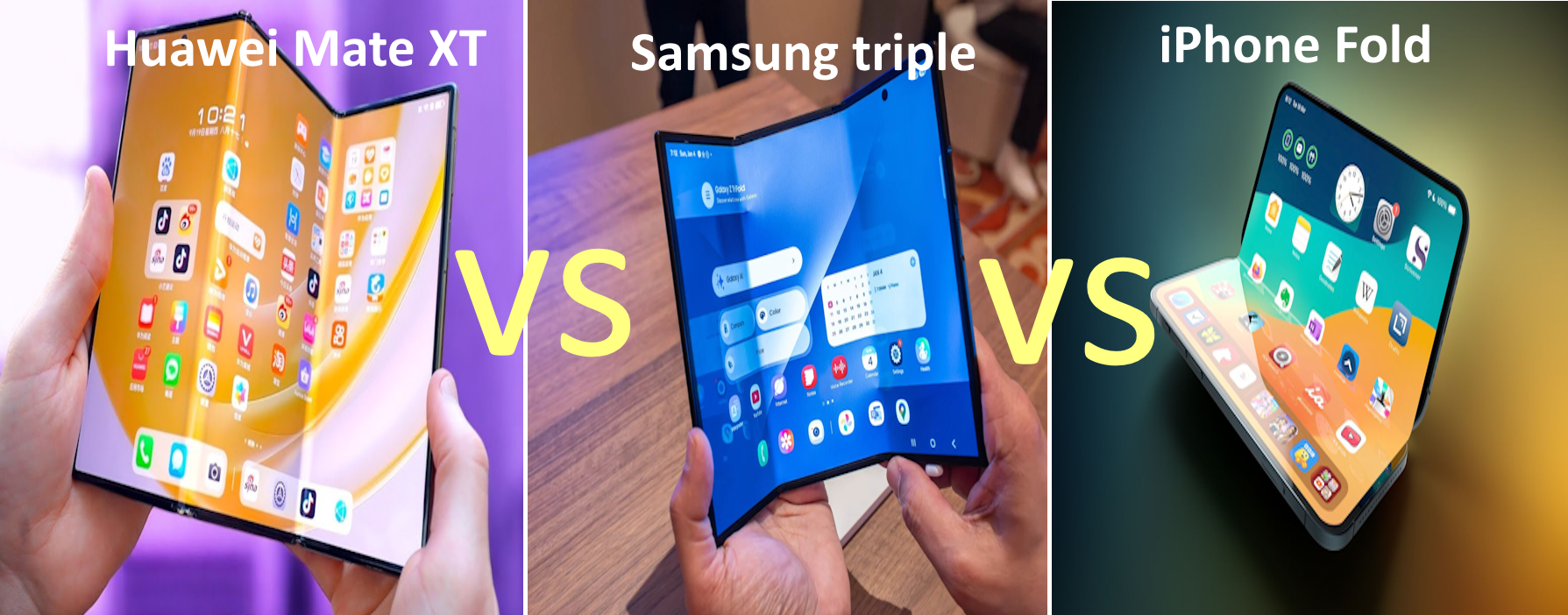
Table of Contents
- Introduction
- The Revolutionary Tri-Fold Technology: Breaking Engineering Barriers
- Display Technology Deep Dive: OLED Excellence Across Three Panels
- Hinge Mechanisms: The Engineering Marvel Behind Triple Folding
- Performance and Processing Power: Chipsets That Power the Future
- Camera Systems: Photography on Three-Panel Canvas
- Battery Life and Charging: Powering the Unthinkable
- Durability and Build Quality: Materials Science Meets Innovation
- Software Optimization: Making Three Screens Work As One
- Conclusion
- Frequently Asked Questions
Introduction
The smartphone industry reached a pivotal moment in late 2024 when Huawei shocked the world by unveiling the Mate XT Ultimate Design, the first commercially available tri-fold smartphone. What seemed like science fiction just years earlier suddenly became reality, transforming a 6.4-inch device into a stunning 10.2-inch tablet with two precise folds. This watershed moment sent shockwaves through Silicon Valley and Shenzhen alike, forcing every major manufacturer to reconsider their roadmaps and accelerate development of their own triple-folding devices. Samsung, the undisputed leader in foldable technology since launching the original Galaxy Fold in 2019, found itself in unfamiliar territory, playing catch-up to a Chinese competitor who had leapfrogged their dual-hinge designs. Apple, characteristically cautious and methodical in its approach to new form factors, watched from the sidelines as patent filings and supply chain rumors suggested the company was developing something extraordinary.
The emergence of tri-fold smartphones represents more than incremental innovation. These devices fundamentally challenge our assumptions about mobile computing, blurring the boundaries between phone, tablet, and laptop in ways that dual-hinge foldables could only hint at. When the Galaxy Z Fold first arrived, consumers marveled at transforming a phone into a small tablet, but the aspect ratio remained awkwardly square, limiting its appeal for media consumption and productivity tasks. Tri-fold devices solve this limitation through clever engineering that creates a 16:11 aspect ratio when fully unfolded, closely matching traditional tablet proportions while maintaining pocketability when closed. The implications extend far beyond screen size. These devices force software developers to rethink entire user interfaces, hardware engineers to solve unprecedented thermal and structural challenges, and manufacturing partners to develop entirely new production techniques for components that simply did not exist before.
While this video highlights the specific features of Samsung’s new 2026 tri-fold phone, there is still information about the comparison between the three phones that you may not be aware of yet :
The journey to commercial tri-fold smartphones took nearly fifteen years of research and development across multiple technology domains. Flexible OLED display technology, pioneered by Samsung Display and refined by competitors like BOE Technology Group in China, evolved from laboratory curiosities to mass-producible panels capable of withstanding hundreds of thousands of fold cycles. Hinge mechanisms progressed from simple friction hinges to sophisticated multi-cam systems incorporating dozens of precision-engineered components manufactured from ultra-high-strength steel typically reserved for aerospace applications. Battery technology advanced to allow thin, high-capacity cells that could fit within the stringent thickness constraints imposed by triple-folding designs. The convergence of these technologies in 2024 created the perfect storm that enabled Huawei to bring the Mate XT to market, earning over three million pre-orders in China within weeks of announcement and setting a new benchmark that competitors would struggle to match.

As we approach mid-2026, the landscape has evolved dramatically from those early days. Samsung reportedly neared completion of its own tri-fold device, leveraging its deep expertise in foldable displays and premium device manufacturing to create what insiders described as the most polished triple-folding experience yet conceived. The Korean giant faced immense pressure to respond decisively to Huawei’s challenge while maintaining the premium positioning that had made the Galaxy Z series a status symbol among early adopters and technology enthusiasts. Meanwhile, Apple’s traditionally secretive development process yielded tantalizing glimpses of what an iPhone Fold might offer, from leaked patent applications describing revolutionary hinge designs to supply chain reports suggesting collaboration with multiple display manufacturers to ensure quality and volume production capabilities. The prospect of Apple entering the foldable market created electric anticipation among consumers who had watched Android manufacturers iterate on flexible displays for half a decade.
The competitive dynamics between flagship smartphones from different manufacturers have intensified dramatically as artificial intelligence capabilities become key differentiators alongside hardware specifications. Recent comprehensive analyses comparing leading devices reveal how processing power, camera systems, and software optimization combine to create distinct user experiences that extend far beyond specification sheets. Understanding these competitive dynamics helps contextualize where tri-fold devices fit within the broader smartphone landscape and which manufacturers possess the technical capabilities and ecosystem advantages to succeed in this emerging category.
This comprehensive analysis examines the tri-fold revolution from every conceivable angle, dissecting the engineering challenges, comparing specifications and real-world performance, and ultimately determining which device represents the future of mobile computing. We evaluate display quality and durability, hinge reliability and user experience, processing power and thermal management, camera capabilities across different folding configurations, battery endurance under various usage patterns, software optimization and app ecosystem maturity, build quality and premium materials, pricing and value proposition, and long-term viability and support commitments. By the time you finish reading, you will understand not just which tri-fold smartphone leads the pack today, but which manufacturer has positioned itself to dominate this emerging category for years to come, shaping the trajectory of mobile technology well into the next decade.
The Revolutionary Tri-Fold Technology: Breaking Engineering Barriers
Triple-folding smartphones represent one of the most complex consumer electronics products ever brought to mass production, requiring breakthroughs across multiple engineering disciplines that seemed impossible just a decade ago. The fundamental challenge stems from creating a continuous display surface that can bend in two different locations simultaneously while maintaining visual fidelity, touch responsiveness, and structural integrity through hundreds of thousands of fold cycles. Traditional rigid displays, constructed from layers of glass, LCD or OLED panels, polarizers, and touchscreen digitizers, cannot bend beyond a few degrees without shattering or suffering permanent deformation. Flexible OLED technology solved this problem by replacing rigid glass substrates with ultra-thin polyimide films that can withstand extreme bending radii while maintaining the organic light-emitting diode layers that produce the vivid colors and deep blacks for which OLED displays are renowned.
The development path from concept to production spanned nearly two decades of intensive research. Engineers worldwide collaborated through international standards organizations to solve fundamental display challenges. The Institute of Electrical and Electronics Engineers published crucial research on flexible display standards that guided manufacturers in developing durable foldable screens. These technical specifications established testing methodologies for fold endurance and display performance that enabled the commercial viability of devices like the Mate XT and Samsung’s TriFold. Samsung Display began investigating flexible display technology in the early 2000s, recognizing that consumers increasingly demanded larger screens without proportionally larger devices. Early prototypes demonstrated the basic principles but suffered from reliability issues, manufacturing complexity, and prohibitive costs that made commercialization impractical. The breakthrough came with the development of low-temperature polycrystalline silicon thin-film transistors, which could be fabricated on flexible substrates while maintaining the switching speeds necessary for high-resolution displays with fast refresh rates. Simultaneously, materials scientists developed new encapsulation techniques using alternating layers of organic and inorganic materials to protect the moisture-sensitive OLED materials from degradation, extending display lifespans from mere hours to tens of thousands of hours suitable for multi-year consumer use.
Shop on AliExpress via link: wholesale-foldable-phone-case

Huawei’s Mate XT Ultimate Design showcased the current pinnacle of flexible display engineering. The device incorporated a 10.2-inch LTPO OLED panel manufactured by BOE Technology Group, featuring a resolution of 2232 by 3184 pixels that delivered stunning clarity whether viewed as a compact 6.4-inch smartphone, a mid-sized 7.9-inch mini-tablet, or a full-fledged 10.2-inch tablet replacement. The display utilized low-temperature polycrystalline oxide technology, an advanced variant of LTPS that offered even better electron mobility and lower power consumption, crucial for devices with such massive screen real estate. BOE engineers developed proprietary multi-directional flexible materials that were 25 percent more bend-resistant than previous generations, allowing the screen to resist compression when folded inward at one crease while simultaneously resisting tension when folded outward at the other crease. This bidirectional folding capability represented a quantum leap beyond dual-fold devices, which only needed to manage tension on a single fold line.
The hinge system constituted the second major engineering challenge, requiring mechanisms that could precisely control the folding motion while distributing stress evenly across the display and maintaining structural rigidity when the device was unfolded. Huawei’s Advanced Precision Hinge System incorporated two distinct hinge assemblies working in perfect synchronization. The inward-folding hinge utilized a sliding track mechanism that allowed the display to curve smoothly without creating sharp creases that would concentrate stress and lead to premature failure. The outward-folding hinge featured an even more intricate structure with multiple pivot points that enabled the reverse bend while protecting the display from damage. Both hinges employed ultra-high-strength steel with a tensile strength of 1900 megapascals, comparable to the steel used in rocket engines and high-performance automotive applications. The multi-drive technology calibrated 26 precision cams based on the force exerted during folding, creating an effortless motion that felt natural despite the mechanical complexity underneath.
Samsung’s approach to tri-fold technology, while not officially revealed as of early 2026, likely leveraged the company’s extensive experience with the Galaxy Z Fold series and its vertical integration across the supply chain. Samsung Display manufactured more flexible OLED panels than any other company globally, supplying not just Samsung’s own devices but also competitors including Apple, Google, and Chinese smartphone manufacturers. This manufacturing expertise translated into superior control over display quality, yield rates, and cost structures that competitors struggled to match. Industry analysts speculated that Samsung’s tri-fold would incorporate the company’s POL-LESS OLED technology, which eliminated traditional polarizer layers that added thickness and reduced flexibility. Removing the polarizer required sophisticated engineering to maintain display visibility under bright ambient lighting, but the resulting reduction in display thickness by approximately 0.1 millimeters provided crucial space for hinge mechanisms and other components in the constrained interior of a foldable device.
Apple’s entry into foldable technology appeared imminent based on patent filings and supply chain reports, though the company characteristically provided no official confirmation or timeline. Patents awarded to Apple by the United States Patent and Trademark Office described novel hinge designs that could eliminate visible creases entirely, a persistent complaint among foldable device users who found the ripples distracting when viewing content or running fingers across the display. One particularly intriguing patent detailed a self-retracting display mechanism that used drop detection sensors to automatically fold the device when falling, protecting the fragile display from impact with hard surfaces. Another patent described touch-sensitive surfaces throughout the device body, not just on the display, enabling new interaction paradigms that could differentiate an iPhone Fold from Android competitors. Apple’s legendary attention to detail and user experience suggested that when the company finally entered the foldable market, it would bring refinements and innovations that redefined consumer expectations for the entire category.
The materials science underlying tri-fold displays extended beyond the flexible substrate and OLED layers to encompass every component in the display stack. The touchscreen digitizer, typically a rigid layer of indium tin oxide on glass, required complete redesign using flexible transparent conductors that maintained touch sensitivity and accuracy even when bent to small radii. Protective layers that shield the delicate OLED materials from scratches and impacts needed to be simultaneously hard enough to resist damage yet flexible enough to bend without cracking. Huawei’s solution incorporated ultra-thin glass developed specifically for foldable applications, with a thickness of less than 0.1 millimeters compared to the 0.5 to 0.7 millimeters typical of rigid smartphone displays. This ultra-thin glass provided superior scratch resistance and premium feel compared to polymer alternatives while maintaining the flexibility necessary for tight bend radii. The lamination process that bonded all these layers together required extraordinary precision to avoid air gaps, contaminants, or misalignment that would cause visible defects or reliability issues.
Thermal management emerged as an unexpected challenge in tri-fold devices due to the concentration of heat-generating components in a very thin form factor. Regulatory oversight ensures thermal and electromagnetic safety standards remain paramount during device development. Federal agencies establish guidelines for radiofrequency exposure limits that all smartphones must meet before market approval. Understanding these safety requirements helps consumers appreciate the extensive testing tri-fold devices undergo, with heat dissipation systems and wireless transmission power carefully calibrated to protect users while maintaining performance across the device’s multiple folding configurations and usage modes. Modern smartphone processors, particularly high-performance chips like Apple’s A-series or Qualcomm’s Snapdragon flagship SoCs, generated substantial heat under heavy workloads like gaming, video recording, or AI processing. Traditional smartphones dissipated this heat through metal frames, large batteries that acted as heat sinks, and vapor chamber cooling systems. Tri-fold devices had less interior volume for these cooling solutions and needed to prevent hotspots that could damage the flexible display or become uncomfortable to hold. Huawei’s engineering team developed advanced thermal management using a combination of graphene sheets for lateral heat spreading, ultra-thin vapor chambers that fit within the device’s narrow profile, and intelligent software that throttled performance when necessary to maintain safe operating temperatures. Samsung and Apple likely employed similar approaches, leveraging their experience with thermal design in their respective tablet product lines.
The manufacturing complexity of tri-fold smartphones created significant challenges for volume production and cost control. Traditional rigid displays could be fabricated in large sheets, tested, and cut into individual panels with high yields and relatively low costs. Flexible displays required specialized equipment, clean room environments, and processes that resulted in lower yields, particularly in early production ramps when manufacturing parameters were still being optimized. The additional complexity of tri-fold devices, with two separate hinge assemblies, more sophisticated display controllers, and tighter tolerances on all components, further reduced yields and increased costs. Huawei’s Mate XT launched at prices starting around 2800 US dollars for the base configuration, reflecting these manufacturing realities. As production volumes increased and yields improved through learning curve effects, costs would gradually decline, but tri-fold devices would likely remain premium products commanding significant price premiums over conventional smartphones for the foreseeable future.
Display Technology Deep Dive: OLED Excellence Across Three Panels
The display represents the defining feature of tri-fold smartphones, transforming these devices from mere phones into versatile computing platforms that adapt to users’ needs throughout the day. Understanding the technology behind these displays requires examining not just the specifications visible on marketing materials but the underlying physics, materials science, and engineering that enable their remarkable capabilities. Organic light-emitting diode technology forms the foundation of all modern foldable displays, chosen over liquid crystal displays for fundamental reasons related to structure and flexibility. LCD displays require a rigid backlight panel, multiple optical films for polarization and color filtering, and liquid crystal materials sandwiched between glass layers, creating a thick, inflexible structure incompatible with folding. OLED displays emit light directly from organic compounds deposited in thin films on flexible substrates, eliminating the need for backlights and allowing thicknesses measured in tens of micrometers rather than millimeters.
Huawei’s Mate XT incorporated a 10.2-inch LTPO OLED display that represented the state of the art in flexible display technology as of late 2024. The acronym LTPO stands for low-temperature polycrystalline oxide, referring to the thin-film transistor technology used in the display’s backplane. These transistors act as switches that control individual pixels, turning them on and off millions of times per second to create moving images. LTPO technology offered significant advantages over previous LTPS implementations, particularly in power consumption. The oxide semiconductors used in LTPO transistors exhibited lower leakage currents, allowing the display to maintain its image while consuming minimal power, crucial for battery life in devices with such expansive screens. The low-temperature processing aspect referred to fabrication temperatures below 500 degrees Celsius, enabling deposition on flexible polyimide substrates that would deform or decompose at the higher temperatures required for traditional transistor manufacturing.
The pixel density of Huawei’s display reached impressive levels despite the large screen size. With 2232 by 3184 pixels spread across 10.2 diagonal inches, the display achieved approximately 360 pixels per inch, slightly below the 400-plus PPI densities common in premium smartphones but well above the threshold where individual pixels become indistinguishable to the human eye at typical viewing distances. The resolution scaled intelligently across the three display modes, presenting 1008 by 2232 pixels in phone mode, 2048 by 2232 in dual-screen mode, and the full resolution when completely unfolded. This adaptive resolution approach maintained pixel density consistency across different form factors while reducing power consumption by only illuminating the active portion of the display. The 16:11 aspect ratio when fully unfolded represented a deliberate choice optimized for media consumption and productivity tasks, closely matching the proportions of tablets and laptops rather than the awkwardly square aspect ratios that plagued earlier foldable devices.
Color accuracy and brightness capabilities separated premium displays from mediocre ones, determining whether content appeared vibrant and true-to-life or washed out and disappointing. While specific measurements for the Mate XT’s display remained proprietary, flexible OLED technology inherently offered excellent color gamut coverage, typically exceeding 100 percent of the DCI-P3 color space used in digital cinema and modern content production. The organic materials used in OLED pixels could be tuned to emit very pure red, green, and blue light, enabling display of a wider range of colors than possible with LED backlights and color filters in LCD technology. Academic research institutions publish breakthrough studies on organic light-emitting diode materials that advance display technology. Major scientific journals document research into novel OLED compounds, encapsulation techniques, and flexible substrate materials that enable commercial foldable displays. These peer-reviewed publications establish the scientific foundations manufacturers leverage when developing tri-fold smartphones, with university researchers often collaborating directly with industry partners to transition laboratory discoveries into mass-production technologies. Peak brightness represented a persistent challenge for OLED displays, particularly flexible variants where thickness constraints limited the amount of organic emissive material that could be deposited. The Mate XT likely achieved peak brightness between 1200 and 1500 nits in high brightness mode, sufficient for outdoor visibility under direct sunlight but below the 2000-plus nits achieved by the latest flagship smartphones with rigid displays.
Refresh rate technology dramatically impacted the perceived smoothness and responsiveness of displays, particularly important for devices like tri-fold smartphones that users might employ for gaming or creative applications requiring precise input. The Mate XT’s 90Hz refresh rate positioned it as a capable but not cutting-edge performer in this regard. At 90Hz, the display updated its image 90 times per second, providing noticeably smoother scrolling and animation compared to traditional 60Hz displays but falling short of the 120Hz or even 144Hz refresh rates offered by flagship gaming phones and high-end tablets. The lower refresh rate likely resulted from engineering tradeoffs, as higher refresh rates increased power consumption substantially, potentially depleting the battery unacceptably fast when using the full 10.2-inch display. Additionally, driving 90 updates per second across millions of pixels required significant processing power in the display controller, generating heat that needed dissipation in the device’s constrained internal volume.
Samsung’s anticipated tri-fold device would almost certainly leverage the company’s leadership in display technology to deliver specifications exceeding the Mate XT in key areas. Samsung Display developed the first flexible AMOLED panels for smartphones and continuously pushed boundaries with innovations like the POL-LESS technology mentioned earlier. The company’s latest Eco² OLED displays, featured in the Galaxy Z Fold 6, demonstrated 25 percent improved power efficiency compared to previous generations while maintaining or improving brightness and color accuracy. Applying these advances to a tri-fold form factor could result in a device offering 120Hz adaptive refresh rates, automatically scaling between 1Hz for static content like reading to 120Hz for smooth gaming, dramatically improving battery life without sacrificing responsiveness. Samsung’s vertical integration allowed tight collaboration between display engineers and system designers, optimizing every aspect of the display stack for performance, power consumption, and durability.
Apple’s approach to display technology, when the company eventually launched its foldable iPhone, would likely emphasize color accuracy, true-tone adaptation, and ProMotion variable refresh rate technology that had become hallmarks of premium Apple displays. The company maintained some of the most stringent display quality standards in the industry, individually calibrating devices during manufacturing to ensure color accuracy and uniformity. An iPhone Fold display would presumably support the P3 wide color gamut, True Tone automatic white balance adjustment based on ambient lighting conditions, and ProMotion refresh rates from 1Hz to 120Hz, matching the capabilities of current iPad Pro models. Apple’s displays traditionally achieved excellent maximum brightness levels, often leading the industry in peak outdoor brightness measurements, suggesting that an iPhone Fold could overcome the brightness limitations common in flexible displays through advanced display driver technology and thermal management.
Crease visibility represented perhaps the most persistent complaint among foldable device users, with the ripple where the display bent remaining visible and tactilely noticeable even in the latest generation devices. Tri-fold smartphones faced an even greater challenge, incorporating two separate creases that users might find distracting when viewing media or running their fingers across the screen during typing or navigation. Huawei’s engineering team minimized crease visibility through several techniques. The multi-directional flexible materials used in the display construction distributed stress more evenly across the fold line, reducing the tendency to form sharp creases. The hinge mechanism controlled the bend radius precisely, ensuring consistent folding geometry that prevented stress concentration. The ultra-thin glass surface layer, while only 0.1 millimeters thick, provided enough rigidity to smooth out minor surface irregularities. Despite these efforts, Huawei acknowledged in product documentation that slight creases were normal and to be expected, a candid admission that reflected the current limitations of flexible display technology.

Future advancements in display technology promised to further reduce or potentially eliminate visible creases. Research teams at universities and corporate laboratories explored alternative display structures using stretchable rather than merely flexible materials, allowing the display to deform in three dimensions rather than just bending along a single axis. These stretchable displays could potentially conform to curved surfaces without forming creases, though significant technical challenges remained before such technology reached commercial viability. In the nearer term, refinements to existing OLED technology, improved encapsulation techniques, and more sophisticated hinge mechanisms would gradually minimize crease visibility. Samsung’s rumored tri-fold design reportedly incorporated novel hinge geometry that maintained a larger bend radius than competitors, potentially resulting in shallower, less noticeable creases. Apple’s patents described active display retraction systems that could adjust tension across the display surface during folding, optimizing the crease profile for minimal visibility.
Hinge Mechanisms: The Engineering Marvel Behind Triple Folding
The hinge mechanism separates exceptional foldable devices from mediocre ones, determining not just durability and reliability but the entire user experience every time someone opens or closes their device. In tri-fold smartphones, this challenge multiplies exponentially, requiring two independent hinge assemblies that must work in perfect coordination while applying opposing bending forces to a single continuous display. The engineering complexity involved in these mechanisms rivals that of precision watchmaking or aerospace applications, incorporating dozens or even hundreds of individual components machined to tolerances measured in micrometers and assembled with extraordinary precision. Understanding hinge technology requires examining the mechanical principles, materials science, and manufacturing techniques that enable these remarkable devices to withstand hundreds of thousands of fold cycles while maintaining smooth operation and structural integrity.
Huawei’s Advanced Precision Hinge System in the Mate XT represented the culmination of years of research and development in mechanical engineering specifically for foldable devices. The system incorporated two distinct hinge assemblies, each optimized for its specific folding direction. The inward-folding hinge utilized a sliding track mechanism that allowed precise control over the display curvature as it folded. This design distributed stress across a larger area of the display rather than concentrating it at a single point, reducing the peak strain that the flexible OLED materials experienced during each fold cycle. The track incorporated multiple bearing surfaces with specialized coatings to minimize friction while maintaining precise alignment, ensuring smooth operation through countless open-close cycles. The outward-folding hinge presented even greater challenges, as the display needed to bend in the opposite direction while maintaining the same precision and reliability. Huawei’s engineers developed a complex linkage system with multiple pivot points that carefully controlled the bend radius and display tension throughout the folding motion.
The multi-drive technology that Huawei highlighted in marketing materials represented a sophisticated control system managing the interaction between the two hinges. The system incorporated 26 precision cams, small mechanical components with carefully profiled surfaces that converted rotational motion into precise linear displacement. These cams calibrated the force required to fold the device based on the current position and the force applied by the user, creating a consistent feel whether opening or closing, regardless of how fast or slow the user moved. The result felt natural and effortless despite the mechanical complexity underneath, a critical factor in user acceptance. Users encountering excessive resistance or inconsistent feel would quickly tire of opening and closing their device, relegating it to single-mode use and negating the primary value proposition of a foldable form factor.
Materials selection for hinge components proved crucial to achieving the required combination of strength, durability, and compact size. Huawei specified ultra-high-strength steel with a tensile strength of 1900 megapascals for the hinge’s core structural components. To put this specification in perspective, typical automotive structural steel might achieve tensile strengths around 500 to 800 megapascals, while even high-strength variants used in critical applications like engine components or suspension parts rarely exceeded 1500 megapascals. The 1900 megapascal steel used in the Mate XT matched materials typically reserved for aerospace applications like rocket engine components or high-performance fasteners. This extreme strength allowed hinge components to be thinner and lighter while maintaining the structural rigidity necessary to support the large display and resist deformation during normal use. The steel underwent specialized heat treatment processes to achieve its remarkable properties, then precision machining to create the complex geometries required for the cam profiles, bearing surfaces, and linkage pivots.
Samsung’s hinge technology, developed through six generations of Galaxy Z Fold devices and four generations of Galaxy Z Flip clamshell foldables, represented the most mature and refined implementation in the industry. The company invested heavily in hinge research, filing hundreds of patents covering everything from fundamental mechanical principles to minute details like lubricant composition and bearing surface treatments. Samsung’s experience showed in the Galaxy Z Fold 6’s hideaway hinge design, which created a waterdrop-shaped fold rather than a sharp crease, reducing stress on the display and minimizing crease visibility. The hinge incorporated a sweeping brush mechanism that prevented dust and debris from entering the hinge assembly, addressing a common durability concern in earlier foldable devices where particulates could damage the display or jam the hinge mechanism. Samsung’s tri-fold design likely extended these innovations to dual-hinge architecture, potentially incorporating even more sophisticated dust protection and stress distribution mechanisms.
Apple’s hinge patents suggested radically different approaches compared to the multi-cam systems and sliding tracks employed by Huawei and the hideaway designs perfected by Samsung. Patent databases reveal the intense innovation race among smartphone manufacturers developing foldable technologies. The United States Patent and Trademark Office maintains comprehensive records of thousands of foldable-related patent applications, documenting breakthrough inventions in hinge mechanisms, flexible display materials, and protective coatings. These patent filings demonstrate how manufacturers invest billions in research while building intellectual property portfolios that protect their innovations and establish competitive advantages in the rapidly evolving foldable smartphone market. One particularly intriguing patent described a hinge using shape memory alloys, materials that could remember specific geometries and automatically return to them when heated. This technology could enable a hinge that remained perfectly flat when the device was open but automatically initiated the folding motion when users closed the device, providing assisted folding that reduced the effort required while protecting the display from excessive bending forces. Another patent detailed a modular hinge design with easily replaceable components, addressing concerns about long-term serviceability and repair costs that had plagued existing foldable devices. Apple’s characteristic focus on user experience and product longevity suggested that these patents represented serious engineering efforts rather than defensive patent filings, indicating real innovation when the company entered the foldable market.
Durability testing for hinge mechanisms required simulating years of real-world use in compressed timeframes, subjecting devices to hundreds of thousands of open-close cycles under controlled conditions. Manufacturers typically designed their hinges to withstand at least 200,000 fold cycles, representing approximately five years of use if someone opened and closed their device 100 times daily. The testing regimen went beyond simple repetitive folding, incorporating variations in folding speed, applied force, temperature extremes from freezing to hot summer days, humidity ranging from desert-dry to tropical, and even vibration and shock to simulate drops or being jostled in pockets and bags. Huawei’s testing facilities in Shenzhen subjected Mate XT prototypes to these grueling conditions, identifying weak points and failure modes that required design refinements before mass production. The company likely discovered numerous issues during development that never reached consumers, from metal fatigue in hinge components to adhesive failures in display lamination to lubricant breakdown at extreme temperatures.
The relationship between hinge design and display crease characteristics proved more complex than casual observers might assume. While the display materials and construction played the primary role in determining crease visibility, the hinge mechanism influenced this in subtle but important ways. A hinge that maintained a larger bend radius during folding subjected the display to less stress, reducing the tendency to form permanent creases over time. Consistent folding geometry, achieved through precise cam profiles and bearing alignments, ensured that the display bent in the same location with the same curvature during every fold cycle, preventing the formation of secondary creases or irregular stress patterns. The speed at which the hinge allowed folding also mattered, as too-rapid motion could exceed the viscoelastic response rate of the flexible display materials, causing micro-damage that accumulated into visible defects over thousands of cycles. These subtle interactions between hinge mechanics and display behavior required careful optimization through extensive testing and iteration.
Performance and Processing Power: Chipsets That Power the Future
The processor represents the brain of any smartphone, determining everything from basic responsiveness and app launch speeds to advanced capabilities like computational photography, artificial intelligence features, and extended reality applications. In tri-fold smartphones, processing requirements intensified dramatically due to the massive displays, sophisticated multitasking interfaces, and power management challenges inherent in these devices. Understanding the processors powering these devices requires examining not just their theoretical specifications but real-world performance across the varied usage scenarios that tri-fold form factors enable. The competitive landscape in mobile processors remained intensely dynamic heading into 2026, with multiple architectures vying for supremacy through different combinations of performance, efficiency, and specialized capabilities.
Huawei’s Mate XT likely incorporated the Kirin 9010 processor, though the company refrained from official confirmation for strategic reasons related to ongoing geopolitical tensions affecting its supply chain. The Kirin 9010 represented an evolutionary update to the Kirin 9000 series that powered Huawei’s previous flagship devices, fabricated using a seven-nanometer manufacturing process that trailed the cutting-edge three-nanometer and four-nanometer processes employed by competitors. This process disadvantage imposed significant limitations on performance and efficiency, as smaller transistors generally operated faster while consuming less power, a crucial consideration in devices with large displays drawing substantial current. Despite these limitations, Huawei’s engineering teams optimized the Kirin 9010 architecture extensively, incorporating advanced features like dedicated neural processing units for AI workloads and sophisticated power management to extract maximum performance within the thermal envelope of the Mate XT’s thin form factor.
The seven-nanometer process technology used in the Kirin 9010 represented a remarkable achievement given the export restrictions limiting Huawei’s access to advanced semiconductor manufacturing equipment. The chip likely came from Semiconductor Manufacturing International Corporation, China’s largest foundry, which developed seven-nanometer capabilities despite lacking access to extreme ultraviolet lithography systems that competitors like Taiwan Semiconductor Manufacturing Company and Samsung Foundry employed for more advanced nodes. The resulting chips exhibited lower yields and potentially reduced reliability compared to those manufactured on cutting-edge processes, though for most consumer use cases these differences would prove imperceptible. The Kirin 9010’s CPU core configuration probably featured a mix of high-performance cores based on ARM’s Cortex architecture alongside more efficient cores for background tasks, following the big.LITTLE heterogeneous computing paradigm that had become standard across the mobile industry.
Samsung’s tri-fold device would almost certainly feature either the company’s own Exynos processor or Qualcomm’s flagship Snapdragon chip, depending on regional market dynamics and strategic relationships between the two companies. The Snapdragon 8 Gen 4, announced in late 2025, represented Qualcomm’s most advanced mobile processor, fabricated using TSMC’s three-nanometer process technology that packed dramatically more transistors into the same silicon area compared to seven-nanometer processes. This density advantage translated directly into superior performance and efficiency, allowing the Snapdragon 8 Gen 4 to deliver sustained peak performance without thermal throttling while maintaining battery life competitive with less powerful chips. The processor incorporated Qualcomm’s latest Adreno GPU architecture, crucial for driving the massive displays in tri-fold devices at high frame rates, and an upgraded Hexagon AI accelerator capable of processing trillion of operations per second for on-device machine learning workloads.
Apple’s anticipated iPhone Fold would utilize the company’s custom-designed A-series or potentially M-series processors, which consistently demonstrated performance leadership across both synthetic benchmarks and real-world usage scenarios. The A18 chip in current iPhone flagships, manufactured using TSMC’s second-generation three-nanometer process, achieved remarkable performance-per-watt efficiency through Apple’s vertical integration between hardware and software. Apple’s design teams optimized processor architecture, operating system kernel, and application frameworks in concert, extracting performance that competitors struggled to match despite similar or superior specifications on paper. An iPhone Fold processor would likely incorporate even more aggressive performance scaling, with multiple high-performance cores capable of sustaining maximum frequencies for extended periods to drive productivity applications across the massive unfolded display while maintaining the cool, quiet operation Apple users expected.
Graphics processing capabilities assumed heightened importance in tri-fold devices given their large, high-resolution displays and potential use cases spanning from gaming to professional creative applications. The Mate XT’s integrated graphics processor, part of the Kirin 9010 system-on-chip, handled display driving duties and 3D graphics rendering, though specific performance characteristics remained undisclosed. Integrated GPUs in mobile processors had advanced tremendously in recent years, approaching the capabilities of dedicated graphics cards from earlier PC gaming systems, but still operated within strict thermal and power constraints that limited sustained performance compared to actively cooled gaming laptops or desktop systems. The seven-nanometer process disadvantage hampered the Mate XT’s graphics performance relative to competitors, as smaller transistors allowed higher clock speeds and more compute units within the same thermal budget.
Qualcomm’s Adreno GPU architecture in the Snapdragon 8 Gen 4 represented one of the most powerful mobile graphics processors available, incorporating hardware-accelerated ray tracing for realistic lighting in games and support for advanced features like variable rate shading that improved performance by selectively reducing rendering quality in areas of the screen where users were unlikely to notice. These capabilities positioned Samsung’s tri-fold device as a credible gaming platform, capable of running demanding titles at high settings on the massive unfolded display while maintaining smooth frame rates. The GPU also accelerated video encoding and decoding, crucial for content creators who might use the device’s large screen for video editing applications. Hardware acceleration for AV1 video codec support ensured efficient streaming and playback of ultra-high-definition content from services adopting this next-generation compression standard.
Apple’s integrated GPU design, typically incorporating more graphics cores than CPU cores in flagship A-series chips, delivered exceptional graphics performance while maintaining the efficiency necessary for all-day battery life. The company’s Metal graphics API provided developers with low-level access to GPU capabilities, enabling optimization unmatched by cross-platform graphics libraries. Games and creative applications optimized for Metal demonstrated performance approaching or exceeding dedicated gaming devices despite running on battery-powered mobile hardware. An iPhone Fold would likely extend this GPU advantage to an even larger display, potentially supporting features like external display connectivity that could transform the device into a desktop-class workstation when paired with keyboard, mouse, and monitor accessories. Apple’s focus on professional creative workflows suggested that an iPhone Fold might target content creators as a primary audience, with hardware and software optimization geared toward photography, videography, and graphic design applications.
Memory and storage configurations represented critical factors in overall system performance, particularly for devices intended to run multiple applications simultaneously across different display panels. The Mate XT offered configurations starting at 16 gigabytes of RAM with 256 gigabytes of storage, extending to options with 1 terabyte of storage for users requiring expansive local file storage. Sixteen gigabytes of RAM positioned the device competitively against flagship smartphones while providing headroom for sophisticated multitasking scenarios enabled by the triple-panel form factor. The storage utilized UFS 4.0 technology, offering sequential read speeds exceeding 4 gigabytes per second that eliminated waiting for applications to load or large files to open. Fast storage proved particularly important when capturing high-resolution photos and videos, as slower storage could cause the camera application to stutter or drop frames while writing data.
Samsung’s tri-fold would likely offer similar or superior memory and storage specifications, leveraging the company’s position as one of the world’s largest memory manufacturers to source components at favorable costs while ensuring latest-generation technology. The company pioneered UFS 4.0 storage in mobile devices and would naturally incorporate this in its flagship tri-fold product, potentially even previewing next-generation UFS 4.1 technology if timing aligned. Samsung’s vertical integration advantages extended to memory selection, with the company producing its own LPDDR5X RAM modules optimized for mobile power envelopes while delivering speeds approaching desktop-class memory performance. This integration allowed Samsung to tune memory controllers, system caches, and operating system memory management for optimal performance across the varied usage patterns that tri-fold devices enable.
Apple’s approach to memory and storage differed philosophically from competitors, with the company generally offering less RAM than Android flagships while achieving similar or better real-world performance through tighter hardware-software integration. The iOS operating system required less memory for background processes compared to Android, allowing more RAM allocation to active applications. Apple’s custom storage controllers and filesystem optimizations extracted maximum performance from whatever storage capacity users selected, though the company’s storage upgrade pricing structure typically made higher-capacity models substantially more expensive than competitors. An iPhone Fold would likely start at a base storage capacity lower than the Mate XT or Samsung’s offering, potentially 128 or 256 gigabytes, with expensive upgrade options scaling to 1 terabyte or beyond for professional users requiring maximum capacity.
Camera Systems: Photography on Three-Panel Canvas
Camera capabilities had evolved from simple smartphone features into primary marketing differentiators and legitimate replacements for dedicated cameras for many users, The debate over whether smartphones have truly replaced traditional cameras intensified as computational photography advanced to levels unimaginable just years ago. Professional photographers conducted extensive real-world testing comparing flagship smartphone cameras against dedicated photography equipment across various scenarios from portraiture to landscape to low-light performance. These comprehensive evaluations revealed nuanced advantages and limitations of each approach, helping consumers understand when smartphone cameras suffice and when dedicated equipment remains essential. The findings particularly matter for tri-fold devices where large displays transform photography workflows through enhanced viewfinder experiences and comprehensive editing capabilities. making the camera system a critical component in any flagship device evaluation. Tri-fold smartphones presented unique opportunities and challenges for camera implementation, from the physical placement of camera modules in the constrained body to software optimization for the varied form factors these devices assumed. Understanding these camera systems requires examining not just megapixel counts and optical specifications but the complete imaging pipeline from light entering the lens to final processed images displayed on the stunning OLED screens or shared with friends and followers across social media platforms.
Huawei’s Mate XT incorporated a triple rear camera array that reflected the company’s long-standing emphasis on computational photography and partnership with legendary camera manufacturer Leica. The primary camera featured a 50-megapixel sensor with a variable aperture mechanism that could adjust between wider and narrower openings to optimize image quality across different lighting conditions and creative intent. Variable aperture represented a relatively rare feature in smartphones, requiring additional mechanical complexity but providing genuine photographic benefits by allowing wider apertures for shallow depth-of-field effects in portraits while stopping down for increased sharpness in landscape photography. The sensor behind this variable aperture likely measured approximately one inch in diagonal dimension, substantially larger than the tiny sensors in most smartphones and approaching the size found in premium compact cameras. Larger sensors captured more light, enabling better low-light performance and providing more creative control over depth of field.
The telephoto camera in the Mate XT delivered 5.5 times optical magnification compared to the primary camera, implemented through a periscope lens arrangement that folded the optical path ninety degrees using a prism, allowing a long focal length lens to fit within the device’s thin profile. This magnification positioned the camera between traditional wide-angle smartphone cameras and the extreme telephoto zoom lenses available on competing devices pushing toward ten-times or even higher magnification. The twelve-megapixel resolution represented a practical compromise, providing sufficient detail for most uses while allowing larger individual pixels on the sensor for improved light sensitivity compared to cramming more megapixels into the same sensor area. The telephoto camera incorporated optical image stabilization, using tiny motors to physically shift lens elements or the sensor itself to counteract hand shake during exposure, crucial for maintaining sharp images at longer focal lengths where even slight movement caused noticeable blur.
The ultra-wide camera complemented the primary and telephoto cameras by capturing expansive scenes that couldn’t fit within the primary camera’s field of view, essential for architectural photography, group shots, and dramatic landscapes. The twelve-megapixel resolution matched the telephoto camera, and the optics likely covered a field of view approaching 120 degrees diagonally, allowing users to capture dramatically wide perspectives impossible with conventional lenses. Ultra-wide cameras faced unique challenges in maintaining image quality, as the extreme field of view stretched the limits of optical design, inevitably introducing distortion, vignetting where image brightness decreased toward the edges, and reduced sharpness in the corners compared to the center. Huawei’s computational photography algorithms corrected many of these optical limitations, applying geometric distortion correction, vignetting compensation, and multi-frame processing to deliver clean, sharp images across the entire frame.
The front-facing camera in the Mate XT delivered eight megapixels of resolution, sufficient for video calls and selfies though noticeably lower than the rear camera specifications. The reduced resolution reflected different usage priorities for front cameras, where users rarely printed images at large sizes or cropped extensively, making the extra pixels less valuable compared to rear cameras documenting important moments and scenes. The front camera’s position in tri-fold devices presented interesting design challenges, as manufacturers needed to ensure the camera remained accessible in all folding configurations while avoiding awkward placement that might feel unnatural during video calls or selfie capture. Huawei’s implementation likely placed the front camera in a location that remained exposed regardless of how the device was folded, ensuring consistent availability across the three distinct form factors.
Shop on AliExpress via link: wholesale-phone-camera-accessories

Samsung’s camera philosophy, developed through years of Galaxy S series flagships and refined in the Z Fold line, emphasized computational photography algorithms that extracted maximum quality from hardware through sophisticated image processing. The company’s ISOCELL sensor division produced some of the industry’s most advanced camera sensors, incorporating technologies like dual-pixel autofocus where every pixel on the sensor contributed to focusing calculations, dramatically improving focus speed and accuracy compared to traditional contrast-detection or phase-detection autofocus systems. Samsung’s tri-fold device would almost certainly leverage these sensor technologies alongside the company’s advanced image signal processors that handled the computationally intensive tasks of noise reduction, dynamic range optimization, and detail enhancement that separated great smartphone photos from merely good ones.
The Galaxy camera experience emphasized versatility and ease of use, with sophisticated scene detection algorithms automatically identifying what users were photographing and optimizing camera settings accordingly, from detecting food and enhancing color saturation to recognizing text documents and boosting contrast for improved legibility. Samsung’s single-take mode, where the camera captured multiple photos and short videos simultaneously with various processing styles and effects applied, resonated with users who wanted creative options without manual intervention. A tri-fold Galaxy device would likely extend these features while adding form-factor-specific capabilities like using the massive unfolded display as a viewfinder for group shots where everyone could see the frame, or prop modes where the device stood independently for hands-free photography and video recording.
Apple’s approach to smartphone cameras, when the company eventually entered the foldable market with an iPhone Fold, would almost certainly emphasize computational photography techniques that had made iPhone cameras industry benchmarks despite sometimes modest specifications compared to Android competitors. The company’s image signal processor, a custom-designed component integrated into every A-series chip, handled extraordinarily complex calculations on every photo captured, from multi-frame noise reduction that aligned and merged multiple exposures to extract more detail while suppressing noise, to neural network-based scene segmentation that applied different processing algorithms to human subjects versus backgrounds for optimal results across the entire image.
The iPhone’s Deep Fusion technology represented years of research into applying machine learning to photography, analyzing photos at the pixel level to optimize texture, detail, and noise characteristics differently in different parts of the image based on what the algorithm determined would produce the most pleasing results. Smart HDR combined multiple exposures captured in rapid succession, selecting the best elements from each frame to build a final image with extended dynamic range that retained detail in both highlights and shadows that would be clipped in a single exposure. ProRAW mode provided professional photographers with unprecedented control, capturing 12-bit color depth and preserving RAW sensor data while still applying Apple’s computational photography pipeline, allowing extensive post-processing flexibility while benefiting from the sophisticated processing that made iPhone photos exceptional straight out of the camera.
Video capabilities assumed equal importance to still photography for many users, particularly content creators who might use tri-fold devices as portable video production studios. The Mate XT supported 4K video recording at standard frame rates, likely offering options for 30 or 60 frames per second depending on desired motion characteristics and file size considerations. Electronic image stabilization complemented the optical stabilization in the telephoto camera, using sensor cropping and digital processing to smooth out camera shake during handheld recording, crucial for producing professional-looking footage without bulky gimbal stabilizers or tripods. The large unfolded display transformed the device into an excellent viewing monitor during video capture, providing a substantial screen for framing shots and monitoring exposure, focus, and other technical parameters.
Samsung’s video capabilities in the Galaxy line emphasized features appealing to both casual users and semi-professional creators, from straightforward 4K recording with excellent stabilization to specialized modes like Super Slow-Mo that captured brief moments at extremely high frame rates, then played them back in dramatic slow motion. Director’s View simultaneously recorded from multiple cameras, allowing users to switch between perspectives during capture or providing editing options to select the best angles in post-production. 8K video recording, available in recent Galaxy flagships, captured ultra-high-resolution footage exceeding most users’ display capabilities but providing cropping flexibility and future-proofing as 8K displays became more common. These video features would naturally extend to a tri-fold Galaxy device, potentially with enhancements leveraging the large display for professional-style monitoring and control interfaces.
Apple’s video capabilities, particularly the iPhone Pro line, attracted professional videographers and filmmakers who discovered they could capture cinema-quality footage on devices that fit in their pockets. ProRes video recording, supporting professional video codecs with minimal compression that preserved maximum quality for editing, transformed iPhones into legitimate production cameras for documentaries, commercials, and even feature films. Cinematic mode used machine learning to automatically rack focus between subjects, mimicking the look of professionally captured video with dedicated cinema cameras and skilled focus pullers. Log recording options preserved maximum dynamic range for extensive color grading in post-production, essential for matching footage from iPhones with traditional cinema cameras in professional productions. An iPhone Fold would likely offer these same professional video features while adding capabilities enabled by the large display, like comprehensive monitoring tools showing waveforms, histograms, and focus peaking that professional videographers expected.
Battery Life and Charging: Powering the Unthinkable
Battery technology represented perhaps the most challenging constraint in smartphone design, particularly for tri-fold devices where massive displays consumed substantial power while the thin form factor limited battery capacity. The physics of lithium-ion batteries, which had powered portable electronics for decades, imposed fundamental limitations on energy density that incremental improvements only slowly overcame. Understanding battery performance in tri-fold smartphones required examining not just the milliamp-hour capacity visible on specification sheets but the complete power management ecosystem encompassing processor efficiency, display optimization, charging technology, and sophisticated software algorithms that squeezed every possible hour of runtime from the limited energy storage available. The battery performance difference between competing devices often determined real-world satisfaction more than any other specification, as even the most impressive displays and cameras became useless when the device died mid-afternoon.
Huawei’s Mate XT incorporated a substantial 5600-milliamp-hour battery, one of the largest capacities available in any smartphone and particularly impressive considering the device’s thin profile when fully unfolded to just 3.6 millimeters. This capacity eclipsed most conventional smartphones by significant margins, reflecting both the power requirements of the massive display and Huawei’s expertise in battery technology developed through years of research into power management for its telecommunications infrastructure equipment. The company specified that the battery utilized silicon anode technology, representing a significant advancement over conventional graphite anodes used in most lithium-ion batteries. Silicon anodes theoretically offered nearly ten times the energy storage capacity of graphite by weight, though practical implementations achieving even double or triple the capacity represented substantial achievements due to silicon’s tendency to expand and contract dramatically during charge and discharge cycles, causing mechanical degradation that limited battery lifespan.
Federal research institutions advance battery technology through fundamental materials science research. The Department of Energy supports breakthrough battery innovations through national laboratory programs, developing next-generation energy storage solutions that enable devices like tri-fold smartphones. These government-funded research initiatives establish the scientific foundations that commercial manufacturers build upon when creating advanced silicon anode batteries and high-density power systems.
The 1.9-millimeter battery thickness Huawei achieved represented remarkable engineering, as most smartphone batteries measured 3 to 4 millimeters thick, immediately consuming substantial space in device interiors. Reducing battery thickness required advances in electrode manufacturing and separator materials, along with sophisticated cell design that maintained structural integrity and safety despite the reduced dimensions. Thinner batteries generally exhibited lower energy density than thicker ones due to the fixed overhead from separators, current collectors, and packaging that didn’t scale proportionally with reduced thickness, making Huawei’s achievement even more impressive. The company likely divided the battery into multiple cells distributed across different sections of the device to maintain the thin profile while achieving the 5600 milliamp-hour total capacity, a common approach in foldable devices where single large cells became impractical.
Charging speed represented a critical factor in user experience, as even large batteries became less constraining if users could quickly replenish them during brief opportunities throughout the day. Huawei supported 66-watt wired fast charging through the USB-C port, capable of replenishing the 5600-milliamp-hour battery from empty to approximately 70 percent in 30 minutes based on typical charging curve characteristics. The physics of lithium-ion batteries allowed rapid charging only during the initial portion of the charging cycle, as the constant-current phase where maximum power delivery occurred typically ended around 70 to 80 percent capacity, transitioning to a constant-voltage phase where charging power decreased to protect battery longevity. The final 20 to 30 percent of charging took disproportionately longer, meaning users who needed quick top-ups benefited most from fast charging while overnight charging to 100 percent showed little advantage beyond 30-watt or even 20-watt charging speeds.
Wireless charging capabilities offered convenience despite inherent efficiency losses compared to wired charging, with the Mate XT supporting 50-watt wireless fast charging that approached wired charging speeds available just a few years earlier. Wireless charging worked through magnetic induction, with coils in the charging pad generating alternating magnetic fields that induced current in receiver coils in the device, ultimately converting this to direct current for battery charging. The process generated substantial heat from resistance losses in the coils and conversion inefficiencies, requiring sophisticated thermal management to avoid damaging the battery or device components. Fifty-watt wireless charging represented cutting-edge capability, substantially faster than the 15-watt maximum supported by most wireless charging standards, though achieving these speeds required Huawei-branded charging accessories with cooling fans and high-capacity power supplies.
Reverse charging features, where smartphones could share their battery power with other devices, had evolved from novelty features to genuinely useful capabilities for users carrying multiple gadgets. The Mate XT offered both wired and wireless reverse charging, allowing the device to charge accessories like wireless earbuds or smartwatches without requiring separate charging cables or pads. The wired reverse charging supported 5 watts while wireless reverse charging delivered 7.5 watts, modest power levels compared to the device’s own charging capabilities but sufficient for slowly replenishing smaller accessories. These features proved particularly valuable for travelers who appreciated reducing the number of charging cables and adapters they needed to pack, though they naturally decreased the phone’s battery level proportionally to the energy transferred to other devices.
Samsung’s battery technology, developed through its position as one of the world’s largest battery manufacturers supplying everything from smartphones to electric vehicles, would undoubtedly feature prominently in the company’s tri-fold device. Samsung’s latest flagship smartphones incorporated batteries with energy densities approaching theoretical limits for conventional lithium-ion chemistry, achieved through advanced electrode formulations and manufacturing processes that maximized active material loading while minimizing parasitic weight from structural components. The company’s tri-fold device would likely incorporate a battery capacity competitive with or exceeding the Mate XT’s 5600 milliamp-hours, distributed across multiple cells positioned to maintain the device’s slim profile while optimizing weight distribution for comfortable holding in various folding configurations.
Samsung’s charging technology emphasized both speed and battery longevity, with sophisticated algorithms that adapted charging rates based on user patterns and battery health status. The company’s batteries supported up to 45-watt wired fast charging in recent flagships, a conservative specification compared to some Chinese competitors offering 100-watt or even 150-watt charging, but one that balanced charging speed against long-term battery health. Research demonstrated that sustained high-power charging accelerated battery degradation, reducing the number of charge cycles before capacity declined noticeably, leading some manufacturers including Samsung to limit maximum charging speeds to preserve battery performance over typical device lifespans of three to four years. A tri-fold Samsung device would likely offer similar 45-watt wired charging alongside approximately 15-watt Qi wireless charging standard across a broad ecosystem of third-party accessories.
Apple’s approach to battery technology and charging, when the company eventually launched an iPhone Fold, would almost certainly emphasize longevity and environmental sustainability over raw charging speeds. The company historically offered more conservative fast charging specifications compared to Android competitors, with even recent iPhone Pro models supporting maximum wired charging speeds around 27 watts and wireless charging capped at 15 watts through MagSafe accessories. This conservative approach reflected Apple’s priorities around battery longevity, with the company designing devices to retain 80 percent of original battery capacity after 500 complete charge cycles, a standard substantially more stringent than industry norms. An iPhone Fold battery management system would likely incorporate sophisticated algorithms informed by years of user behavior data, learning individual charging patterns to optimize when the device charged to full capacity versus when it should hold at lower levels to minimize degradation.

Real-world battery life depended not just on capacity but on the efficiency of every component in the device and the sophistication of power management algorithms that adapted behavior to conserve energy. The Mate XT’s 7-nanometer processor represented a significant handicap compared to the 3-nanometer processes in competing flagship devices, as older manufacturing processes resulted in higher power consumption for equivalent computational work. This disadvantage partially offset the larger battery capacity, resulting in battery life that, while good, might not lead the category despite the 5600-milliamp-hour capacity. Testing by independent reviewers suggested the Mate XT delivered approximately seven to eight hours of screen-on time under mixed usage including web browsing, video streaming, gaming, and productivity applications, respectable performance that positioned it competitively against other large-screen devices though not dramatically superior despite the substantial battery capacity.

Display power consumption dominated battery life in tri-fold devices due to the enormous screen areas involved, making display power efficiency improvements particularly impactful. LTPO display technology offered significant advantages by enabling variable refresh rates that dynamically adjusted from 1Hz for static content to 90Hz for smooth motion, dramatically reducing power consumption during common activities like reading articles or viewing photos where high refresh rates provided no benefit. The Mate XT’s display power consumption likely ranged from under one watt when displaying mostly static content at minimum brightness to potentially 5 or 6 watts when fully unfolded at maximum brightness with 90Hz refresh rate active, meaning display alone could drain the entire battery in one to two hours under worst-case conditions. Practical usage alternated between these extremes, with most users spending time viewing content at moderate brightness and mixed refresh rates that averaged 2 to 3 watts, allowing the large battery to power the device through a full day.
Durability and Build Quality: Materials Science Meets Innovation
Durability represented a persistent concern for foldable devices, as the flexible displays and complex hinge mechanisms inherently introduced potential failure points absent from conventional rigid smartphones. Early foldable devices suffered reliability issues ranging from hinge failures to screen delamination to catastrophic display cracks that generated negative publicity and deterred mainstream adoption. Understanding durability in tri-fold smartphones required examining material selection, manufacturing quality control, protective features, and the extensive testing regimens manufacturers employed to ensure their devices could withstand years of real-world use. The stakes were particularly high given the premium pricing of these devices, as consumers purchasing products costing three thousand dollars or more rightly expected exceptional build quality and longevity justifying the investment.
Huawei’s Mate XT addressed durability through multiple complementary approaches spanning materials, mechanical design, and protective features. The device body incorporated a combination of aerospace-grade aluminum alloy for structural rigidity and weight optimization alongside vegan leather covering on the back panel that provided premium aesthetics and improved grip compared to smooth glass or metal. The aluminum alloy selection emphasized strength-to-weight ratio, utilizing compositions similar to those in aircraft structures where every gram mattered but components needed to withstand substantial stresses without deformation. The frame design incorporated internal ribbing and strategic reinforcement in high-stress areas like the hinge mounting points and corners where drops concentrated impact forces, distributing loads across wider areas to prevent localized failures.
The display protective layers represented perhaps the most critical durability element, as the flexible OLED panel underneath, while remarkably resilient for a flexible display, remained vulnerable to punctures and scratches without adequate protection. Huawei employed ultra-thin glass as the top layer, providing superior scratch resistance compared to polymer alternatives while maintaining the flexibility necessary for the tight bend radii in the hinge areas. This glass measured approximately 0.1 millimeters thick, about one-tenth the thickness of conventional smartphone cover glass but still substantially harder than even the most advanced polymer films. The glass underwent specialized chemical strengthening processes similar to Corning’s Gorilla Glass used in rigid smartphones, exchanging sodium ions in the glass surface for larger potassium ions that created compressive stress layers resisting crack formation and propagation.
The Mate XT’s display incorporated a protective film that Huawei explicitly warned users against removing or replacing, as the film formed an integral part of the display stack specifically designed for the flexible OLED’s unique characteristics. This protective film, distinct from the ultra-thin glass layer underneath, provided an additional barrier against scratches and impacts while also serving functional purposes like maintaining surface smoothness across the hinge creases and providing the tactile feel users experienced when touching the screen. The non-Newtonian fluid composite structure Huawei highlighted in marketing materials suggested sophisticated energy absorption mechanisms in this protective layer, using materials that remained flexible under normal use but stiffened upon high-speed impact, similar to materials used in body armor that flowed like liquids under slow deformation but solidified to resist bullets.
Hinge durability testing subjected devices to hundreds of thousands of fold cycles under varied conditions, far exceeding typical user behavior to identify potential failure modes before reaching consumers. Huawei’s testing protocols likely included accelerated aging under elevated temperatures and humidity, vibration testing simulating years of handling and transportation, impact testing to qualify drop resistance, and dust ingress testing to verify that particles couldn’t enter the hinge mechanism and damage the display or jam the folding motion. The company’s statement that hinges incorporated friction-reducing gaps designed to facilitate smooth operation acknowledged the inherent challenge in creating perfectly sealed foldable devices, as the hinge mechanism necessarily created openings where dust could enter. Managing this reality through smart mechanical design and accepting that some dust accumulation was inevitable while ensuring it couldn’t cause failures represented a pragmatic engineering approach.
The crease normalization messaging in Huawei’s documentation reflected manufacturers’ ongoing challenges with flexible display technology. Despite enormous engineering efforts and materials science advances, the physics of bending screens inevitably created visible creases at fold lines that users could see and feel. Huawei’s candid acknowledgment that creases were normal and expected demonstrated maturity in managing consumer expectations, though skeptics might argue it also excused manufacturing limitations. The slight sounds during folding and unfolding that Huawei noted as normal stemmed from mechanical components moving past each other, lubricants redistributing under pressure, and the display itself flexing, with audible clicks or pops typically originating from magnetic detents in the hinge mechanism that provided tactile feedback at key folding positions.
Samsung’s approach to durability, refined through six generations of Galaxy Z Fold development, incorporated lessons learned from both successes and occasional failures that reached public attention. The company invested heavily in hinge research, developing the Armor Aluminum frame material used in recent Galaxy Z devices that offered 10 percent greater strength than conventional aluminum alloys while maintaining similar weight. The hideaway hinge design protected the flexible display by creating a waterdrop-shaped fold rather than a sharp crease, distributing stress more evenly across the display surface and reducing the peak strain that led to premature failures. Samsung’s hinges incorporated sophisticated bearing systems with multiple contact points distributing wear across broader areas, extending hinge lifespan well beyond the 200,000-fold cycles the company publicly guaranteed.
Samsung’s displays featured the company’s Ultra Thin Glass technology, a proprietary material that provided superior scratch resistance and tactile feel compared to polymer films while maintaining flexibility sufficient for foldable applications. The material’s exact composition remained closely guarded, though materials science analysts suspected it incorporated ion-exchanged glass similar to Corning’s but with optimized thickness profiles and possibly additives that enhanced flexibility. Samsung’s vertical integration allowed tight control over every aspect of display manufacturing, from substrate selection to encapsulation processes, enabling quality control and yield optimization competitors couldn’t match. The company’s tri-fold device would almost certainly leverage these existing technologies while potentially introducing new innovations specific to dual-hinge applications where displays experienced more complex stress patterns than single-fold devices.
Apple’s entry into foldable devices, whenever it occurred, would likely set new standards for durability and build quality given the company’s reputation for premium construction and attention to detail. Apple’s materials engineering teams developed proprietary alloys and manufacturing processes that created distinctive products users immediately recognized as premium through sight, touch, and even sound. The company pioneered ceramic materials in consumer electronics with the Apple Watch Edition, demonstrating willingness to incorporate exotic materials when they delivered tangible benefits justifying added costs. An iPhone Fold’s external surfaces might incorporate titanium frames similar to recent iPhone Pro models, offering superior strength-to-weight ratios compared to aluminum while developing attractive patinas over time that added character rather than looking worn. Surgical-grade stainless steel in critical structural areas could provide localized reinforcement where stress concentration demanded maximum strength regardless of weight penalties.
Apple’s displays traditionally achieved industry-leading quality through stringent specifications and individual device calibration during manufacturing, suggesting an iPhone Fold display would meet or exceed any competitor in durability alongside visual quality. The company likely collaborated with multiple display suppliers to ensure adequate production capacity while avoiding dependence on single sources, though Samsung Display’s leadership in flexible OLEDs made them a probable primary supplier despite the companies’ competitive relationship in smartphones and tablets. Apple’s quality control processes might extend fold cycle testing beyond industry norms to 300,000 or 500,000 cycles, ensuring devices remained mechanically sound throughout longer replacement cycles than Android devices as iOS users historically kept phones longer before upgrading.
Protective accessories represented an important ecosystem element for premium devices where users invested thousands of dollars, with manufacturers and third parties developing cases, screen protectors, and covers designed specifically for foldable form factors. Consumer protection regulations ensure warranty terms remain transparent and enforceable for expensive devices. The Federal Trade Commission actively enforces the Magnuson-Moss Warranty Act, preventing manufacturers from voiding warranties when consumers use third-party repair services or aftermarket parts. These protections prove essential for tri-fold smartphone buyers given the devices’ premium pricing and complex construction, ensuring manufacturers cannot unfairly deny warranty coverage or force consumers to use expensive authorized repair channels exclusively. Huawei offered a kickstand case with the Mate XT that protected the device while adding functionality, allowing hands-free viewing in various orientations impossible without support. The case design necessarily accommodated the complex geometry of dual hinges and multiple folding configurations, representing significant engineering challenges beyond conventional phone cases. Screen protectors for foldable devices remained controversial, as applying aftermarket protectors to flexible displays risked damage and voided warranties, while manufacturer-applied protectors sometimes peeled or developed bubbles requiring replacement at authorized service centers.
Water and dust resistance represented another durability dimension where foldable devices lagged rigid smartphones due to the inherent challenges in sealing hinge mechanisms and maintaining ingress protection across moving parts. Most foldable devices lacked the IP68 water resistance ratings common in flagship smartphones, instead offering more limited protection like IPX8 water resistance without dust protection or IP rating at all. The moving parts and necessary gaps in hinge assemblies created pathways for water and particles to enter devices, requiring careful engineering to minimize exposure of sensitive components while accepting that perfect sealing remained impossible with current technology. Manufacturers employed gaskets, water-resistant coatings on internal components, and strategic placement of drain holes that allowed water to exit even if it entered, though users still needed to exercise more care with foldable devices around water compared to fully sealed conventional smartphones.
Software Optimization: Making Three Screens Work As One
Software optimization separated mediocre foldable experiences from exceptional ones, determining whether tri-fold devices fulfilled their promise of seamless adaptation between phone, tablet, and portable workspace form factors or felt like awkward compromises that frustrated users with half-implemented features and buggy transitions. The challenge extended far beyond simply scaling user interfaces to different screen dimensions, encompassing everything from app continuity across folding configurations to sophisticated multitasking interfaces that leveraged the massive unfolded displays to window management paradigms borrowed from desktop operating systems but adapted for touch-first interaction. Understanding software optimization in tri-fold devices required examining operating system foundations, manufacturer customizations, application ecosystem maturity, and the developer tools and incentives driving third-party optimization.
Huawei’s Mate XT ran HarmonyOS, the company’s proprietary operating system developed following export restrictions that complicated access to Google Mobile Services and the Play Store ecosystem. HarmonyOS evolved from a limited-scope embedded operating system into a full-featured smartphone platform with an application ecosystem spanning millions of apps, though Western services remained conspicuously absent due to ongoing geopolitical tensions. The operating system incorporated sophisticated display management capabilities specifically designed for foldable devices, automatically adapting application layouts as users changed form factors and managing application states across different screen configurations. When users unfolded the device from phone mode to tablet mode, the operating system intelligently determined whether to scale the active application to fill the larger screen or maintain its original size while adding another application alongside, based on application type and user preferences learned over time through machine learning algorithms.
The multitasking interface in HarmonyOS allowed users to run multiple applications simultaneously with each occupying different portions of the massive unfolded display, a desktop computing paradigm adapted for mobile devices. Users could drag applications from an app drawer onto any portion of the screen, resize windows by dragging edges or corners, and arrange up to three applications in various split-screen configurations that maximized productivity for workflows spanning multiple applications. The operating system maintained application states independently for each window, allowing users to scroll through documents in one window while video chatted in another and referenced email in a third without applications interfering with each other. This sophisticated window management exceeded capabilities in most mobile operating systems, positioning the Mate XT as a genuine productivity device rather than an oversized smartphone.
The app continuity experience determined how seamlessly applications transitioned between different folding configurations, with poorly implemented continuity creating jarring experiences where applications restarted or lost user progress when the device folded or unfolded. Huawei’s implementation saved application states before form factor transitions, preserving scroll positions, text input, and application context so users could unfold their device mid-task and continue exactly where they left off on the larger screen. The operating system provided developers with standardized APIs for form factor awareness, allowing applications to adapt their interfaces intelligently rather than simply scaling existing layouts. Well-optimized applications might display a single-column article list in phone mode, transition to two-column layouts in mid-sized mode, and show three columns with a persistent navigation sidebar when fully unfolded, maximizing information density while maintaining usability.
Samsung’s approach to foldable software, refined through years of Galaxy Z Fold development, emphasized tight integration between hardware capabilities and software features that leveraged the unique form factor. The company’s OneUI interface, built atop Android, incorporated sophisticated multitasking features like Flex Mode that adapted application interfaces when the device was partially folded, positioning video playback in the upper screen half while showing controls in the lower half. App continuity worked seamlessly, with applications automatically adapting to screen size changes without requiring user intervention or losing state. Samsung’s Multi Window feature allowed running three applications simultaneously on the unfolded display, with a persistent taskbar across the bottom showing recently used apps for quick access. The edge panel provided shortcuts and widgets accessible from any screen configuration, putting frequently used functions just a swipe away.
Samsung’s developer relations team invested heavily in encouraging third-party application optimization for foldable form factors, providing comprehensive documentation, development tools, and direct technical support to major application developers. The company created a program offering financial incentives for developers who optimized their applications for the unique capabilities of foldable devices, recognizing that hardware innovation meant little if the application ecosystem didn’t take advantage. These efforts showed results, with most popular applications offering some level of foldable optimization by 2025, though quality varied significantly from applications deeply optimized with custom interfaces for different form factors to simple responsive layouts that scaled without truly leveraging the additional screen space. Samsung’s tri-fold device would likely launch with extensive application optimization given the company’s ecosystem investment and advance notice to developers through pre-release hardware programs.
Apple’s approach to foldable software, whenever iPhone Fold launched, would almost certainly leverage the company’s existing iPad ecosystem and developer relationships to ensure robust application support from day one. The iOS and iPadOS operating systems shared common foundations with consistent APIs and development tools, meaning most iPad applications would theoretically work on an iPhone Fold with minimal or no modification required. The reality proved more nuanced, as applications optimized for iPad’s horizontal orientation and desktop-class interface paradigms might not translate perfectly to a tri-fold device used vertically or in intermediate folding configurations. Apple’s Stage Manager feature, introduced in iPadOS 16, demonstrated the company’s vision for window management on large-screen touch devices, allowing overlapping resizable windows in a desktop-reminiscent paradigm that iPhone Fold would likely adopt or extend.
Apple’s developer ecosystem represented a significant advantage, with millions of developers already creating applications optimized for various Apple device form factors from Apple Watch to iPhone to iPad to Mac. The company’s developer tools, particularly SwiftUI declarative interface framework, encouraged building adaptive interfaces that automatically scaled across device sizes with minimal extra code. An iPhone Fold running applications built with modern Apple frameworks would likely offer superior third-party application experiences compared to Android foldables, as developers targeted just one manufacturer’s specifications rather than needing to accommodate numerous foldable form factors with different aspect ratios and capabilities from Samsung, Huawei, Oppo, Xiaomi, and others. Apple’s App Store review process enforced quality standards and interface guidelines that would presumably extend to foldable-optimized applications, ensuring consistent behavior and preventing poorly adapted applications from reaching users.
Gesture navigation evolved as a critical interaction paradigm in large-screen foldables, as reaching distant corners of 10-inch displays proved impractical for one-handed use. Operating systems implemented sophisticated gesture systems that allowed users to perform common actions through swipes and taps from screen edges without needing to reach distant buttons or interface elements. HarmonyOS, OneUI, and iOS all incorporated edge gestures for navigating back, accessing multitasking interfaces, and summoning quick settings or notification panels. The specific gesture implementations varied, with no universal standard emerging despite efforts by Android’s design team to establish common patterns. This fragmentation created learning curves when users switched between devices, though most users adapted quickly once learning their device’s gesture language.
Split-screen and multi-window implementations represented key differentiators in productivity capabilities, separating devices that truly enabled desktop-class workflows from those offering token multitasking features. The most sophisticated implementations allowed resizing application windows to arbitrary dimensions, not just preset split ratios, giving users precise control over how much screen space each application occupied. Persistent taskbars or docks provided quick access to frequently used applications without interrupting current tasks. Sophisticated window management allowed saving and recalling specific application layouts, so users could instantly configure their device for specific workflows Modern productivity workflows increasingly depend on seamless integration between multiple applications and services, with artificial intelligence tools fundamentally transforming how professionals accomplish tasks from writing to research to creative work. Comprehensive guides exploring practical applications of AI technologies identify which tools genuinely enhance productivity versus marketing hype, covering everything from language models to image generation to specialized domain applications. Understanding these AI capabilities helps tri-fold smartphone users leverage their devices’ substantial processing power and large displays for workflows previously requiring desktop workstations, with on-device AI processing enabling sophisticated features without compromising privacy through cloud dependencies. like research involving browser, note-taking, and reference applications or communication setups with email, messaging, and video chat applications arranged optimally. These desktop-inspired features required operating system sophistication beyond typical smartphone software, pushing the boundaries of what mobile operating systems could accomplish.
Conclusion
The tri-fold smartphone revolution launched by Huawei’s Mate XT in late 2024 transformed mobile computing in ways that dual-hinge foldables could only hint at, creating genuine alternatives to tablets and even laptops for users willing to adapt their workflows and pay premium prices for cutting-edge technology. These devices represented triumphs of engineering across multiple disciplines from display technology to mechanical design to software optimization, each challenge requiring breakthroughs that seemed impossible just years earlier. As we look toward the second half of 2026, the landscape continues evolving rapidly with Samsung poised to leverage its manufacturing expertise and ecosystem advantages to potentially claim leadership in the category it once pioneered, while Apple’s legendary perfectionism and vertical integration promise to raise quality standards and user expectations when iPhone Fold finally arrives.
The Huawei Mate XT demonstrated remarkable courage in bringing to market a device that skeptics dismissed as impossible, proving that triple-folding smartphones could be not just functional but genuinely compelling products that offered utility impossible from conventional form factors. The device’s 10.2-inch unfolded display truly transformed mobile computing, providing screen real estate approaching small tablets while folding to pocketable dimensions. The sophisticated hinge mechanism with its dual folding directions and 26 precision cams represented mechanical engineering at its finest, delivering smooth operation through hundreds of thousands of cycles. The 5600-milliamp-hour battery and 66-watt fast charging addressed power concerns inherent in devices with such massive displays. The camera system with its 50-megapixel variable aperture primary sensor and 5.5x periscope telephoto delivered imaging capabilities matching or exceeding conventional flagship smartphones.
Huawei faced significant challenges that prevented the Mate XT from achieving its full potential, most notably the 7-nanometer processor that lagged competitors by two full process generations and HarmonyOS ecosystem limitations in Western markets where Google services remained unavailable. The device’s premium pricing starting near 2800 dollars positioned it as an exclusive product accessible only to enthusiasts and early adopters rather than mainstream consumers. Durability concerns around the flexible display and complex hinge mechanism, while addressed through extensive testing and premium materials, remained valid given the newness of triple-folding technology and limited long-term reliability data. These limitations prevented the Mate XT from completely transforming the smartphone market, though it undeniably established the feasibility and desirability of tri-fold form factors.
Samsung’s anticipated entry into triple-folding smartphones carried enormous weight given the company’s dominance in foldable devices and the Galaxy Z series’ establishment as the foldable category leader. Samsung’s advantages spanned the entire technology stack from display manufacturing where the company supplied competitors to sophisticated hinge mechanisms refined through years of iteration to mature software optimization built atop Android with extensive third-party application support. A Samsung tri-fold device would almost certainly feature the latest 3-nanometer flagship processor from Qualcomm or Samsung’s own Exynos division, delivering performance and efficiency advantages over Huawei’s dated 7-nanometer chip. The display would leverage Samsung Display’s POL-LESS OLED technology and ultra-thin glass for superior image quality and durability. The camera system would incorporate the company’s latest ISOCELL sensors with computational photography algorithms honed across multiple Galaxy generations.
Samsung’s greatest advantage might prove to be ecosystem maturity, with robust application support from third-party developers already optimizing for Galaxy Z Fold devices and extensive accessory ecosystems from first-party and third-party manufacturers. The company’s established brand reputation in Western markets, particularly North America where Samsung competed directly with Apple for premium smartphone market share, positioned it to succeed where Huawei struggled due to geopolitical complications. Samsung’s vertical integration rivaled Apple’s in scope, with the company manufacturing its own displays, processors, memory, storage, cameras, and batteries, allowing optimization across the entire product stack. These advantages suggested Samsung’s tri-fold device could become the category-defining product that achieved mainstream success beyond early adopter niches.
Apple’s eventual entry into foldable smartphones, whether with a tri-fold iPhone Fold or a different form factor entirely, would reshape the category through the company’s legendary attention to user experience and design refinement. Apple historically entered product categories after competitors established them, then redefined consumer expectations through superior execution and integration with existing ecosystem services. The iPhone in 2007 wasn’t the first smartphone, but it eliminated styluses and physical keyboards to create the modern touchscreen paradigm every competitor eventually adopted. The iPad in 2010 wasn’t the first tablet, but it established the category by demonstrating what tablets should be rather than accepting compromises competitors thought inevitable. The Apple Watch in 2015 arrived years after Android Wear devices but became the definitive smartwatch through tight iPhone integration and focus on health tracking that created entirely new use cases.
An iPhone Fold would likely follow this pattern, arriving after competitors established tri-fold viability but setting new standards for display quality, hinge reliability, build quality, and software polish that competitors would struggle to match. The device would leverage Apple’s extraordinary silicon design capabilities to deliver unmatched performance and efficiency, extending battery life beyond what specifications suggested possible through hardware-software co-optimization. The camera system would benefit from years of computational photography research and machine learning capabilities that made iPhone cameras industry benchmarks despite sometimes modest specifications. The software experience would draw from both iOS and iPadOS development, delivering seamless transitions between form factors with robust third-party application support from day one leveraging the existing iPad ecosystem.
The ultimate winner in the tri-fold smartphone revolution will be determined not by specifications alone but by complete user experience spanning hardware quality, software polish, ecosystem maturity, brand reputation, service support, and long-term reliability. Huawei demonstrated technical capability and courage in launching first but faces ecosystem and geopolitical challenges limiting market reach. Samsung possesses deep technical expertise, vertical integration, and established market presence but must overcome perceptions of incremental iteration rather than revolutionary innovation. Apple benefits from ecosystem lock-in, brand loyalty, and reputation for quality but arrives late to the category after competitors established form factors and set consumer expectations. The competition ultimately benefits consumers by driving rapid innovation and refinement, transforming tri-fold smartphones from expensive curiosities into genuinely compelling productivity tools that redefine mobile computing possibilities.
Frequently Asked Questions
Question 1: What makes tri-fold smartphones different from dual-fold foldables?
Answer 1: Tri-fold smartphones incorporate two separate hinge mechanisms rather than a single hinge, allowing the device to fold in multiple configurations and achieve dramatically larger unfolded screen sizes approaching 10 inches or more while still folding to pocketable dimensions. The dual-hinge design enables versatile form factors including fully closed phone mode, partially opened mid-size mode showing two display panels, and completely unfolded tablet mode presenting all three panels. This flexibility provides more usage scenarios than dual-fold devices that offer just phone and tablet configurations. The engineering complexity increases substantially with two hinges that must coordinate perfectly while applying opposing bending forces to a single continuous flexible display, requiring breakthroughs in materials science and mechanical design that took years to achieve. The software optimization challenges also intensify as operating systems must intelligently adapt to three distinct form factors with different aspect ratios and use cases, ensuring seamless application continuity and appropriate interface scaling across all configurations. Despite added complexity, tri-fold devices offer compelling advantages for users wanting maximum screen real estate without compromising portability, particularly benefiting productivity workflows, media consumption, and creative applications where large displays provide tangible benefits.
Question 2: How durable are flexible displays in tri-fold smartphones?
Answer 2: Flexible OLED displays in tri-fold smartphones represent remarkable engineering achievements but inherently involve durability tradeoffs compared to rigid displays protected by thick glass. Modern flexible displays incorporate ultra-thin glass layers measuring just 0.1 millimeters thick for scratch resistance while maintaining flexibility, backed by polymer substrates and sophisticated multi-layer structures distributing stress during folding. Manufacturers design these displays to withstand at least 200,000 fold cycles, equivalent to approximately five years of use at 100 folds daily, though real-world conditions with temperature extremes, humidity, dust, and occasional impacts may reduce lifespan below laboratory testing results. The visible creases at fold lines remain inevitable with current technology, representing permanent deformation in display layers that materials science hasn’t yet eliminated despite extensive research. Protective films covering the displays require careful treatment, as removing or replacing them voids warranties and risks damaging underlying layers. Users should expect tri-fold displays to show wear more noticeably than rigid smartphones after extended use, though premium materials and sophisticated hinge mechanisms in devices like the Mate XT, Samsung’s offerings, and eventually Apple’s products should provide acceptable durability for most users willing to treat devices with appropriate care given their premium pricing and complex construction.
Question 3: Can tri-fold smartphones replace tablets for productivity work?
Answer 3: Tri-fold smartphones offer genuine tablet replacement potential for many productivity workflows, particularly those not requiring specialized tablet features like precision stylus input or extensive keyboard usage. The 10-inch displays when fully unfolded provide screen real estate comparable to compact tablets like the iPad mini or various Android tablets in the 8 to 10-inch category, with superior portability since the same device serves phone duties when folded. Sophisticated multitasking interfaces in modern operating systems like HarmonyOS, Samsung’s OneUI, and eventually iOS on iPhone Fold allow running multiple applications simultaneously with flexible window sizing and arrangements approaching desktop-class productivity. The ability to reference documents while composing emails, take notes during video calls, or compare spreadsheets side-by-side transforms mobile devices into versatile workspace tools previously requiring separate tablets or laptops. Limitations exist including smaller screen sizes than full-size tablets diminishing advantages for tasks requiring extensive screen real estate, reduced stylus precision due to flexible displays exhibiting different tactile characteristics than rigid glass, and keyboard limitations with on-screen keyboards consuming substantial display space while physical keyboard accessories remain optional and potentially awkward with tri-fold form factors. Users whose workflows centered on content consumption, light document editing, communication applications, and web browsing likely find tri-fold smartphones excellent tablet replacements, while creative professionals requiring precision input or large canvases might still prefer dedicated tablets.
Question 4: How does battery life compare between tri-fold and conventional smartphones?
Answer 4: Battery life in tri-fold smartphones presents complex comparisons with conventional devices due to dramatically different usage patterns and form factors. Tri-fold devices incorporate substantially larger batteries than typical smartphones, with the Mate XT’s 5600 milliamp-hours exceeding most conventional flagship phones by significant margins. However, the massive displays consume proportionally more power, particularly when fully unfolded at high brightness levels, partially or completely negating the capacity advantage. Usage patterns dramatically influence battery life, with device operating in phone mode with just the primary display active delivering battery life comparable to or better than conventional smartphones, while extended usage in fully unfolded tablet mode drains batteries significantly faster due to the expansive screen area and higher brightness required for comfortable viewing. Mixed usage including time in phone mode for calls and messaging, mid-size mode for casual browsing and communication, and periodic tablet mode for productivity or media results in battery life roughly equivalent to conventional flagship smartphones lasting a full day of moderate use before requiring charging. Fast charging capabilities partially mitigate battery concerns, allowing rapid replenishment during brief charging opportunities throughout the day. Advanced power management through variable refresh rate displays, intelligent processor performance scaling, and sophisticated operating system optimization helps maximize battery endurance. Users should expect tri-fold battery life sufficient for typical daily usage but potentially requiring more frequent charging than conventional smartphones particularly when heavily using the full display.
Question 5: What are the main disadvantages of tri-fold smartphones?
Answer 5: Tri-fold smartphones introduce several significant disadvantages alongside their compelling benefits, starting with premium pricing often exceeding three thousand dollars that positions them as luxury products rather than mainstream devices. Weight and thickness when folded create noticeably bulkier packages than conventional smartphones, reducing pocketability and one-handed usability despite manufacturers’ optimization efforts. Durability concerns remain valid given the complex hinge mechanisms and flexible displays that inherently introduce potential failure points absent from rigid smartphones, with limited long-term reliability data since the category emerged recently. Visible and tactilely noticeable creases at fold lines distract some users during content viewing and touch interaction, though crease visibility continues improving with each generation. Limited application optimization means many third-party applications don’t fully leverage tri-fold capabilities, instead simply scaling existing interfaces rather than implementing thoughtful adaptations for varied form factors. Repair costs for damaged displays or failed hinges likely exceed even premium smartphone repair expenses given the specialized components and limited service provider experience with these devices. Ecosystem limitations particularly affect devices like Huawei’s Mate XT where geopolitical factors restrict access to popular Western services and applications. Heat generation from large displays and powerful processors becomes more noticeable in thin form factors, potentially causing discomfort during extended intensive usage. Despite these disadvantages, enthusiasts and early adopters willing to accept tradeoffs for cutting-edge technology and unique capabilities find tri-fold smartphones compelling, with continued engineering refinement and ecosystem maturation gradually addressing concerns.
Question 6: Which processor is better for tri-fold phones: Qualcomm Snapdragon or Apple’s A-series?
Answer 6: Comparing processors for tri-fold smartphones requires examining multiple dimensions beyond raw performance benchmarks, with both Qualcomm’s Snapdragon flagship chips and Apple’s A-series processors offering compelling but different advantages. Apple’s A-series chips consistently demonstrate superior single-threaded performance and efficiency through custom CPU core designs optimized specifically for iOS rather than licensing standard ARM cores, enabling faster app launches and smoother interface responsiveness particularly beneficial in complex multitasking scenarios on large tri-fold displays. The tight hardware-software integration Apple achieves through controlling both silicon design and operating system development allows optimizations impossible for competitors, extracting maximum performance from specifications that might appear less impressive on paper. Qualcomm’s Snapdragon processors offer superior compatibility with Android ecosystem applications and services, extensive connectivity options including leading 5G modem integration, and strong multi-threaded performance beneficial for productivity applications running multiple processes simultaneously. The three-nanometer manufacturing process in latest Snapdragon chips provides substantial advantages over older process nodes, delivering better performance-per-watt and enabling higher sustained performance without thermal throttling. Graphics capabilities favor recent Snapdragon chips with advanced Adreno GPU architectures offering hardware ray tracing and other features particularly relevant for gaming on large displays. Neural processing capabilities exist in both processor families with Qualcomm’s Hexagon AI accelerators and Apple’s Neural Engine delivering trillions of operations per second for on-device machine learning. Ultimately processor choice matters less than complete system optimization, with Samsung or other manufacturers using Snapdragon achieving excellent results through software refinement just as Apple would deliver exceptional experiences through ecosystem integration.
Question 7: Are tri-fold smartphones good for gaming and entertainment?
Answer 7: Tri-fold smartphones excel at gaming and entertainment applications, leveraging their massive unfolded displays to deliver immersive experiences approaching portable gaming systems and tablets while maintaining phone functionality when folded. The 10-inch displays provide substantial screen real estate for detailed game graphics, expansive views in open-world titles, and comfortable interfaces for strategy games requiring precise input across multiple interface elements. High refresh rate capabilities in premium tri-fold devices enable smooth motion in fast-paced action games, with OLED display technology delivering vibrant colors and perfect blacks enhancing visual impact. The wide aspect ratios when fully unfolded closely match video content proportions, minimizing black bars during movie and television streaming that plague conventional smartphone displays. Stereo speaker systems in devices like the Mate XT and anticipated Samsung and Apple offerings deliver spatial audio experiences complementing large displays, creating theater-like immersion Audio quality assumes heightened importance as smartphones evolve into primary entertainment devices replacing dedicated media players and portable speakers. Comprehensive evaluations of wireless earbuds and headphones identify options delivering exceptional sound quality, comfortable fits, and reliable connectivity for users wanting premium audio experiences without wires constraining movement. The recommendations prove particularly relevant for tri-fold smartphone owners whose devices excel at media consumption, with high-quality wireless audio completing the immersive experience that large displays enable. Features like active noise cancellation, spatial audio, and multipoint connectivity transform how users enjoy music, movies, and video calls on their mobile devices impossible from pocket-sized phones. Gaming performance depends heavily on processor capabilities, with latest-generation flagship chips from Qualcomm and Apple delivering smooth frame rates in demanding titles while managing heat through sophisticated thermal design. Large batteries enable extended gaming and media sessions without frequent charging interruptions, particularly important for users treating devices as primary entertainment platforms. Portable charging solutions become essential accessories for users pushing their devices through intensive workdays or extended travel without reliable power access. Comprehensive guides to modern power banks evaluate capacity, charging speeds, portability, and build quality across dozens of options, identifying ideal solutions for different user needs from compact emergency chargers to massive multi-device power stations. The recommendations prove particularly valuable for tri-fold smartphone owners whose devices’ substantial batteries require high-capacity chargers delivering sufficient power to meaningfully extend usage between wall outlet access, with fast charging support ensuring minimal downtime during brief charging opportunities. Limitations include bulk when folded reducing portability compared to dedicated portable gaming systems, heat generation during intensive gaming becoming more noticeable in thin form factors, and application optimization varying significantly with some games not properly supporting unusual aspect ratios or display configurations. Users prioritizing entertainment alongside productivity find tri-fold smartphones compelling single-device solutions.
Question 8: How do camera systems on tri-fold phones compare to dedicated cameras?
Answer 8: Camera systems in premium tri-fold smartphones approach or match image quality from compact point-and-shoot cameras while offering convenience advantages, though significant gaps remain compared to interchangeable lens cameras and professional photography equipment. The 50-megapixel primary sensors in devices like Huawei’s Mate XT deliver excellent resolution for most purposes, with large sensor sizes approaching one inch diagonally capturing substantially more light than typical smartphone cameras and enabling better low-light performance and depth-of-field control. Computational photography techniques leveraging powerful processors and sophisticated algorithms extract remarkable quality from mobile camera hardware, with multi-frame processing, AI-enhanced detail, and advanced image fusion producing images that often exceed what pure optical quality would suggest possible. Variable aperture mechanisms in premium devices provide genuine photographic flexibility previously requiring dedicated cameras, allowing wider apertures for portraits with pleasing background blur while stopping down for landscape photography requiring extensive depth of field. Telephoto and ultra-wide supplementary cameras expand creative possibilities beyond primary cameras, with periscope designs enabling optical zoom magnifications reaching 5x or higher. Limitations include smaller sensors than dedicated cameras restricting ultimate image quality particularly in challenging lighting, fixed lens designs lacking the flexibility of interchangeable lens systems, and reduced ergonomics compared to cameras designed specifically for photography rather than compromising for phone functionality. The massive displays in tri-fold devices provide excellent viewfinders for composition and photo review approaching dedicated camera screens, with precise touch focus and exposure control enabling creative control matching or exceeding compact cameras. Casual photographers find tri-fold camera systems entirely adequate while enthusiasts and professionals still benefit from dedicated equipment.
Question 9: What software features are essential for tri-fold smartphone usability?
Answer 9: Essential software features separating excellent tri-fold experiences from mediocre ones span seamless app continuity maintaining application states across folding configurations, sophisticated multitasking interfaces enabling multiple applications to run simultaneously with flexible window arrangements, intelligent display scaling adapting interfaces appropriately for different form factors rather than simply stretching existing layouts, robust gesture navigation allowing efficient interaction with large displays without requiring users to reach distant screen areas, customizable taskbars or docks providing quick access to frequently used applications across all configurations, desktop-style window management including resizing, moving, and arranging application windows with precise control, saved window layouts recalling specific application arrangements for common workflows, smart switching that automatically determines optimal layout when applications launch based on context and user behavior patterns learned through machine learning, stylus support for devices targeting creative professionals requiring precision input, wireless display connectivity allowing tri-fold devices to function as portable presentation systems or extended displays for laptops, and sophisticated power management intelligently scaling performance and display parameters to maximize battery life without compromising user experience. Operating system foundations must handle these features gracefully, with Android, HarmonyOS, and iOS all incorporating varying degrees of this functionality through default implementations and manufacturer customizations. Third-party application optimization remains critical, with developers needing to embrace form factor flexibility rather than designing for single screen sizes, though standardized APIs and development frameworks increasingly simplify this challenge. Users evaluating tri-fold devices should carefully examine software capabilities during purchasing decisions, as exceptional hardware becomes frustrating without software sophistication enabling its full utilization.
Question 10: Will tri-fold smartphones replace traditional laptops for work?
Answer 10: Tri-fold smartphones complement rather than completely replace traditional laptops for most professional workflows, offering compelling advantages for mobile productivity while lacking capabilities essential for intensive computing tasks. The devices excel at communication-centric workflows including email management, video conferencing, messaging, and collaborative document editing where large displays and versatile form factors provide significant benefits without requiring laptop-class processing power or extensive local storage. Cloud-based productivity applications accessible through web browsers or native mobile apps enable substantial work completion on tri-fold devices, The comparison between tablets and laptops for mobile productivity workloads reveals nuanced tradeoffs that help users select optimal devices for their specific needs. Comprehensive testing evaluating battery life, performance, display quality, and ecosystem advantages across leading devices from Apple, Microsoft, and others clarifies which form factors excel for different professional scenarios. These insights directly inform tri-fold smartphone purchasing decisions, as devices occupying space between phones and tablets must justify their existence by delivering compelling advantages over established categories. Understanding where tablets succeed and where they fall short helps contextualize tri-fold capabilities and limitations. with modern operating systems supporting desktop-class browsing experiences and sophisticated multitasking approaching laptop capabilities. Optional keyboard accessories transform tri-fold devices into laptop-like systems for extended typing sessions, though the experience rarely matches dedicated laptop keyboards in comfort and precision. The relationship between smartphones and laptops continues evolving as mobile devices gain capabilities traditionally requiring full computers while laptops become more portable and efficient. Detailed comparisons examining battery performance, processing power, display quality, and productivity capabilities across form factors reveal how device selection increasingly depends on specific workflows rather than blanket superiority of any category. These insights particularly benefit users considering tri-fold smartphones as potential laptop replacements, clarifying realistic expectations about what mobile devices can accomplish and identifying scenarios where traditional computers remain superior choices despite advances in mobile technology. Limitations become apparent for workflows requiring specialized professional software unavailable or poorly optimized for mobile platforms, extensive local file storage and management beyond cloud synchronization, sustained high-performance computing for tasks like video editing or 3D modeling generating excessive heat in thin mobile form factors, precise input for creative work where touch interfaces and limited stylus options prove inferior to graphics tablets and professional input devices, and extensive peripheral connectivity with modern laptops offering multiple high-speed ports compared to single USB-C ports on mobile devices. Business travelers and mobile professionals whose work centers on communication, content consumption, light document editing, and cloud-based applications find tri-fold smartphones excellent laptop supplements reducing travel weight and enabling productivity during brief moments throughout the day. Traditional laptop reliance continues for desk-bound knowledge workers, creative professionals, developers, and anyone requiring capabilities mobile computing cannot yet replicate.
Articles related:

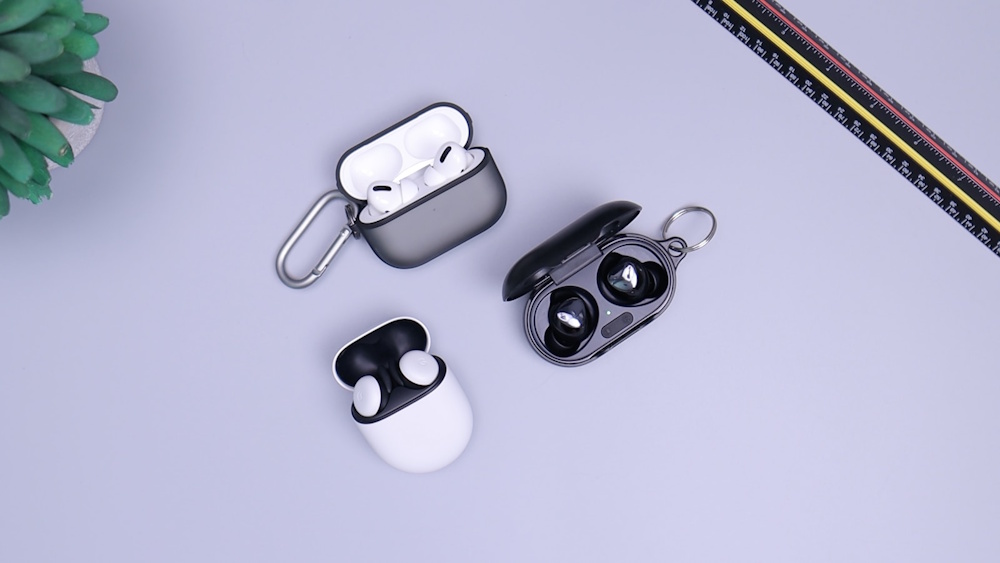

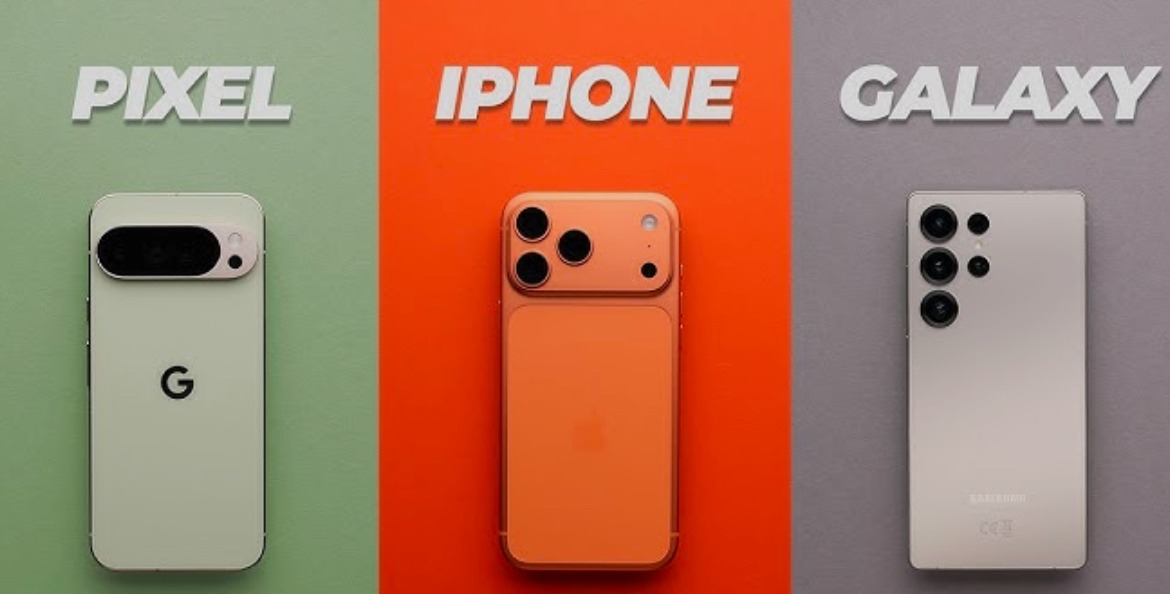
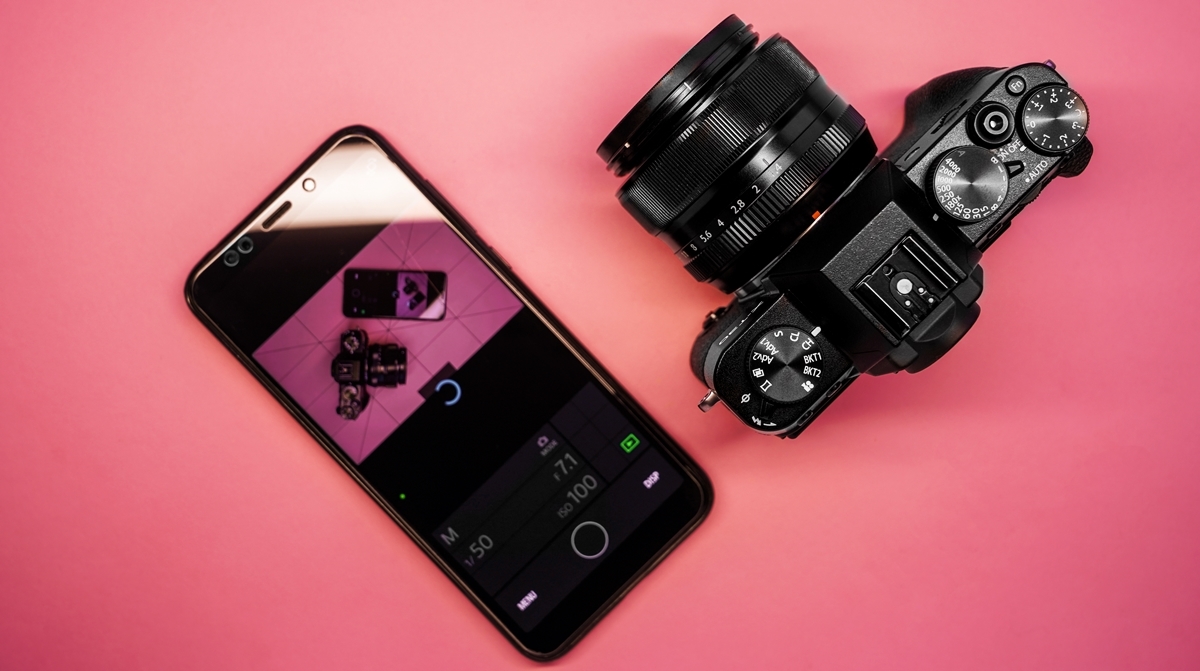
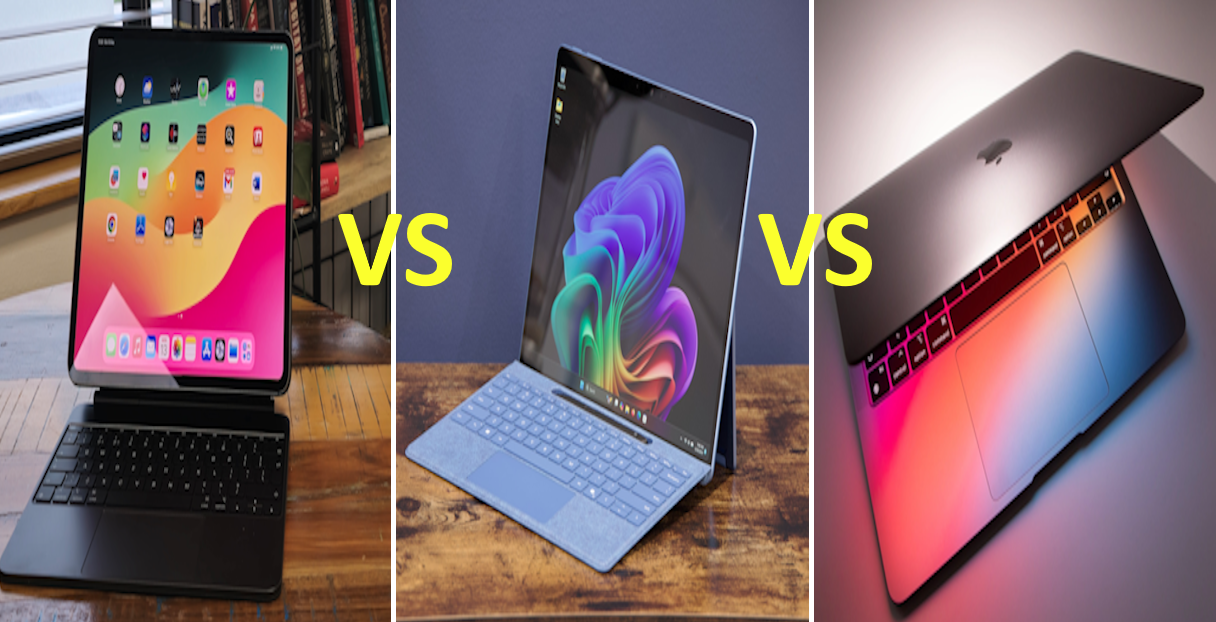

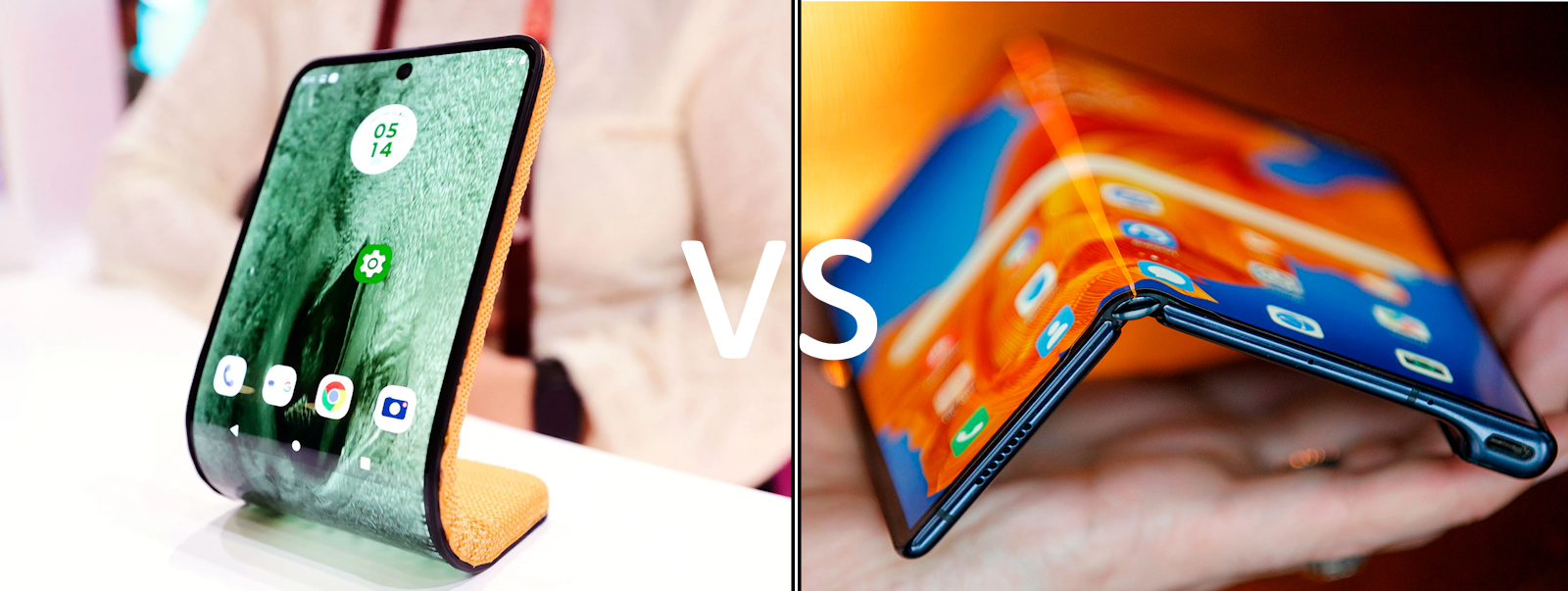

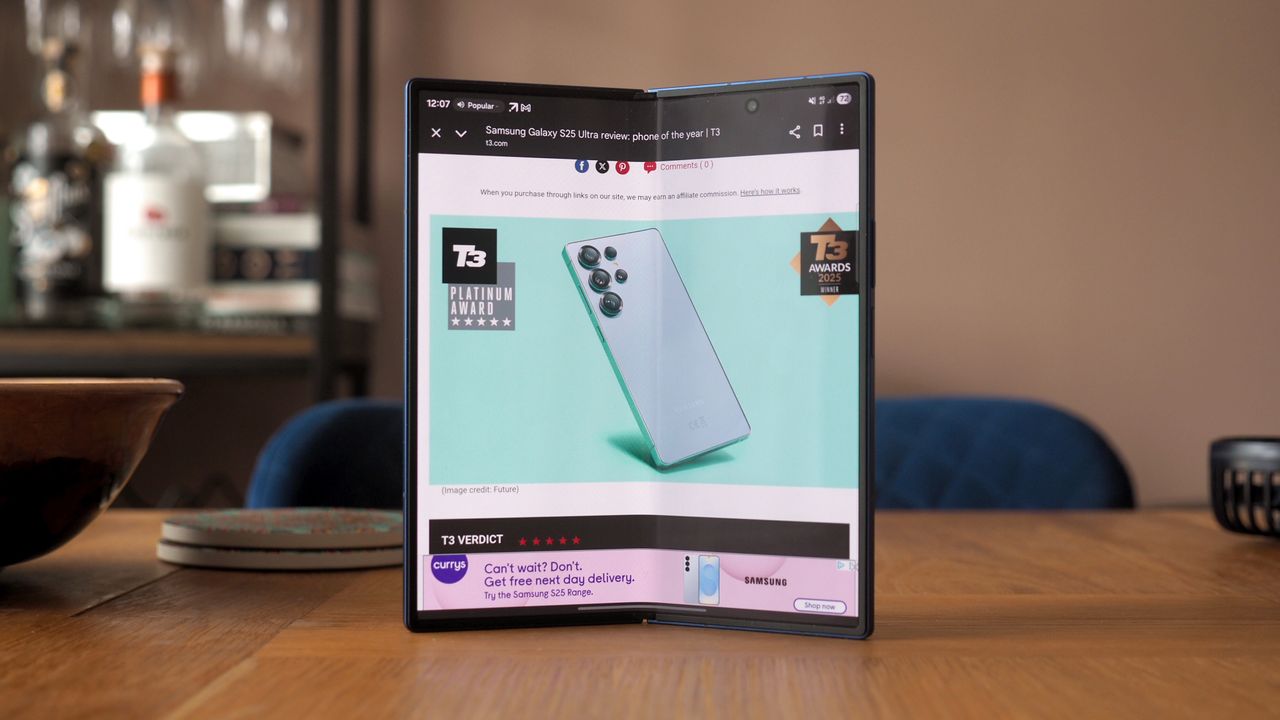
Tags
📧 Get More Articles Like This
Subscribe to receive product reviews and buying guides in your inbox!
We respect your privacy. Unsubscribe at any time.