Best Power Banks and Portable Charging Solutions: Never Run Out of Battery Again
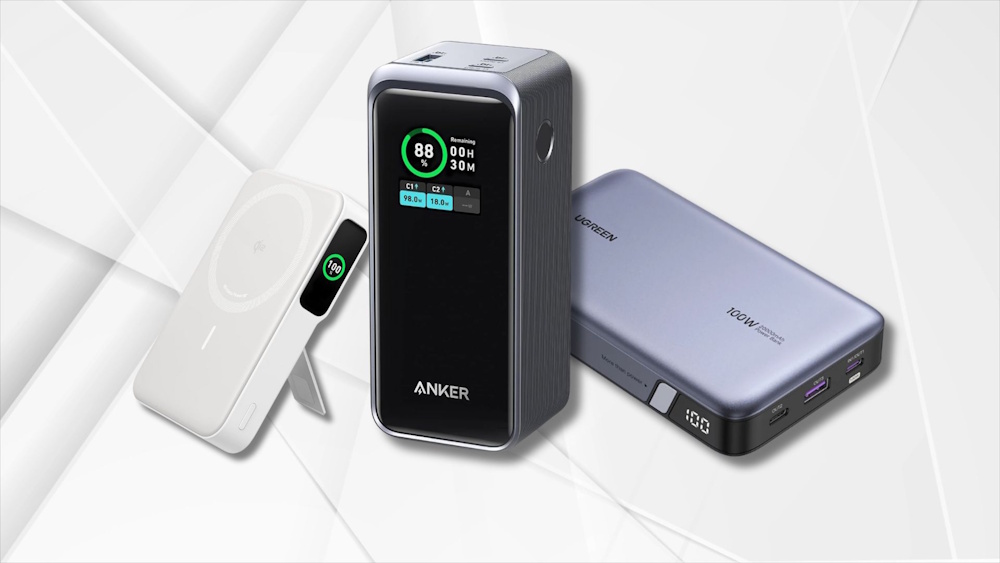
Table of Contents
- Introduction: The Essential Modern Companion
- Understanding Power Bank Specifications
- Capacity Guide: How Much Power Do You Need?
- Charging Speed and Technology Explained
- Best Power Banks for Smartphones
- High-Capacity Power Banks for Laptops
- Ultra-Portable Power Banks for Travel
- Wireless and Multi-Device Charging Solutions
- Solar and Alternative Charging Options
- Safety Features and Quality Indicators
- Conclusion: Choosing Your Perfect Power Bank
- FAQ
Introduction: The Essential Modern Companion
The nightmare scenario is universal: you’re navigating an unfamiliar city using GPS, your battery drops to 15%, then 10%, then the dreaded 5% warning appears. No charger nearby. No outlet accessible. Your lifeline to maps, communication, ride services, and emergency contacts is about to die. Or perhaps you’re on a long flight, train journey, or road trip—hours away from power outlets while work emails demand responses, entertainment beckons, and boredom threatens. Or maybe you’re at an all-day conference, music festival, or outdoor event where your phone is essential for coordinating, capturing memories, and staying connected, yet battery life won’t last until evening.
These situations aren’t rare exceptions—they’re daily realities in our hyper-connected world where smartphones, tablets, wireless earbuds, smartwatches, and countless other devices have become genuine necessities rather than conveniences. We depend on these devices for navigation, communication, work, entertainment, payments, identification, health monitoring, and emergency access. When they die, we’re not just inconvenienced—we’re genuinely disconnected and sometimes vulnerable.
The average smartphone battery lasts 8-12 hours with moderate use, less with heavy usage (GPS navigation, video streaming, gaming, constant communication). Tablets manage slightly better but still require daily charging. Wireless earbuds need charging every 4-8 hours. Smartwatches last 1-2 days. The cumulative effect: we’re constantly monitoring battery percentages, strategically timing charges, and feeling anxiety when levels drop too low before reaching power sources.
While the following demonstration highlights some of the most powerful and efficient battery banks, the real charging strategies and secrets of portable power lie in the exclusive details at the bottom of this article - information you may not have discovered yet: :
Power banks—portable battery packs providing on-the-go device charging—solve this modern problem elegantly. These portable power sources slip into bags or pockets, providing emergency charging anywhere, anytime. No outlet hunting, no desk tethering, no battery anxiety. Just reliable backup power ensuring your devices remain functional when you need them most.
The global portable charger market exceeded $25 billion recently and continues growing at double-digit annual rates as device proliferation and battery dependency intensify. Power banks have evolved from niche accessories to mainstream necessities—according to surveys, over 60% of smartphone users own at least one power bank, with frequent travelers and heavy device users owning multiple units for different situations.
However, the power bank market is vast and confusing. Options range from $10 pocket-sized emergency chargers to $300+ high-capacity laptop power stations. Capacities span from 3,000mAh (one partial phone charge) to 50,000mAh+ (charging laptops multiple times). Features include fast charging, wireless charging, multiple ports, solar panels, rugged designs, and integrated cables. Brands range from established electronics companies to unknown manufacturers with dubious quality and safety records.
The critical questions facing anyone shopping for power banks:
- How much capacity do I actually need for my usage patterns?
- What charging speeds should I prioritize?
- Which brands offer reliable quality versus which are dangerous cheap alternatives?
- Should I invest in one high-capacity unit or multiple smaller ones?
- What features genuinely matter versus marketing gimmicks?
- How do I balance capacity, portability, and cost?
This comprehensive guide answers these questions definitively. We’ll demystify power bank specifications so you understand what actually matters, explain capacity requirements for different usage scenarios, explore charging technologies from standard USB to ultra-fast protocols, recommend specific power banks across budget ranges and use cases, discuss safety considerations preventing dangerous cheap alternatives, and provide practical guidance matching power banks to your actual needs.
Whether you’re a frequent traveler needing laptop charging capability, a daily commuter wanting emergency phone backup, an outdoor enthusiast requiring rugged reliable power, a professional whose work depends on constant connectivity, or simply someone tired of battery anxiety—this guide provides the knowledge to choose power banks serving your specific needs perfectly.
Your devices are essential. Your power bank ensures they stay that way.
1. Understanding Power Bank Specifications: Decoding the Numbers
Capacity (mAh and Wh): The Fundamental Metric
Power bank capacity measures how much electrical energy the battery stores, expressed in milliamp-hours (mAh) or watt-hours (Wh). Higher numbers mean more stored energy and more device charges before the power bank itself needs recharging.
Understanding mAh ratings:
A 10,000mAh power bank theoretically stores 10,000 milliamp-hours of charge. Your smartphone with a 3,000mAh battery should receive approximately 3.3 charges (10,000 ÷ 3,000), right? Wrong. The reality is more complex due to conversion losses.
Conversion efficiency and usable capacity:
Power banks store energy at 3.7V (standard lithium battery voltage) but output at 5V (USB standard voltage) or higher. This voltage conversion creates inefficiency—approximately 10-15% energy loss through heat dissipation. Additionally, the charging process itself loses 5-10% efficiency. Combined, these factors mean usable capacity is approximately 65-75% of stated mAh rating.
A 10,000mAh power bank provides approximately 6,500-7,500mAh usable capacity—not the full 10,000mAh. That 3,000mAh smartphone receives about 2.2-2.5 full charges, not 3.3. Understanding this reality prevents disappointment and informs appropriate capacity selection.
Watt-hours (Wh): The superior metric:
Wh provides more accurate capacity measurement accounting for voltage differences. The formula: Wh = (mAh × Voltage) ÷ 1000. A 10,000mAh power bank at 3.7V contains 37Wh (10,000 × 3.7 ÷ 1000). Comparing Wh between devices with different voltages provides accurate capacity comparison—crucial for laptop power banks operating at various voltages.
Airlines regulate power banks by Wh rather than mAh—most allow up to 100Wh in carry-on luggage without special permission. This equals approximately 27,000mAh at 3.7V—important for frequent flyers selecting power banks.
Input and Output Specifications
Output current (charging speed):
Measured in amperes (A), output current determines how quickly the power bank charges connected devices. Common outputs:
- 1A (5W): Slow charging suitable for basic phones, earbuds, older devices. Charges iPhone 4-5 hours, flagship Android 5-6 hours.
- 2.1A (10.5W): Standard charging for most smartphones and tablets. Charges iPhone 3-4 hours, flagship Android 3.5-4.5 hours.
- 2.4A (12W): Enhanced charging matching many stock chargers. Marginally faster than 2.1A.
- 3A+ (15W+): Fast charging protocols (Quick Charge, Power Delivery) providing significantly faster charging—often 50-80% charge in 30 minutes.
Multiple output ports enable simultaneous device charging, though total output is usually limited. A power bank with two 2.4A ports might specify “combined 3A output”—using both ports simultaneously provides 1.5A per port rather than 2.4A each. Read specifications carefully to understand simultaneous charging capabilities.
Input current (recharge speed):
Higher input current means faster power bank recharging. Many power banks charge slowly—8-12 hours for high-capacity units with standard 1A input. Models with 2A+ input recharge in 4-6 hours—important if you use your power bank daily and need quick turnaround between uses.
Quick Charge and Power Delivery input (where supported) dramatically reduce recharge time—often refilling large power banks in 2-3 hours versus 10+ hours with standard charging.
USB Standards and Port Types
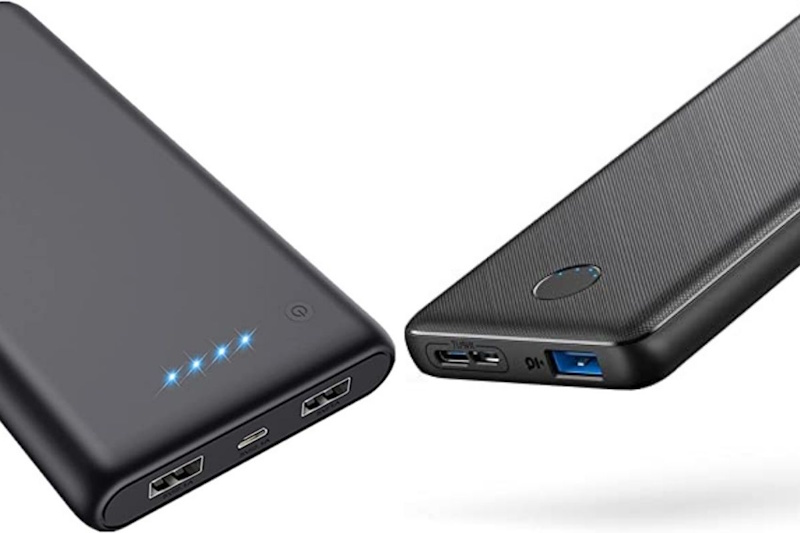
USB-A (rectangular port): Traditional USB port supporting standard charging and various fast charging protocols (Quick Charge, proprietary systems). Most power banks include 1-3 USB-A output ports. Ubiquitous compatibility but increasingly superseded by USB-C.
USB-C (oval reversible port): Modern standard supporting higher power delivery (up to 100W+), bidirectional charging (same port for input and output), faster data transfer, and universal adoption across new devices. Premium power banks prioritize USB-C ports for maximum compatibility and capability.
Micro-USB (small trapezoid port): Older standard still common in budget power banks for charging input. Gradually being replaced by USB-C. Slow charging input and no output capability—purely for recharging the power bank.
Lightning port: Apple’s proprietary connector for iPhones and iPads. Some power banks include built-in Lightning cables or adapters—convenient for Apple users eliminating separate cable carrying.
Pass-Through Charging
Pass-through charging allows simultaneously charging the power bank while it charges connected devices—essentially using the power bank as an intermediary between wall charger and devices. Convenient but generates extra heat and may reduce power bank lifespan slightly. Not all power banks support pass-through charging—check specifications if this matters to your usage.
Shop on AliExpress via link: wholesale-portable-power-bank
2. Capacity Guide: How Much Power Do You Need?
Small Capacity (3,000-5,000mAh): Emergency Backup
Best for: Ultra-portability, pocket carry, emergency charging, light smartphone users, supplemental charging.
Real-world capability: 0.8-1.5 smartphone charges, partial tablet charge, multiple earbud/smartwatch charges.
Advantages: Extremely portable (lipstick-sized, 100-150 grams), fits pockets easily, TSA-friendly for flights, affordable ($10-20), charges quickly (1-2 hours).
Limitations: Limited charging capability—single emergency phone charge, insufficient for heavy users or multiple devices, requires frequent recharging.
Ideal users: Light smartphone users needing occasional backup, commuters wanting pocket emergency power, event attendees supplementing phone battery through evenings, people already carrying bags with larger power banks who want ultra-light pocket backup.
Example scenario: You’re out for dinner and drinks, battery hits 20%, and you need navigation home later. A pocket 5,000mAh power bank provides the boost getting you through the evening without anxiety—perfect supplemental power without bag carrying.
Medium Capacity (10,000-15,000mAh): Sweet Spot for Most Users
Best for: Daily smartphone charging, moderate multi-device use, day trips, standard travel.
Real-world capability: 2-3 smartphone charges, 1-2 tablet charges, multiple earbud/smartwatch charges, simultaneous charging of phone + earbuds.
Advantages: Balanced capacity and portability (200-300 grams, fits small bags), sufficient for day-long heavy phone use or multi-day light use, affordable ($20-40), manages multiple devices reasonably, TSA-friendly (usually under 100Wh limit).
Limitations: Insufficient for laptop charging (most models), may not last multi-day trips with heavy device use, still requires somewhat regular recharging.
Ideal users: Typical smartphone users charging once daily, professionals using phone heavily for work, travelers on day trips or short overnight trips, commuters managing phone + earbuds daily, festival/event attendees with full-day device usage.
Example scenario: You’re traveling for a weekend trip. Your 10,000mAh power bank provides two full iPhone charges (lasting Friday evening through Sunday) or keeps your Android flagship charged through two days of heavy navigation, photography, and communication—perfect capacity without excessive weight.
This capacity range represents the sweet spot for most people—enough power for real utility without becoming burdensome to carry.
High Capacity (20,000-30,000mAh): Power User Solution
Best for: Extended travel, heavy multi-device charging, laptop supplemental charging (smaller laptops), professional use, outdoor activities.
Real-world capability: 4-6 smartphone charges, 2-3 tablet charges, 1-2 small laptop charges (ultrabooks, Chromebooks), simultaneous multi-device charging for days.
Advantages: Substantial power reserves, multi-day autonomy without recharging power bank, handles multiple devices simultaneously, some models support laptop charging, extended outdoor/remote power.
Limitations: Heavy and bulky (400-600 grams, sizeable), requires dedicated bag space, longer recharge times (6-10 hours standard charging), approaches or exceeds airline 100Wh limit (check specifications), higher cost ($40-80).
Ideal users: Frequent travelers on multi-day trips, digital nomads and remote workers, outdoor enthusiasts on extended trips, heavy device users (phone + tablet + laptop + accessories), professionals whose work depends on constant device availability.
Example scenario: You’re on a week-long international trip with limited charging access. Your 20,000mAh power bank keeps your phone, tablet, earbuds, and smartwatch charged for 3-4 days between hotel charges—essential reliability for intensive travel.
Ultra-High Capacity (40,000mAh+): Portable Power Stations
Best for: Laptop charging, extreme capacity needs, group charging, off-grid power, professional equipment.
Real-world capability: 8+ smartphone charges, 3-4 tablet charges, 2-4 laptop charges (depending on laptop size), simultaneous charging of multiple laptops/tablets, powering small devices (cameras, drones, lights).
Advantages: Massive power reserves, laptop charging capability, simultaneous fast charging of multiple devices, extended autonomy (week+ for phone-only use), AC outlet output (some models).
Limitations: Very heavy and bulky (800-1500+ grams, brick-sized), definitely requires bag carrying, extended recharge times (8-15+ hours), expensive ($80-250+), exceeds airline carry-on limits (requires checked baggage or special permission), overkill for phone-only users.
Ideal users: Digital professionals charging laptops regularly, content creators with multiple high-power devices (cameras, laptops, tablets, lighting), off-grid workers or travelers, emergency preparedness, group travel power management, expedition and outdoor professionals.
Example scenario: You’re a freelance photographer on a multi-day shoot with laptop, multiple camera batteries, tablet, phone, and drone. Your 40,000mAh+ power station keeps all equipment operational for days without grid power—professional reliability justifying the weight and cost.
Matching Capacity to Device Requirements
Smartphone battery capacities:
- iPhone (various models): 2,800-4,300mAh
- Samsung Galaxy flagship: 4,000-5,000mAh
- Budget Android phones: 3,000-4,000mAh
Tablet battery capacities:
- iPad: 7,000-10,000mAh
- Android tablets: 6,000-8,000mAh
Laptop battery capacities:
- Ultrabooks/Chromebooks: 30-50Wh (8,000-13,500mAh equivalent)
- Standard laptops: 50-70Wh (13,500-19,000mAh equivalent)
- Performance laptops: 70-100Wh (19,000-27,000mAh equivalent)
Use these reference points calculating your needs. Heavy smartphone user charging once daily? 10,000mAh provides 2-3 charges—several days autonomy. Need laptop charging? Minimum 20,000mAh for ultrabooks, 30,000-50,000mAh for standard laptops.
3. Charging Speed and Technology Explained
Standard USB Charging (5V/1-2.4A)
Basic USB charging delivers 5-12W power—adequate for slowly charging smartphones, tablets, and small devices. Most power banks support standard USB charging as baseline, with budget models offering only this option.
Charging times (standard USB 5V/2A):
- iPhone: 3-4 hours (0-100%)
- Samsung Galaxy: 3.5-4.5 hours (0-100%)
- iPad: 5-7 hours (0-100%)
Standard charging is slow but universal—works with any USB device without compatibility concerns. For overnight charging or situations where speed doesn’t matter, standard charging is perfectly adequate.
Quick Charge Technology (Qualcomm)
Qualcomm’s Quick Charge (QC) technology enables dramatically faster charging through increased voltage and current. QC-compatible devices and chargers negotiate optimal power delivery automatically.
Quick Charge versions:
Quick Charge 2.0: Delivers up to 18W (9V/2A or 12V/1.5A), charging compatible devices approximately 75% faster than standard USB. Widely compatible with Android devices from 2015-2018 era.
Quick Charge 3.0: Improved efficiency delivering up to 18W with more granular voltage control (3.6V-20V in 200mV increments), optimizing power delivery and reducing heat. Compatible devices charge 27% faster than QC 2.0, 4x faster than standard USB. Most common QC version in current power banks.
Quick Charge 4/4+: Enhanced QC 3.0 with USB-C Power Delivery integration, improved efficiency, and better thermal management. Backward compatible with QC 2.0/3.0.
Real-world performance: QC 3.0 charges compatible phones from 0-50% in approximately 30 minutes, 0-80% in about 50 minutes. This speed is genuinely useful—quick top-ups during short breaks rather than hours tethered to chargers.
Important limitation: Quick Charge is proprietary Qualcomm technology primarily supporting Android devices with Qualcomm Snapdragon processors. iPhones don’t support Quick Charge (they use USB Power Delivery instead). Verify your devices support QC before prioritizing this feature.
USB Power Delivery (USB-PD)
USB Power Delivery is the universal fast charging standard gaining industry-wide adoption. Unlike proprietary protocols (Quick Charge, Samsung Adaptive Fast Charging, OnePlus Warp Charge), USB-PD is an open standard supported across manufacturers and device types.
USB-PD capabilities:
Power delivery up to 100W (20V/5A) through USB-C connections—sufficient for charging largest laptops. The negotiated power delivery protocol enables devices and chargers communicating optimal charging parameters, bidirectional power flow (devices can charge power banks and vice versa), and universal compatibility across devices supporting the standard.
USB-PD power profiles:
- 15W (5V/3A): Smartphone fast charging
- 27W (9V/3A): Tablet and small laptop charging
- 45W (15V/3A): Standard laptop charging
- 60W (20V/3A): Performance laptop charging
- 100W (20V/5A): High-performance laptop charging
Real-world performance: USB-PD charges iPhones from 0-50% in approximately 30 minutes (with 18W+ PD charger), iPads significantly faster than standard charging, and compatible laptops at speeds matching or exceeding manufacturer chargers.
Why USB-PD matters: It’s the future. Apple adopted USB-PD for iPhone fast charging and iPad charging. Google and Samsung support USB-PD. Laptops increasingly use USB-C PD for charging, replacing proprietary laptop chargers. A USB-PD power bank provides universal compatibility across current and future devices—the smart future-proof choice.
Wireless Charging
Some premium power banks include Qi wireless charging capability—place compatible devices on the power bank surface for cable-free charging. Convenient but with limitations: slower charging than wired (typically 5-10W), less efficient (more energy loss than wired), devices must remain stationary (can’t use while charging), and only works with wireless-charging-compatible devices.
Wireless charging on power banks is a convenience feature rather than primary charging method—nice for overnight charging or desk use, but wired charging remains faster and more efficient for active use.
Shop on AliExpress via link: wholesale-fast-charging-power-bank
4. Best Power Banks for Smartphones: Reliable Daily Companions
Premium Smartphone Power Banks ($40-80)
Anker PowerCore III Elite 25,600mAh 87W ($100-120): Premium choice offering massive capacity, dual USB-C ports with 87W total output (45W single port), USB-A port, ultra-fast 30W recharging, supports laptop charging, and Anker’s MultiProtect safety system. This power bank handles phones, tablets, and even MacBook Pro—ultimate versatility justifying premium pricing.
The 25,600mAh capacity provides 5-6 iPhone charges or 4-5 Samsung Galaxy charges—nearly a week of smartphone power. The 87W output enables simultaneous fast charging of multiple devices. Premium build quality and Anker’s reputation for reliability make this the flagship smartphone power bank.
Best for: Power users, frequent travelers, multi-device owners, those wanting one power bank handling all needs from phone to laptop.
Belkin BoostCharge 20,000mAh ($60-80): Refined design with 20,000mAh capacity, USB-C Power Delivery (18W), dual USB-A ports, integrated USB-C cable, and premium build quality. Belkin’s reputation for quality and customer service provides confidence, while integrated cable eliminates forgetting cables—genuinely convenient for travel.
The 20,000mAh capacity provides 4-5 iPhone charges or 3-4 flagship Android charges. The integrated cable means always having charging capability regardless of cable availability—underrated convenience feature for spontaneous charging needs.
Best for: iPhone users (Lightning cable variant available), travelers valuing reliability, those wanting quality brands with proven track records, integrated cable convenience.
Mid-Range Smartphone Power Banks ($20-40)
Anker PowerCore 10,000mAh PD ($30-40): The sweet-spot power bank offering 10,000mAh capacity, USB-C Power Delivery (18W), USB-A port, compact size (200 grams), and Anker quality at reasonable pricing. This capacity handles 2-3 smartphone charges—perfect for daily use or weekend trips without excessive bulk.
The USB-C PD support provides fast iPhone charging (0-50% in 30 minutes) and Android fast charging. Compact form factor fits small bags or even large pockets. At $35, this represents outstanding value—quality, capacity, and features at accessible pricing.
Best for: Most smartphone users, daily commuters, weekend travelers, budget-conscious buyers wanting reliable quality, iPhone users wanting fast charging without premium investment.
RAVPower 15,000mAh ($35-45): Balanced capacity and features with 15,000mAh, dual USB ports (one USB-C PD, one USB-A), simultaneous charging, reasonable size, and good build quality. The 15,000mAh provides 3-4 iPhone charges or 2-3 Android flagship charges—suitable for 2-3 days moderate use.
RAVPower offers Anker-comparable quality at slightly lower prices—lesser-known brand providing similar performance and reliability. Good choice for budget-conscious buyers wanting mid-capacity reliability.
Best for: Multi-day trips, heavy phone users, dual-device charging, those wanting more capacity than 10,000mAh without jumping to 20,000mAh+ weight.
Budget Smartphone Power Banks ($10-25)
Anker PowerCore 5,000mAh ($15-20): Ultra-compact emergency power offering 5,000mAh, single USB-A port, lipstick size (120 grams), and Anker quality at budget pricing. Provides 1-1.5 smartphone charges—genuine emergency backup rather than extended power but so portable you’ll actually carry it everywhere.
The compact size makes this power bank practical for daily pocket carrying—more likely to have it when needed than larger units left in bags at home. For emergency backup rather than primary power, this little unit is perfect.
Best for: Ultra-portability priority, pocket carrying, emergency backup, minimalist users, supplemental power alongside larger units.
Xiaomi Mi Power Bank 3 10,000mAh ($18-25): Budget option offering surprising quality with 10,000mAh capacity, dual USB-A ports, USB-C input/output (18W), aluminum body, and Xiaomi’s surprisingly good build quality at aggressive pricing. Performance and reliability exceed expectations for the price point.
While lacking brand recognition of Anker, Xiaomi produces quality electronics, and this power bank proves it. For budget-conscious buyers wanting 10,000mAh capacity with fast charging, this provides outstanding value.
Best for: Budget shoppers, those skeptical of power bank necessity wanting low-risk trial, students, backup power banks, gifts.
Ultra-Compact “Lipstick” Power Banks
Ultra-small power banks prioritizing portability over capacity—literally lipstick-sized units fitting pockets easily. Capacity ranges 3,000-5,000mAh providing single emergency phone charges.
Anker PowerCore+ Mini 3,350mAh ($10-15): Smallest Anker power bank offering genuine emergency backup in incredibly compact form (80 grams, fits palm). Perfect for concerts, events, nights out, or any situation where you need emergency power but minimal bulk.
These ultra-compact units aren’t daily drivers—they’re emergency backup for specific situations. However, their size means actually carrying them when larger power banks would stay home—providing genuine utility despite limited capacity.
Shop on AliExpress via link: wholesale-compact-power-bank-10000mah
5. High-Capacity Power Banks for Laptops: Mobile Workstation Power
Understanding Laptop Charging Requirements
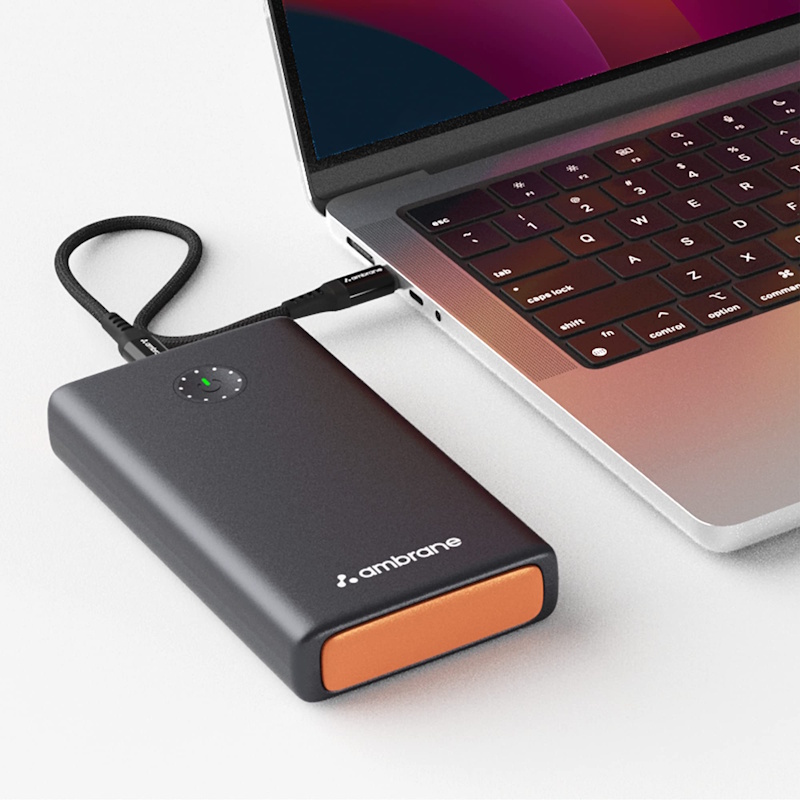
Laptop charging through USB-C requires power banks supporting USB Power Delivery at sufficient wattage for your specific laptop. Most ultrabooks and thin laptops charge adequately with 30-45W; standard laptops need 45-65W; performance laptops require 65-100W.
Verify your laptop’s charging requirements before purchasing. Check manufacturer specifications for USB-C charging wattage, or examine your existing charger’s rated output. Insufficient wattage means slow charging or inability to charge while using the laptop—the power bank merely slows battery drain rather than charging.
Not all laptops support USB-C charging—many older models and some current budget laptops use proprietary charging connectors. These require specialized power banks with AC outlets or proprietary adapters—significantly limiting options and increasing costs.
Premium Laptop Power Banks ($100-250)
Anker PowerCore+ 26,800mAh PD 45W ($130-150): Comprehensive laptop power bank offering 26,800mAh capacity, 45W USB-C Power Delivery output, dual USB-A ports, 30W USB-C input (fast recharge), and complete compatibility with MacBook Air, ultrabooks, Chromebooks, tablets, and smartphones. The 45W output charges MacBook Air at full speed while 26,800mAh capacity provides 1-2 full laptop charges depending on laptop battery size.
This capacity and output handle ultrabooks, tablets, and phones perfectly. However, insufficient for larger laptops requiring 60W+ charging (MacBook Pro 15/16”, gaming laptops, workstation laptops)—those need higher-powered options.
Best for: MacBook Air users, ultrabook owners, Chromebook users, digital nomads with thin laptops, travelers wanting universal device charging.
Omni 20+ 71Wh (20,000mAh equivalent) ($199-249): Premium laptop power bank offering 71Wh capacity, 100W USB-C Power Delivery output, wireless Qi charging, AC power outlet (100W), multiple USB ports, OLED display showing remaining power and output metrics, and premium build quality. This feature-packed unit charges virtually any USB-C laptop at full speed while simultaneously charging phones, tablets, and other devices.
The AC outlet enables charging laptops without USB-C charging and powering small devices (cameras, lights, small appliances). The OLED display provides detailed information eliminating battery level guessing. Premium pricing buys genuine versatility and capability—ultimate portable power solution.
Best for: MacBook Pro users, performance laptop owners, content creators with multiple high-power devices, professionals requiring reliable laptop power, anyone wanting maximum capability regardless of cost.
ZMI PowerPack 20,000mAh 65W ($80-100): Value-focused laptop charger offering 20,000mAh capacity, 65W USB-C Power Delivery, hub functionality (HDMI, USB-A ports), and reasonable pricing. The 65W output handles most laptops including 13” MacBook Pro, standard Windows laptops, and tablets at full charging speed.
Hub functionality adds utility beyond charging—connecting external displays, peripherals, and storage through the power bank while charging. For mobile professionals, this multi-function capability provides workspace flexibility. ZMI offers surprising quality at competitive pricing—lesser-known brand delivering Anker-comparable performance for less money.
Best for: Budget-conscious laptop users, 13” MacBook Pro owners, professionals wanting hub functionality, those seeking laptop charging without premium pricing.
Mid-Range Laptop Power Banks ($60-100)
RAVPower 20,000mAh 60W PD ($70-90): Balanced laptop power bank with 20,000mAh capacity, 60W USB-C output, dual USB-A ports, USB-C input, and solid build quality. The 60W output charges most ultrabooks and 13” laptops at full speed, handling MacBook Air, MacBook Pro 13”, Dell XPS 13, and similar devices comfortably.
The 20,000mAh capacity provides 1-1.5 laptop charges depending on laptop battery size—sufficient for day-long intensive mobile work or multi-day light usage. RAVPower reliability and reasonable pricing make this the value choice for laptop charging.
Best for: 13” laptop users, budget-conscious laptop charging, students with ultrabooks, remote workers needing mobile power.
Baseus 30,000mAh 65W ($75-95): High-capacity option with 30,000mAh, 65W USB-C Power Delivery, multiple ports, digital display, and competitive pricing. The 30,000mAh provides 1.5-2 laptop charges or extended multi-device power. 65W output handles 13-15” laptops adequately.
Baseus represents Chinese quality brands offering aggressive pricing and decent performance—less established than Anker but delivering functional products. For buyers prioritizing capacity and cost, Baseus provides excellent value despite lesser brand recognition.
Best for: Heavy laptop users, extended travel, multi-device charging, those wanting maximum capacity under $100.
Laptop Charging Reality Check
Wattage matters critically: Insufficient wattage prevents effective laptop charging. A 30W power bank might theoretically “charge” a 65W laptop but so slowly as to be useless—the laptop drains battery faster than charging provides power during use. Always match or exceed your laptop’s charging requirements.
Capacity affects charge cycles: Laptops have larger batteries than phones. A MacBook Air (50Wh battery) requires approximately 65-70Wh usable capacity for one full charge (accounting for conversion losses). A 20,000mAh (74Wh) power bank provides approximately 1-1.5 MacBook Air charges—less than you might expect. Performance laptops with 70-90Wh batteries require massive power banks (40,000mAh+) for multiple charges.
Weight and size trade-offs: Laptop power banks are substantial. The 26,800mAh Anker weighs 580 grams (1.3 pounds)—noticeable in backpacks alongside laptops and accessories. Ultra-high-capacity models exceed 1 kilogram (2.2 pounds). Ensure you’re willing to carry this weight before investing in laptop charging capability.
6. Ultra-Portable Power Banks for Travel: Minimizing Bulk
TSA and Airline Regulations
Power banks must travel in carry-on luggage—never checked baggage due to lithium battery fire risk. Most airlines allow power banks up to 100Wh (approximately 27,000mAh at 3.7V) without special permission. Power banks 100-160Wh require airline approval and are limited to two per passenger. Power banks over 160Wh are prohibited.
Always verify capacity in Wh rather than just mAh. Manufacturers usually print Wh ratings on devices or packaging specifically for airline compliance. When in doubt, calculate: Wh = (mAh × Voltage) ÷ 1000. Most quality power banks clearly label Wh ratings preventing airport issues.
Ultra-Slim Power Banks
Anker PowerCore Slim 10,000mAh ($25-30): Remarkably thin power bank (14mm thick) fitting easily in pockets, passport pouches, or slim bags. The 10,000mAh capacity provides 2-3 smartphone charges while weighing just 200 grams and occupying minimal space. USB-C and USB-A outputs provide flexible charging.
This slim form factor makes carrying effortless—slides into pockets unlike thicker power banks that bulge awkwardly. For travelers prioritizing low bulk over maximum capacity, this represents the optimal balance.
Mophie Powerstation Mini 5,000mAh ($20-25): Ultra-compact option measuring credit-card size with 5,000mAh capacity. Fits passport wallets, small purses, or even shirt pockets. Provides single full smartphone charge—perfect emergency backup without noticeable weight or bulk.
The aluminum body and fabric covering create premium feel despite modest capacity. For minimalist travelers or event attendees, this little unit provides essential backup power without burdening you with size or weight.
Built-In Cable Power Banks
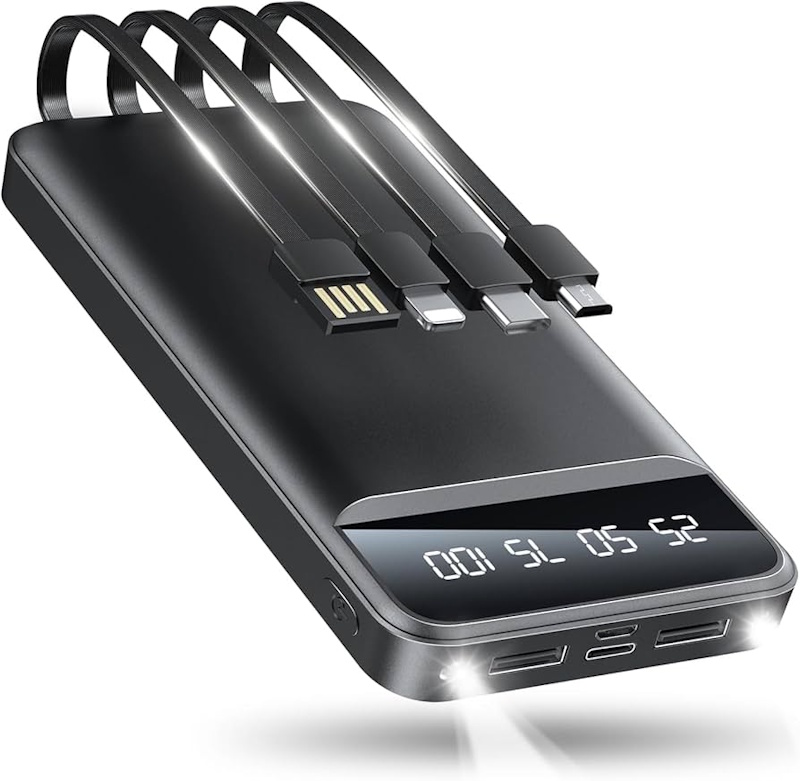
Power banks with integrated cables eliminate forgetting cables—underrated convenience for spontaneous charging or situations where carrying separate cables is impractical.
Anker PowerCore+ 10,000mAh with Built-in USB-C Cable ($35-45): Integrated USB-C cable plus USB-C and USB-A ports provide maximum flexibility. The captive cable ensures always having USB-C charging capability while additional ports accommodate other devices or cable preferences.
Built-in cable convenience shines during travel—no cable hunting, no forgetting adapters, no borrowing from others. Just pull out the power bank and charge immediately. For frequent travelers, this convenience alone justifies slight premium over standard power banks.
iWALK LinkMe 4,500mAh ($18-25): Ultra-compact built-in Lightning connector power bank plugging directly into iPhones—no cables whatsoever. Incredibly compact and convenient for iPhone users wanting emergency backup without any accessories. Simply plug into iPhone port and charge.
The small capacity (4,500mAh) provides single iPhone charge but the no-cable convenience and tiny size make this perfect for concerts, festivals, nights out, or travel where you want absolute minimum bulk.
Shop on AliExpress via link: wholesale-ultra-slim-power-bank
7. Wireless and Multi-Device Charging Solutions
Wireless Charging Power Banks
Wireless charging capability adds convenience—place phone on power bank surface for cable-free charging. However, limitations exist: slower than wired charging (5-10W typically), requires careful positioning, devices must support Qi wireless charging, and less efficient than wired charging (more energy waste).
Anker PowerCore III 10K Wireless ($45-60): Quality wireless power bank offering 10,000mAh capacity, 10W wireless charging, 18W USB-C wired charging, and USB-A port. Place phone on surface for wireless charging or use cables for faster wired charging—flexibility matching different situations.
The 10W wireless charging is reasonably fast (for wireless) though still slower than 18W wired. The ability to charge wirelessly overnight or at desks while keeping faster wired charging for urgent needs provides genuine versatility.
Best for: Qi wireless device owners, overnight charging, desk use, those valuing convenience over maximum speed.
Mophie Powerstation Wireless XL 10,000mAh ($60-70): Premium wireless power bank with 10,000mAh, 10W wireless charging, USB-C and USB-A wired ports, and Mophie’s quality construction. Priority+ charging intelligently directs power to devices based on charging method and device needs.
Mophie’s premium positioning delivers through superior build quality, reliable wireless charging, and thoughtful features. For users wanting best-in-class wireless charging experience, Mophie justifies premium pricing.
Multi-Port Power Banks for Group Charging
Traveling with family or friends? Multi-port power banks enable simultaneous charging of multiple devices—everyone stays powered from one shared unit.
Anker PowerCore 20,100mAh with 4 Ports ($50-60): High-capacity multi-device charger offering 20,100mAh, four USB-A ports (total 8A output), and PowerIQ intelligent charging. Simultaneously charge four smartphones, or combinations of phones and tablets, from one unit. Perfect family travel power solution.
The substantial capacity supports group charging through full days without recharging the power bank itself. Smart charging distributes available power optimally across connected devices—automatic and effortless.
RAVPower 30,000mAh Multi-Port ($60-80): Massive capacity with multiple USB ports enabling extended group charging or single-user multi-day autonomy. The 30,000mAh provides week+ power for phones or multiple daily charges for families’ devices.
This capacity level suits extended travel, camping, road trips, or situations where power bank recharging is infrequent or impossible. Group travelers appreciate shared power reducing individual power bank carrying.
8. Solar and Alternative Charging Options
Solar Power Banks: Backup Charging
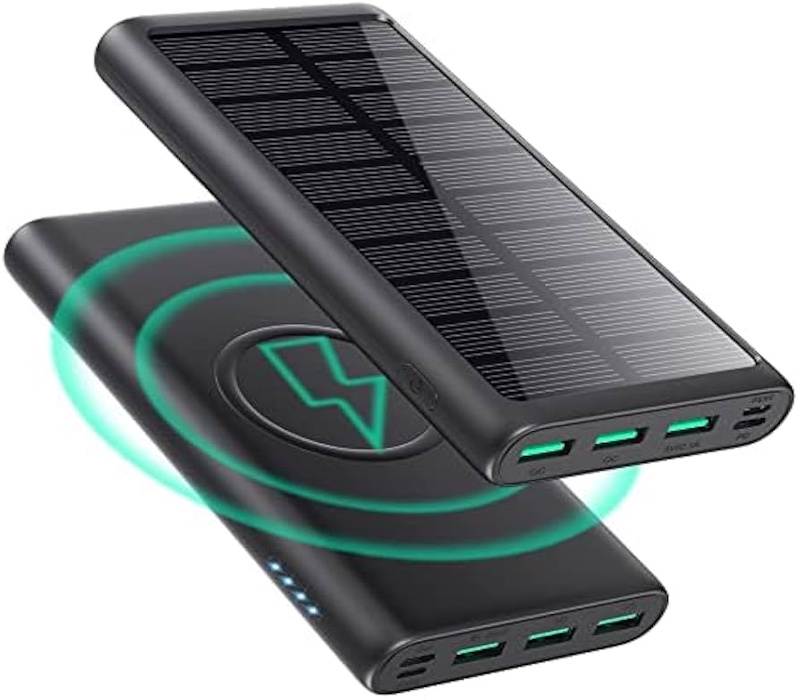
Solar power banks include integrated solar panels generating electricity from sunlight—theoretically eliminating charging dependence on electrical outlets. However, reality is more limited than marketing suggests.
Solar charging limitations:
Small solar panels (common on portable power banks) generate minimal power—typically 1-2W in optimal direct sunlight. Charging a 10,000mAh power bank requires approximately 50+ hours of direct sunlight—entirely impractical for primary charging.
Solar panels serve emergency backup—slow charging better than no charging during multi-day outdoor adventures without grid access. However, expect to primarily charge via USB with solar as emergency supplement rather than primary method.
When solar makes sense:
Extended wilderness adventures (multi-day hiking, expeditions) where electrical charging is impossible, emergency preparedness kits providing backup charging capability, outdoor workers spending entire days in direct sunlight, or situations where slow supplemental charging provides value despite inefficiency.
Recommended solar power banks:
Hiluckey 25,000mAh Solar Power Bank ($40-50): Rugged design with 25,000mAh capacity, four solar panels, dual USB outputs, LED flashlight, and IP65 water resistance. The large capacity and multiple panels provide best-case solar charging (still slow but better than single-panel alternatives).
The rugged construction and water resistance suit outdoor use better than standard power banks. However, expect to charge primarily via USB with solar as true emergency backup—don’t purchase solely for solar charging expectations.
BigBlue 28W Solar Charger ($60-75): Folding solar panel array (not integrated power bank) providing 28W solar charging—dramatically faster than integrated panel power banks. Pair with standard power bank (charging power bank from solar panel) for optimal outdoor power solution.
Separate solar panels generate meaningful power—fully charging 10,000mAh power banks in a sunny day versus weeks with integrated panels. For serious outdoor users, dedicated solar panels plus standard power banks provide better performance than combination solar power banks.
Hand-Crank and Alternative Charging
Hand-crank chargers generate power through manual cranking—genuinely grid-independent charging. However, manual charging is exhausting—cranking for 10-15 minutes provides 5-10 minutes phone usage. These work for emergencies but are impractical for regular charging.
Emergency preparedness kits benefit from crank chargers providing guaranteed power generation regardless of batteries, solar availability, or grid access. However, for anything beyond true emergency survival situations, conventional power banks provide far superior utility.
9. Safety Features and Quality Indicators
Critical Safety Features
Lithium batteries pose fire and explosion risks when defective, damaged, or poorly manufactured. Quality power banks incorporate multiple safety features preventing dangerous failures:
Overcharge protection: Prevents battery overcharging beyond safe voltage limits—primary cause of lithium battery fires.
Over-discharge protection: Prevents battery draining below minimum safe voltage—preserves battery life and prevents damage.
Short circuit protection: Immediately cuts power if short circuits occur—prevents fires and device damage.
Temperature protection: Monitors battery temperature, reducing charging speed or shutting down if overheating occurs.
Current regulation: Limits output current preventing excessive power delivery damaging connected devices.
Quality power banks from reputable manufacturers (Anker, RAVPower, Aukey, Belkin, Mophie) incorporate all these protections as standard. Budget unknown brands often skip safety features—saving costs but creating fire and injury risks.
Identifying Quality Power Banks
Brand reputation: Stick with established brands with track records and customer service. Anker dominates power bank market through consistent quality, reasonable pricing, and responsive customer service. RAVPower, Aukey, Belkin, and Mophie also deliver reliable products.
Certifications: Look for UL, CE, FCC, RoHS certifications indicating testing and compliance with safety standards. Certified products undergo third-party testing verifying safety—uncertified products lack this verification.
Realistic specifications: Be skeptical of impossibly good specifications at suspiciously low prices. A 50,000mAh power bank for $20 is either fake capacity or dangerously poor quality. If it seems too good to be true, it is.
Customer reviews: Check reviews specifically mentioning long-term reliability, actual capacity versus advertised, and safety issues. Patterns of battery swelling, overheating, or premature failure indicate quality problems.
Warranty: Quality manufacturers offer 18-24 month warranties demonstrating confidence in products. Short or absent warranties suggest manufacturers expect failures.
Dangerous Fake Power Banks
Counterfeit power banks represent serious safety hazards—often containing fraction of advertised capacity using low-quality cells prone to fire and explosion. These proliferate on discount websites, flea markets, and unverified sellers.
Red flags:
- Prices far below legitimate products
- Unknown brands with no searchable company information
- Impossibly high capacity at low prices
- No safety certifications
- Extremely lightweight (genuine 20,000mAh power banks weigh 300-400 grams—fake ones with empty shells or small batteries weigh much less)
- Poor build quality with flimsy cases and loose ports
Only purchase from reputable retailers and authorized sellers. Amazon, Best Buy, manufacturer direct websites provide authenticity assurance. Avoid random websites, extremely discount sellers, and too-good-to-be-true deals risking genuine danger.
Conclusion: Choosing Your Perfect Power Bank
The perfect power bank matches your specific device needs, usage patterns, portability requirements, and budget—not the highest-capacity or most-featured model, but the right balance for your situation.
For most smartphone users: A 10,000-15,000mAh power bank provides optimal balance—enough capacity for genuine utility (2-3 charges) without excessive bulk. Anker PowerCore 10,000mAh PD ($30-40) represents the sweet spot: adequate capacity, USB-C fast charging, compact size, reliable brand, and reasonable price.
For frequent travelers: Consider 20,000mAh capacity providing multi-day autonomy and multi-device charging. Stay under 27,000mAh (100Wh) avoiding airline restrictions. Look for USB-C Power Delivery supporting various devices and fast charging.
For laptop users: Ensure USB-PD support at sufficient wattage (45W+ for ultrabooks, 60W+ for standard laptops). Higher capacity (20,000-30,000mAh) needed for meaningful laptop charging. Budget appropriately—quality laptop power banks cost $80-150+.
For ultra-portability: Choose 5,000-10,000mAh slim designs prioritizing carry convenience over maximum capacity. Anker PowerCore Slim 10,000mAh achieves remarkable thinness while providing practical charging.
For outdoor/emergency use: Rugged designs with higher capacity (20,000mAh+) and optional solar panels. However, rely primarily on USB charging with solar as backup—don’t expect solar-only viability.
Critical selection factors:
- Match capacity to needs: Calculate daily device usage and trip duration determining required capacity—don’t overbuy paying for unused capacity and extra weight.
- Prioritize reputable brands: Safety and reliability matter—stick with established manufacturers despite slightly higher costs.
- Consider charging speed: Fast charging (USB-PD, Quick Charge) dramatically improves convenience—worth modest premiums for frequently-used power banks.
- Balance portability and capacity: Larger capacity means more weight and bulk—ensure you’ll actually carry the size you purchase.
- Verify compatibility: Confirm charging protocols match your devices—USB-PD for iPhones/MacBooks, Quick Charge for compatible Androids, appropriate wattage for laptops.
Don’t let device battery anxiety control your daily life or travel experiences. A quality power bank costing $20-60 provides peace of mind knowing your essential devices remain functional whenever and wherever you need them. That reliability—worth far more than the modest investment—transforms how you use and depend on your devices.
Your devices are lifelines to navigation, communication, work, entertainment, and safety. Your power bank ensures they remain reliable lifelines rather than anxiety-inducing battery meters counting down to zero.
Frequently Asked Questions
Q: How long do power banks last before needing replacement?
A: Quality power banks typically last 300-500 full charge cycles before capacity degradation becomes noticeable (reduced to 70-80% original capacity). With typical use (charging 2-3 times weekly), expect 3-5 years lifespan. Premium brands often last longer through superior battery cells and management systems. Budget power banks may degrade faster, potentially within 1-2 years of regular use.
Q: Can I bring power banks on airplanes?
A: Yes, but only in carry-on luggage—never checked baggage. Most airlines allow power banks up to 100Wh (approximately 27,000mAh) without special permission. Power banks 100-160Wh require airline approval. Verify capacity in Wh (usually printed on device) ensuring compliance. TSA and international equivalents strictly enforce these rules—non-compliant power banks will be confiscated.
Q: Why doesn’t my power bank charge my device to 100% like advertised capacity suggests?
A: Conversion efficiency losses mean usable capacity is approximately 65-75% of stated mAh rating. A 10,000mAh power bank provides roughly 6,500-7,500mAh to devices due to voltage conversion and charging inefficiency. This is normal and universal across all power banks—not defective, just physics. Always calculate expected charges accounting for 30-35% capacity loss.
Q: Is it safe to leave power banks charging overnight?
A: Quality power banks with proper overcharge protection can safely charge overnight—protection circuits prevent overcharging once full. However, it’s generally better practice to charge during waking hours monitoring the process, particularly with budget or unknown-brand power banks potentially lacking adequate protection. Never charge damaged, swollen, or overheating power banks—dispose of them immediately.
Q: Can power banks damage my devices?
A: Quality power banks from reputable manufacturers include voltage regulation and current limiting preventing device damage. However, extremely cheap unbranded power banks with poor circuitry can potentially damage devices through voltage spikes, excessive current, or poor quality USB ports. Stick with certified products from known brands minimizing this risk essentially to zero.
Q: How do I know my power bank’s actual capacity versus advertised?
A: Fully charge the power bank, then completely drain it charging a device with known battery capacity (like a smartphone), tracking how many charges completed. Compare to theoretical charges expected from advertised capacity accounting for 30% efficiency loss. If actual performance is substantially lower (providing half the expected charges), capacity is likely misrepresented. Reputable brands deliver capacities within 10-15% of advertised; fake power banks often contain 30-50% of claimed capacity.
Q: Can I charge my power bank and devices simultaneously (pass-through charging)?
A: Many power banks support pass-through charging, but not all—check specifications. Pass-through is convenient but generates additional heat potentially reducing power bank lifespan with frequent use. For occasional use, pass-through is fine. For daily simultaneous charging, consider whether this feature is truly necessary or if you can charge the power bank separately from devices.
Q: What’s better for frequent use—one large power bank or multiple smaller ones?
A: Multiple smaller power banks offer advantages: redundancy if one fails or is forgotten, different capacities for different situations (pocket unit for daily carry, large unit for travel), simultaneous use powering multiple devices without sharing ports, and easier battery health management through rotation. However, one well-chosen medium-capacity power bank (15,000-20,000mAh) often suffices for most users at lower total cost and reduced management complexity.
Articles related:







Tags
📧 Get More Articles Like This
Subscribe to receive product reviews and buying guides in your inbox!
We respect your privacy. Unsubscribe at any time.