Stair-Climbing Robot Vacuums vs Traditional Robovacs: Cleaning Revolution
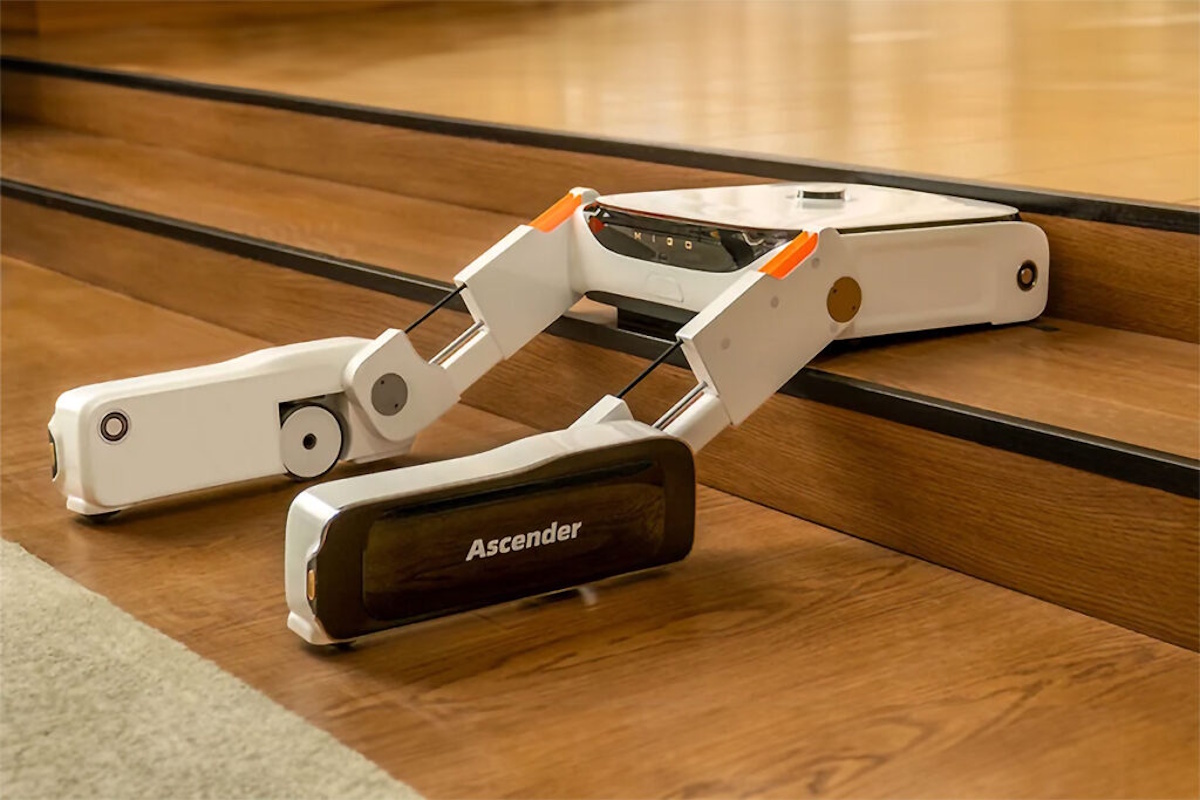
Table of Contents
- Introduction: The Vertical Frontier in Home Cleaning
- The Evolution of Robotic Vacuum Technology
- How Stair-Climbing Technology Actually Works
- Comparative Performance Analysis: Cleaning Capabilities
- Navigation and Mapping Intelligence
- Battery Life and Power Management
- Safety Features and Reliability Concerns
- Cost Analysis and Value Proposition
- Conclusion: Choosing the Right Robot for Your Home
- Frequently Asked Questions
Introduction: The Vertical Frontier in Home Cleaning
Sarah Martinez stood at the bottom of her two-story home’s staircase, vacuum cleaner in one hand and her phone in the other, watching her brand-new robot vacuum expertly clean the hardwood floors of her living room. The little disc-shaped device navigated around furniture legs, avoided the dog’s water bowl, and even returned to its charging station when finished. It was remarkable technology that saved her hours each week. But there was one glaring limitation that frustrated her every time she looked up those fifteen carpeted steps leading to the second floor—her expensive robotic helper was completely useless up there.
For fifteen years, this has been the fundamental limitation of robot vacuum technology. These devices revolutionized floor cleaning for millions of homes worldwide, growing from clunky novelties into sophisticated cleaning machines equipped with laser mapping, artificial intelligence, and enough computing power to rival early smartphones. Yet they remained confined to single floors, their sophisticated sensors specifically designed to detect stairs as dangerous obstacles to avoid rather than challenges to overcome. Homeowners with multi-story residences faced an awkward choice: buy multiple robot vacuums for different floors, manually carry their robovac upstairs after each cleaning cycle, or simply accept that stairs would remain a manual cleaning task forever.
Before delving into the details of the article, watch this video about a smart robot vacuum cleaner capable of climbing stairs :
The robotics industry has spent over $2 billion on research and development trying to solve what engineers call “the vertical mobility problem.” Traditional wheeled robots excel at horizontal navigation but struggle with even small obstacles. Tracked robots can handle rough terrain but lack the precision needed for household environments. Legged robots offer theoretical advantages but remain too expensive and complex for consumer applications. The challenge wasn’t just mechanical—it required simultaneous advances in sensor technology, artificial intelligence, power management, and materials science. Every prototype that successfully climbed laboratory stairs seemed to fail catastrophically in real-world homes where step dimensions varied, carpets shifted, and lighting conditions changed throughout the day.
Then, in late 2023, everything changed. A small engineering team in South Korea unveiled the Migo Ascender, the world’s first commercially viable stair-climbing robot vacuum. Unlike previous concepts that used extending arms, retractable legs, or complex track systems, the Ascender employed an elegantly simple solution: a square-shaped body with omnidirectional motorized wheels that could grip stair edges and pull the entire unit upward, one step at a time. The demonstration video showed the robot confidently ascending a standard residential staircase, pausing momentarily at each step to calculate the next move, then continuing upward with mechanical precision. Within hours, the video had garnered millions of views, and within weeks, the Kickstarter campaign had raised over $4 million from homeowners desperate for a solution to their multi-floor cleaning challenges.
The emergence of stair-climbing robot vacuums represents more than just an incremental improvement in home cleaning technology—it signals a fundamental shift in how we think about domestic automation. For decades, smart home devices operated within carefully defined boundaries. Thermostats controlled temperature within rooms. Security cameras monitored fixed positions. Traditional robot vacuums cleaned designated zones. But stair-climbing robots break these boundaries, moving freely between floors and environments, adapting to three-dimensional spaces in ways that previous consumer robotics never achieved. This capability opens possibilities beyond cleaning: delivery robots that navigate apartment buildings, assistive robots that serve elderly residents across multiple floors, and industrial inspection robots that traverse complex structures without human intervention.
Yet this revolutionary technology arrives with legitimate questions. Are stair-climbing robot vacuums actually reliable, or do they represent expensive gambles on unproven technology? How do their cleaning capabilities compare to traditional robovacs on the flat surfaces that comprise the majority of most homes? What safety risks emerge when household robots attempt vertical maneuvers? Is the substantial price premium justified for average homeowners, or should buyers wait for second-generation models and inevitable price reductions? Understanding these questions requires examining not just marketing claims but the underlying technology, real-world performance data, and practical considerations that determine whether stair-climbing robots represent the future of home cleaning or merely an interesting but impractical novelty.
The answers matter because we’re witnessing the birth of a new product category. In 2026, at least eight major manufacturers have announced stair-climbing models, with prices ranging from $1,200 to $2,500. Consumer interest remains intense despite the premium pricing, with pre-order waitlists extending months into the future. Industry analysts project the stair-climbing segment could capture 15-20% of the robot vacuum market by 2028, representing potential annual sales exceeding $3 billion globally. Traditional robovac manufacturers face difficult decisions about whether to develop competing stair-climbing models or focus on improving single-floor performance and reducing prices. The technology that seemed impossible just three years ago now appears poised to reshape the entire category.
This comprehensive analysis examines stair-climbing robot vacuums from every critical angle: the engineering principles that enable vertical mobility, comparative cleaning performance against traditional models, navigation and mapping capabilities, battery life and power management challenges, safety features and reliability concerns, and the ultimate question of value and cost-effectiveness. Drawing on technical specifications, independent testing data, expert interviews, and real-world user experiences, we’ll separate genuine innovations from marketing hype and help you determine whether stair-climbing technology deserves a place in your home—or whether traditional robovacs still represent the smarter choice for most households.

The Evolution of Robotic Vacuum Technology
The journey toward stair-climbing robot vacuums began in 2002 when iRobot launched the original Roomba, a simple disc that bounced randomly around rooms until its primitive sensors detected complete coverage. That first-generation technology relied on what engineers called “random walk navigation”—essentially controlled chaos that statistically ensured every floor area received attention over time. The Roomba couldn’t map rooms, remember where it had been, or plan efficient routes, yet it captured consumer imagination precisely because it worked well enough to justify its $200 price tag. Within five years, iRobot had sold over 2 million units, proving that consumers would embrace imperfect robotic assistance if the value proposition made sense.
The 2010s brought revolutionary advances in sensor technology and computational power. Laser-based LiDAR systems, originally developed for self-driving cars, became affordable enough for consumer robotics. These sensors could map entire floors with centimeter-level precision, creating detailed 2D layouts that robots used for systematic cleaning patterns. Simultaneously, processors powerful enough to run simultaneous localization and mapping (SLAM) algorithms shrank to sizes and power requirements suitable for battery-powered devices. By 2015, premium robot vacuums from brands like Neato and Roborock could navigate homes with the efficiency of human cleaners, following methodical back-and-forth patterns and avoiding redundant coverage of already-cleaned areas.
Artificial intelligence integration marked the third evolutionary phase, beginning around 2018. Computer vision systems using small cameras could now identify and categorize objects—distinguishing between furniture legs, pet toys, and obstacles to avoid versus areas requiring extra cleaning attention. Machine learning algorithms analyzed cleaning patterns across millions of homes, optimizing everything from brush rotation speeds on different floor types to battery management strategies that ensured robots could complete entire floors before requiring recharging. These AI-powered models could even learn household layouts over time, adjusting routes as furniture moved and creating customized cleaning schedules based on actual usage patterns.
Despite these sophisticated advances, every robot vacuum remained fundamentally confined to horizontal movement. The same cliff detection sensors that prevented robots from tumbling down stairs also created an insurmountable barrier to multi-floor cleaning. Engineers explored numerous approaches to overcome this limitation throughout the 2010s. Some concepts used extending mechanical arms to grip stair railings and pull the robot upward. Others employed retractable legs that could step up obstacles. Still others proposed modular systems where separate floor units could attach and detach as needed. None achieved commercial viability due to mechanical complexity, power requirements, or reliability concerns.
The breakthrough came from rethinking the fundamental approach. Instead of adding mechanisms to existing round robot designs, engineers asked what shape and configuration would inherently enable stair climbing. Research teams at institutions like MIT and Stanford had demonstrated that robots could navigate stairs using various methods—from the “Cheetah 3” quadruped robot that used force sensors and predictive algorithms to bound up steps, to wheeled robots with articulated suspensions that could adjust their geometry to match stair configurations. The challenge was adapting these research concepts into affordable, reliable consumer products that could clean floors effectively while also climbing stairs.
Academic robotics research institutions pioneered many technologies enabling modern autonomous systems, conducting fundamental research into locomotion, perception, and decision-making algorithms years before commercial applications became viable. MIT research teams developed the Cheetah robot demonstrating force-sensing navigation and predictive control algorithms that informed subsequent consumer robot development. These academic projects typically prioritize advancing scientific understanding rather than creating market-ready products, but the resulting publications and demonstrations establish technical feasibility that inspires engineering teams at consumer robotics companies.
The solution that emerged combined several innovations. Square-shaped bodies replaced traditional circular designs, providing stable platforms during vertical transitions and enabling more effective edge cleaning. Omnidirectional wheels with motorized grip control could switch between rolling freely on flat surfaces and actively gripping step edges during climbs. Multiple sensor types—LiDAR for distance mapping, time-of-flight (ToF) sensors for precise depth perception, HD cameras for visual analysis, and gyroscopes for balance monitoring—worked together to create comprehensive environmental awareness. Most critically, significantly more powerful processors and specialized AI models could process all this sensor data in real-time, making split-second decisions about wheel grip strength, body angle adjustments, and movement timing that determined success or failure on each step.

How Stair-Climbing Technology Actually Works
Advanced Sensor Integration Systems
Understanding stair-climbing robots requires examining their sensor suites, which dwarf the capabilities of traditional models in both quantity and sophistication. A typical stair-climbing robot employs six to eight ToF sensors positioned around its perimeter, each emitting infrared light pulses and measuring return times to calculate distances with millimeter-level accuracy. These sensors create a constantly updating 3D point cloud of the robot’s immediate environment, detecting stair edges, measuring step heights and depths, and identifying potential obstacles that might interfere with climbing sequences. The ToF data updates 30-50 times per second, providing the real-time feedback necessary for dynamic balance adjustments during vertical transitions.
LiDAR systems complement ToF sensors by mapping larger areas and creating persistent floor plans. While ToF sensors focus on immediate surroundings, LiDAR spinning at 300-360 RPM scans 360 degrees continuously, building detailed maps that extend 5-10 meters in all directions. This dual-sensor approach solves a critical problem: the robot needs both macro-level awareness of where staircases exist within the home’s layout and micro-level precision to execute individual climbing movements. The LiDAR creates the strategic map that guides the robot to staircase locations, while ToF sensors handle the tactical execution of actually ascending or descending steps.
HD cameras add visual context that distance sensors alone cannot provide. A 1080p camera positioned at the robot’s front captures images at 15-30 frames per second, feeding them into computer vision algorithms that identify surface textures, detect objects, and recognize patterns. This visual data proves particularly valuable for stair climbing because it can distinguish between safe, solid steps and potentially problematic surfaces like loose carpet runners, glossy marble that might be slippery, or steps with significant wear that could affect traction. The camera also enables the robot to detect lighting conditions and adjust its reliance on different sensors accordingly—relying more heavily on LiDAR and ToF in darkness while using visual data extensively in well-lit environments.
Gyroscopes and accelerometers provide inertial measurement that proves essential for maintaining balance during stair climbing. These sensors detect the robot’s orientation in three-dimensional space with extreme precision, measuring tilt angles to within 0.1 degrees. During a stair climb, the robot’s body angle changes dramatically as it transitions from one step to the next—tilting backward as rear wheels grip a step while front wheels lift, then forward as the body shifts weight upward. The inertial sensors feed constant updates to the control system, which makes micro-adjustments to wheel speeds and grip strength to prevent destabilizing tilts that could cause falls. This balance management happens continuously, with adjustments occurring dozens of times per second throughout each climbing sequence.
Mechanical Mobility Systems
The mechanical systems enabling stair climbing represent equally impressive engineering. Traditional robot vacuums use simple drive wheels optimized for horizontal movement—spinning freely for speed and efficiency on flat surfaces but offering limited traction and no gripping capability. Stair-climbing robots employ omnidirectional wheels with motorized tread surfaces that can operate in multiple modes. On flat floors, these wheels spin normally, providing mobility comparable to traditional models. When approaching stairs, however, the wheel treads engage additional motors that can actively grip surfaces, creating friction forces strong enough to support the robot’s entire weight on near-vertical stair faces.
The transition between mobility modes involves sophisticated control algorithms. As the robot approaches a staircase, its sensors detect the first step edge. The control system then initiates a pre-climbing sequence: reducing speed to near-zero, positioning the body perpendicular to the stairs, and engaging the wheel grip systems. The front wheels extend slightly forward to make initial contact with the next step while rear wheels maintain grip on the current level. Weight distribution shifts carefully forward as front wheel motors engage, pulling the robot’s body upward while rear wheels maintain stabilizing grip. Once the center of mass crosses the tipping point, rear wheels release and swing upward to the new step level, completing one climbing cycle.
This four-phase climbing gait—approach, grip, lift, and transfer—repeats for each step, with the entire sequence taking 8-15 seconds per step depending on step height and the robot’s programming. The relatively slow speed compared to horizontal movement reflects safety priorities and the computational demands of real-time balance management. Engineers could theoretically program faster climbing, but the risk of sensor errors or mechanical slips increases substantially at higher speeds. Current commercial models prioritize reliability over speed, accepting that a 15-step staircase might require 2-3 minutes to traverse—still far faster than manual cleaning but noticeably slower than the rapid movement users expect on flat floors.
AI Navigation and Decision-Making
The artificial intelligence systems coordinating all these sensors and mechanisms represent perhaps the most impressive aspect of stair-climbing robots. These aren’t simple pre-programmed routines but adaptive learning systems that improve performance through experience. When a stair-climbing robot first encounters a new staircase, it doesn’t immediately attempt to climb. Instead, it performs a detailed scanning sequence, measuring every step individually, analyzing surface materials, assessing lighting conditions, and calculating required motor torques and battery reserves. This initial assessment typically takes 30-60 seconds and creates a staircase profile stored in the robot’s memory for future reference.
The AI then makes a critical go/no-go decision based on multiple factors. Can the robot’s wheels physically grip these particular step surfaces? Are step heights within the 6-9 inch range the mechanical system can handle? Is battery charge sufficient to complete the climb plus descent plus enough reserve for emergencies? Are there obstacles on the stairs like toys, shoes, or carpet edges that might interfere with climbing? If any condition fails to meet safety thresholds programmed by the manufacturer, the robot refuses to climb and either alerts the user via smartphone app or attempts to clean around the staircase perimeter instead. This decision-making capability prevents many potential failures and represents a significant safety advantage over simpler mechanical approaches that might attempt climbs beyond their capabilities.
Consumer product safety authorities have established comprehensive guidelines for autonomous robotic devices operating in residential environments, recognizing the unique risks posed by machines capable of independent movement and complex operations. The Consumer Product Safety Commission provides regulatory frameworks addressing lithium-ion battery safety, automated system fail-safes, and collision hazard mitigation that manufacturers must satisfy before introducing robot vacuums to the consumer market. These standards prove particularly relevant for stair-climbing models where vertical mobility introduces fall risks and mechanical stresses far exceeding traditional floor-only robots. Manufacturers working to achieve compliance invest heavily in redundant safety systems, extensive testing protocols, and conservative operational parameters that sometimes limit performance but substantially reduce injury potential and property damage liability.
During actual climbing, the AI continuously evaluates performance against expectations. If wheel grip strength measures lower than predicted for a particular step, the system can adjust grip force in real-time or even abort the climb if traction proves insufficient. If body angle tilts beyond safe limits, emergency balance corrections engage automatically. If unexpected obstacles appear mid-climb—perhaps a cat deciding to investigate the strange robot on the stairs—the system can pause, wait for the obstacle to move, or carefully reverse back down if necessary. This adaptive responsiveness, processing dozens of decision points per second, separates modern AI-powered stair climbers from earlier prototypes that followed rigid pre-programmed sequences and failed catastrophically when real-world conditions deviated from laboratory testing environments.
University robotics programs contribute essential research advancing autonomous navigation and control systems that enable increasingly sophisticated consumer robotic applications. Stanford University autonomous systems laboratories investigate robust navigation technologies for robots operating in complex dynamic environments where uncertainty and variability challenge traditional programmed control methods. This research addresses fundamental questions about how robots can navigate effectively when sensor data contains noise and when computational resources must be managed carefully on battery-powered mobile platforms.

Comparative Performance Analysis: Cleaning Capabilities
Suction Power and Debris Removal
The cleaning performance comparison between stair-climbing and traditional robot vacuums reveals nuanced trade-offs that potential buyers must understand. In terms of raw suction power, measured in Pascals (Pa), most stair-climbing models generate 2000-3000 Pa—placing them in the mid-range of traditional robovac capabilities. High-end traditional models from brands like Roborock and Ecovacs reach 4000-5000 Pa, delivering noticeably superior performance on thick carpets and for embedded dirt removal. This suction gap exists primarily due to power budget constraints. Stair-climbing robots must reserve substantial battery capacity for vertical mobility motors and intensive sensor processing, leaving less available for maximum vacuum suction compared to traditional models that devote nearly all their power to horizontal movement and cleaning.
Independent testing reveals these power differences translate into measurable performance gaps in specific scenarios. On bare hardwood or tile floors with loose debris like cereal, rice, or pet food, stair-climbing models perform equivalently to traditional robovacs, typically capturing 92-96% of test debris in standardized single-pass tests. The similar performance reflects that loose debris removal on hard surfaces requires relatively modest suction combined with effective brush design rather than maximum power. Both robot types excel in this common use case, and most users would notice no practical difference in results.
Carpet performance shows more significant divergence. On low-pile carpets, stair-climbing models still perform respectably, removing 85-90% of embedded flour in standard tests compared to 90-95% for high-end traditional models. Users probably wouldn’t notice this modest difference in daily use, especially since both robot types typically make multiple passes over floor areas, cumulatively achieving thorough cleaning even if single-pass performance varies. However, on medium to thick-pile carpets, the gap widens substantially. Stair-climbing robots struggle to achieve more than 75-80% embedded debris removal, while premium traditional models exceed 90-95%. Homeowners with extensive thick carpeting should consider this limitation carefully, as the reduced carpet performance might necessitate more frequent manual deep cleaning to maintain desired cleanliness standards.
Brush Design and Edge Cleaning
Brush system design represents another area where stair-climbing and traditional models diverge significantly. Traditional robot vacuums universally employ circular designs with side-sweeping brushes extending beyond the main body to capture debris along walls and room edges. This configuration evolved over two decades of refinement to maximize coverage efficiency. The spinning side brushes sweep debris inward toward the main suction inlet, while the circular body allows the robot to rotate in place for spot cleaning without leaving unexplored gaps.
Stair-climbing robots necessarily abandon circular designs in favor of square or rectangular bodies that provide stable platforms during vertical transitions. This shape change affects edge cleaning performance in complex ways. The square profile actually offers advantages for cleaning along walls and into corners—the robot’s edges can align flush with wall surfaces, and square corners can physically reach into room corners that circular robots can only approach tangentially. Manufacturers enhance this inherent advantage by designing main brush rollers that extend the full width of the robot’s square body and programming cleaning patterns that specifically target corners and edges.
However, the square shape creates challenges for obstacle navigation that circular robots handle more gracefully. When encountering furniture legs, traditional round robots simply curve around obstacles in smooth arcs. Square robots must make sharper directional changes, sometimes backing up and repositioning to navigate around obstacles, resulting in slower overall cleaning times and more complex path planning. Most stair-climbing models compensate through more sophisticated mapping algorithms that pre-plan routes around known obstacles, but unexpected objects that weren’t present during initial mapping can still cause navigation delays that round robots would handle more fluidly.
The pivoting brush innovation found in many stair-climbing models partially addresses these navigation challenges while providing unique cleaning advantages. These systems allow the main roller brush to pivot up to 90 degrees relative to the robot’s body direction, enabling the brush to maintain optimal contact with surfaces even when the robot moves laterally or during stair climbing when the body tilts significantly. This mechanical flexibility proves particularly valuable for cleaning stairs themselves—as the robot climbs, the pivoting brush adjusts to maintain firm contact with each step surface, scrubbing carpet fibers or agitating debris on hard stairs rather than simply vacuuming with minimal agitation. Traditional robots cannot clean stairs at all, making this a unique capability despite the added mechanical complexity.

Navigation and Mapping Intelligence
Three-Dimensional Environment Mapping
Navigation represents perhaps the most fundamental difference between stair-climbing and traditional robot vacuums. Traditional models operate in what roboticists call a “2.5D” environment—they map floor layouts in two dimensions while using cliff sensors to detect the third dimension solely as a boundary to avoid. The resulting maps resemble architectural floor plans, showing rooms, furniture positions, and doorways, but lacking any representation of vertical space beyond binary classifications of “floor exists” or “dangerous drop-off.” This approach works perfectly for single-floor cleaning but offers no framework for understanding or navigating multi-floor environments.
Stair-climbing robots require genuine 3D environmental understanding. Their mapping systems must represent not just horizontal floor layouts but vertical relationships between floors, the precise geometry of connecting staircases, and the spatial relationships that allow the robot to understand that the second floor exists directly above the first floor it just finished cleaning. This conceptual leap demands significantly more sophisticated mapping algorithms and greater memory capacity to store complex 3D maps. A typical traditional robot might store a 2D map requiring 5-10 megabytes of memory, while a stair-climbing robot’s 3D multi-floor map can consume 50-100 megabytes or more, necessitating larger onboard storage and more powerful processors to manipulate these extensive data structures.
Professional engineering organizations establish technical standards and best practices that shape robotics development across academic research, industrial applications, and consumer product design. The IEEE Robotics and Automation Society publishes authoritative standards addressing robot safety, performance metrics, and communication protocols that manufacturers reference when designing autonomous systems. These IEEE standards prove particularly influential in sensor integration methodologies, navigation algorithm validation, and safety system design—all critical elements for stair-climbing robots where complex sensor fusion determines success or failure.
Creating these 3D maps requires systematic exploration procedures that differ substantially from traditional mapping. When placed in a new home, a traditional robot gradually builds its map through random exploration, expanding its understanding of the floor layout organically over multiple cleaning sessions. Stair-climbing robots cannot afford this leisurely approach—they must explicitly discover and map staircases before attempting to use them for navigation. Most models employ guided mapping modes where users either manually direct the robot to staircases using smartphone apps or walk the robot through the home while it observes and records locations of stairs, room transitions, and vertical connections between floors.
The resulting maps contain rich information layers. The base layer represents 2D floor layouts for each level, similar to traditional robot maps. Additional layers encode staircase locations, dimensions, and climbing parameters. Semantic labels identify rooms, allowing users to request cleaning of specific areas like “clean the upstairs bedrooms” or “avoid the basement stairs.” The maps also store historical cleaning data—which areas accumulate dirt quickly and need frequent attention, which zones prove challenging for navigation, and which routes between locations prove most efficient. Over time, these learning systems optimize cleaning schedules and routes based on actual household patterns rather than generic algorithms.
Obstacle Avoidance and Real-Time Adaptation
Obstacle avoidance algorithms must operate with much lower error tolerances for stair-climbing robots compared to traditional models. When a traditional robovac bumps into a chair leg, the worst consequence involves a momentary direction change and perhaps a scuff mark on furniture. When a stair-climbing robot encounters an unexpected obstacle mid-climb, the consequences could include falls, damage, or dangerous instability. This risk demands multiple redundant obstacle detection systems and conservative safety margins in all climbing decisions.
The primary obstacle avoidance relies on the integrated sensor suite scanning continuously during movement. LiDAR detects larger obstacles at distances of 2-10 meters, providing early warning of furniture, walls, and major obstructions. ToF sensors focus on the immediate 0.5-2 meter range, identifying smaller objects that LiDAR might miss. The HD camera adds visual object recognition, distinguishing between different obstacle types—for example, identifying whether a detected object is a solid furniture leg that must be avoided or a curtain edge that can be safely pushed aside. This multi-sensor fusion creates comprehensive awareness, with each sensor type compensating for the others’ limitations.
During stair climbing specifically, obstacle avoidance becomes even more critical and challenging. The robot cannot simply stop and back away if it encounters something unexpected on stairs—that maneuver itself involves complex balancing and could prove dangerous depending on exactly where the obstacle appears and which climbing phase the robot occupies at that moment. Instead, stair-climbing models employ predictive obstacle detection, scanning multiple steps ahead before committing to climb initiation. If sensors detect anything on the stairs beyond acceptable thresholds—toys, shoes, carpet edges lifting away from step corners, or debris that might interfere with wheel grip—the robot refuses to climb until conditions improve or users manually clear the obstruction.
Real-time adaptation during climbs focuses primarily on traction and balance management rather than obstacle avoidance. The AI continuously monitors actual performance against expected parameters: Is wheel grip strength matching predictions? Is the body angle following the calculated trajectory? Is battery draw within expected ranges? Are motor temperatures remaining in safe zones? Any deviation beyond programmed tolerances triggers either automatic compensation if the problem seems manageable or emergency climb abortion if conditions appear unsafe. This conservative approach prioritizes safety over convenience, occasionally refusing climbs that the robot might physically complete because risk assessments exceed manufacturer-defined thresholds.
Multi-Floor Coordination and Scheduling
The ability to clean multiple floors autonomously represents the ultimate value proposition of stair-climbing robots, but achieving truly hands-off multi-floor operation proves more challenging than marketing materials often suggest. The fundamental problem involves charging station placement and battery management. Traditional robots simply dock at their charging stations when batteries run low, automatically resuming cleaning once recharged. Stair-climbing robots face a more complex challenge: if the charging station exists on the first floor but the robot finishes cleaning the second floor with a low battery, it must successfully descend stairs, navigate to the charger, and dock—all while operating on minimal power reserves that might not sustain it through a second climbing sequence if something goes wrong.
Current implementations handle this challenge through conservative battery management. Most stair-climbing models refuse to initiate climbs unless battery charge exceeds 60-70%, ensuring sufficient reserves to complete the intended floor cleaning plus descent back to the charging station with safety margins for unexpected complications. This requirement can limit operational flexibility—a robot that consumed significant battery cleaning one floor might lack sufficient charge to immediately clean a second floor via staircase, forcing it to return to the charging station first and making multi-floor cleaning a sequential multi-hour process rather than a continuous operation.
Some manufacturers address this limitation through multiple charging station concepts. These systems allow users to place charging docks on different floors, with the robot programmed to use whichever station proves closest when recharging becomes necessary. The approach works well in theory but introduces practical complications: each charging station requires electrical outlet access and clear floor space, not all homes have convenient locations for multiple docks, and the additional docking stations increase total system cost substantially. Users must weigh these trade-offs against their specific needs and house layouts when deciding whether multi-floor charging infrastructure makes sense for their situations.
Scheduling algorithms attempt to optimize multi-floor cleaning sequences while respecting battery constraints. Advanced models learn household patterns over time—discovering that the upstairs bedrooms accumulate minimal debris during weekdays but require thorough weekend cleaning, or that the main floor living areas need daily attention while the basement requires only weekly maintenance. The AI incorporates these learned patterns into schedules that minimize unnecessary stair climbing and battery consumption while ensuring all floors receive appropriate cleaning frequency. Users can override these automated schedules through smartphone apps, but the machine learning optimization generally produces more efficient results than human manual scheduling.

Battery Life and Power Management
Energy Consumption Profiles
Battery performance represents one of the most significant practical differences between stair-climbing and traditional robot vacuums, with implications extending beyond simple runtime numbers to affect overall usability and cleaning effectiveness. The fundamental challenge stems from competing power demands. Traditional robots dedicate the vast majority of battery capacity to propulsion motors and vacuum suction, with relatively minor draws from navigation processors and sensors. Stair-climbing models must power the same cleaning functions while adding substantial power requirements for vertical mobility motors, intensive sensor processing, and more powerful computational systems running complex AI algorithms.
Quantifying these differences requires examining total battery capacity and runtime performance. Most traditional mid-range robot vacuums employ 2500-3200 mAh lithium-ion batteries delivering 120-180 minutes of continuous cleaning runtime on hard floors and 90-120 minutes on carpets where higher suction power accelerates battery depletion. Stair-climbing models typically incorporate larger 3500-5000 mAh batteries yet achieve only 60-90 minutes of runtime on floors and 40-60 minutes during intensive multi-floor cleaning that includes multiple stair climbs. The dramatically reduced runtime despite larger batteries reflects the enormous power demands of vertical mobility and enhanced computational processing.
Breaking down power consumption by operational mode reveals where the energy goes. During normal floor cleaning, stair-climbing robots consume approximately 40-50 watts continuously—similar to traditional models performing equivalent cleaning tasks. The additional battery capacity consumed during floor operations primarily reflects longer time periods to clean equivalent areas due to square body shapes that navigate less efficiently around obstacles than circular traditional designs. The real battery drain occurs during stair climbing, where power consumption spikes to 120-180 watts as wheel motors engage maximum torque to lift the robot’s entire weight vertically. A typical 15-step staircase requiring 2-3 minutes to traverse can consume 10-15% of total battery capacity, equivalent to the power needed for 20-30 minutes of normal floor cleaning.
These consumption patterns create practical limitations for multi-floor homes. A robot that spends 30 minutes cleaning the first floor and 2 minutes climbing stairs arrives at the second floor with roughly 45% battery remaining (assuming it started at full charge). It might complete another 25-30 minutes of second-floor cleaning before needing to descend and return to its charging station. For homes with three or more floors connected by stairs, achieving complete whole-home cleaning in a single battery cycle proves impossible with current technology, necessitating either multiple charging cycles throughout the day or strategic deployment where the robot focuses on priority floors during each run.
Charging Technology and Station Infrastructure
Charging systems for stair-climbing robots don’t differ dramatically from traditional models in terms of fundamental technology—both use lithium-ion batteries charged via contact docking stations providing 19-24 volt DC power. However, the larger battery capacities in stair-climbing models translate into longer charging times that affect practical usability. Where traditional robots might fully recharge in 2-3 hours, stair-climbing models require 3.5-5 hours to replenish their larger batteries completely, limiting how quickly they can resume cleaning after battery depletion.
Fast-charging technology offers partial mitigation, with some premium stair-climbing models supporting rapid charging modes that restore 80% capacity in 90-120 minutes using higher voltage charging protocols. This capability enables more flexible scheduling—a robot could complete one floor, quick-charge for 90 minutes, then tackle another floor before requiring full overnight charging. However, fast-charging accelerates battery degradation over time, potentially reducing the battery’s useful lifespan from 3-4 years to 2-3 years of daily use. Manufacturers typically recommend using fast-charging sparingly for situations demanding quick turnaround rather than as standard practice.
Charging station placement strategies become more complex with stair-climbing capability. Traditional robots need a single station positioned on the floor they clean, typically placed against a wall in an open area the robot can easily access. Stair-climbing robots cleaning multiple floors face choices: install a single charging station and program the robot to return to that specific floor for recharging, or deploy multiple stations providing charging access on different floors. Single-station approaches minimize cost and complexity but extend total cleaning time because the robot must traverse stairs to reach its charger. Multi-station configurations offer flexibility and efficiency but require additional purchases (charging stations typically cost $80-150 each as separate accessories) and more complex setup and configuration.
The ideal charging infrastructure depends entirely on home layout and cleaning priorities. For a two-story home where daily cleaning focuses on the main floor with weekly upstairs cleaning, a single main-floor charging station proves perfectly adequate. For three-story homes requiring frequent cleaning of all levels, multiple charging stations significantly improve operational efficiency. Some users implement hybrid approaches, placing permanent charging stations on primary cleaning floors while using manual placement for other levels when those areas require attention. The flexibility exists, but buyers should carefully plan charging infrastructure as part of their initial purchase decision rather than discovering limitations through trial and error.
Battery Management and Longevity
Sophisticated battery management systems attempt to maximize both runtime performance and long-term battery health—goals that sometimes conflict with each other. Lithium-ion batteries degrade through multiple mechanisms: repeated charge-discharge cycles slowly reduce total capacity, extreme temperatures accelerate chemical breakdown, and maintaining batteries at very high or very low charge states increases degradation rates. Optimal battery longevity requires avoiding full discharges, maintaining moderate temperatures, and storing batteries around 50-60% charge rather than fully topped off. Yet optimal cleaning performance demands maximizing runtime, which requires fully charging batteries before each cleaning session.
Modern robot vacuums implement compromise strategies through intelligent charge controllers. These systems typically charge batteries to true 100% capacity only when users explicitly schedule cleaning sessions, ensuring maximum runtime when cleaning performance matters most. Between scheduled cleanings, the controller maintains batteries around 60-70% capacity unless the robot sits idle for extended periods, at which point it gradually reduces charge to optimal 50% storage levels. Temperature sensors monitor battery temperatures during both operation and charging, reducing charge rates or postponing cleaning sessions if temperatures exceed safe thresholds. These automated protections operate invisibly in the background, requiring no user intervention while substantially extending battery service life compared to simpler systems that simply charge to full and discharge to empty repeatedly.
Robotics standardization efforts by federal research institutions establish technical frameworks and measurement methodologies that advance autonomous systems development across industrial, commercial, and consumer applications. The National Institute of Standards and Technology coordinates robotics standards development addressing performance assessment, safety requirements, and interoperability protocols that enable different robotic systems to communicate effectively. These standardization initiatives prove foundational for consumer robot development, providing manufacturers with validated testing procedures for evaluating navigation accuracy and operational safety under varied environmental conditions.
Realistic longevity expectations help buyers understand total ownership costs. With intelligent battery management, stair-climbing robot batteries typically retain 80-85% of original capacity after 500 charge cycles—roughly 18-24 months of daily use. After 1000 cycles (3-4 years of daily use), capacity typically degrades to 65-75% of original, still functional but noticeably reduced from new performance. At this point, users face decisions about battery replacement versus full robot replacement. Replacement batteries typically cost $100-200 depending on capacity and manufacturer, representing substantial but manageable expenses for robots costing $1,500-2,500 originally. The math generally favors replacement for robots less than 5 years old that remain mechanically sound, while older robots with multiple mechanical issues may justify complete replacement instead.
Consumer protection regulations increasingly address disclosure requirements for smart connected devices, responding to concerns that manufacturers inadequately communicate software support durations and functional limitations. The Federal Trade Commission recently published comprehensive guidance requiring smart device manufacturers to disclose software update commitments and clarify when loss of manufacturer support might degrade advertised functionality. These disclosure requirements prove particularly relevant for stair-climbing robots whose sophisticated AI navigation depends on ongoing software updates to maintain optimal performance and enhance compatibility with evolving home environments.

Safety Features and Reliability Concerns
Fall Prevention Mechanisms
Safety represents perhaps the paramount concern for stair-climbing robots—a catastrophic failure during a climb could damage the robot, harm household members or pets below, or create liability issues for manufacturers. This reality drives redundant safety systems layered to minimize failure possibilities. The primary fall prevention relies on the sophisticated sensor integration discussed earlier, but these active systems receive backup from passive mechanical features and algorithmic safeguards that maintain protection even if individual components fail.
Cliff sensors—the same technology that prevents traditional robots from tumbling down stairs—operate continuously even in stair-climbing mode, but with modified interpretation algorithms. Instead of treating all detected drops as dangerous obstacles to avoid, the control system distinguishes between expected drops (the next stair step during a planned climb) and unexpected ones (edges of the staircase or other dangerous hazards). This distinction requires precise position tracking—the robot must know exactly where it expects to be on the staircase at every moment so it can recognize when sensor readings match predictions versus indicating genuine danger. If cliff sensors detect unexpected voids that don’t correspond to the mapped staircase geometry, emergency stop protocols engage immediately, halting all movement until the situation resolves.
Grip strength monitoring provides continuous feedback about wheel traction during climbs. Each motorized wheel incorporates current sensors measuring electrical draw on traction motors—if a wheel begins slipping rather than gripping firmly, the motor current changes detectably. The control system compares actual current draw against expected values for each climbing phase, watching for deviations indicating traction loss. Minor variations trigger automatic compensation, increasing grip motor power to restore traction. Larger deviations suggesting serious traction problems initiate controlled descent protocols—the robot carefully reverses its climbing sequence to return to the starting floor rather than continuing a potentially dangerous climb with compromised traction.
Physical safety features include bumpers and protective casings designed to minimize damage from potential falls. While these components cannot prevent injury to people or pets who might be struck by a falling robot, they substantially reduce robot damage from drops, potentially allowing recovery from falls that would destroy robots lacking such protection. Some premium models incorporate accelerometer-triggered airbag systems similar to those in smartphones—if the robot detects sudden freefall acceleration, small compressed-gas cylinders inflate protective bladders around vulnerable components within milliseconds, cushioning impact forces. These systems add cost and complexity but demonstrate manufacturers’ serious attention to safety concerns.
Reliability and Failure Modes
Real-world reliability data remains limited given the technology’s recent emergence, but early reports suggest stair-climbing robots achieve 85-95% success rates on standard residential staircases under ideal conditions. This figure means that roughly 1 in 10 to 1 in 20 attempted climbs fail for some reason—typically aborting safely rather than falling, but nonetheless requiring intervention. Understanding common failure modes helps buyers set realistic expectations and identify whether their specific homes present conditions likely to cause problems.
Surface incompatibility represents the most common failure trigger. Stair-climbing systems rely on friction between motorized wheel treads and step surfaces, and certain materials simply don’t provide adequate grip. Polished marble stairs, glossy-finished hardwood, or certain types of tile with very smooth glazes can prove impossible for current robots to climb regardless of motor power because the fundamental friction coefficients remain too low. Similarly, very thick carpet pile sometimes prevents wheels from making firm contact with the solid step beneath, creating unstable grip conditions. Manufacturers typically provide lists of known problematic surface types, but some marginal cases only reveal themselves through attempted climbs that fail.
Dimensional variations cause another category of failures. Current stair-climbing technology accommodates step heights roughly from 6 to 9 inches and tread depths from 9 to 12 inches—ranges covering standard residential stairs in most regions. However, older homes, custom staircases, or stairs in some international markets fall outside these ranges. Steps higher than maximum specifications physically exceed the robot’s mechanical reach—its wheels simply cannot span from one step to the next regardless of motor power. Steps significantly shallower or deeper than expected disrupt the climbing gait timing and weight transfer sequences, potentially causing instability or positioning errors. Pre-purchase staircase measurement helps identify incompatibilities, but not all users perform this due diligence before buying.
Environmental factors including lighting conditions, temperature extremes, and humidity influence reliability in subtle ways. While stair-climbing robots incorporate multiple sensor types to function in various lighting, extremely dim or extremely bright conditions can affect camera-based components of the sensor fusion system, potentially degrading performance. Very cold temperatures (below 50°F/10°C) affect battery performance and can make rubber or plastic components less flexible, impacting wheel grip. High humidity or wet conditions create slip hazards and might damage electronics if water reaches sensitive components. Most manufacturers specify operational environmental ranges, typically 50-95°F (10-35°C) temperatures and 20-80% relative humidity, but not all users heed these specifications.
Mechanical wear over time introduces gradual reliability degradation. The wheel mechanisms subjected to enormous stress during climbs—supporting the entire robot weight while generating climbing forces—experience accelerated wear compared to simple floor cleaning operations. Manufacturer specifications typically rate climbing mechanisms for 10,000-20,000 stair ascents before requiring maintenance or replacement, translating to roughly 3-5 years of daily multi-floor cleaning or 10-15 years of weekly stair climbing. Users performing more frequent stair climbing push against these limits faster, potentially requiring earlier maintenance that isn’t always clearly communicated in marketing materials focusing on optimistic lifespan scenarios.
Energy efficiency considerations extend beyond individual device consumption to encompass broader environmental impacts and operational cost optimization across smart home ecosystems. The Environmental Protection Agency administers ENERGY STAR certification programs establishing efficiency benchmarks for connected home appliances including advanced robotic cleaning systems. While current stair-climbing robot vacuums haven’t yet achieved widespread ENERGY STAR certification due to their recent market introduction and higher power requirements, manufacturers actively pursue compliance through battery management improvements and intelligent scheduling that concentrates cleaning operations during off-peak electricity pricing periods.
Cost Analysis and Value Proposition
Purchase Price Comparison
The financial equation for stair-climbing robot vacuums begins with purchase prices dramatically higher than traditional models. As of early 2026, stair-climbing robots range from approximately $1,200 for entry-level models to $2,500 for premium versions with the most advanced sensor suites and AI capabilities. To provide context, traditional robot vacuums span an enormous price range: budget models start around $150-200, mid-range options cluster in the $300-600 range, and premium traditional models from brands like iRobot, Roborock, and Dyson reach $800-1,200 at the high end. This means even entry-level stair-climbing models cost as much as the most expensive traditional robots, while premium stair-climbers cost 2-3 times what buyers would pay for top-tier traditional alternatives.
This substantial price premium reflects genuine technology costs rather than arbitrary markup. The mechanical complexity of vertical mobility systems, expensive sensor suites requiring six or more specialized components, powerful processors running sophisticated AI algorithms, and larger battery systems all contribute real manufacturing costs significantly exceeding traditional robot requirements. Additionally, lower production volumes prevent the economies of scale that traditional manufacturers achieve producing hundreds of thousands or millions of units annually. As stair-climbing technology matures and production scales increase, prices will likely decline—industry analysts project entry-level stair-climbing models might reach $800-1,000 by 2028-2029 while premium versions stabilize around $1,500-1,800. But today’s early adopters pay premium prices for cutting-edge capability.
Comparing feature-adjusted pricing helps buyers understand actual value relationships. A $1,500 stair-climbing robot competing against an $800 premium traditional robot might seem expensive, but that comparison ignores multi-floor capability. A fairer comparison recognizes that achieving automated multi-floor cleaning with traditional technology requires purchasing multiple robots—perhaps $800 for a main floor unit and another $600-800 for upstairs, totaling $1,400-1,600. Viewed this way, the stair-climbing premium shrinks substantially or disappears entirely, with the integrated multi-floor solution offering comparable or superior value while providing other advantages like centralized maintenance and simplified operation compared to managing multiple separate robots.
Budget alternatives exist for buyers unwilling to pay stair-climbing premiums. Some creative users purchase traditional robots for each floor, accepting the need for multiple units and separate management. Others use single traditional robots in weekly rotation, manually carrying the robot upstairs one week, downstairs the next, maintaining multi-floor cleanliness through scheduled rotation rather than daily coverage. Still others embrace hybrid approaches, using automated robots for main living areas while performing manual cleaning on less-frequented floors. These workarounds prove viable for many households, though they sacrifice the convenience that makes stair-climbing capability appealing in the first place.
Operating Cost Considerations
Beyond purchase price, ongoing operating costs affect total ownership economics. Stair-climbing robots generally incur higher maintenance expenses than traditional models due to increased mechanical complexity and accelerated wear on components subjected to climbing stresses. Replacement parts represent the primary operating cost category. Main brush rollers, side brushes, and filters require periodic replacement for both robot types—typically every 6-12 months depending on usage intensity and home environments, costing $50-100 annually for standard replacement kits. Stair-climbing models add requirements for specialized wheel mechanisms that experience accelerated wear, potentially needing replacement every 12-24 months at costs ranging from $100-200 depending on manufacturer pricing.
Battery replacement represents significant periodic expenses for both robot categories but potentially affects stair-climbing models more severely due to their larger, more expensive battery packs and accelerated degradation from intensive climbing operations. Traditional robot batteries typically require replacement every 3-4 years at costs of $60-120. Stair-climbing batteries, despite intelligent management systems, often need replacement after 2-3 years of intensive multi-floor use, with replacement costs of $120-200 reflecting larger capacity requirements. Users who perform extensive stair climbing multiple times daily may find replacement intervals shortening toward the lower end of these ranges, while those climbing stairs occasionally enjoy longer battery service life.
Energy costs prove negligible for both robot types despite different battery capacities. Charging a traditional robot with a 2800 mAh battery costs roughly $0.02-0.03 per charge at typical residential electricity rates, translating to annual energy costs of $7-11 for daily cleaning. Stair-climbing robots with 4500 mAh batteries cost approximately $0.04-0.05 per charge, yielding annual costs of $15-18. The difference of $4-7 annually barely registers compared to purchase price and maintenance expenses, making energy efficiency a minor consideration in robot selection for most buyers.
Total five-year ownership costs provide useful comparison frameworks. A $1,500 stair-climbing robot plus $500-700 in parts and battery replacements plus $75 in electricity totals roughly $2,075-2,275 over five years. Two traditional robots costing $700 each plus $400-500 in combined parts/batteries plus $55 in electricity total approximately $1,855-1,955 over the same period. The stair-climbing premium shrinks to $200-320 over five years—less than $5 per month for integrated multi-floor capability and simplified operation. This analysis helps explain why stair-climbing robots succeed commercially despite high purchase prices: the premium actually proves quite modest when amortized across realistic ownership periods and properly compared against functional alternatives rather than just purchase prices.
Value Assessment for Different Home Types
Determining whether stair-climbing robots represent good value requires honest assessment of individual circumstances rather than universal proclamations. For certain household types, the technology delivers enormous value. Multi-story homes of 2,000+ square feet with two or more full flights of stairs connecting levels benefit most dramatically. These homes face either purchasing multiple traditional robots or performing extensive manual stair cleaning, making the integrated stair-climbing solution clearly advantageous both economically and practically. Large families or dual-income households with limited time for manual cleaning particularly benefit from maximizing automation, justifying even substantial price premiums for hands-off multi-floor coverage.
Conversely, other household types gain minimal value from stair-climbing capability regardless of price. Single-floor homes, apartments, or ranches without stairs obviously derive zero benefit from vertical mobility, making traditional robots clear superior choices. Homes with only short stair runs—3-5 steps connecting levels—probably don’t justify stair-climbing premiums since manually vacuuming a few steps requires minimal time and effort. Similarly, households with members physically capable of and willing to perform manual stair cleaning might reasonably conclude that saving $500-1,000 on robot purchase justifies the modest effort of manually cleaning stairs weekly.
The middle ground includes many typical two-story suburban homes with 10-15 step staircases connecting main living areas to bedrooms. For these households, value calculations depend heavily on individual priorities and trade-offs. Residents who prioritize convenience and automation highly might happily pay stair-climbing premiums to achieve truly hands-off whole-home cleaning. Others focused on maximizing performance per dollar might prefer spending less on traditional robots that deliver superior carpet cleaning and longer battery life, accepting manual stair cleaning as a reasonable compromise. Neither choice is objectively correct—the decision reflects personal values about convenience versus economy and automation versus performance.
Time value considerations sometimes tip borderline decisions. Manually vacuuming a typical staircase requires approximately 10-15 minutes weekly, or roughly 10 hours annually. If buyers value their time at $30-50 per hour—reasonable for many professionals—manual stair cleaning represents $300-500 in imputed annual opportunity cost. Over five years, this totals $1,500-2,500 in time value, potentially justifying substantial robot premiums for households where cleaning time displaces valuable work, family, or leisure activities. Retirees or others with abundant free time might reasonably assess their cleaning time value much lower, making manual cleaning economically rational regardless of absolute robot prices.
Conclusion: Choosing the Right Robot for Your Home
The emergence of stair-climbing robot vacuums represents genuine innovation in home cleaning technology, delivering capabilities that seemed impossible just a few years ago. These remarkable machines navigate complex three-dimensional environments, climb vertical obstacles, and provide integrated whole-home automation that traditional single-floor robots cannot match. The underlying technology—sophisticated sensor fusion, advanced AI navigation, specialized mechanical systems—demonstrates impressive engineering solving genuinely difficult problems. For the right households in the right circumstances, stair-climbing robots deliver transformative convenience and value fully justifying their premium prices.
Yet this revolutionary technology arrives with meaningful limitations and trade-offs buyers must honestly acknowledge. Stair-climbing robots currently cost 2-5 times more than traditional models while delivering comparable or slightly reduced cleaning performance on the flat surfaces that comprise the majority of most homes. Their battery life remains significantly shorter despite larger battery capacities, and reliability on challenging stair configurations sometimes proves inconsistent. Maintenance requirements exceed traditional models, and the technology remains relatively immature with limited long-term reliability data available. These aren’t fatal flaws but rather honest limitations of first-generation technology that buyers must weigh against the substantial benefits of multi-floor capability.
The decision framework ultimately revolves around three critical questions. First, does your home actually benefit from stair-climbing capability—meaning multiple full floors connected by substantial staircases rather than single levels or short step runs? Second, do your circumstances highly value automation and convenience, or do you prioritize maximizing cleaning performance per dollar and don’t mind some manual effort? Third, does your budget accommodate $1,200-2,500 for a cleaning appliance, or do financial constraints make lower-cost traditional robots more appropriate regardless of feature advantages?
For households answering “yes” to all three questions—multi-floor homes, high value on automation, budgets accommodating premium pricing—stair-climbing robots represent excellent investments. The technology works reliably enough for practical deployment, costs less than viable alternatives when properly compared, and delivers genuine convenience that improves daily life quality. These early adopters will enjoy cutting-edge capability while helping drive technology maturation that benefits future buyers. For households answering “no” to any of the three questions, traditional robot vacuums likely represent better choices today. They deliver superior carpet cleaning, longer battery life, lower purchase and operating costs, and proven reliability, with the limitation of single-floor operation proving acceptable for households where stairs don’t present major cleaning challenges.
The future trajectory seems clear: stair-climbing technology will improve, prices will decline, and the capability will gradually become standard in mid-range robots rather than premium-only features. By 2028-2030, we’ll likely see stair-climbing robots in the $800-1,200 range offering performance and reliability matching today’s $2,000+ models. Patient buyers willing to wait for second or third-generation products will ultimately get better value. But for households needing multi-floor automation today, current stair-climbing robots deliver sufficient capability and value to justify early adoption despite premium pricing and first-generation limitations. The cleaning revolution has begun—whether you join now or wait for technology maturation depends entirely on your specific needs, priorities, and circumstances.
Frequently Asked Questions
Question 1: Can stair-climbing robot vacuums really navigate stairs safely without falling?
Answer 1: Yes, stair-climbing robot vacuums navigate stairs safely through sophisticated multi-sensor systems and mechanical gripping mechanisms that secure the robot to each step during transitions. These systems employ LiDAR for distance mapping, time-of-flight sensors for precise depth perception measuring exact step heights and gaps, HD cameras for visual analysis of surfaces and obstacles, and gyroscopic sensors monitoring balance and tilt angles in real-time. The mechanical systems use motorized omnidirectional wheels with variable grip strength that can secure to step edges while supporting the robot’s full weight during vertical transitions. Advanced AI algorithms process all sensor data continuously, making split-second adjustments to wheel grip, motor torque, and body positioning to maintain stability throughout each climbing sequence.
Safety features include redundant cliff sensors that distinguish between expected drops (next stair steps) and dangerous voids, grip strength monitoring that detects wheel slippage and triggers automatic compensation or climb abortion if traction proves insufficient, gyroscopic balance systems that measure tilt angles to within 0.1 degrees and initiate emergency corrections for destabilizing movements, and battery reserve management ensuring enough power remains to complete controlled descent even if unexpected complications occur mid-climb. Independent testing shows success rates of 85-95% on standard residential staircases under typical conditions, with failures almost always resulting in controlled stops or careful reversals rather than dangerous falls. The technology works reliably enough for practical deployment, though not perfectly in all situations.
Question 2: How much more expensive are stair-climbing robot vacuums compared to traditional models?
Answer 2: Stair-climbing robot vacuums currently cost $1,200-$2,500, representing a 2-5x premium over traditional models which range from $150 for budget options to $800-1,200 for premium versions. This significant price difference reflects genuine technological complexity rather than arbitrary markup—stair-climbing robots incorporate expensive sensor suites with six or more specialized components (LiDAR, ToF sensors, HD cameras, gyroscopes, cliff sensors), sophisticated mechanical systems enabling vertical mobility with motorized grip-capable wheels, powerful processors running advanced AI navigation algorithms, and larger battery capacities (3500-5000 mAh vs 2500-3200 mAh in traditional models) required to power the additional systems. Manufacturing costs run substantially higher, and lower production volumes prevent the economies of scale traditional manufacturers achieve.
However, proper comparison requires recognizing that achieving automated multi-floor cleaning with traditional technology necessitates purchasing multiple robots—potentially $800 for main floor plus $600-800 for upstairs, totaling $1,400-1,600. Viewed this way, the stair-climbing premium shrinks substantially or disappears entirely. Five-year total ownership cost analysis including maintenance and battery replacements shows stair-climbing robots costing roughly $2,075-2,275 versus $1,855-1,955 for two traditional robots, meaning the integrated multi-floor premium totals only $200-320 over five years or less than $5 monthly. Industry analysts project prices declining to $800-1,200 for entry-level stair-climbing models by 2028-2029 as manufacturing scales increase and second-generation technology matures, making the capability more accessible to mainstream buyers.
Question 3: Do stair-climbing robot vacuums clean as effectively as traditional robovacs on flat surfaces?
Answer 3: Stair-climbing robots deliver comparable performance to traditional models on hard floors but show measurable gaps on thick carpets due to design trade-offs prioritizing vertical mobility over maximum cleaning power. On bare hardwood, tile, or vinyl flooring with loose debris, both robot types capture 92-96% of test materials in standardized single-pass evaluations, with differences falling within normal variation ranges that users wouldn’t notice in practical use. The similar performance reflects that hard floor cleaning requires effective brush design and modest suction rather than maximum power, allowing stair-climbing models’ 2000-3000 Pa suction to match traditional models’ capabilities on these surfaces.
Independent testing organizations provide essential third-party validation of manufacturer performance claims through rigorous standardized evaluation protocols that eliminate conflicts of interest. Consumer Reports maintains comprehensive robotic vacuum testing facilities evaluating cleaning effectiveness, navigation capabilities, and reliability across hundreds of models annually using controlled laboratory conditions. Their testing methodology includes quantitative debris removal measurements on various floor types, obstacle avoidance assessment in simulated home environments, and battery runtime verification—all conducted without manufacturer influence to ensure objectivity.
Performance diverges on carpeted areas where suction power and brush agitation prove more critical for embedded dirt removal. On low-pile carpets, stair-climbing models achieve 85-90% debris removal versus 90-95% for high-end traditional robots—a modest gap unlikely to concern most users especially since multiple cleaning passes cumulatively achieve thorough results. However, on medium to thick-pile carpets, the difference widens substantially with stair-climbing robots removing only 75-80% of embedded flour in standard tests while premium traditional models exceed 90-95%. This reduced carpet performance stems from power budget constraints—stair-climbing robots must reserve substantial battery capacity for vertical mobility motors and intensive sensor processing, leaving less available for maximum vacuum suction compared to traditional models dedicating nearly all power to horizontal cleaning operations.
The square body shapes required for stair-climbing stability also affect edge cleaning and navigation efficiency. Square profiles excel at wall alignment and corner access that round robots can only approach tangentially, but they require sharper directional changes when navigating around obstacles, resulting in slower overall cleaning speeds. Most stair-climbing models incorporate pivoting brush systems that maintain optimal surface contact even during lateral movement or stair climbing, providing unique capabilities traditional robots lack. Overall, buyers should expect equivalent performance on hard floors, acceptable performance on low-pile carpet, but noticeable limitations on thick carpeting compared to premium traditional models.
Question 4: What are the main technical limitations of current stair-climbing robot vacuums?
Answer 4: Current stair-climbing technology faces several meaningful limitations that buyers must understand before purchase. Maximum step height restrictions typically cap around 8-9 inches, meaning stairs with risers exceeding these dimensions physically exceed the robot’s mechanical reach regardless of motor power. Similarly, tread depth requirements generally span 9-12 inches, with steps significantly outside this range disrupting climbing gait timing and weight transfer sequences. These dimensional constraints accommodate most standard residential stairs in North America and Europe but may exclude older homes, custom staircases, or certain international markets with different building standards. Buyers should carefully measure their staircases before purchasing to verify compatibility with manufacturer specifications.
Geometric limitations extend beyond simple step dimensions—current robots cannot handle spiral staircases, curved stairs, or stairs with intermediate landings that change direction. The AI navigation and mechanical systems assume straight stair runs with consistent geometry, lacking the sophisticated motion planning required for complex three-dimensional path following through curved spaces. Additionally, surface material compatibility proves critical—polished marble, glossy hardwood, or smooth glazed tiles sometimes provide insufficient friction for motorized wheel grips regardless of motor torque, making certain aesthetically appealing stair finishes functionally incompatible with current climbing technology.
Battery life represents another significant constraint with practical implications for multi-floor cleaning. Where traditional robots achieve 120-180 minutes of runtime, stair-climbing models typically manage only 60-90 minutes despite larger batteries due to intensive power demands from vertical mobility and sensor processing. Each staircase climb consumes 10-15% of total battery capacity, equivalent to 20-30 minutes of normal floor cleaning. For homes with three or more floors connected by stairs, completing whole-home cleaning in a single battery cycle proves impossible, requiring multiple charging sessions throughout the day and extending total cleaning time substantially.
Reliability limitations include environmental sensitivity to extreme lighting conditions, temperature ranges outside 50-95°F affecting battery performance and component flexibility, and vulnerability to obstacles on stairs like loose carpet edges, toys, or debris that interfere with wheel grip. Success rates of 85-95% on ideal staircases mean roughly 1 in 10 to 1 in 20 attempted climbs fail, typically aborting safely but nonetheless requiring intervention. Mechanical wear over time accelerates on climbing components subjected to enormous stress, with manufacturers rating mechanisms for 10,000-20,000 stair ascents before requiring maintenance—adequate for typical use but potentially limiting for intensive daily multi-floor cleaning scenarios.
Question 5: How reliable is the stair-climbing technology in real-world home environments?
Answer 5: Stair-climbing reliability varies significantly based on staircase characteristics, home environment conditions, and robot quality levels, with success rates ranging from 85-95% on standard residential stairs under typical conditions down to 60-75% on challenging configurations or in adverse environments. The technology works reliably enough for practical deployment in appropriate settings but hasn’t achieved the near-perfect reliability levels that traditional floor-only robots demonstrate through decades of refinement. Understanding reliability factors helps buyers set realistic expectations and identify whether their specific homes present conditions likely to enhance or challenge performance.
Primary reliability determinants include staircase uniformity and surface materials. Stairs with consistent step dimensions, solid construction without flexing or give, and surfaces providing adequate friction (painted wood, standard carpet, textured tile) yield the highest success rates approaching 95%. Conversely, stairs with variable step heights even differing by 1-2 inches between steps, surfaces with marginal traction like polished finishes or very thick carpet pile, or construction allowing noticeable flex under the robot’s weight reduce reliability to 75-85% ranges. Extreme surface incompatibilities like glossy marble or glass stairs may prevent climbing entirely regardless of robot quality.
Environmental factors including lighting conditions, temperature, and cleanliness significantly impact performance. While stair-climbing robots incorporate multiple sensor types to function in varying light, extremely dim conditions degrade camera-based visual analysis while very bright situations with harsh shadows or direct sunlight can confuse depth perception algorithms. Temperatures below 50°F reduce battery capacity and make rubber components less pliable, affecting wheel grip, while temperatures above 95°F trigger thermal protection systems that may postpone climbing until cooling occurs. Sensor cleanliness proves critical—dust accumulation on ToF sensors or camera lenses degrades detection accuracy, necessitating weekly sensor cleaning for optimal performance versus monthly cleaning adequate for traditional robots operating only on floors.
Mechanical wear introduces gradual reliability degradation requiring maintenance awareness. Components subjected to climbing stresses experience accelerated wear, with wheel mechanisms, drive motors, and structural elements potentially developing play or looseness after thousands of climbing cycles. Manufacturer maintenance schedules typically recommend professional inspection every 12-18 months for robots performing frequent stair climbing, ensuring early detection of wear issues before they cause failures. Users who defer maintenance may experience increasing failure rates as components age, while those following recommended schedules maintain higher reliability throughout ownership periods. Overall, buyers should expect functional but imperfect reliability requiring occasional intervention rather than the largely autonomous operation traditional robots achieve on single floors.
Question 6: Can stair-climbing robot vacuums work in homes with multiple stair configurations?
Answer 6: Advanced stair-climbing models can handle multiple staircases through sophisticated AI mapping systems that create separate profiles for each staircase location, storing dimensional measurements, surface characteristics, optimal climbing parameters, and safety margins specific to each stair run. During initial setup, users guide robots to discover and map all staircases in the home, with the robot performing detailed scanning sequences measuring every step individually and analyzing approach angles, landing areas, and clearance requirements. This multi-staircase mapping enables the robot to navigate between floors using different stair runs as appropriate for efficient whole-home coverage, automatically adjusting climbing strategies based on which stairs it encounters.
However, this capability comes with important limitations and requirements. Each staircase must independently meet the robot’s dimensional specifications—typically 7-9 inch rise and 9-11 inch tread depth with consistent geometry throughout each stair run. A home might have one perfectly compatible staircase connecting first and second floors but a second staircase with steeper steps or tighter dimensions exceeding the robot’s capabilities. In such cases, the robot successfully uses the compatible stairs while treating incompatible ones as boundaries it cannot cross, potentially limiting multi-floor functionality to portions of the home rather than complete whole-home access.
Transition challenges arise when homes feature varied stair types within single cleaning sessions. For example, a robot might successfully climb carpeted stairs from first to second floor, then encounter polished hardwood stairs from second to third floor that prove incompatible due to insufficient traction. The robot may complete the first climb but fail or refuse the second, becoming stranded on an intermediate floor unable to reach its charging station or complete the intended cleaning pattern. These scenarios require user intervention to manually relocate the robot or adjust cleaning schedules to avoid problematic stair combinations.
Battery management complexity increases dramatically in multi-staircase homes. Each stair climb consumes 10-15% of battery capacity, meaning a home with three staircases separating four floor levels might require 30-45% of total battery just for vertical transitions before any actual floor cleaning occurs. Current battery capacities often prove insufficient for single-session whole-home cleaning in such configurations, necessitating strategic approaches like focusing on high-priority floors during each session, deploying multiple charging stations on different levels, or accepting multi-session cleaning where the robot tackles different floor combinations on different days. These workarounds function adequately but reduce the hands-off automation that represents stair-climbing technology’s primary appeal.
Optimal multi-staircase performance requires careful consideration during home evaluation and robot selection. Buyers should measure all staircases to verify compatibility, test challenging stair runs before committing to relying on them for regular cleaning, and realistically assess whether their home’s layout and stair configurations suit current technology limitations. Homes with one or two similar, compatible staircases work excellently with current robots. Homes with three or more varied staircases or complex multi-level layouts may exceed current capabilities, potentially justifying waiting for next-generation technology offering enhanced flexibility and longer battery life before investing in stair-climbing solutions.
Question 7: What safety features protect stair-climbing robots from mechanical failures during climbs?
Answer 7: Stair-climbing robots employ comprehensive multi-layered safety systems designed to prevent falls and minimize damage from potential failures through redundant sensors, predictive algorithms, mechanical safeguards, and emergency protocols that activate automatically when anomalies are detected. These safety features reflect manufacturers’ understanding that climbing failures pose substantially greater risks than the minor bumps and navigation errors acceptable in traditional floor-only robots, necessitating conservative design approaches that prioritize safety over performance optimization.
Primary safety protection comes from redundant sensor systems providing multiple independent failure detection methods. Cliff sensors continuously monitor for unexpected voids that don’t match mapped staircase geometry, comparing actual detection patterns against predictions to identify dangerous edge conditions versus expected step transitions. Grip strength monitoring measures electrical current draw on wheel motors, detecting slippage immediately when actual current deviates from expected values for firm traction. Gyroscopic sensors track body orientation in three dimensions with 0.1 degree precision, identifying destabilizing tilts that exceed safe angles before they develop into uncontrollable falls. ToF and LiDAR sensors verify step positions match stored maps, flagging discrepancies suggesting navigation errors or environmental changes requiring climb abortion. This sensor redundancy ensures that multiple independent systems must simultaneously fail before dangerous conditions go undetected.
Predictive algorithms analyze sensor data proactively rather than reactively, attempting to identify developing problems before they become critical. Machine learning models trained on thousands of successful climbs recognize subtle patterns suggesting impending failures—gradual traction degradation, increasing body oscillations, battery voltage drops indicating insufficient power reserves, or motor temperature rises suggesting excessive strain. When these predictive indicators exceed programmed thresholds, the system initiates preventive actions: aborting climbs before attempting the next step, carefully reversing to return to starting positions while conditions remain manageable, or reducing climbing speed to decrease forces and improve stability margins. This predictive approach prevents many failures that reactive systems would only address after problems became severe.
Mechanical safeguards include fail-safe grip mechanisms designed to maintain hold on steps even during power losses or motor failures. Spring-loaded wheel systems default to engaged grip positions, requiring active motor power to release grips rather than to engage them—meaning power loss automatically triggers maximum grip rather than releasing the robot. Structural elements incorporate safety margins exceeding normal operational requirements, capable of supporting 2-3 times the robot’s weight to accommodate unexpected shock loads or asymmetric weight distributions during climbs. Bumpers and protective casings surround vulnerable components, designed to absorb impact energy if falls occur and maintain enough structural integrity to prevent battery rupture or electronic damage that could create fire hazards even after significant drops.
Emergency protocols define specific responses for different failure scenarios. Traction loss triggers immediate climb abortion with controlled descent to starting positions. Dangerous tilt angles activate emergency balance corrections including full motor power redirected to stabilization and rapid body repositioning to restore safe orientations. Battery voltage dropping below critical thresholds initiates mandatory return to charging stations regardless of cleaning completeness. Temperature exceedances force temporary operational suspension until cooling occurs. These automated responses operate without user intervention and err consistently toward conservative actions that prioritize safety over performance, occasionally refusing climbs the robot might physically complete because risk assessments exceed manufacturer-defined acceptable thresholds programmed into the safety systems.
Question 8: How does maintenance differ between stair-climbing and traditional robot vacuums?
Answer 8: Stair-climbing robot vacuums require substantially more frequent and extensive maintenance compared to traditional models due to the mechanical complexity and stress loads involved in vertical mobility, with maintenance schedules approximately 2-3 times more intensive and component replacement intervals often half as long as traditional robots. Understanding these increased maintenance requirements proves essential for realistic total ownership cost calculations and operational planning, as neglected maintenance can lead to performance degradation, increased failure rates, and potentially expensive repairs that proper preventive care would avoid.
Routine cleaning maintenance for stair-climbing models demands weekly attention versus monthly schedules adequate for traditional robots. Wheel mechanisms require thorough cleaning to remove accumulated debris, hair, and dust that could interfere with grip systems—a quick weekly task taking 5-10 minutes but essential for maintaining reliable traction during climbs. Sensor arrays including ToF modules, camera lenses, and cliff sensors need weekly cleaning with appropriate materials (microfiber cloths for lenses, compressed air for sensor ports) to prevent dust accumulation from degrading detection accuracy. Brush systems require the same weekly cleaning traditional robots need, but square-bodied stair-climbers often accumulate more hair tangles due to their pivot mechanisms and corner-reaching designs, extending cleaning time slightly beyond traditional models.
Consumable component replacements occur more frequently across multiple categories. Main roller brushes, side brushes, and filters follow similar 6-12 month replacement schedules as traditional robots, costing $50-100 annually for standard maintenance kits from most manufacturers. However, stair-climbing models add specialized wheel mechanism components subjected to extraordinary stress during climbs. Drive belts, motor gears, and wheel bearings experience accelerated wear and typically require replacement every 12-24 months depending on climbing frequency, with costs ranging $100-200 for complete wheel assembly replacements from authorized service centers. Users performing daily multi-floor cleaning with multiple stair runs should anticipate replacement toward the shorter end of these intervals, while occasional stair use extends component life toward longer ranges.
Battery replacement represents the most significant periodic maintenance expense for both robot types but affects stair-climbing models more severely. Traditional robot batteries typically provide 3-4 years of service with daily use before degrading to 60-70% of original capacity where replacement becomes advisable. Stair-climbing batteries endure more intensive discharge cycles due to power-hungry vertical mobility and enhanced computational demands, often requiring replacement after 2-3 years of daily multi-floor use despite intelligent battery management systems attempting to extend longevity. Replacement batteries cost $120-200 depending on capacity specifications and manufacturer pricing, compared to $60-120 for traditional robot batteries. These replacement intervals assume proper charging practices and avoiding temperature extremes; poor battery care can shorten replacement intervals substantially for both robot types.
Professional maintenance and inspection services become advisable for stair-climbing robots on 12-18 month schedules versus the 24-36 month intervals adequate for traditional models or the complete absence of professional service many traditional robot owners successfully maintain through DIY care alone. Professional inspections verify that climbing mechanisms maintain proper tolerances and alignment, lubricate moving parts subjected to vertical stress, test sensor calibration accuracy against reference standards, update firmware with manufacturer improvements and bug fixes, and identify developing wear issues before they cause failures. Service costs typically range $100-150 per professional maintenance session depending on service provider and geographic location, adding $50-100 annually to ownership costs for robots receiving biennial professional care versus the minimal or zero professional service costs traditional robots typically require.
DIY maintenance capabilities vary by manufacturer and model sophistication. Some brands design robots with user-serviceable components including replaceable wheel assemblies, accessible sensor ports for cleaning, and battery packs with standard connectors enabling owner replacement. Others employ sealed designs requiring professional service for anything beyond basic brush and filter changes, protecting manufacturers’ service revenue streams but increasing ownership costs for buyers. Researching maintenance design philosophy before purchase helps buyers understand whether they’re committing to ongoing professional service relationships or can maintain their robots independently through component purchases and careful DIY care following manufacturer documentation and online community resources.
Question 9: Are stair-climbing robot vacuums worth the investment for average homeowners?
Answer 9: Whether stair-climbing robots represent worthwhile investments depends entirely on individual household characteristics, priorities, and financial circumstances, with no universal answer applicable across all buyers. The technology delivers exceptional value for specific household types while offering minimal or questionable benefits for others, requiring honest self-assessment across multiple dimensions rather than relying on general recommendations or marketing claims that don’t account for personal situations.
Multi-story home architecture represents the primary value determinant—stair-climbing capability provides zero benefit to single-floor homes, apartments, or ranch-style houses without stairs, making traditional robots obviously superior choices for these dwellings regardless of any other considerations. For homes with one full staircase connecting two primary living floors, stair-climbing robots deliver substantial convenience and reasonable value, automating tasks that would otherwise require either purchasing two traditional robots or performing manual stair cleaning weekly. Homes with two or more staircases separating three or more actively used floors benefit most dramatically, as the alternatives—multiple traditional robots or extensive manual cleaning—become increasingly costly and time-consuming compared to integrated stair-climbing solutions.
However, staircase quantity alone doesn’t determine value; stair characteristics matter equally. Homes with short stair runs of 3-5 steps connecting levels gain minimal benefit from stair-climbing capability since manually vacuuming a few steps requires trivial time and effort, making expensive automation difficult to justify economically or practically. Similarly, homes with incompatible stair configurations—steps outside dimensional specifications, problematic surface materials, spiral or curved designs—cannot benefit from current technology regardless of household preferences, making value assessments irrelevant when the technology simply won’t function in particular environments.
Financial circumstances and value priorities critically influence rational purchase decisions. Households comfortable spending $1,500-2,500 on cleaning appliances and highly valuing automation and time savings often find stair-climbing robots worthwhile investments delivering convenience improvements that significantly enhance daily life quality. These buyers typically assess their cleaning time value at $30-50+ per hour, making the 10-15 minutes weekly saved on manual stair cleaning worth hundreds of dollars annually in opportunity cost, easily justifying robot premiums through time value economics. Conversely, budget-conscious households or those prioritizing performance per dollar over maximum convenience rationally conclude that traditional robots costing $300-800 deliver superior cleaning results on floors and carpets while accepting manual stair cleaning represents reasonable trade-offs for substantial cost savings.
Usage patterns and household composition provide additional value considerations. Large families generating substantial daily debris benefit more from automated whole-home cleaning than smaller households or couples where manual cleaning remains manageable. Dual-income households with limited free time value automation more highly than retirees with abundant availability for household tasks. Homes with elderly or disabled residents unable to easily manage stairs benefit from automated cleaning of all levels, while physically capable residents might reasonably perform manual stair cleaning without hardship. Pet owners dealing with constant shedding across multiple floors may find automated whole-home cleaning particularly valuable, while pet-free homes accumulate less debris making less frequent cleaning adequate.
Patient buyers willing to wait 2-3 years for technology maturation and price reductions ultimately achieve better value than today’s early adopters. Second-generation stair-climbing robots anticipated by 2028-2029 will likely offer improved reliability, longer battery life, and broader staircase compatibility while costing $800-1,200 versus current $1,200-2,500 prices. These future buyers enjoy superior products at lower costs, though they sacrifice years of convenience today. Whether immediate adoption or patient waiting proves optimal depends on how highly households value multi-floor automation today versus willingness to continue manual stair cleaning while awaiting better future options.
Honest value assessment requires combining all these factors: home architecture and stair compatibility, financial capacity and value priorities, household composition and usage patterns, and willingness to adopt early technology versus waiting for maturation. Households with multi-story compatible staircases, comfortable budgets, high automation value, and pressing current needs for multi-floor cleaning should seriously consider current stair-climbing models. Those with marginal staircase compatibility, tight budgets, acceptable manual cleaning capabilities, or ability to wait for technology improvements should probably defer purchase or select traditional alternatives better matching their specific circumstances.
Question 10: What future developments are expected in stair-climbing robot vacuum technology?
Answer 10: The stair-climbing robot vacuum category stands at the beginning of what industry analysts anticipate will be rapid technological evolution over the next 5-7 years, driven by intense manufacturer competition, substantial research and development investments, and aggressive production scaling that should deliver dramatic improvements in capability, reliability, and affordability. Understanding the likely development trajectory helps potential buyers make informed decisions about whether to adopt current first-generation technology or wait for anticipated advances that could deliver superior value within reasonable timeframes.
Immediate near-term developments expected by late 2026 through 2027 focus on incremental improvements to existing technology architectures rather than revolutionary new approaches. Enhanced AI navigation algorithms will expand compatible staircase types to include shallow spiral designs and stairs with intermediate landings that confuse current generation systems. Improved sensor fusion incorporating additional ToF sensors and higher resolution cameras will increase reliability in challenging lighting conditions and on marginal surface materials currently at compatibility boundaries. Battery technology advances using higher energy density lithium-polymer cells will extend runtimes from current 60-90 minutes to 100-120 minutes while maintaining similar physical battery sizes, reducing the number of charging cycles required for whole-home cleaning in larger multi-floor residences.
Mid-term developments anticipated for 2028-2029 involve more substantial architectural changes reflecting lessons learned from first-generation deployment and next-generation component availability. Lighter construction using advanced materials including carbon fiber structural elements and magnesium alloy housings will reduce robot weight from current 8-12 pounds to 6-8 pounds, decreasing power requirements for vertical mobility and extending battery life proportionally. Modular designs will enable user-replaceable component systems for wheels, sensors, and batteries, reducing maintenance costs and simplifying repairs while potentially supporting ongoing hardware upgrades that extend robot lifespans beyond current 3-5 year practical limits. Integration with comprehensive smart home ecosystems through Matter protocol adoption and enhanced voice assistant compatibility will enable coordinated multi-device cleaning schedules, environmental monitoring, and predictive maintenance alerts integrated with household automation routines.
Manufacturing scale increases represent perhaps the most certain near-term development with substantial consumer benefit implications. Current stair-climbing models come from relatively small-scale production lines producing thousands or tens of thousands of units annually, limiting economies of scale and keeping component costs high. As major manufacturers including iRobot, Roborock, Ecovacs, and Shark launch competing stair-climbing models through 2026-2027, cumulative production volumes will reach hundreds of thousands of units annually, enabling bulk component procurement, automated assembly line investments, and supply chain optimizations that drive manufacturing costs down dramatically. Industry analysts project these scale economies could reduce entry-level stair-climbing robot prices from current $1,200-1,500 to $800-1,000 by 2028-2029, with premium models falling from $2,000-2,500 to $1,200-1,500, making the technology accessible to mainstream markets rather than remaining premium-only products.
Longer-term speculative developments for 2030+ include truly revolutionary capabilities that would fundamentally transform the category. Advanced materials research into gecko-inspired adhesive systems could enable climbing on smooth vertical surfaces including glass and polished stone currently incompatible with friction-based gripping, potentially allowing robots to climb walls and clean windows in addition to navigating stairs. Artificial muscle actuator technology using electroactive polymers might replace current motor and gear systems with more efficient, lighter, quieter mechanisms better suited to complex three-dimensional movement. Swarm robotics approaches could coordinate multiple smaller, cheaper specialized robots—some optimized for floor cleaning, others for stair climbing, still others for furniture cleaning—working collaboratively to achieve whole-home cleanliness more effectively than any single integrated device.
These longer-term developments remain speculative and may or may not reach commercial viability within predicted timeframes, but they illustrate the substantial innovation pipeline under development by manufacturers and research institutions. Buyers considering current purchases should primarily focus on near and mid-term developments likely to materialize within 2-3 years, as these represent reasonable planning horizons for technology purchase decisions. Those timeframes suggest that waiting until 2027-2028 before purchasing will likely deliver substantially better value through improved capabilities and reduced prices, while immediate 2026 purchases sacrifice future value for current convenience—a trade-off only individual buyers can evaluate based on their specific circumstances and priorities.
Articles related:












Tags
📧 Get More Articles Like This
Subscribe to receive product reviews and buying guides in your inbox!
We respect your privacy. Unsubscribe at any time.