Caring for Your Fine Jewelry: The Complete Preservation Guide
Table of Contents
- Introduction: Protecting Your Precious Investment
- Understanding Your Jewelry Materials
- Daily Care and Wearing Habits
- Cleaning Methods for Different Jewelry Types
- Professional Maintenance and Inspection
- Storage Solutions That Prevent Damage
- Protecting Jewelry During Activities
- Insurance and Documentation
- Conclusion: Jewelry as Heirlooms
- FAQ
Introduction: Protecting Your Precious Investment
Your fine jewelry represents far more than precious metals and gemstones—it embodies memories, milestones, love, achievement, and family history. That engagement ring symbolizes a life partnership. Those inherited earrings carry your grandmother’s elegance and stories. That anniversary bracelet commemorates years of shared experiences. These pieces aren’t merely accessories; they’re tangible connections to the most important moments and people in your life, meant to be treasured, worn, and eventually passed down to future generations.
Yet despite their emotional and monetary value, many people unknowingly damage their fine jewelry through improper care, inadequate storage, or simple neglect. A diamond engagement ring worn during gardening accumulates dirt dulling its brilliance. Gold chains tangled in jewelry boxes develop scratches and kinks. Pearl necklaces stored improperly lose their luster. Silver earrings tarnish black in humid environments. Prong settings loosen gradually until gemstones fall out, often unnoticed until it’s too late.
The harsh reality: most jewelry damage is entirely preventable. With proper care, maintenance, and storage, fine jewelry maintains its beauty and integrity for decades—even centuries. Family heirlooms passed through generations prove this—Victorian rings still sparkle brilliantly, Art Deco necklaces remain stunning, vintage bracelets continue dazzling. These survived not through luck but through proper care from owners who understood preservation principles.
While the following demonstration highlights basic jewelry care procedures, much more maintenance information lies in the exclusive details at the bottom of this article – information you may not have discovered yet: :
Fine jewelry care isn’t complicated, time-consuming, or expensive. It requires establishing simple habits, understanding which activities threaten your pieces, knowing basic cleaning techniques, implementing proper storage systems, and scheduling periodic professional maintenance. Most care takes mere minutes weekly with occasional deeper attention monthly or annually. This minimal investment of time and attention preserves jewelry worth hundreds or thousands of dollars while maintaining the sentimental value that transcends any monetary assessment.
The fine jewelry industry estimates that proper care extends jewelry life by 50-100+ years compared to neglected pieces. Professional jewelers regularly repair damage from preventable causes: prongs worn down from chemical exposure, chains broken from improper storage, gemstones lost from loosened settings never inspected, metals damaged from abrasive contact. These repairs cost hundreds of dollars and sometimes cannot fully restore pieces to original condition. Prevention is infinitely preferable to repair.
This comprehensive guide provides everything you need to properly care for your fine jewelry collection. We’ll explore the specific care requirements for different metals (gold, platinum, silver) and gemstones (diamonds, sapphires, pearls, opals, emeralds), explain safe cleaning methods you can perform at home versus when professional cleaning is necessary, reveal proper storage techniques preventing tarnish, scratches, and tangles, identify activities and exposures that damage jewelry, discuss professional maintenance schedules keeping pieces secure, and provide documentation and insurance guidance protecting your investment.
Whether you own a single precious engagement ring or an extensive jewelry collection, whether your pieces are contemporary or vintage, whether you’re a jewelry novice or experienced collector—this guide empowers you to preserve your treasures for your lifetime and beyond. Your jewelry deserves care worthy of its value and meaning. Let’s ensure it remains beautiful for generations.
1. Understanding Your Jewelry Materials
Precious Metals: Gold, Platinum, and Silver
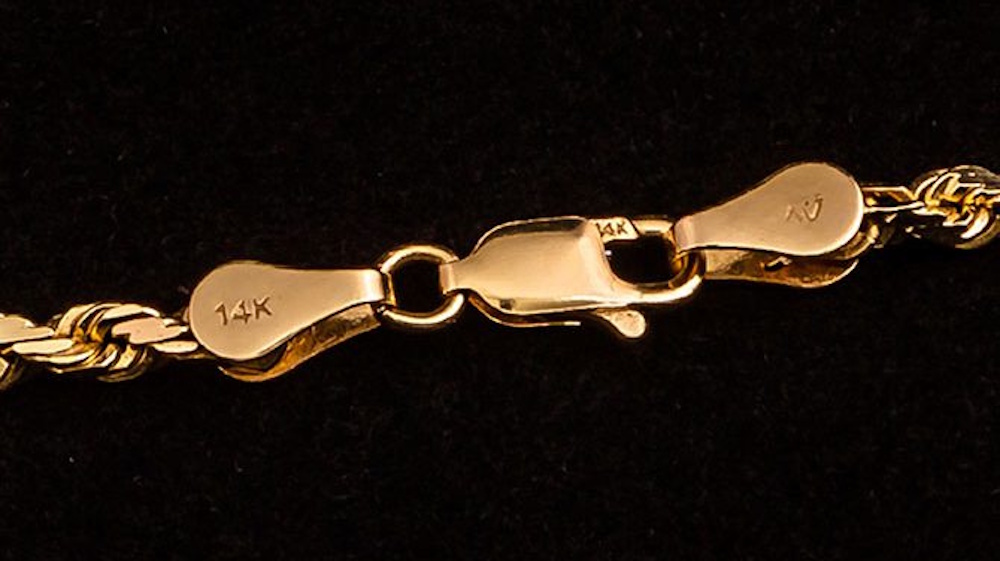
Gold jewelry comes in various karats (purity levels): 24K (pure gold, 99.9%), 22K (91.7% gold), 18K (75% gold), 14K (58.3% gold), and 10K (41.7% gold). Higher karat gold is softer and more susceptible to scratches and dents, while lower karat gold is harder and more durable due to alloy metals mixed with pure gold. Gold doesn’t tarnish or corrode, making it excellent for daily wear, but it can scratch, bend, and accumulate oils and dirt dulling its shine.
White gold is yellow gold alloyed with white metals (palladium, nickel, zinc) and typically plated with rhodium creating bright white appearance. The rhodium plating wears over time (1-3 years depending on wear), requiring periodic re-plating to maintain color. Without re-plating, white gold gradually shows its natural yellowish-white color beneath.
Rose gold (pink gold) is gold alloyed with copper creating warm pink tones. The copper can oxidize slightly over time, potentially darkening the color subtly. Rose gold is slightly harder than yellow gold due to copper content, making it reasonably durable for daily wear.
Platinum is extremely durable, dense, and naturally white. It doesn’t require plating like white gold and won’t fade or change color. Platinum develops a patina (subtle matte finish) over time from microscopic scratches—some people love this lived-in look while others prefer polished shine (restored through professional buffing). Platinum is heavier and more expensive than gold but extremely long-lasting, making it ideal for engagement rings and frequently-worn pieces.
Sterling silver (92.5% silver, 7.5% other metals, typically copper) is beautiful but tarnishes when exposed to air, moisture, and sulfur compounds. Tarnish is the black or brown discoloration forming on silver surfaces—not damage but oxidation that’s easily removed. Silver is softer than gold, scratching more easily and requiring gentle handling.
Gemstones: Understanding Hardness and Care Needs
Gemstones vary dramatically in hardness, durability, and care requirements. The Mohs hardness scale (1-10) measures scratch resistance, with diamonds at 10 (hardest natural material) and talc at 1 (softest).
Diamonds (Mohs 10): Extremely hard and durable, diamonds resist scratching and withstand daily wear excellently. However, diamonds can chip or fracture from sharp impacts at vulnerable points (corners, edges, thin sections). Despite their hardness, diamonds aren’t indestructible—dropping on hard surfaces or striking with force can damage them. Diamonds are also lipophilic (oil-attracting), meaning they accumulate oils, lotions, and dirt that dull brilliance, requiring regular cleaning for optimal sparkle.
Sapphires and Rubies (Mohs 9): These corundum gemstones are extremely hard and durable, second only to diamonds. Suitable for daily wear including engagement rings, they resist scratching and handle normal activities well. However, they can still chip or crack from severe impacts, and fracture-filled or glass-filled rubies/sapphires (common treatments) require gentler care than untreated stones.
Emeralds (Mohs 7.5-8): Despite decent hardness, emeralds are fragile due to natural inclusions (internal fractures and flaws) present in virtually all emeralds. Most emeralds are oil-treated or resin-filled to improve appearance and stability, but these treatments break down over time or with exposure to heat, chemicals, and ultrasonic cleaners. Emeralds require gentle care—avoid impacts, extreme temperature changes, harsh chemicals, and ultrasonic/steam cleaning.
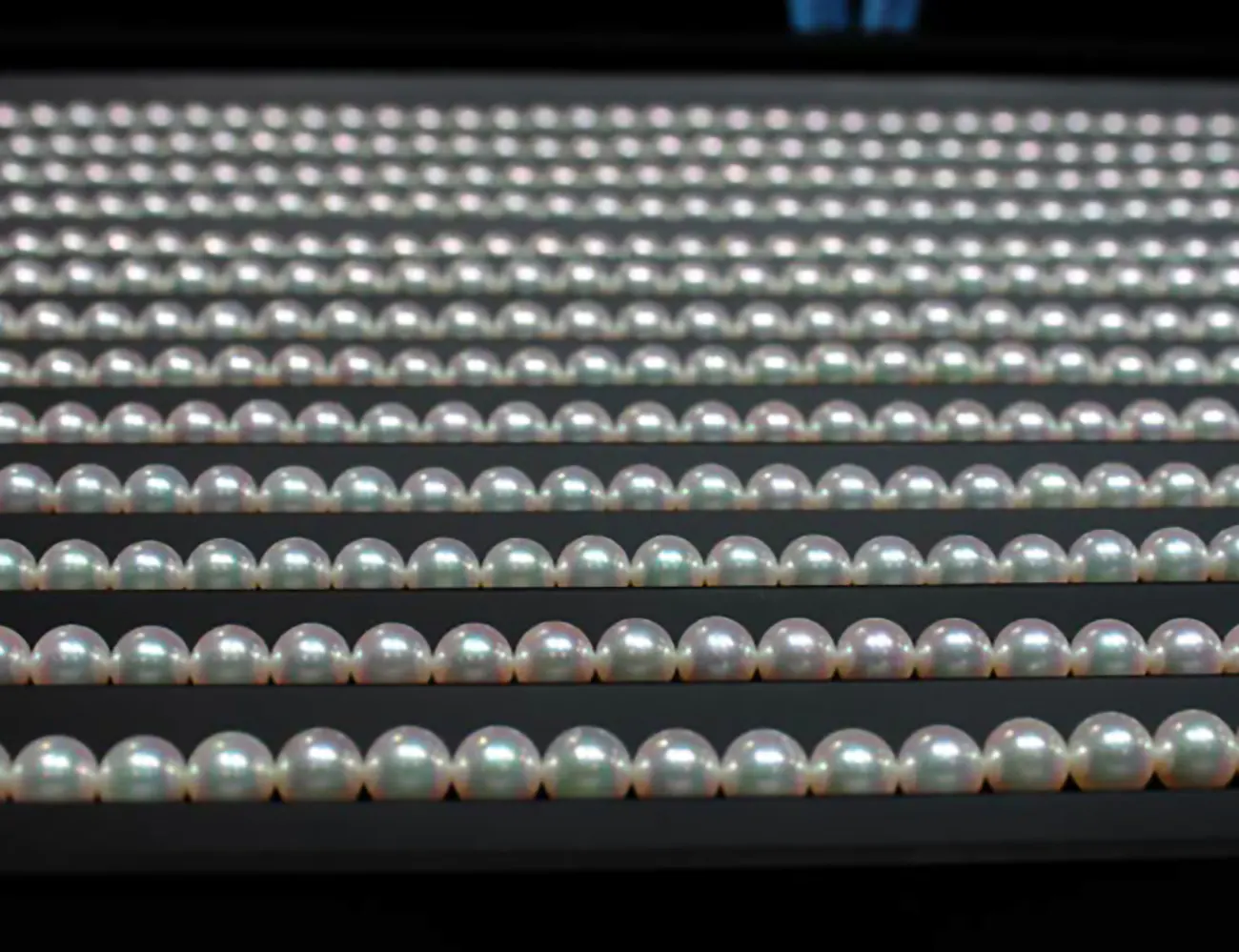
Pearls (Mohs 2.5-4.5): Extremely soft and porous organic gems composed of calcium carbonate and protein. Pearls are highly vulnerable to chemicals (perfumes, hairspray, cosmetics, cleaning products), acids (including perspiration), heat, and abrasion. They require the most delicate care of any commonly worn gemstone and should always be put on last (after makeup and perfume application) and removed first.
Opals (Mohs 5.5-6.5): Relatively soft and containing water (3-20% water content), opals can crack or craze (develop internal cracks) if they dry out or experience rapid temperature changes. They scratch easily and are sensitive to chemicals and impacts. Opals require gentle handling and should never be exposed to extreme temperatures or harsh cleaning methods.
Tanzanite, Aquamarine, Topaz (Mohs 7-8): Moderately hard but can cleave (split along natural planes) if struck incorrectly. These gems require reasonable care, avoiding harsh impacts while being suitable for occasional wear.
Understanding your jewelry’s materials determines appropriate care methods. What safely cleans diamonds can destroy pearls. What properly stores gold can tarnish silver. Material knowledge prevents damaging mistakes.
Shop on AliExpress via link: https://s.click.aliexpress.com/e/_c4UpG9k9
2. Daily Care and Wearing Habits
The “Last On, First Off” Rule
This simple principle prevents most jewelry damage and contamination: put jewelry on last when getting ready, remove it first when undressing. This means:
Apply makeup, perfume, hairspray, and lotions BEFORE putting on jewelry. These products contain chemicals, oils, and particles that accumulate on jewelry, dulling gemstones, corroding metals, and damaging delicate pieces like pearls. Perfume and hairspray are particularly damaging—the alcohol and oils coat jewelry creating film, while some perfume ingredients chemically react with pearls, opals, and certain metals.
Remove jewelry BEFORE showering, bathing, swimming, or exercising. Water, soap, shampoo, and chlorine damage jewelry. Soap leaves residue dulling gemstones. Chlorine (pools, hot tubs) corrodes gold and platinum over time, potentially discoloring or weakening metal. Saltwater corrodes metals and leaves deposits. Perspiration from exercise contains acids and salts that tarnish silver and can harm pearls.
Remove jewelry BEFORE sleeping. Nighttime wear increases risk of snagging, bending, or breaking jewelry. Chains wrap around necks dangerously, prongs catch on bedding potentially loosening settings, and pressure during sleep can bend soft metals or damage delicate pieces.
Remove jewelry BEFORE applying hand sanitizer, lotions, or handling chemicals. Hand sanitizer’s high alcohol content damages gemstones (particularly porous stones like pearls, opals, and turquoise) and can discolor metals over time. Lotions create film on diamonds and colored stones dulling their appearance.
What to Avoid While Wearing Jewelry
Household cleaning: Bleach, ammonia, chlorine, and harsh cleaners corrode metals, discolor gemstones, and destroy pearls and porous stones. Always remove jewelry before cleaning.
Gardening and yard work: Dirt accumulates in settings, tools can strike and damage gemstones, and garden chemicals harm jewelry. The risk of losing jewelry in soil or outdoor areas is also significant.
Cooking and food preparation: Grease, oils, and food particles accumulate in jewelry. Flour and dough work into crevices. The risk of jewelry falling into food or down drains increases dramatically.
Heavy lifting or strenuous activities: Impact risks increase, and pressure on rings can bend prongs or damage settings. Even hauling groceries or moving furniture creates risks.
Contact sports and vigorous exercise: Obvious impact risks, plus perspiration damage. Remove all jewelry before sports, gym workouts, or intense physical activities.
Working with machinery or tools: Jewelry can catch in machinery causing serious injury and jewelry damage. Even minor tools like wrenches or hammers create impact risks.
Regular Inspection Habits
Weekly quick checks: Briefly examine your frequently-worn pieces for loose stones, bent prongs, damaged clasps, or tangled chains. This takes 30 seconds but can prevent stone loss or jewelry damage by catching problems early.
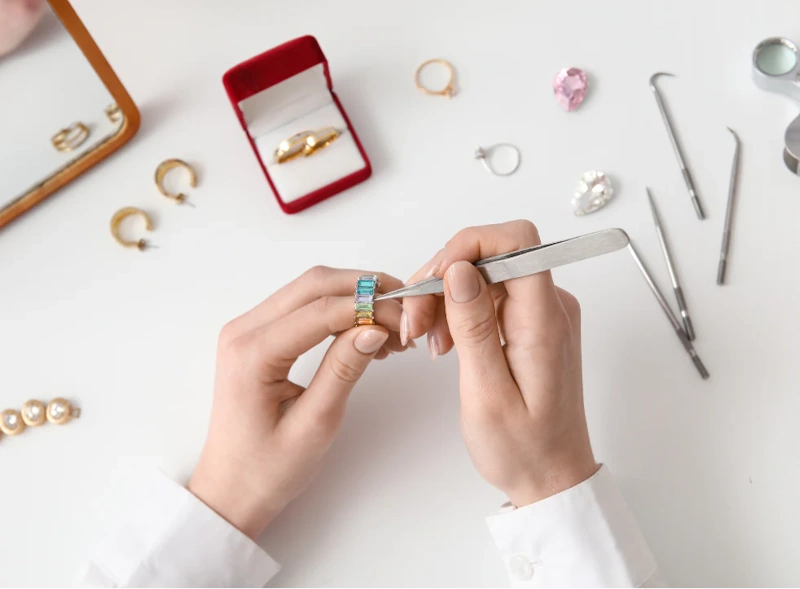
Monthly detailed inspection: Spend 5 minutes examining jewelry more carefully. Gently try wiggling gemstones—they shouldn’t move at all. Check prongs for wear or bending. Test clasps for security. Examine chains for weak links or kinks. Look for discoloration, tarnish, or damage.
The “tap test” for loose stones: Hold the piece near your ear and gently tap the setting. If you hear rattling, a stone is loose—immediately stop wearing the piece and take it to a jeweler. Continuing to wear jewelry with loose stones almost guarantees stone loss.
If you notice anything concerning—loose stones, worn prongs, damaged clasps, weakened chains—immediately stop wearing the piece and take it to a professional jeweler for repair. Delaying repair risks stone loss or further damage that may be irreparable.
3. Cleaning Methods for Different Jewelry Types
Safe At-Home Cleaning for Diamonds and Durable Gemstones
Materials needed:
- Small bowl
- Warm (not hot) water
- Mild dish soap (unscented, no moisturizers)
- Soft toothbrush (ultra-soft bristles, new brush dedicated to jewelry only)
- Soft lint-free cloth
Method:
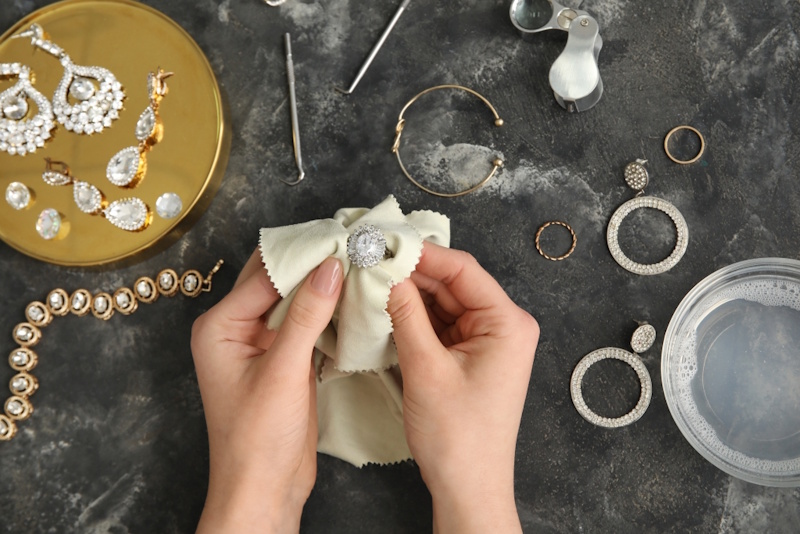
- Fill bowl with warm water and add 2-3 drops of mild dish soap
- Place jewelry in solution and let soak 10-15 minutes, loosening oils and dirt
- Gently brush using soft toothbrush, paying special attention to undersides of gemstones where dirt accumulates and prongs/settings where grime collects
- Rinse thoroughly under warm running water (close the drain or use a strainer!)
- Pat dry with soft lint-free cloth
- Allow to air dry completely before storing
This method safely cleans diamonds, rubies, sapphires, and other hard, durable gemstones set in gold or platinum. Perform weekly for frequently-worn pieces, monthly for occasional-wear pieces.
Important safety notes:
- Never clean jewelry over an open drain without protection
- Don’t use hot water (can shock some gemstones causing cracks)
- Don’t use harsh detergents, toothpaste, baking soda, or household cleaners
- Don’t scrub aggressively (damages metal and can loosen settings)
Cleaning Gold Jewelry
Pure gold doesn’t tarnish, but accumulated oils, lotions, and dirt dull its shine. The soap and water method described above works perfectly for gold jewelry with durable gemstones.
For plain gold jewelry without gemstones, you can use slightly stronger solutions:
- Warm water with a few drops of ammonia (10 parts water, 1 part ammonia)
- Soak 1-2 minutes maximum
- Gently brush with soft toothbrush
- Rinse thoroughly and dry completely
White gold care: Since white gold is rhodium-plated, avoid abrasive cleaning that wears the plating faster. Gentle soap and water cleaning preserves the rhodium layer. When white gold appears yellowish or worn, it needs professional rhodium re-plating (typically every 1-3 years depending on wear).
Cleaning Silver Jewelry
Silver tarnishes naturally when exposed to air and sulfur compounds. Regular cleaning prevents heavy tarnish buildup:
For lightly tarnished silver:
- Use the soap and water method described earlier
- Dry immediately and thoroughly (water accelerates tarnish)
- Buff with silver polishing cloth restoring shine
For heavily tarnished silver:
- Use commercial silver polish (liquid or cream) following product instructions
- Apply with soft cloth using gentle circular motions
- Remove all polish residue by rinsing thoroughly
- Dry completely and buff with clean cloth
Alternative method (for silver without gemstones):
- Line bowl with aluminum foil (shiny side up)
- Add hot water, 1 tablespoon baking soda, 1 tablespoon salt
- Place silver jewelry in solution ensuring contact with aluminum foil
- Chemical reaction removes tarnish (visible as smell and foil darkening)
- Soak 5-10 minutes, rinse thoroughly, dry completely
This method works through ion exchange but shouldn’t be used frequently (harsh on delicate details and antique patinas) and never on silver with gemstones.
Cleaning Pearls (Extremely Delicate)
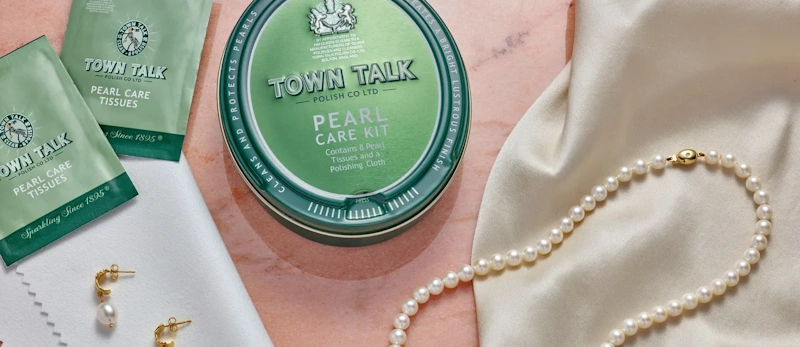
Pearls require the gentlest care of all jewelry:
After each wear:
- Wipe pearls with soft, slightly damp cloth removing body oils, makeup, and perfume residue
- This 30-second practice dramatically extends pearl life
Monthly cleaning:
- Prepare solution of lukewarm water with tiny amount of mild soap (1 drop per cup of water)
- Dip soft cloth in solution and gently wipe each pearl
- Immediately wipe with clean damp cloth removing all soap
- Dry thoroughly with soft cloth
- Let air dry completely (flat, not hanging) before storing
Pearl necklace/bracelet specific care:
- Restring pearl necklaces every 1-2 years (silk cord stretches and weakens)
- Professional restringing includes knotting between each pearl (prevents all pearls falling if string breaks and prevents pearls rubbing and scratching each other)
Never use on pearls:
- Ultrasonic cleaners (damage and crack pearls)
- Steam cleaners (damage pearls)
- Chemicals, including jewelry cleaning solutions
- Abrasive materials or brushes
- Baking soda, vinegar, or ammonia
Shop on AliExpress via link: wholesale-jewelry-storage-box
Cleaning Emeralds and Delicate Gemstones
Emeralds, opals, pearls, turquoise, lapis lazuli, and other porous or treated stones require gentle handling:
- Use only lukewarm water and extremely mild soap
- Don’t soak (quick dip only if necessary)
- Use soft cloth rather than brushes
- Dry immediately and thoroughly
- Never use ultrasonic or steam cleaners
- Avoid temperature extremes
- Don’t expose to chemicals, perfumes, or hairsprays
For these delicate stones, professional cleaning is often safer than at-home cleaning, as jewelers understand specific stone vulnerabilities and use appropriate gentle methods.
When to Use Professional Cleaning
Professional jewelers have specialized equipment providing deeper, safer cleaning than home methods:
Ultrasonic cleaners: Use high-frequency sound waves creating microscopic bubbles that remove dirt from hard-to-reach areas. Safe for diamonds, rubies, sapphires, and other hard stones in secure settings. NOT safe for pearls, opals, emeralds, tanzanite, peridot, or any stones with fractures or treatments. Also risky for loose settings (vibrations can loosen already-compromised prongs).
Steam cleaners: Use high-pressure steam removing grime. Safe for diamonds, sapphires, rubies in secure settings. NOT safe for pearls, opals, emeralds, or any heat-sensitive stones. Never use on jewelry with enamel, adhesives, or delicate components.
Professional cleaning is recommended:
- Annually for frequently-worn fine jewelry
- Before and after long-term storage
- Before special events (optimal brilliance for occasions)
- When jewelry appears dull despite home cleaning
- For delicate or valuable pieces requiring expert handling
- Combined with professional inspection (discussed next section)
4. Professional Maintenance and Inspection
Annual Professional Inspection
Even with excellent at-home care, annual professional inspection by qualified jewelers is essential. Jewelers examine aspects invisible to untrained eyes:
Prong inspection: Prongs wear down gradually from daily contact with surfaces. Worn prongs are the primary cause of lost gemstones—the stone remains secure until suddenly it doesn’t, and it’s gone. Jewelers measure prong height and thickness, identifying wear before it becomes critical. Re-tipping (building up worn prongs) costs $50-150 per prong—vastly less expensive than replacing lost gemstones worth hundreds or thousands.
Setting security: Jewelers check that bezels, channel settings, pave settings, and all other setting types remain secure. Settings loosen over time from metal fatigue and wear. Early detection prevents stone loss.
Metal integrity: Jewelers examine shanks (ring bands), chains, clasps, and joints for wear, stress fractures, thin spots, and damage. Shanks wear thin on undersides from daily contact with surfaces—rings can literally wear through if never inspected and repaired.
Clasp functionality: Necklace and bracelet clasps wear out, becoming difficult to close or spontaneously opening. Jewelers test clasps ensuring proper function and replace worn clasps before jewelry is lost.
Chain condition: Links weaken, solder joints fail, and chains develop kinks from improper storage. Jewelers identify compromised links before chains break, preventing loss.
Professional inspection typically costs $0-50 (many jewelers provide free inspection with cleaning). The value in preventing stone loss, jewelry loss, or major repairs far exceeds any inspection cost.
Rhodium Re-plating for White Gold
White gold’s rhodium plating wears off gradually from friction and exposure, revealing the natural yellowish-white color beneath. How quickly plating wears depends on:
- How frequently jewelry is worn
- Friction exposure (rings wear faster than earrings)
- Hand washing, sanitizer use, and chemical exposure
- Individual body chemistry (some people’s skin chemistry wears plating faster)
Most white gold jewelry needs re-plating every 1-3 years. The process takes 1-2 weeks:
- Jeweler removes stones (if necessary for safety)
- Jewelry is cleaned thoroughly
- Rhodium is electroplated onto the surface
- Stones are reset (if removed)
- Final polishing and inspection
Re-plating costs $50-150 depending on jewelry size and complexity. While not strictly necessary (underlying white gold is still perfectly functional), most people prefer maintaining the bright white appearance they originally purchased.
Restringing Pearls and Beaded Jewelry
Silk cord stretches and weakens over time, particularly from exposure to oils, perfumes, and moisture. Pearl necklaces and bracelets should be professionally restrung:
- Every 1-2 years for frequently worn pieces
- Every 3-5 years for occasional wear pieces
- Immediately if cord appears dirty, stretched, or frayed
Professional restringing includes:
- Removing old cord completely
- Cleaning pearls/beads
- Restringing on new silk or synthetic cord
- Knotting between each pearl/bead (prevents total loss if strand breaks and prevents beads scratching each other)
- Attaching secure clasp
- Final inspection
Restringing costs $40-100 depending on strand length and complexity. This maintenance prevents the heartbreak of broken strands with pearls scattering and potentially lost forever.
Refinishing and Restoration
Over years or decades, jewelry develops wear requiring professional restoration:
Polishing: Removes surface scratches and restores shine. However, polishing removes microscopic metal layers—excessive polishing over time can thin jewelry significantly. Professional jewelers polish conservatively, removing only necessary material. Expect polishing every 5-10 years for average wear.
Re-tipping and prong rebuilding: Adds metal to worn prongs restoring protection for gemstones. Essential maintenance for prong-set jewelry, typically needed every 5-15 years depending on wear.
Shank replacement: When ring shanks wear dangerously thin, jewelers replace the entire shank (band) while preserving the original setting and gemstones. This major repair extends ring life indefinitely.
Reconditioning antique and heirloom jewelry: Specialized jewelers restore vintage and antique pieces, repairing damage while preserving historical character and value. Proper restoration requires expertise—never attempt DIY repairs on valuable or sentimental pieces.
5. Storage Solutions That Prevent Damage
The Golden Rules of Jewelry Storage
Store pieces separately: Jewelry stored together tangles, scratches, and damages other pieces. Diamonds (hardest gemstones) scratch everything including other diamonds. Chains wrap around each other creating impossible knots. Separate storage is non-negotiable for jewelry preservation.
Store in cool, dry, dark locations: Heat, moisture, and light damage jewelry. Avoid bathrooms (humidity tarnishes silver and can damage pearls), windowsills (sunlight fades some gemstones and damages pearls), and uncontrolled temperature areas (attics, garages, cars).
Store in lined boxes or pouches: Soft lining prevents scratches. Individual pouches (fabric, suede, or special anti-tarnish cloth) protect each piece.
Keep chains fastened and straight: Close clasps preventing tangling and hang or lay flat rather than coiling tightly. Coiling creates kinks and weak points in chains.
Store silver in anti-tarnish environment: Use anti-tarnish strips, cloths, or bags that absorb sulfur compounds preventing tarnish. Alternatively, store silver in airtight containers minimizing air exposure.
Types of Jewelry Storage
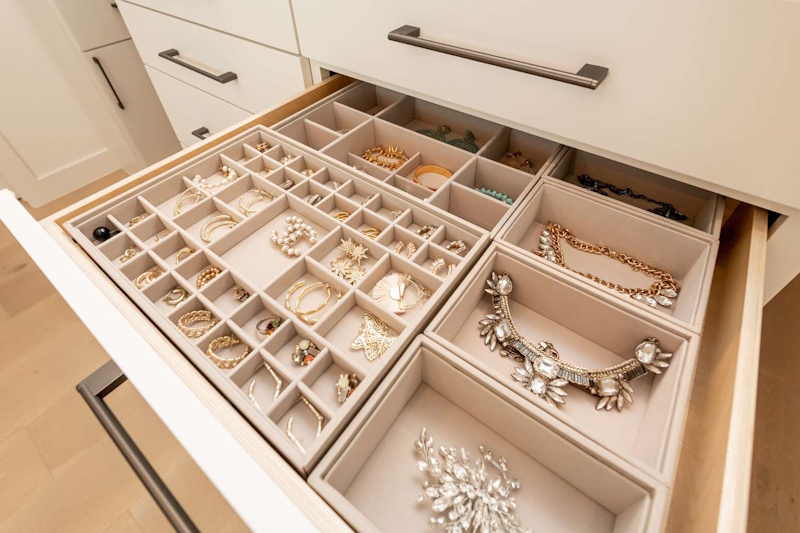
Jewelry boxes with compartments: Traditional solution with divided sections, lined compartments, and ring rolls. Choose boxes with:
- Soft fabric lining (velvet, suede, felt)
- Sufficient depth (jewelry shouldn’t press against lid when closed)
- Separate compartments preventing contact between pieces
- Secure closure (prevents accidental opening and spilling)
Individual pouches: Soft fabric bags (cotton, microfiber, suede) that protect individual pieces. Particularly useful for jewelry you travel with or occasionally-worn pieces stored safely in drawers. Anti-tarnish pouches for silver jewelry slow oxidation.
Hanging organizers: Clear compartments hanging in closets provide visible storage and easy access. Works well for costume jewelry and frequently-rotated pieces but not ideal for fine jewelry long-term storage (dust exposure, potential temperature fluctuations).
Safe or safety deposit box: For extremely valuable jewelry, insurance often requires secured storage. Home safes protect against theft (and potentially fire if fireproof) while safety deposit boxes at banks provide maximum security but inconvenient access.
Special Storage Considerations
Pearls: Never store in airtight containers or safety deposit boxes—pearls need slight moisture maintaining their water content. Store pearls in soft pouches in bedroom drawers or jewelry boxes where air circulates. Alternatively, store flat (not hanging—silk cord stretches) in partially open boxes.
Opals: Like pearls, opals contain water and can dry out, crack, or craze in extremely dry environments. Store in slightly humid environments or with dampened cloth nearby (not touching jewelry).
Silver: Store in anti-tarnish bags or with anti-tarnish strips preventing oxidation. Some people store silver in airtight ziplock bags with anti-tarnish strips—this significantly slows tarnish but requires ensuring jewelry is completely dry before sealing (trapped moisture accelerates tarnish).
Watches: Store watches in original boxes or watch cases protecting faces and movements. Automatic watches benefit from watch winders (devices that rotate watches, keeping movements functioning) or regular wearing—automatic movements can seize from extended storage without movement.
Travel Jewelry Storage
Traveling with fine jewelry requires special care preventing loss, theft, and damage:
Never check jewelry in luggage: Always carry jewelry in carry-on bags. Checked luggage gets lost, stolen, or damaged too frequently to risk valuable jewelry.
Use travel jewelry cases: Compact cases with padded compartments designed for travel protect jewelry while minimizing bulk. Choose cases with:
- Secure zipper or closure
- Padded sections
- Ring rolls and necklace compartments
- Small enough for purses or carry-on bags
Minimal jewelry for travel: Only bring jewelry you’ll actually wear. Every piece travels with loss or theft risk—don’t bring your entire collection unnecessarily.
Wear high-value pieces during transit: Wedding and engagement rings, valuable earrings, and other irreplaceable pieces are safest worn on your body during travel rather than packed (where they could be lost or stolen).
Travel insurance: Consider travel insurance covering jewelry for trips where you’re bringing valuable pieces. Standard travel insurance may have low jewelry coverage limits ($500-1000)—purchased additional coverage protects high-value items.
Shop on AliExpress via link: wholesale-jewelry-travel-case
6. Protecting Jewelry During Activities
High-Risk Activities Requiring Jewelry Removal
Swimming (pools, oceans, lakes): Cold water causes fingers to shrink—rings slip off easily in water and are lost forever. Chlorine in pools corrodes metals over time. Saltwater corrodes metals and leaves deposits. Sand scratches metals and gemstones. Ocean swimming risks losing jewelry in vast expanses making recovery impossible.
Hot tubs and saunas: High heat can damage some gemstones (opals, emeralds, pearls) and cause thermal shock leading to cracks. Chlorine and chemicals corrode metals. Heat causes fingers to swell, then shrinking when cooling creates loss risk.
Exercise and sports: Impact risks, equipment catching jewelry, perspiration damage, and potential injury from jewelry caught in equipment all create hazards. Remove all jewelry before exercise.
Showering and bathing: Soap leaves residue dulling gemstones. Jewelry slips off soapy wet hands falling down drains. Shampoo and conditioner coat jewelry. Over time, repeated exposure weakens settings and corrodes metals.
Sleeping: Jewelry catches on bedding, hair wraps in chains, pressure bends soft metals, and prongs snag fabrics potentially loosening settings. Particularly important to remove dangling earrings (painful if caught during sleep) and chains (can wrap dangerously around neck).
Applying makeup, perfume, hairspray, lotions: These products coat jewelry with films, chemicals react with pearls and porous stones, and buildup dulls gemstones. Always put jewelry on after applying these products.
Medium-Risk Activities Requiring Careful Consideration
Cooking: Grease, oils, food particles, and flour accumulate in jewelry. Handling raw meat creates sanitation concerns. The risk exists of jewelry falling into food or hot liquids. Many cooks prefer removing rings entirely while cooking; others keep them on but wash hands and jewelry thoroughly after cooking.
Typing and computer work: Constant desk contact wears ring shanks and prongs over time. While not necessarily requiring removal, awareness of gradual wear emphasizes importance of annual professional inspection checking for thinning shanks.
Gardening: Dirt, chemicals, fertilizers, and pesticides harm jewelry. The risk of losing rings in soil or damaging settings with tools is significant. Garden gloves don’t adequately protect jewelry—removal is safer.
Painting and home projects: Paint, solvents, wood stain, and other chemicals damage jewelry. Even “wash-off” products leave residue. Physical projects risk impacts damaging settings or losing stones.
Safe Activities with Precautions
Office work (non-manual): Generally safe if avoiding harsh chemicals, being careful around copiers and printers (toner), and washing hands after handling paper (paper dust accumulates in settings).
Dining out and social events: Safe activities where jewelry is actually meant to shine. However, remain aware of jewelry when gesturing (avoid banging rings on tables or walls) and wash hands after eating (oils transfer to jewelry).
Air travel: Safe for wearing jewelry but consider security screening. Fine jewelry rarely triggers metal detectors (insufficient metal content), but extensive jewelry might require additional screening. Consider TSA’s potential need to inspect jewelry.
The Washing Hands Dilemma
Frequent hand washing removes dirt and germs but exposes rings to soap, water temperature fluctuations, and loss risk. The balancing considerations:
Keep rings on if:
- Settings are secure (recently inspected)
- Using gentle soap (harsh industrial soaps damage jewelry faster)
- Drying hands thoroughly (water accelerates tarnish and leaves deposits)
- Aware of ring security when hands are soapy
Remove rings if:
- Washing hands in public restrooms (high loss risk from slippery soapy hands over unfamiliar sinks)
- Using harsh industrial soaps or hand sanitizer repeatedly
- Settings are loose or jewelry is delicate
Many people develop the habit of removing rings and placing in pockets before public restroom use—just remember to put them back on afterward! Jewelry left on restroom counters is often lost or stolen.
7. Insurance and Documentation
Why Jewelry Insurance Matters
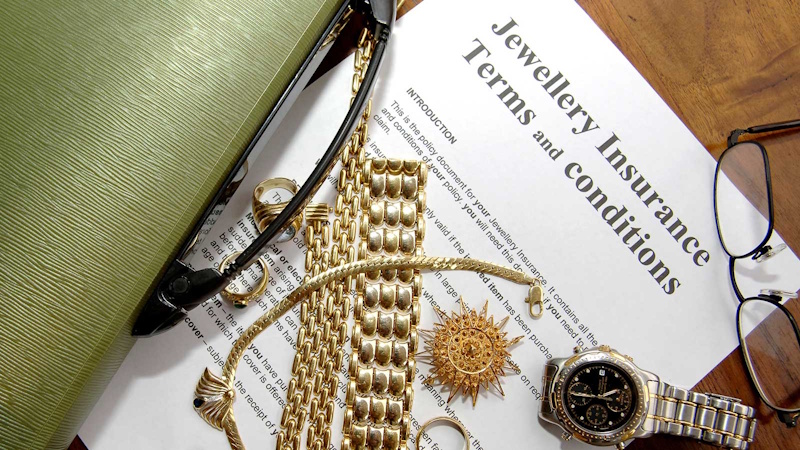
Homeowners or renters insurance typically includes minimal jewelry coverage—often $1,000-2,000 maximum for all jewelry combined, with per-item limits of $500-1,000. If you own an engagement ring worth $5,000, a necklace worth $3,000, and inherited pieces worth thousands more, standard insurance is woefully inadequate.
Jewelry insurance provides:
- Higher coverage limits: Insure each piece for its full value
- Comprehensive protection: Coverage for loss (not just theft), mysterious disappearance, accidental damage, and sometimes even lost stones
- No deductible: Most jewelry policies have no deductible for claims
- Worldwide coverage: Protection wherever you travel
- Replacement value: Coverage for current replacement cost even if value has increased since purchase
Obtaining Jewelry Insurance
Specialized jewelry insurers: Companies like Jewelers Mutual, Lavalier, and others specialize in jewelry insurance, offering comprehensive coverage at competitive rates (typically 1-2% of jewelry value annually—so $100-200 annual premium for $10,000 of jewelry).
Scheduling on homeowners insurance: Adding “scheduled personal property” or “floater” to homeowners/renters insurance provides specific itemized coverage for high-value jewelry. This requires appraisals and increases homeowners premiums but provides adequate coverage.
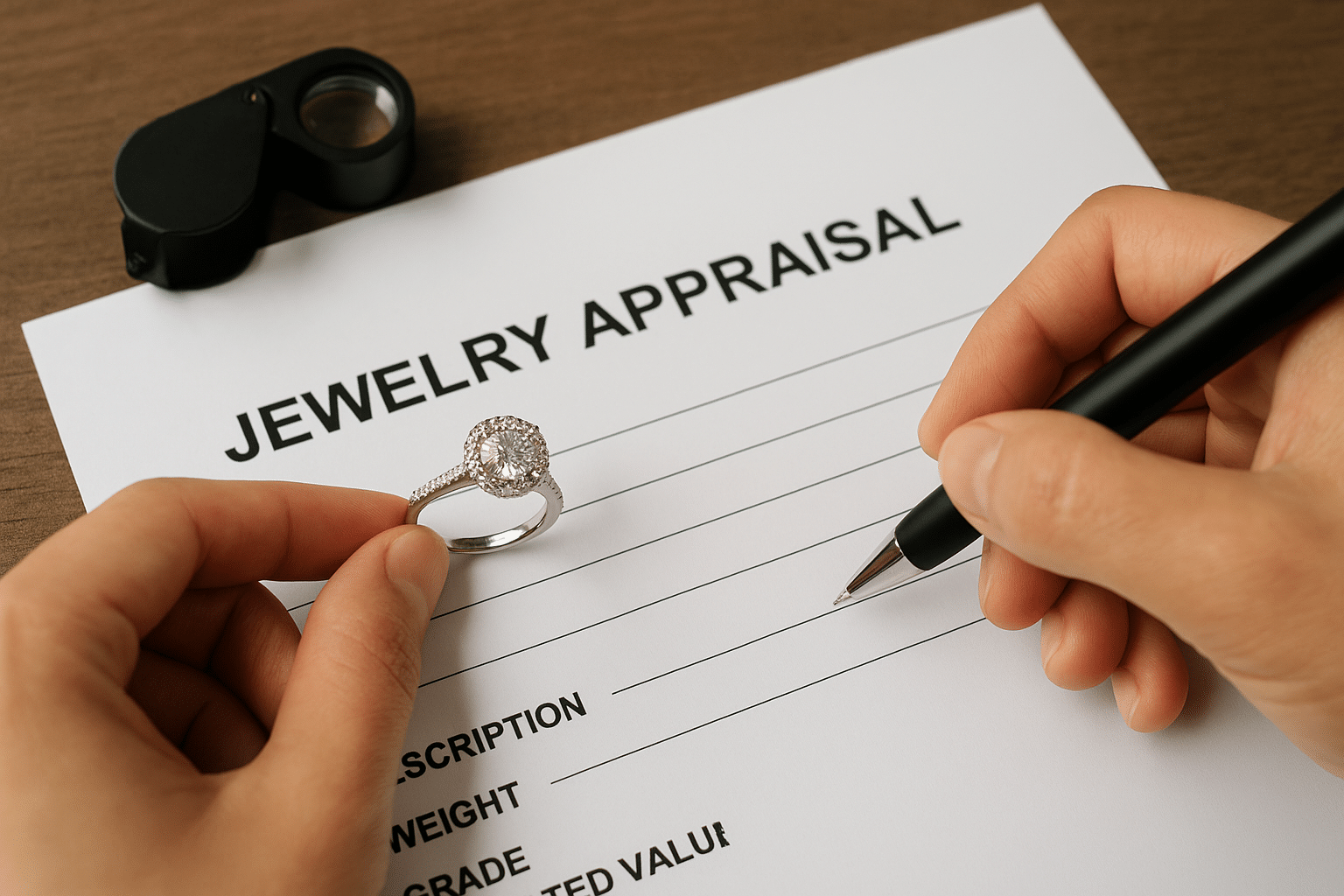
Appraisals required: Insurance requires professional appraisals documenting:
- Detailed descriptions (metal type, karat, weight, gemstone types, cuts, carat weights, clarity, color)
- Current replacement value
- Photographs from multiple angles
- Appraiser credentials and contact information
Appraisals cost $50-150 per piece (depending on complexity) and should be updated every 3-5 years as jewelry values change.
Documentation Best Practices
Photograph every piece: Take clear, detailed photos from multiple angles showing:
- Overall piece
- Close-ups of gemstones
- Settings and details
- Any unique characteristics or imperfections (help prove ownership if stolen and recovered)
- Scale (photo with ruler showing size)
Store photos digitally in cloud storage and physically in safety deposit box or safe.
Maintain purchase receipts: Original purchase receipts document value and ownership. Store copies (physical and digital) separately from jewelry.
Create written descriptions: Document each piece’s characteristics:
- Metal type, karat, and approximate weight
- Gemstone types, cuts, approximate carat weights, and colors
- Setting style
- Any unique features, engravings, or maker’s marks
- Approximate dimensions
- Purchase date and location (if known)
Record serial numbers: Some jewelry (particularly watches and some branded pieces) have serial numbers—record them for identification if stolen.
Store documentation securely: Keep copies in multiple locations:
- Digital copies in encrypted cloud storage
- Physical copies in home safe or safety deposit box
- Copy with insurance agent or attorney
Update documentation regularly: As collections grow or change, update photos, descriptions, and appraisals ensuring coverage remains adequate and current.
What to Do if Jewelry is Lost or Stolen
Immediate steps:
- Search thoroughly—jewelry is often misplaced rather than lost
- Retrace your steps and check everywhere you’ve been
- Check all pockets, bags, car, and home thoroughly
- Ask family members and check with locations you visited
If truly lost or stolen:
- File police report immediately (required for insurance claims and aids recovery if jewelry is pawned or sold)
- Contact insurance company filing claim promptly
- Provide all documentation (photos, appraisals, receipts, descriptions)
- Contact local pawn shops and watch online marketplaces (stolen jewelry often appears for resale)
- Check with local jewelers (stolen jewelry sometimes brought for “repairs” or resizing)
Conclusion: Jewelry as Heirlooms
Fine jewelry represents investment—financial investment in precious materials, emotional investment in memories and relationships, and investment in beauty that transcends trends and time. With proper care, jewelry lasts not just lifetimes but generations, becoming treasured heirlooms carrying family history and stories.
The vintage engagement ring your grandmother wore survives to grace your hand because someone cared for it properly. The antique brooch passed through generations remains beautiful because owners understood preservation. Your jewelry deserves the same care, ensuring it remains gorgeous for your children, grandchildren, and great-grandchildren to treasure.
Jewelry care isn’t burden—it’s gift to your future self and future generations. The minutes spent weekly cleaning, the consciousness of when to remove pieces, the annual professional inspection, the proper storage—these small acts preserve treasures for decades. The alternative is preventable damage, lost stones, broken chains, and diminished beauty requiring expensive repairs or irreplaceable loss.
Your jewelry tells your story. Care for it with love and intention, and it will continue telling that story long after you’re gone, connecting generations through beauty and meaning.
Frequently Asked Questions
Q: How often should I clean my engagement ring?
A: For daily-worn engagement rings, clean weekly using gentle soap and water method. Professional cleaning and inspection should occur annually. This maintains optimal sparkle and catches any setting issues before stones loosen.
Q: Can I wear my jewelry in the shower?
A: No. Soap leaves residue dulling gemstones, jewelry can slip off and fall down drains, shampoo/conditioner coat jewelry, and repeated exposure weakens settings and corrodes metals over time. Always remove jewelry before showering.
Q: My white gold ring looks yellowish—is something wrong?
A: No, this is normal. White gold is rhodium-plated to achieve bright white appearance. The plating wears off gradually from wear and friction, revealing the natural yellowish-white color beneath. Solution: professional rhodium re-plating every 1-3 years restores original appearance.
Q: How should I store pearls?
A: Store pearls in soft cloth pouches or boxes with air circulation (not airtight containers). Store flat rather than hanging (prevents cord stretching). Pearls need slight humidity—never store in extremely dry environments or safety deposit boxes. Wipe with soft damp cloth after each wearing to remove oils and residue.
Q: Can I use ultrasonic cleaners on all jewelry?
A: No. Ultrasonic cleaners are safe only for diamonds, rubies, and sapphires in secure settings. Never use on pearls, opals, emeralds, tanzanite, or any porous, fractured, or delicate stones. Also unsafe for loose settings (vibrations can loosen compromised prongs) or jewelry with adhesives or enamel.
Q: How do I prevent my silver jewelry from tarnishing?
A: Store silver in anti-tarnish pouches or with anti-tarnish strips. Keep away from humidity and air exposure. Wear silver regularly (oils from skin actually help prevent tarnish). Clean tarnish immediately when it appears rather than letting it build up. Consider airtight storage with anti-tarnish strips for maximum protection.
Q: Should I remove my wedding ring when washing hands?
A: This depends. For routine hand washing at home with gentle soap, most people keep rings on (ensure thorough drying afterward). For public restrooms, harsh industrial soaps, or when using hand sanitizer frequently, removing rings is safer. If removing, place in secure pocket to prevent forgetting and loss.
Q: How often should I have my jewelry professionally inspected?
A: Annually for frequently-worn fine jewelry, especially pieces with gemstones set in prongs. This catches worn prongs, loose settings, thin shanks, and other issues before they result in stone loss or jewelry damage. Inspection typically costs $0-50 and prevents expensive losses and repairs.
Q: Can hand sanitizer damage my jewelry?
A: Yes, particularly with repeated exposure. Hand sanitizer’s high alcohol content can dull gemstones (especially porous stones like pearls, opals, and turquoise), discolor metals over time, and damage certain treatments and adhesives. While occasional exposure won’t immediately destroy jewelry, frequent sanitizer use while wearing rings accelerates damage. Best practice: remove rings before applying sanitizer or apply sanitizer, allow it to dry completely, then put rings back on.
Q: Is it safe to sleep wearing jewelry?
A: No. Sleeping in jewelry creates multiple risks: chains can wrap around neck dangerously, earrings catch painfully on pillows and hair, prongs snag bedding potentially loosening settings, soft metals can bend from pressure during sleep, and overall wear accelerates. Remove all jewelry before sleeping.
Articles related:
Tags
📧 Get More Articles Like This
Subscribe to receive product reviews and buying guides in your inbox!
We respect your privacy. Unsubscribe at any time.