Why Sprinters Look Down at Finish Line: The 0.01-second technique that could win them an Olympic gold medal
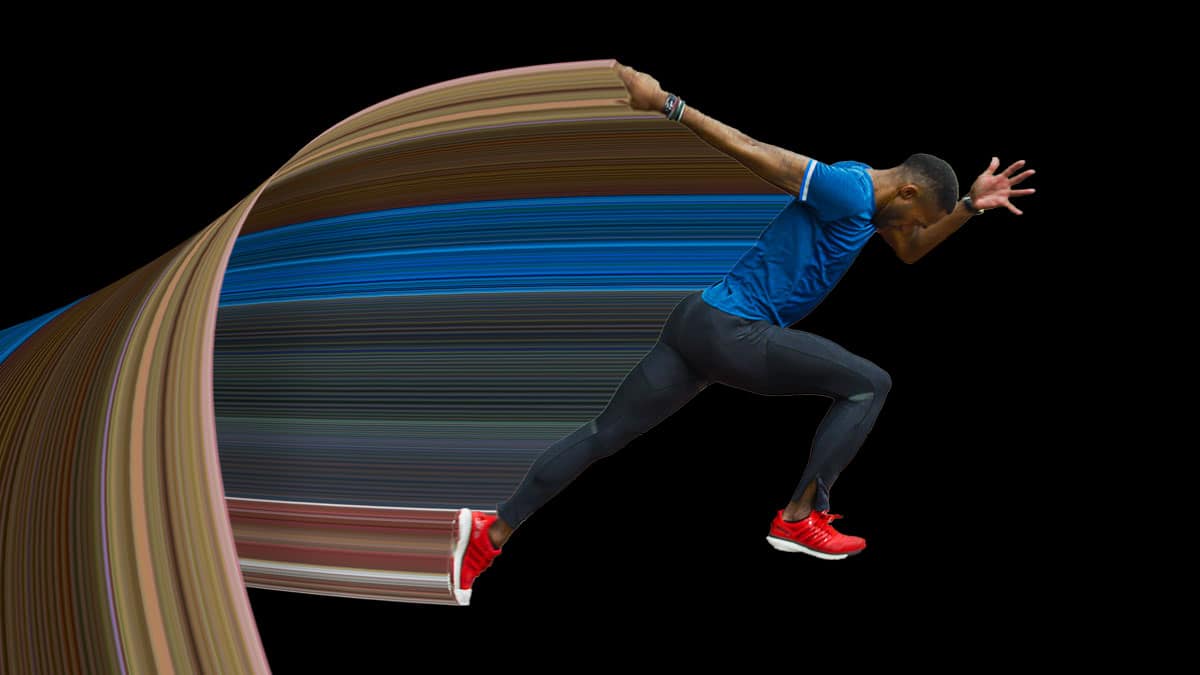
Table of Contents
- Introduction: The Split Second That Changes Everything
- The Biomechanical Science Behind Looking Down
- Photo Finish Rules: What Actually Determines the Winner
- The Evolution of Finish Line Technique Through Olympic History
- How Head Position Affects Torso Placement
- Training Methods Elite Sprinters Use to Perfect the Lean
- Common Mistakes That Cost Races
- Technology That Measures the Unmeasurable
- Conclusion: Mastering the Art of the Finish
Introduction: The Decisive Moment That Haunts Olympic Dreams
The morning after the 2016 Rio Olympics 400-meter final, Shaunae Miller-Uibo woke up to discover she had become both a legend and a controversy. The Bahamian sprinter had done something that appeared reckless to television audiences worldwide but was actually a calculated biomechanical decision refined through thousands of hours of practice. In the final two meters of the race, as American favorite Allyson Felix appeared certain to claim gold, Miller-Uibo executed a full-body dive across the finish line that television commentators initially called desperate. The photo finish revealed she had won by exactly 0.07 seconds, her torso breaking the plane a fraction before Felix’s upright chest crossed the line. What millions of viewers didn’t understand was that this wasn’t desperation or luck—it was pure physics applied at the absolute limit of human performance. The dive represented years of training in a technique that most recreational athletes never practice and many coaches fail to teach properly.
The truth hiding in plain sight on every Olympic track is far more fascinating than a simple dive for glory. Elite sprinters don’t actually look at the finish line as they approach it. Instead, they deliberately drop their gaze downward in the final strides, triggering a biomechanical chain reaction that rotates their torso forward without sacrificing forward velocity. This counterintuitive technique—looking down when you desperately want to see the finish line—represents one of sport’s most elegant applications of physics to human movement. The downward head position isn’t random or instinctive. It’s the result of decades of biomechanical research showing that head position directly controls torso angle through the body’s vestibular system and postural reflexes. When a sprinter running at nearly 12 meters per second drops their chin toward their chest in the final stride, their brain interprets this as the beginning of a forward fall and automatically rotates the shoulders forward to maintain balance. This automatic response happens faster than conscious thought, creating the perfect finishing position without disrupting the sprint rhythm that took the entire race to establish.
Before delving into the details of the article, also watch this video for more information about runners, which reviews the scientific analysis of the physical phenomenon behind runners slowing down in the final meters:
Consider the mathematics that make this technique absolutely essential at elite levels. At world-class sprint speeds, athletes cover approximately 12 meters per second during peak velocity. This means they advance 0.012 meters—slightly more than one centimeter—every millisecond. The timing systems used at Olympic competitions measure to the thousandth of a second, meaning the difference between gold and silver can literally be measured in the width of a finger. In this microscopic margin of victory, the positioning of the torso becomes paramount because it’s the torso, not the head or limbs, that determines the official finish time. A sprinter who can angle their torso forward by just 10 centimeters through optimal technique gains approximately 0.008 seconds—enough to change medal positions in races routinely decided by 0.01 seconds. The history of Olympic sprinting is littered with races where this exact scenario played out, where an athlete who appeared to be in second place for 99 meters claimed victory in the final meter through superior technique.

The 2012 London Olympics 100-meter final provides the perfect case study in how finish technique determines Olympic destinies. Usain Bolt won in 9.63 seconds, but the margin between Bolt and bronze medalist Justin Gatlin was just 0.12 seconds—the time it takes to blink once. Within that infinitesimal time window, three athletes finished within 0.05 seconds of each other, their positions determined entirely by who executed the superior finishing technique. Slow-motion analysis of the photo finish revealed that both Bolt and silver medalist Yohan Blake dropped their heads approximately 1.8 meters before the line, initiating the torso rotation that pushed their chests forward. Gatlin, running with his head up and chin high, lost critical centimeters that could have elevated him to silver. This pattern repeats in Olympic finals year after year because at the absolute pinnacle of human performance, technical perfection matters as much as raw speed. The athletes competing in Olympic sprint finals are separated by marginal physical differences—perhaps two percent in top-end velocity—but technique can create advantages or disadvantages of five percent or more.
What makes the looking-down technique particularly fascinating from a biomechanical perspective is that it seems to violate basic athletic instincts. Every athlete is taught to keep their head up, to focus on their target, to maintain upright posture. Sprinters spend the first ninety meters of a 100-meter race doing exactly that, fighting to maintain perfect upright mechanics that maximize velocity. Then, in the final five meters, they must deliberately abandon that upright posture and initiate what biomechanists call a “controlled fall” toward the finish line. This transition from maximum velocity maintenance to strategic position manipulation represents one of the most difficult skills in track and field because it must be executed with perfect timing while the body is under extreme physiological stress. Athletes who practice the technique poorly often lean too early, losing momentum and actually slowing down before the finish. Those who lean too late gain no advantage whatsoever. The sweet spot—that precise moment when looking down triggers the perfect torso angle without disrupting velocity—occurs in a window lasting less than half a second, at the exact moment when oxygen debt is maximal and decision-making capacity is minimal.
The broader implications of finish line technique extend far beyond individual races. At the Olympic level, where sponsorships worth millions of dollars hinge on medal color, the 0.01-second advantage created by proper technique can determine an athlete’s entire financial future. A gold medalist typically earns three to five times more in endorsements than a silver medalist, and silver medalists earn double what bronze medalists receive. This creates enormous incentive for coaches and athletes to master every technical detail that might provide even fractional advantages. Modern sprint coaching has evolved to include specialized finish line training sessions where athletes practice the lean hundreds of times at various speeds and from different distances, building the muscle memory that allows perfect execution under championship pressure. Some elite training programs use motion capture technology to analyze torso angles and head positions during practice finishes, providing real-time feedback that allows athletes to refine their technique to within millimeters of optimal positioning. This level of technical precision represents a massive change from coaching methods used even twenty years ago, when finish technique was often taught casually if at all.
The evolution of timing technology has fundamentally changed how sprint performance is measured and analyzed. Modern systems integrate multiple measurement modalities including high-speed imaging, force sensing, and atomic time synchronization. Government research facilities have contributed substantially to developing the measurement standards that ensure fair competition at the highest levels of athletics.
The Biomechanical Science Behind Looking Down
The physics governing finish line technique in sprinting represent a perfect intersection of biomechanics, neurology, and practical athletics. When a sprinter initiates the downward head movement approximately 1.5 to 2 meters before the finish line, they trigger a cascade of automatic postural adjustments that have been programmed into human neurology through millions of years of evolution. The human vestibular system, located in the inner ear, constantly monitors head position relative to gravity and sends rapid signals to postural muscles throughout the body to maintain balance. When the head tilts forward beyond a certain threshold—approximately 30 to 35 degrees from vertical—the brain interprets this as the beginning of a fall and automatically activates the anterior chain muscles to prevent impact. This automatic response, called the vestibulospinal reflex, causes the shoulders to rotate forward and the chest to thrust outward, creating exactly the body position that pushes the torso across the finish line ahead of an upright competitor.
Research conducted at the Institute of Biomechanics and Orthopaedics at German Sport University Cologne has quantified the precise advantages created by optimal head positioning during sprint finishes. Their studies using high-speed motion capture revealed that elite sprinters who initiate head drop at the optimal distance gain torso advancement of 8 to 12 centimeters compared to their body position with head held high. At championship sprint speeds of 11.5 to 12 meters per second, this torso advancement translates to time savings of 0.007 to 0.010 seconds—frequently enough to change medal positions in races where podium finishers are separated by 0.05 seconds or less. The researchers found that head angle matters enormously for achieving maximum torso advancement. A head drop of 25 degrees creates minimal torso rotation, while a drop of 40 degrees creates excessive forward rotation that can cause loss of balance and reduced forward velocity. The optimal angle falls between 30 and 35 degrees, which creates maximum torso advancement while maintaining the body’s center of mass in a position that preserves forward momentum. This narrow optimal range explains why finish technique requires such extensive practice to execute correctly under race conditions.
The interaction between head position and torso angle becomes even more complex when considering the role of arm movement during the finish. Biomechanical analysis has shown that sprinters who execute the optimal finish technique don’t simply drop their heads—they coordinate head drop with specific arm movements that enhance torso rotation without disrupting balance. The most effective technique involves driving one arm forward while the opposite arm pulls backward, creating a rotational force that helps propel the torso forward. This arm action must be precisely timed with the head drop because executing the movements out of sequence can create opposing forces that cancel each other out or, worse, cause the athlete to stumble. World-class sprinters have practiced this coordinated movement pattern thousands of times, developing what sports scientists call “motor programs”—pre-programmed movement sequences that the nervous system can execute automatically without conscious thought. During actual competition, when oxygen debt is maximal and cognitive function is impaired by exhaustion, these automatic motor programs allow athletes to execute perfect technique without having to think about individual movement components.

The force production dynamics during the finishing lean reveal why technique matters so profoundly at elite levels. During normal upright sprinting, athletes generate approximately 800 to 1000 pounds of force with each foot strike, with that force directed primarily vertically to counteract gravity and maintain forward velocity. When initiating the finishing lean, sprinters must maintain force production while simultaneously changing their body angle, which requires extraordinary coordination and strength. Studies measuring ground reaction forces during practice finishes have demonstrated that the best finishers maintain force production at 95 to 98 percent of their maximum upright levels while executing the lean, whereas athletes with poor technique often see force production drop to 85 to 90 percent as they attempt to change position. This reduction in force production directly translates to velocity loss that can completely negate any positional advantage gained through the lean. The technical challenge is maintaining maximum force application through the final foot strikes while the body’s center of mass shifts forward—a skill that requires specific strength training focused on maintaining power output in compromised positions.
Neurological research into sprint finishing has revealed fascinating insights about decision-making under extreme physiological stress. During the final seconds of a maximal sprint, blood lactate levels exceed 15 millimoles per liter, creating an acidic environment that impairs muscle function and reduces neural transmission speed. Simultaneously, oxygen debt triggers survival reflexes that make the brain prioritize breathing over precision movement control. In this compromised physiological state, athletes must execute a complex technical movement with precision timing measured in fractions of a second. Neuroimaging studies of elite sprinters have shown that successful finish execution correlates with increased activation in the supplementary motor area and premotor cortex—brain regions responsible for executing learned motor patterns automatically. This suggests that extensive practice creates neural pathways that allow finish technique to be executed as an automatic program rather than requiring conscious control, which would be impaired by the physiological stress of maximal sprinting. Athletes with thousands of repetitions of finish practice show activation patterns similar to performing simple habitual movements, indicating that the complex coordination has become neurologically automated through training.
Photo Finish Rules: What Actually Determines the Winner
The official rules governing sprint finishes have evolved dramatically over more than a century of Olympic competition, driven by advances in timing technology and the need to resolve races separated by increasingly smaller margins. Under current World Athletics regulations that have governed competition since the 1932 Los Angeles Olympics, the winner of a sprint race is determined when the first athlete’s torso crosses the vertical plane extending upward from the finish line. This vertical plane concept is crucial to understanding why finish technique matters so profoundly. The plane rises infinitely upward from the finish line, meaning that an athlete whose torso breaks the plane at shoulder height finishes at exactly the same instant as one whose torso breaks it at chest height. This is why sprinters don’t attempt to jump upward at the finish—vertical displacement provides no advantage whatsoever. All that matters is horizontal position of the torso relative to the vertical plane, which is why the lean technique focuses entirely on advancing the torso forward without any upward component.
The definition of “torso” in official competition rules is precise and deliberately excludes body parts that could be manipulated to create unfair advantages. The torso includes the shoulders, chest, and abdomen—essentially the rib cage and trunk region that represents the athlete’s central mass. Specifically excluded from the definition are the head, neck, arms, hands, legs, and feet, regardless of how far forward they might extend. This rule exists because appendages can be thrust forward without corresponding movement of the body’s center of mass, which would reward reaching movements rather than genuine forward progress. Historical records show that before this rule was standardized, finish line controversies were common as athletes developed increasingly creative ways to extend arms or legs across the line while their torsos remained behind. The modern torso-only rule creates a fair standard that rewards the athlete who has genuinely progressed furthest down the track rather than who can reach furthest. This standardization has held since 1932 because it provides an objective, measurable criterion that modern photo-finish technology can evaluate with absolute precision.
Modern photo-finish technology represents one of the most sophisticated applications of high-speed imaging in any sport. The current systems used at Olympic competitions employ digital line-scan cameras positioned precisely at the finish line, capturing images at rates exceeding 3000 frames per second. Unlike conventional cameras that capture entire two-dimensional images, photo-finish cameras have an image field only a few pixels wide, essentially creating a one-dimensional slice of the finish line. During the race, this narrow field of view remains stationary while the camera captures thousands of these slices per second. Computer software then arranges these individual slices horizontally to create a panoramic image that effectively displays the finish line as time passes, with time denoted on the horizontal axis. This produces the characteristic “squeezed” appearance of photo-finish images where bodies appear compressed because runners crossing the line at different times appear at different horizontal positions in the composite image. Athletes who cross the line simultaneously appear directly aligned vertically, while those separated by even thousandths of a second appear offset horizontally, allowing judges to determine precise finishing order.

The timing systems integrated with photo-finish cameras achieve precision that seems almost incomprehensible given the speeds involved. The Omega Quantum Timer used at recent Olympic Games measures time with a resolution of one-millionth of a second—one microsecond—which represents accuracy 100 times greater than previous generation systems. At this resolution, the system could theoretically distinguish between two sprinters separated by just 0.012 millimeters at top speed, though such precision exceeds what is actually necessary or even meaningful given other sources of measurement uncertainty. In practice, official times for track events are rounded to the nearest hundredth of a second because the allowed tolerances in track measurement make greater precision meaningless. International standards permit tracks to vary by up to 10 millimeters per 100 meters, meaning that the actual distance runners cover can vary by a full centimeter even on certified competition tracks. This measurement uncertainty translates to approximately 0.001 seconds of time variation at sprint speeds, making it meaningless to report times more precisely than hundredths of a second. However, the systems remain capable of much greater precision for use in resolving extremely close finishes where placing order matters even if the time difference is smaller than can be officially reported.
The calibration and validation procedures for Olympic timing equipment reveal the extraordinary lengths taken to ensure accurate measurement. Before major championships, timing equipment undergoes rigorous testing against reference standards traceable to the NIST cesium fountain atomic clock, one of the world’s most accurate timekeeping devices. Engineers at the National Institute of Standards and Technology have developed specialized testing equipment that can generate precisely timed signals separated by intervals as short as 100 nanoseconds, allowing timing systems to be validated across their entire operating range. During actual competition, backup timing systems run continuously in parallel with primary systems, providing redundancy in case of equipment failure. Manual timers with calibrated stopwatches record finish times as an additional backup, though manual times are only used if all electronic systems fail simultaneously—an occurrence so rare that it hasn’t happened at an Olympic Games in over thirty years. This multi-layer redundancy ensures that even in the catastrophic failure of primary systems, accurate timing and placing can still be determined.
The Evolution of Finish Line Technique Through Olympic History
The development of finish line technique in sprinting represents a fascinating case study in how rule changes and technological advances drive athletic innovation. In the earliest Olympic Games of the modern era, sprints were timed exclusively by handheld stopwatches operated by human timers positioned at the finish line. These manual timing methods had inherent uncertainty of approximately 0.2 to 0.3 seconds due to human reaction time variability and the challenge of determining precisely when runners crossed the line. In this era, finish technique mattered relatively little because timing precision couldn’t distinguish between athletes separated by the small margins that technique provides. Athletes simply ran through the finish line at maximum velocity without any thought to body positioning or leaning movements. The breakthrough that changed everything came at the 1932 Los Angeles Olympics when the Kirby timing device—essentially a camera triggered by the starting gun that photographed runners as they crossed the finish line—made it possible for the first time to determine placing with precision better than human perception could achieve.
The introduction of photo-finish technology created immediate incentive for athletes and coaches to develop techniques that would provide advantages measurable at the new level of precision. Historical photographs from the 1936 Berlin Olympics show some of the earliest documented examples of deliberate leaning at the finish, though the techniques used were crude compared to modern standards. Athletes would extend their arms forward while thrusting their chests out, creating a technique that looked more like reaching than the controlled rotation used today. This primitive leaning method actually caused many athletes to decelerate in the final strides as they disrupted their running mechanics to execute the movement. Coaches of the era debated whether leaning provided any real advantage given the velocity loss it seemed to cause. The controversy continued through the 1940s and 1950s as timing technology improved but biomechanical understanding of optimal technique remained limited. It wasn’t until the 1960s, when slow-motion film analysis became widely available, that coaches could systematically study what actually happened during successful finishes and identify the technical elements that provided advantages without causing deceleration.
The 1964 Tokyo Olympics marked a turning point in finish technique development, coinciding with the introduction of quartz-based timing systems capable of measuring to the nearest hundredth of a second. Bob Hayes, who won the 100-meter final in a time of 10.06 seconds after adjustment for the timing system’s built-in delay, demonstrated a finishing technique markedly more sophisticated than what had been seen in previous Olympics. Film analysis revealed that Hayes maintained nearly perfect upright mechanics until approximately two meters before the line, then executed a rapid forward rotation that brought his chest across the plane while his legs were still driving maximally. This technique—maintaining velocity while adding the lean at the last possible moment—became the template that subsequent generations of sprinters would refine. Hayes’ success proved definitively that proper technique could provide measurable advantages without sacrificing speed, resolving the debate that had persisted for thirty years about whether leaning was beneficial or harmful to finishing performance.

The biomechanical research era that began in the 1970s brought scientific rigor to understanding exactly why certain techniques worked better than others. Researchers at institutions including the German Sport University Cologne and the Research Institute for Olympic Sports in Finland began using force plates, electromyography, and high-speed motion capture to quantify every aspect of sprint mechanics including the finishing phase. These studies revealed that the key to effective finishing wasn’t simply leaning forward but rather maintaining force production while rotating the torso, a much more complex skill than coaches had previously understood. The research identified specific technical elements that distinguished great finishers from average ones including the precise angle of head drop, the timing of arm movements relative to torso rotation, and the maintenance of ground reaction forces during the lean. This scientific knowledge allowed coaches to develop much more sophisticated training protocols specifically targeting finish technique, moving beyond simply telling athletes to “lean at the line” toward teaching the specific biomechanical sequence that optimized performance.
The modern era of finish technique, beginning approximately in the 1990s and continuing through the present, has been characterized by increasingly aggressive finishing movements as athletes have become more skilled at executing complex techniques without losing velocity. The Shaunae Miller-Uibo dive at the 2016 Rio Olympics represents the extreme end of this evolution—a full-body dive executed with such precision that it advanced her torso across the line faster than continuing to run would have. This technique remains controversial because the risks are substantial. Poorly executed dives cause athletes to lose significant velocity as they leave the ground, and athletes who dive too early can find themselves falling short of the line with no way to generate additional forward progress. Despite these risks, the advantages of a perfectly executed dive are undeniable, which is why increasing numbers of elite athletes now practice diving finishes as part of their regular training. The technique requires extraordinary timing, body control, and spatial awareness to execute successfully, but for athletes competing at levels where races are decided by hundredths of a second, mastering the dive finish has become essential to maximizing competitive performance.
How Head Position Affects Torso Placement
The relationship between head position and torso angle during sprinting represents one of the most elegant examples of how the human nervous system coordinates complex movements through automatic reflexes. The vestibular system, consisting of semicircular canals and otolith organs in the inner ear, continuously monitors head position and acceleration in three-dimensional space. This information feeds directly into brainstem reflexes that adjust muscle tone throughout the body to maintain balance and upright posture. When the head tilts forward beyond a critical threshold, the vestibulospinal reflex automatically activates muscles along the anterior chain—including the pectoralis major, anterior deltoids, and abdominal muscles—to prevent the body from falling forward. This automatic response occurs at the brainstem level without requiring conscious thought or decision-making from the cerebral cortex, which is why it can be executed reliably even when the athlete is in severe oxygen debt and cognitive function is impaired.
The biomechanical chain that connects head drop to torso advancement involves multiple linked segments that must move in precise coordination. When a sprinter drops their chin toward their chest, the weight of the head—approximately 4 to 5 kilograms—shifts forward, creating a moment arm that exerts rotational force around the neck and upper thoracic spine. This rotational force must be countered by increased activation of the posterior neck muscles and upper back musculature to prevent uncontrolled forward collapse. Simultaneously, the forward head position triggers the vestibulospinal reflex that activates anterior chain muscles, creating a balanced tension between anterior and posterior muscle groups that allows controlled forward rotation of the torso. Elite sprinters have developed extraordinary strength and coordination in these muscle groups through specific training, allowing them to control the rate and extent of forward rotation with precision. Athletes who lack adequate posterior chain strength often find that initiating the head drop causes rapid, uncontrolled forward rotation that disrupts their stride pattern and can even cause them to stumble or fall.
The timing of head drop relative to foot contacts provides another crucial variable that separates effective from ineffective finish technique. High-speed motion analysis has revealed that the best finishers initiate head drop during the penultimate foot contact—the second-to-last time the foot touches the ground before crossing the finish line. This timing allows the head drop to trigger torso rotation during the final stride, when the body is already in the air and forward rotation won’t disrupt ground contact mechanics. Athletes who initiate head drop during a ground contact phase often find that the balance disruption interferes with force application, reducing the propulsive power of that stride and causing net velocity loss despite the improved body position. The challenge is that at sprint speeds approaching 12 meters per second, the final two strides pass in approximately 0.16 seconds combined, providing an extraordinarily narrow window for executing the technique with proper timing. This is why finish technique requires such extensive practice—athletes must develop the spatial awareness and timing precision to know exactly when they’re two strides from the finish line even while running at maximum velocity with their vision partially compromised by the downward head angle.

The neural control mechanisms governing finish technique execution provide fascinating insights into how the brain manages complex movement under extreme stress. Functional MRI studies of elite sprinters have revealed that with extensive practice, the brain regions activated during finish technique execution shift from areas associated with conscious motor control to regions involved in automated movement patterns. Novice sprinters asked to practice finish leans show high activation in the prefrontal cortex and supplementary motor area—regions involved in planning and consciously controlling movement sequences. Elite sprinters with years of finish practice show minimal activation in these planning regions and instead show dominant activation in the basal ganglia and cerebellum—structures involved in executing well-learned motor programs automatically. This neural reorganization explains why elite athletes can execute perfect finish technique even in the oxygen-deprived, cognitively impaired state that exists at the end of a maximal sprint. The technique has become so thoroughly learned that it can be triggered and executed as an automatic program without requiring the conscious thought processes that would be disrupted by physiological stress.
Training Methods Elite Sprinters Use to Perfect the Lean
The development of world-class finish technique requires training methodologies that are surprisingly different from general sprint training. While general sprint development focuses on maximum velocity, acceleration mechanics, and power production, finish technique training specifically addresses the unique challenge of maintaining velocity while executing a complex postural change under severe physiological stress. Elite training programs typically dedicate 8 to 12 percent of total training time specifically to finish technique development, recognizing that the skill requires focused practice that can’t be adequately developed simply by running full-speed races. This dedicated technique time usually occurs during the specific preparation phase of periodized training when athletes are focusing on race-specific skills rather than general physical development.
Progressive skill development represents the foundation of effective finish technique training. Athletes begin by learning the finishing movement at walking speed, focusing entirely on the biomechanical sequence without any concern for velocity. Coaches use video feedback and verbal cues to help athletes feel the proper sequence starting with head drop, progressing through torso rotation, and ending with recovery steps that prevent falling after crossing an imaginary finish line. Once athletes can execute clean technique at walking speed, they progress to jogging, then striding at 60 to 70 percent of maximum velocity, gradually increasing speed as technique remains consistent. This progression typically requires six to eight weeks for athletes new to systematic finish training, though athletes with previous experience can progress more rapidly. The key principle is that speed increases only when technique remains perfect at the current speed, preventing the development of movement patterns that would need to be corrected later. Coaches familiar with motor learning principles know that practicing poor technique at high speed creates neural pathways that are extremely difficult to reprogram, making it essential to establish perfect movement patterns at manageable speeds before progressing to race pace.
Specialized drills targeting specific components of the finish movement allow athletes to develop individual skills that combine to create the complete technique. One fundamental drill involves athletes lying prone on the ground with arms extended overhead, then practicing the arm-pulling motion that helps generate torso rotation during the actual finish. This isolated practice allows athletes to develop the powerful, coordinated arm action without the complexity of running mechanics, building the specific motor pattern and muscle recruitment that will later be integrated into the full-speed movement. Another common drill has athletes practice the head-drop movement while walking toward a mirror, allowing them to feel the vestibular sensation of the forward head tilt while seeing how it affects torso angle. These isolated component drills typically occupy 15 to 20 percent of finish training time, with the remainder devoted to practicing the integrated movement at progressively higher speeds.
Research examining sprint start performance across different athlete ability levels has identified the biomechanical factors that distinguish elite from amateur sprinters. Comparative studies analyzing joint kinematics, force production, and movement patterns reveal that technical proficiency matters as much as physical capacity in determining sprint outcomes. These findings underscore why systematic technique development must accompany strength and power training in comprehensive sprint programs.
Shop on AliExpress via link: wholesale-sprint-training-equipment
Simulation training using graduated distances helps athletes develop the spatial awareness and timing precision essential for executing finish technique at the correct moment. Athletes begin by practicing finishes from just 30 meters, a distance where they’re running at approximately 85 to 90 percent of maximum velocity but without the severe oxygen debt that exists at the end of a full 100-meter sprint. This allows them to focus entirely on technique execution without the physiological stress that would compromise motor control. As athletes master technique at 30 meters, distances gradually increase to 40, 50, 60 meters and eventually full race distances. Throughout this progression, coaches mark precise points where athletes should initiate the head drop, typically using colored cones or lines placed 1.5 to 2 meters before the finish. Athletes receive immediate feedback about whether they initiated technique at the correct distance, allowing rapid refinement of the spatial judgment that determines optimal timing. Advanced training programs use motion capture systems that provide objective feedback about head angle, torso position, and timing relative to foot contacts, though many successful programs achieve excellent results using only video feedback from smartphone cameras positioned at the finish line.
Sports performance researchers at leading universities have conducted extensive studies examining the muscle activation patterns and biomechanical variables that determine sprint success. Comprehensive meta-analyses of sprinting mechanics have integrated electromyographic data, kinematic measurements, and force production variables across different sprint phases. This research foundation enables coaches to design training programs targeting the specific neuromuscular adaptations required for elite sprint performance.
Mental rehearsal and visualization represent crucial components of finish technique training that are often overlooked by coaches unfamiliar with sports psychology principles. Research has demonstrated that mental practice of motor skills activates many of the same neural pathways as physical practice, though obviously without developing the muscular strength and coordination that only physical practice provides. Elite sprinters typically spend 10 to 15 minutes daily visualizing perfect finish technique, mentally rehearsing the sensations of dropping the head, feeling the torso rotate forward, and maintaining velocity through the final strides. This mental practice serves multiple purposes. It reinforces the motor programs being developed through physical training, helping consolidate the neural pathways that allow automatic execution. It also helps athletes develop pre-race routines that include finish visualization, ensuring that the technique remains accessible even under the stress of championship competition. Some athletes report that visualization practice helps them maintain confidence in their finishing ability, knowing they’ve mentally rehearsed successful execution hundreds or thousands of times before facing the actual competitive situation.
Common Mistakes That Cost Races
The most catastrophic error in finish technique execution is initiating the lean too early, a mistake that causes immediate deceleration and can cost athletes 0.05 to 0.10 seconds compared to optimal technique. When sprinters begin their forward rotation more than 2.5 meters before the finish line, they disrupt the biomechanical efficiency that maintains maximum velocity during normal upright sprinting. The forward torso angle shifts the body’s center of mass ahead of the base of support, requiring the athlete to either decrease stride length to prevent overbalancing or increase ground contact time to maintain stability. Either adjustment reduces stride frequency or force application, directly decreasing velocity precisely when maintaining maximum speed should be the priority. High-speed video analysis of championship races frequently reveals athletes who maintained the lead for 95 meters only to be overtaken in the final 5 meters because they leaned prematurely while competitors maintained perfect upright mechanics until the optimal leaning point. This error typically stems from poor spatial awareness under stress—athletes feel themselves approaching the finish line and instinctively initiate the lean before reaching the optimal distance. Training programs that develop precise distance judgment through repetitive practice can largely eliminate this error, but it remains common among athletes who haven’t practiced finish technique extensively.
Looking up or forward while attempting to execute the lean creates biomechanical conflicts that prevent optimal torso positioning. Athletes who keep their heads up while trying to lean forward must fight against the vestibulospinal reflex that normally coordinates head and torso position. Maintaining an upright head position while leaning the torso forward requires conscious muscular effort to overcome the automatic reflexes trying to keep the head aligned with the spine, resulting in tense, inefficient movement that reduces both the extent of torso advancement and the athlete’s ability to maintain velocity. Video analysis reveals that athletes attempting this conflicted technique achieve only 40 to 60 percent of the torso advancement that optimal head-down technique provides. The error often originates from athletes wanting to see the finish line or watching for competitors in adjacent lanes, both understandable but counterproductive instincts. Coaches must help athletes understand that in the final two meters, maintaining perfect technique provides far greater advantage than any information that could be gained from looking forward. Athletes who trust their spatial awareness developed through practice can execute the head-drop confidently without needing visual confirmation of the finish line’s location.
Reaching with arms or thrusting hands forward represents a particularly common mistake among athletes who understand that body position matters but haven’t grasped the specific definition of torso in competition rules. Video review of collegiate and even some national-level competitions shows athletes extending their arms fully forward in the final stride, creating dramatic visual impression but providing exactly zero competitive advantage because arms don’t count in determining finish times. This wasted effort actually creates disadvantages because extending the arms forward requires decelerating arm swing, which disrupts the rotational balance that maintains sprint velocity. Biomechanical analysis has shown that optimal arm positioning during the finish involves driving one arm forward while pulling the other back in an exaggerated movement that creates rotational momentum helping propel the torso forward. This coordinated arm action provides real advantages by generating forces that assist rather than disrupt forward progress, whereas simply extending both arms creates static position that contributes nothing to velocity or torso advancement. The error typically stems from visual learning—athletes see photos of finishes where runners have arms extended and assume this represents optimal technique without understanding that the arm position visible in the photo resulted from the forces generated earlier in the movement sequence rather than being a deliberately achieved position.

Attempting to dive or jump at the finish without adequate practice represents the highest-risk error that can transform a podium performance into an injury or a disqualification. The full-body dive that Shaunae Miller-Uibo executed successfully at the 2016 Rio Olympics requires extraordinary timing, body control, and spatial awareness to execute without catastrophic consequences. Athletes who attempt diving without extensive practice typically initiate the dive too early, leaving them in the air with no way to generate forward progress during the final meter when their torso should be crossing the finish plane. The mathematics are unforgiving—a sprinter traveling at 11 meters per second who leaves the ground 2 meters before the finish line will be in the air for approximately 0.18 seconds, during which time they will cover distance based entirely on their velocity at takeoff plus whatever forward rotation they can generate. If the athlete’s timing is even slightly early, they’ll land short of the line and must scramble the final distance at dramatically reduced velocity. Even worse, poor diving technique often results in athletes landing on shoulders or head, creating serious injury risk. Coaches working with athletes interested in developing dive finish technique typically require a minimum of six months of progressive practice starting with foam pits before allowing any diving attempts at actual finish lines.
Technology That Measures the Unmeasurable
The evolution of timing technology in track and field represents one of the great unsung achievements in precision measurement, transforming sprinting from a sport where winners were determined by human judges with stopwatches to one where placement can be resolved to thousandths of a second. The journey began with the Kirby timing device at the 1932 Los Angeles Olympics, essentially a film camera triggered by the starting gun that photographed runners crossing the finish line. This primitive by modern standards but revolutionary for its era system provided the first truly objective record of finish order, eliminating the subjectivity and potential bias inherent in human judging. The device used a rotating drum camera that produced a continuous strip photograph showing all runners as they crossed the line, allowing officials to determine placing by examining which torsos appeared at the leftmost position on the strip. Accuracy was limited by the film’s frame rate and the need to develop film before results could be determined, but even this limited precision represented massive improvement over manual timing methods.
The introduction of electronic timing at the 1964 Tokyo Olympics marked the transition to truly modern measurement systems. These first-generation electronic systems used photoelectric beams positioned at the finish line connected to quartz crystal oscillators that provided timing precision of 0.01 seconds—ten times better than human timers could achieve. The photoelectric sensors generated an electronic pulse when broken by runners crossing the line, triggering the timing system with consistency impossible for human operators. However, early electronic systems still required human interpretation to determine exactly when the torso had crossed, creating potential for error and controversy. The breakthrough that resolved this limitation came with the development of line-scan cameras in the 1980s, which provided both objective timing and incontrovertible visual evidence of precisely when each athlete’s torso crossed the vertical plane. These systems, marketed under brand names including FinishLynx and Omega, became the global standard for major track competitions by the early 1990s and have undergone continuous refinement to achieve the extraordinary precision used in modern championships.
The Omega Quantum Timer introduced at the 2012 London Olympics represents the current state-of-the-art in sprint timing technology. This system measures time with resolution of one-millionth of a second—one microsecond—using internal reference signals synchronized to atomic time standards maintained by the National Institute of Standards and Technology. The system’s precision is so extraordinary that it could theoretically distinguish between sprinters separated by the width of a single atom at sprint speeds, though obviously such precision far exceeds what is meaningful or necessary for actual competition. What makes the Quantum Timer exceptional isn’t just raw measurement precision but rather its integrated nature—the system combines timing, photo finish imaging, wind speed measurement, false start detection, and data distribution into a single coordinated platform that provides comprehensive information about every aspect of race performance. The false start detection capability represents a particularly impressive technical achievement, using force sensors in starting blocks that measure pressure 4000 times per second to determine whether athletes initiated movement before the starting signal.
Shop on AliExpress via link: wholesale-sports-timing-equipment
The photo-finish camera component of modern timing systems achieves precision that seems almost magical when you understand the technical challenges involved. The current generation systems capture up to 10000 images per second using specialized line-scan sensors that image only a vertical slice one pixel wide aligned precisely with the finish line. These individual slices are assembled horizontally to create the composite photo-finish image, with each slice representing a specific moment in time. The timing precision depends on the scan rate—at 10000 images per second, each image represents 0.0001 seconds of elapsed time, meaning the system can theoretically resolve finishes separated by one ten-thousandth of a second. In practice, the limiting factor isn’t camera speed but rather the physical width of the scanning element. Even at 10000 scans per second, a sprinter traveling at 12 meters per second will move 1.2 millimeters between successive scans, which means the system can’t distinguish between athletes whose torsos are separated by less than that distance at the moment they cross the line. This practical limitation is why official times are reported to hundredths of a second rather than the thousandths or millionths that the timing equipment could measure—reporting greater precision would imply distinguishing capability that doesn’t exist given other sources of measurement uncertainty.
Conclusion: Mastering the Art of the Finish
The technique of looking down at the finish line represents far more than a simple trick or gimmick in the world of elite sprinting. It embodies the convergence of biomechanics, neurology, technology, and relentless practice that defines performance at the absolute limits of human capability. When Shaunae Miller-Uibo executed her gold-medal dive at the 2016 Rio Olympics, she demonstrated what happens when an athlete has mastered every technical detail that contributes to performance in a sport where hundredths of seconds separate champions from also-rans. Her technique wasn’t desperate or reckless—it was the product of years of practice and a deep understanding of exactly how the rules, physics, and human biomechanics combine to determine who crosses the finish line first. For athletes aspiring to compete at championship levels, developing world-class finish technique isn’t optional or peripheral—it’s essential equipment as fundamental as starting blocks or running spikes.
The broader lesson extends beyond track and field to any pursuit where marginal gains determine success or failure. Olympic sprinting represents an extreme case where the margins are measured in hundredths of seconds and technique differences matter enormously, but the principle applies universally. In any competitive domain, mastering the details that others overlook creates advantages that accumulate into significant performance differences. The sprinters who dedicate hours to perfecting their finishing lean aren’t wasting time on insignificant details—they’re optimizing the factors within their control to maximize competitive performance. This mindset of relentless optimization, of assuming that every technical detail matters and deserves systematic attention, separates champions from talented athletes who never quite achieve their potential. For coaches and athletes in any sport, the story of finish line technique in sprinting provides a powerful reminder that excellence emerges from mastering fundamentals that may seem minor in isolation but prove decisive in competition.
Looking forward, the continued evolution of finish line technique will likely push the boundaries of what seems possible or even advisable. As timing systems become more precise and athletes become more skilled at executing complex movements at maximum velocity, we may see finishing techniques that today would seem impossibly aggressive or dangerous. The dive finish that remains controversial and relatively rare in 2026 may become standard technique by the 2030s as younger athletes grow up practicing it from early in their development. The biomechanical research that has quantified optimal head angles and torso positions will continue to refine understanding of exactly what movements provide maximum advantage, allowing coaches to teach increasingly precise technique. Technology will play an expanding role through motion capture systems that provide immediate feedback during training and virtual reality systems that allow athletes to practice race-specific skills in controlled environments. But regardless of how technology and technique evolve, the fundamental principle will remain constant—in a sport decided by microseconds, mastering the technical details of every phase including the finish separates champions from competitors.
DETAILED FAQ
Question 1: Why do Olympic sprinters look down at the finish line instead of straight ahead?
Answer 1: Sprinters deliberately look down in the final 1.5 to 2 meters because this head position triggers an automatic biomechanical chain reaction that advances their torso across the finish line faster than maintaining an upright head position would allow. When the head drops forward beyond approximately 30 to 35 degrees from vertical, the vestibular system in the inner ear interprets this as the beginning of a fall and activates the vestibulospinal reflex. This automatic brainstem-level response causes the shoulders to rotate forward and the chest to thrust outward, creating exactly the body position that pushes the torso across the vertical plane of the finish line ahead of competitors maintaining upright posture. The technique is counterintuitive because sprinters spend the first 95 meters of a 100-meter race maintaining perfect upright mechanics, then must deliberately abandon that posture in the final strides. Research at the German Sport University Cologne has quantified that optimal head positioning creates torso advancement of 8 to 12 centimeters compared to upright running, translating to time savings of 0.007 to 0.010 seconds—frequently enough to change medal positions in championship races where podium finishers are separated by 0.05 seconds or less.
Question 2: What body part actually determines the winner in sprint races?
Answer 2: Under World Athletics rules that have governed sprint competition since the 1932 Los Angeles Olympics, the winner is determined when the first athlete’s torso crosses the vertical plane extending upward from the finish line. The torso is precisely defined to include the shoulders, chest, and abdomen—essentially the rib cage and trunk region representing the athlete’s central mass. Specifically excluded from this definition are the head, neck, arms, hands, legs, and feet, regardless of how far forward these appendages might extend. This rule exists because appendages can be thrust forward without corresponding movement of the body’s center of mass, which would reward reaching movements rather than genuine forward progress. Before this standard was established, finish line controversies were common as athletes developed increasingly creative ways to extend arms or legs across the line while their torsos remained behind. The modern torso-only rule creates a fair, objective standard that rewards the athlete who has genuinely progressed furthest down the track. Photo-finish cameras positioned precisely at the finish line capture thousands of images per second showing the exact moment when each athlete’s torso breaks the vertical plane, allowing officials to determine placing with precision to thousandths of a second.
Question 3: How much time can the proper finish technique save in a 100-meter sprint?
Answer 3: Properly executed finish technique can save between 0.01 and 0.05 seconds depending on the athlete’s maximum velocity, the precision of their technique execution, and the distance from which they initiate the finishing movement. At Olympic sprint speeds approaching 12 meters per second, athletes advance approximately 0.012 meters—slightly more than one centimeter—every millisecond. The optimal finishing lean advances the torso forward by 8 to 12 centimeters compared to upright running position, translating to time savings of 0.007 to 0.010 seconds from torso advancement alone. Additional time can be saved by maintaining velocity through superior technique rather than decelerating during the lean, which adds another 0.01 to 0.02 seconds of advantage. These fractional seconds prove decisive at championship levels where races are routinely decided by margins smaller than 0.05 seconds. The 2016 Rio Olympics 400-meter final where Shaunae Miller-Uibo defeated Allyson Felix by exactly 0.07 seconds through a diving finish technique provides perfect illustration of how finish execution determines Olympic medals. At the 2012 London Olympics 100-meter final, the margin between gold medalist Usain Bolt and bronze medalist Justin Gatlin was just 0.12 seconds, with finishing technique contributing substantially to the final placing order among athletes whose physical capabilities differed by perhaps two percent.
Question 4: Is diving across the finish line faster than running through it?
Answer 4: Diving across the finish line is only faster than running through when executed with absolute perfect timing, body control, and spatial awareness—a skill level that even many Olympic athletes haven’t mastered. A perfectly executed dive allows the athlete to advance their torso across the finish plane while still generating forward momentum from the final foot contact, essentially getting the benefit of one more stride’s worth of forward progress without having time to take that stride. However, poorly executed dives actually slow athletes significantly because once they leave the ground, they have no way to generate additional forward velocity and will decelerate due to air resistance during the time in the air. Athletes who dive too early find themselves falling short of the line with no ability to recover, while those who dive too late gain no advantage whatsoever. The mathematics are unforgiving—a sprinter traveling at 11 meters per second who leaves the ground 2 meters before the finish will be in the air for approximately 0.18 seconds, covering distance based entirely on their velocity at takeoff. Even slight timing errors cause the dive to provide less torso advancement than a properly executed lean would have achieved. Most elite coaches recommend mastering the controlled lean technique before attempting any diving finishes, with some requiring six months of progressive practice in controlled environments before allowing athletes to dive in actual competition.
Question 5: When should sprinters begin their finish line lean?
Answer 5: The optimal point to initiate the finishing lean occurs approximately 1.5 to 2 meters before the finish line, beginning during the penultimate foot contact—the second-to-last time the foot touches the ground before crossing the line. This precise timing allows the head drop and subsequent torso rotation to occur during the final stride when the body is already in the air, preventing the balance disruption from interfering with ground contact mechanics that would reduce force application and velocity. Starting the lean more than 2.5 meters before the finish causes immediate deceleration as the forward torso angle disrupts the biomechanical efficiency of normal upright sprinting. The body’s center of mass shifts ahead of the base of support, requiring either decreased stride length to prevent overbalancing or increased ground contact time to maintain stability, with either adjustment reducing velocity precisely when maintaining maximum speed should be the priority. Conversely, initiating the lean with less than 1 meter remaining provides insufficient time for the torso rotation to develop fully, reducing the positional advantage to negligible levels. At sprint speeds approaching 12 meters per second, the final two strides pass in approximately 0.16 seconds combined, providing an extraordinarily narrow window for technique execution. This is why finish technique requires extensive practice to develop the spatial awareness and timing precision necessary to know exactly when you’re two strides from the finish line while running at maximum velocity with vision partially compromised by the downward head angle.
Question 6: Why don’t extending your arms count in photo finishes?
Answer 6: Arms and all other appendages are explicitly excluded from finish determination under international competition rules because they can be manipulated to create positional advantage without corresponding movement of the athlete’s true forward progress down the track. The competition rules define the torso as the shoulders, chest, and abdomen while specifically excluding the head, neck, arms, hands, legs, and feet precisely because these body parts can be thrust forward independently of the central mass. Before this torso-only rule was standardized at the 1932 Los Angeles Olympics, finish line controversies were common as athletes developed increasingly creative ways to extend body parts across the line while their actual bodies remained behind. Historical photographs from early Olympic Games show athletes with arms fully extended forward, hands reaching desperately for the finish line in attempts to gain positional advantage. These reaching movements rewarded flexibility and arm length rather than genuine athletic performance, which competition organizers determined created unfair advantages unrelated to actual running ability. The modern torso-only standard ensures that finish times reflect the moment when the athlete’s central mass—represented by the torso—has progressed across the finish line, providing an objective and fair criterion that modern photo-finish technology can evaluate with absolute precision. This rule also eliminates dangerous techniques where athletes might injure themselves attempting extreme reaching movements at maximum velocity.
Question 7: How accurate are Olympic timing systems in measuring finishes?
Answer 7: Modern fully automatic timing systems used at Olympic competitions measure time with resolution of one-millionth of a second—one microsecond—using internal reference signals synchronized to atomic time standards maintained by the National Institute of Standards and Technology. The Omega Quantum Timer introduced at the 2012 London Olympics achieves precision of 0.1 parts per million, meaning maximum timing uncertainty of one second per 10 million seconds of operation. At this precision level, the system could theoretically distinguish between sprinters separated by just 0.012 millimeters at top speed. However, official times for track events are rounded to the nearest hundredth of a second because other sources of measurement uncertainty make greater precision meaningless. International standards permit competition tracks to vary by up to 10 millimeters per 100 meters, meaning the actual distance runners cover can differ by a full centimeter even on certified tracks. This measurement uncertainty translates to approximately 0.001 seconds of time variation at sprint speeds, making it pointless to report times more precisely than hundredths. The photo-finish cameras integrated with timing systems capture up to 10000 images per second, with each individual line scan representing 0.0001 seconds of elapsed time. These systems undergo rigorous calibration against reference standards traceable to the NIST cesium fountain atomic clock before major championships, ensuring accuracy within less than half a millisecond throughout the competition period.
The calibration procedures for Olympic timing equipment follow stringent protocols established by measurement science authorities. Research institutions specializing in precision measurement have developed testing methods that validate timing systems against atomic clock standards. These validation protocols ensure that photo-finish systems maintain accuracy at levels far exceeding what competitive requirements demand, providing absolute confidence in results even when races are decided by thousandths of a second.
Question 8: Do faster sprinters need the finish technique as much as slower ones?
Answer 8: Elite sprinters running at world-class velocities actually rely on finish technique even more critically than slower athletes because their races are decided by smaller absolute margins and technique differences create larger relative advantages at higher speeds. At championship levels where athletes run within two percent of identical times, races are routinely decided by margins between 0.01 and 0.05 seconds—differences that finish technique can easily create or eliminate. The 2012 London Olympics 100-meter final perfectly illustrates this principle. Usain Bolt won in 9.63 seconds while bronze medalist Justin Gatlin finished in 9.79 seconds, a margin of just 0.16 seconds separating gold from bronze despite both athletes being among the fastest humans in history. Within those tiny margins, finishing technique contributed measurably to the final placing. At the velocities these athletes achieve—approaching 12 meters per second at peak speed—the 8 to 12 centimeters of torso advancement created by optimal technique translates to 0.007 to 0.010 seconds of advantage, which can easily determine medal color. Additionally, faster sprinters generate greater forces and achieve more extreme body positions during the finishing lean, meaning technical errors create larger penalties. A slower athlete with imperfect technique might lose 0.02 seconds compared to optimal execution, while an elite sprinter with the same technical error might lose 0.04 seconds because the biomechanical disruption has larger effects at higher velocities and force levels.
The competitive gait patterns displayed by elite sprinters differ markedly from those of recreational runners. Biomechanical analyses of competitive gait have revealed the specific technical features that enable championship performance in sprinting events. These studies examining everything from hurdling to distance running provide context for understanding the specialized demands of sprint finishing technique within the broader framework of competitive track athletics.
Question 9: What happens if a sprinter falls while leaning at the finish?
Answer 9: If a sprinter’s torso successfully crosses the vertical plane of the finish line before the fall begins, the official time stands regardless of what happens afterward. The finish is determined at the instant the torso breaks the plane, making subsequent events irrelevant to the official result. However, sprinters who begin falling before their torso crosses the line face serious competitive disadvantage because they cannot generate forward progress while falling, causing them to tumble across the line at dramatically reduced velocity compared to maintaining upright sprint mechanics. This situation most commonly occurs when athletes attempt aggressive finishing leans beyond their technical capability or when they misjudge the distance to the finish line and initiate the lean too early. The biomechanical chain of events during a pre-finish fall involves the center of mass moving too far ahead of the base of support, creating rotational moment that the athlete’s muscles cannot counter. Once uncontrolled rotation begins, the athlete has approximately 0.15 to 0.20 seconds before impact with the ground—time during which they might cover 1.5 to 2 meters at their pre-fall velocity but will decelerate continuously due to lack of propulsive force. For this reason, modern coaching emphasizes controlled lean technique that maintains stability rather than aggressive movements that risk losing balance. Athletes practicing finish technique use progressive approaches starting at low speeds, building the strength and coordination necessary to execute extreme lean angles while maintaining control.
Question 10: Can the finish lean technique be taught to amateur sprinters?
Answer 10: The finish lean represents a completely trainable skill that athletes at all competitive levels can develop through systematic practice, though mastering the technique to the degree that provides meaningful advantages in actual competition requires months of focused training. Coaches teaching finish technique to amateur athletes typically use a progressive approach starting with very basic movements at walking speed, allowing athletes to develop the fundamental motor patterns before adding the complexity of high-speed execution. Athletes begin by practicing the head-drop movement while walking, learning to feel the vestibular sensation of forward head tilt while observing in a mirror how it affects torso angle. They progress to practicing the coordinated arm movements that help generate torso rotation, using isolated drills where they lie prone and practice the pulling motion without the complication of running mechanics. Once these component skills are established, athletes practice the integrated finish movement at progressively higher speeds, starting at easy jogging pace and gradually increasing to full sprint velocity over six to eight weeks. Coaches use video feedback from smartphone cameras positioned at practice finish lines, allowing athletes to see their technique and make adjustments before errors become ingrained movement patterns. The key principle throughout this development is that speed increases only when technique remains perfect at the current speed, preventing the formation of poor motor patterns that would require extensive time to correct. Most amateur athletes can develop functional finish technique that provides measurable advantages within three to four months of consistent practice, though achieving the precision timing and body control demonstrated by Olympic-level sprinters requires years of refinement.
The neuromuscular coordination required for maximum velocity sprinting involves complex interactions between acceleration mechanics and high-speed running biomechanics. Analysis of elite sprint performance has documented how athletes transition from horizontal force application during acceleration to vertical force production at maximum velocity. Understanding these phase-specific biomechanical requirements helps athletes and coaches develop targeted training strategies for each component of sprint performance.
Understanding proper sprint biomechanics requires examining the complete movement pattern from acceleration through maximum velocity to the finish. Scientific reviews of sprinting mechanics have documented how muscle activation patterns, ground reaction forces, and kinematic variables change across different phases of the race. This research foundation allows coaches to develop evidence-based training protocols that address each component of sprint performance systematically.
Articles related:










Tags
📧 Get More Articles Like This
Subscribe to receive product reviews and buying guides in your inbox!
We respect your privacy. Unsubscribe at any time.