Archery Equipment Evolution: Why Olympic Bows Cost $3000 But Medieval Longbows Were Stronger
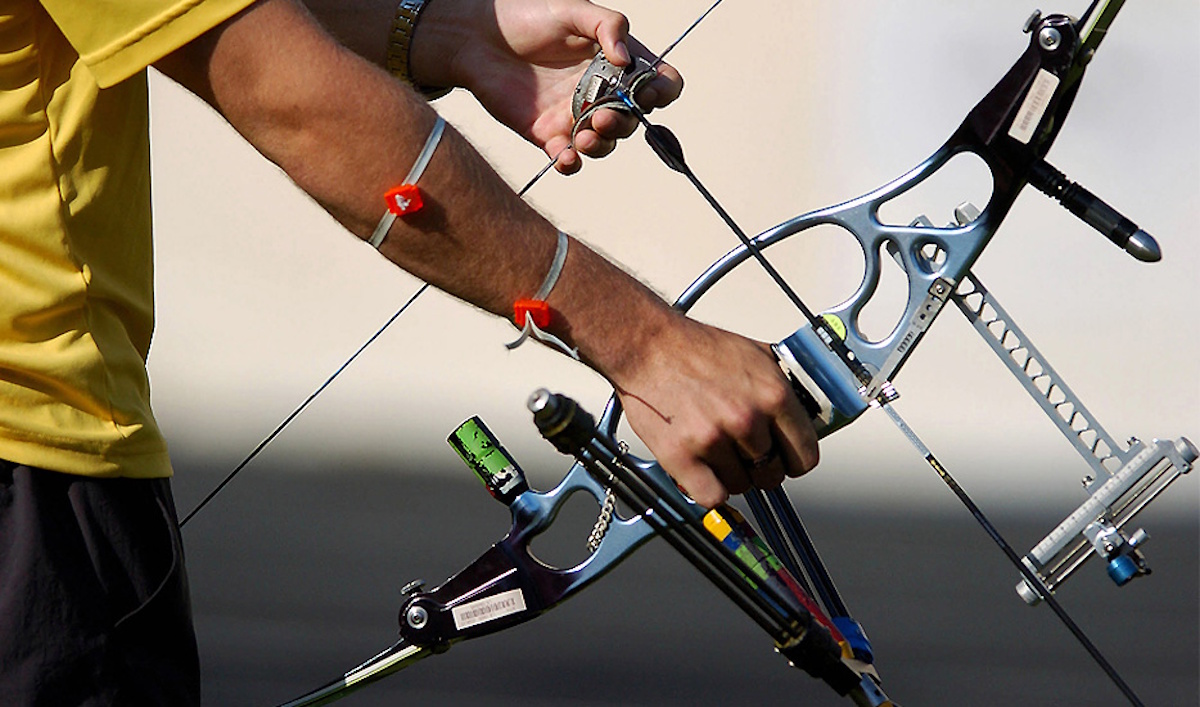
Table of Contents
- The $3000 Paradox: Modern Price vs Medieval Power
- Medieval Longbow Engineering: Nature’s Composite Weapon
- Olympic Bow Technology: Precision Over Power
- The Training Divide: Months vs Lifetimes
- Materials Science: Yew vs Carbon Fiber
- Why Stronger Isn’t Better: The Accuracy Revolution
- The Economic Reality: Why Longbows Disappeared
- Modern Compound Bows: The Third Evolution
- Frequently Asked Questions
The $3000 Paradox: Modern Price vs Medieval Power
Standing at the Olympic archery range in Paris during the 2024 Games, I watched South Korean archer An San draw her bow with mechanical precision. The equipment in her hands represented nearly four thousand dollars of carbon fiber, aluminum alloys, and computer-aided engineering. Each arrow cost forty-five dollars. The stabilizer system alone weighed more than some medieval arrows. Yet the draw weight barely exceeded forty-five pounds—a force that would have made a 14th-century English archer laugh before returning to practice with his 160-pound warbow.
This jarring contrast raises a question that haunts every archery enthusiast who discovers the sport’s history: why do modern Olympic bows cost exponentially more than medieval longbows when they’re objectively weaker? The answer reveals everything wrong with how we measure technological progress. We assume newer means better, stronger, more capable. But archery’s evolution tells a different story—one where the goal itself transformed so completely that comparing medieval and modern bows becomes like comparing a Formula One race car to a medieval warhorse. They share a purpose only in the most abstract sense.
Before delving into the details of the article, watch this video which presents a sports report on the exorbitant cost of archery equipment at the Olympics:
The medieval English longbow represents one of humanity’s most devastating handheld weapons. Recovered specimens from the Mary Rose, King Henry VIII’s flagship that sank in 1545, provided archaeologists with perfectly preserved examples of these instruments of war. When researchers at Southampton University created precise replicas and tested them, the results shocked modern archers. These bows required draw forces between 100 and 185 pounds, with most averaging around 150 pounds. To put this in perspective, drawing a 150-pound bow demands more force than most people can bench press. The arrows weighed up to four ounces—three times heavier than Olympic arrows—and struck targets with kinetic energy comparable to some modern firearms.
Modern recreational archers and historical reenactment enthusiasts can explore traditional archery through accessible equipment options that balance authentic design principles with contemporary safety standards and manufacturing quality. Finding suitable archery equipment accessories including traditional arrow components, protective gear, targets, and maintenance tools enables beginners to experience historical shooting styles without requiring master craftsmen or specialized materials. These entry-level traditional archery supplies let enthusiasts develop appreciation for historical techniques while understanding the significant skill and strength differences between recreational traditional shooting and authentic medieval warfare archery.
Shop on AliExpress via link: wholesale-archery-equipment
Contemporary Olympic recurve bows, by stark contrast, operate at draw weights between 35 and 50 pounds depending on the archer’s gender and physical build. The International Archery Federation regulations don’t mandate maximum draw weight, but competitive reality does. Higher draw weights increase muscle fatigue, reduce stability, and compromise the micro-level control necessary for consistent accuracy at 70 meters. Korean Olympic archers, who dominate the sport with almost mechanical consistency, typically use draw weights at the lower end of the spectrum. Their scores regularly exceed those of physically stronger archers using heavier equipment. This counterintuitive reality illustrates the fundamental difference between warfare archery and competitive archery.
The price differential becomes even more striking when you consider manufacturing complexity. A medieval longbow required a single piece of properly seasoned yew wood, shaped and tillered by a skilled bowyer over several days of careful work. The entire bow might cost the equivalent of two weeks’ wages for a skilled craftsman—perhaps $2000 in modern currency accounting for labor value. A complete Olympic recurve setup in 2026, however, includes a machined riser ($800-1200), limbs ($400-800), stabilizer system ($300-500), sight ($200-400), arrow rest ($80-150), and additional accessories pushing total costs past $3000 before considering arrows and maintenance. The medieval archer could arm himself for less than the cost of a modern stabilizer bar.
Yet this price comparison misses the real expense. Medieval England didn’t purchase longbows as finished products—they invested in creating longbowmen. The true cost lived in the training infrastructure maintained across generations. English law under Edward III mandated archery practice for all males on Sundays and holy days. Villages maintained archery butts. Guilds regulated bow and arrow production. The state subsidized yew wood importation from Italy and Spain when domestic supplies depleted. This represented a multi-generational national investment dwarfing any individual equipment cost. A fully trained longbowman embodied fifteen years of continuous practice beginning in childhood, developing skeletal changes visible in archaeological remains centuries later.

Modern Olympic archery inverts this equation entirely. Equipment costs thousands, but competitive archers can reach international levels within five to seven years of dedicated training. The sport attracts adults who never held a bow before university. Recreational archers can achieve satisfying accuracy within months. This accessibility stems directly from the equipment’s engineered consistency. Medieval longbows demanded immense strength and instinctive aiming developed through decade-long muscle memory formation. Olympic bows incorporate precision sights, stabilization systems that compensate for minor movement, and draw-force curves optimized for human physiology. The bow does work the archer once had to do.
The fundamental paradox resolves when we recognize that medieval and modern archery pursued entirely different objectives. Medieval longbows were designed to kill armored men at 80 yards while maintaining a rate of fire sufficient to create arrow storms—10 to 12 shots per minute from trained archers. Historical accounts from battles like Crécy and Agincourt describe the sky darkening with arrows, a psychological weapon as potent as the physical damage. Individual accuracy mattered less than volume and penetrative power. A longbowman who could consistently strike a two-foot square target at 60 yards met battlefield requirements. Missing by six inches meant hitting the man standing next to your intended target.
Olympic archery, conversely, demands that arrows group within a four-inch circle at 70 meters. Missing the 10-ring by two inches can cost a medal. Elite archers expect every arrow to land within a hand’s breadth of their aim point across dozens of shots. This level of consistency requires equipment stability impossible in handcrafted wooden bows. Carbon fiber limbs don’t warp with humidity changes. Precision-machined aluminum risers don’t develop grain irregularities. Computer-optimized stabilizer configurations don’t vary between bows. The equipment’s role shifted from power delivery to consistency amplification.
Consider the training difference through a thought experiment. Place a medieval longbowman and a modern Olympic archer side by side, each with their era-appropriate equipment. At 40 yards against a human-sized target, the longbowman likely achieves comparable or superior results despite lacking sights. His instinctive aiming, developed through childhood practice, compensates for equipment limitations. Now move the target to 70 meters and demand that ten consecutive arrows land within a dinner plate. The Olympic archer succeeds routinely. The longbowman, even with perfect form, cannot match this consistency. His wooden bow’s subtle variations, the instinctive aiming method, and the sheer physical effort of drawing 150 pounds create unavoidable shot-to-shot inconsistency.
The cost of modern Olympic equipment purchases not strength but predictability. Every component serves consistency: stabilizers reduce bow movement during the critical release moment, precision sights eliminate aiming guesswork, clickers ensure identical draw length, pressure buttons fine-tune arrow spine interaction. These features seem like luxury additions until you recognize they’re solving problems that didn’t exist in medieval warfare. A longbowman didn’t need identical draw length across shots because battlefield effectiveness tolerated six-inch variance. Olympic scoring doesn’t tolerate six-millimeter variance.
Historical records reveal that medieval archery’s greatest challenge wasn’t equipment manufacturing but archer production. The Assize of Arms in 1252 required males to maintain bow proficiency. Later statutes prohibited games that might distract from archery practice. By the 15th century, England faced chronic archer shortages despite legal mandates. The skill couldn’t be rushed. A boy beginning training at age seven might reach minimal battlefield competence by sixteen, full proficiency by twenty-five. This timeline wasn’t negotiable—human physiology and skill acquisition don’t compress. Modern Olympic archers, using equipment that handles power storage and stability mechanically, achieve competitive proficiency faster because the equipment itself absorbed much of the traditional learning curve.
The price paradox, then, represents a shift in where we invest resources. Medieval societies invested in human training infrastructure spanning decades. Modern competitive archery invests in engineered equipment that democratizes access. A $3000 bow lets someone with three years’ practice compete against veterans. A medieval longbow, costing less in materials, demanded exclusive access to those who began training as children and maintained practice through adulthood. The equipment cost less but the selection process cost more—most of the population could never develop sufficient strength and skill regardless of training time invested.
Understanding this context reframes “strength” itself. Modern engineers could easily design competition bows with 150-pound draw weights. The materials exist. The technology is straightforward. We don’t build such bows because they’d be counterproductive for competitive archery’s goals. Similarly, medieval England didn’t design 40-pound longbows not because they lacked capability but because such bows couldn’t penetrate armor at battle distances. Each era optimized for its specific requirements. Comparing their solutions without acknowledging their different problems creates false hierarchies.
Medieval Longbow Engineering: Nature’s Composite Weapon
The medieval English longbow achieved its devastating power through principles that modern materials science can explain but not improve upon for its specific application. When researchers examined longbows preserved in anaerobic mud from the Mary Rose, they discovered engineering sophistication hidden in apparent simplicity. These weren’t crude sticks of wood but carefully optimized machines exploiting natural material properties that took evolution millions of years to develop.
Yew wood (Taxus baccata) provided the ideal material for reasons medieval bowyers understood empirically without modern scientific terminology. The tree’s growth pattern creates a natural composite structure. The outer sapwood, pale and light, exhibits exceptional tensile strength—it resists being pulled apart during the bow’s draw. The inner heartwood, darker and denser, compresses efficiently without buckling. When shaped into a bow, this combination creates a spring with differentiated zones: the back (facing away from the archer) stretches under tension, the belly (facing the archer) compresses. A single piece of yew naturally provides both materials in optimal proportion.
Modern composite bows attempt to replicate this principle using laminated materials—fiberglass backs bonded to wood cores with horn or carbon fiber bellies. The medieval longbow achieved the same effect through careful selection of naturally grown wood. Bowyers examined yew staves with extraordinary precision, rejecting pieces with irregular grain, knots near the working surface, or uneven sapwood-to-heartwood ratios. The best staves came from slow-growing mountain yew, where harsh conditions produced dense, even grain. English bowyers preferred yew from Northern Italy and Spain, where Alpine conditions created ideal growth patterns. This international trade in specialized timber indicates sophisticated understanding of material properties.
The physics of longbow power starts with basic energy storage. When an archer draws the bow, they perform work against the elastic resistance of the yew. This work converts to stored elastic potential energy in the bent limbs. Upon release, the limbs snap back to their original position, converting stored energy into the arrow’s kinetic energy. The efficiency of this conversion, measured as the percentage of stored energy transferred to the arrow, determined a bow’s practical effectiveness. Medieval longbows achieved energy transfer efficiencies around 60-70%—comparable to modern recurve bows and substantially better than many contemporary composite materials when designed in similar configurations.
The extreme length of English longbows, typically six to six and a half feet, served multiple engineering purposes beyond the obvious benefit of longer draw. A longer bow bends more gradually along its length, distributing stress across more material. This distribution allowed higher draw weights without exceeding the yew’s structural limits. Shorter bows of equivalent draw weight concentrate stress at the limb’s midpoint, risking catastrophic failure. The length also provided a longer power stroke—the distance the string travels from full draw to rest position. This extended stroke allowed more complete energy transfer to the arrow, increasing its velocity and kinetic energy.
Engineering mechanics principles explain how structural design distributes stress to prevent material failure while maximizing functional performance. Advanced educational programs in mechanical engineering teach students to analyze force distribution, stress concentration, and failure modes in structures ranging from bridges to sporting equipment. Understanding these fundamental engineering concepts illuminates why traditional bow designers—working through empirical observation rather than mathematical analysis—nevertheless achieved designs that modern computational modeling confirms were near-optimal for their materials and applications.
Draw weight alone doesn’t determine arrow speed or impact force. The bow’s force-draw curve—how resistance changes as you pull—matters enormously. Medieval longbows exhibited a progressive draw, meaning resistance increased continuously throughout the pull. Early in the draw, when the archer’s muscles are at mechanical disadvantage, resistance remains relatively low. As the draw progresses and the archer’s body reaches optimal leverage positions, resistance increases. This progressive resistance curve maximizes the area under the force-draw graph, which represents stored energy, while remaining within human strength capabilities throughout the draw cycle.
The arrows these bows launched carried significant mass—typically 80 to 100 grams compared to 15-20 grams for modern Olympic arrows. This weight served critical tactical purposes. Heavy arrows retain velocity better over distance, suffering less from air resistance. They hit targets with momentum that light, fast arrows cannot match. When engaging armored opponents, this momentum proved decisive. A heavy war arrow striking plate armor transferred enough energy to cause blunt-force trauma even without penetration. The impact could knock a knight off balance, bruise organs behind armor, or crack ribs. Light arrows, regardless of initial velocity, dissipated energy too quickly to achieve these effects.
Archaeological evidence reveals the brutal effectiveness of these weapons. Skeletal remains from medieval battlefields show arrow wounds penetrating bone. Studies at the University of Exeter analyzed injury patterns on medieval skeletons buried at a Dominican friary. The research, published in 2020, demonstrated that longbow arrows could cause trauma comparable to modern gunshot wounds. The arrows didn’t just pierce flesh—they shattered bone, creating wound channels that led to rapid exsanguination or infection. Some specimens showed arrows that had spun clockwise during flight, allowing them to penetrate through long bones rather than deflecting off the hard surface.
Modern forensic analysis techniques applied to medieval skeletal remains provide unprecedented insights into historical combat injuries and weapon effectiveness. University bioarchaeology departments employ advanced imaging technologies, ballistic testing protocols, and comparative trauma analysis to understand how different weapon systems created characteristic injury patterns. These investigations reveal that medieval projectile weapons inflicted devastating injuries often underestimated in historical accounts focusing on armored knight casualties while overlooking the catastrophic trauma experienced by lightly protected infantry and archers who comprised the majority of medieval armies.

The manufacturing process for authentic longbows involved sophisticated understanding of wood behavior and mechanics. Bowyers selected staves in winter when sap concentrations were lowest. The wood then seasoned for one to four years in controlled conditions—too fast and the wood developed internal stresses, too slow and fungal damage degraded fibers. During this seasoning, bowyers periodically inspected staves, rejecting any that showed warping or splitting. Only about one in five carefully selected staves survived to become finished bows, indicating extraordinary quality control.
Shaping the bow required removing material to create the precise taper and thickness that would produce the desired draw weight and force curve. Bowyers worked primarily by eye and feel, testing the bow repeatedly during manufacture. They pulled it partially, observed how each section bent, and removed wood from areas that flexed too little. This process, called tillering, continued until the bow bent in a smooth, even curve with no weak points that might break or strong points that concentrated stress. The final bow might weigh only 500-600 grams despite delivering forces exceeding those from modern bows twice as heavy.
Medieval bowyers also understood hysteresis—energy lost during the draw-release cycle due to material properties. All materials exhibit some hysteresis; the question is minimizing it. Yew’s cellular structure, with its combination of elastic sapwood and resilient heartwood, demonstrates lower hysteresis than many alternatives. This meant more of the energy the archer invested in drawing converted to arrow velocity rather than heating the bow or creating vibrations. The difference between a 65% efficient bow and a 70% efficient bow might seem minor, but at battlefield draw weights, this five-percentage-point improvement translated to arrows hitting harder and flying farther.
The cultural transmission of this knowledge represents technological sophistication often overlooked when we romanticize medieval craftsmanship. Bowyers served apprenticeships lasting seven years or more, learning to read wood grain, understand seasonal variations in yew quality, recognize optimal tapering ratios, and predict how different grain orientations would affect bow behavior. This knowledge wasn’t written down—it lived in communities of practice, passed through direct mentorship. When firearms supplanted longbows and economic incentives shifted, this accumulated expertise largely vanished. Modern attempts to recreate medieval longbow performance required extensive experimental archaeology, reverse-engineering principles that were once common knowledge.
Maintenance requirements for longbows created additional practical challenges. Unlike modern bows that resist environmental changes, yew is hygroscopic—it absorbs and releases moisture based on atmospheric humidity. A bow perfectly tillered in dry conditions might become over-stressed in high humidity, risking failure. Archers stored unstrung bows in controlled conditions when possible and replaced strings regularly. The string itself, typically made from linen or hemp, stretched over time and with moisture absorption, requiring periodic replacement and length adjustment. These maintenance demands meant archers needed significant practical knowledge beyond shooting technique.
The relationship between arrow and bow created a matched system that modern archery treats quite differently. Medieval arrows were custom-fletched for specific bows. The arrow’s spine—its stiffness—had to match the bow’s draw weight and the archer’s release style. An arrow too stiff would fly erratically; too flexible and it would break on release or wobble excessively. Modern archers can purchase standardized arrows tested for consistency, but medieval archers either made their own or worked closely with fletchers who understood their specific equipment. This customization added another layer of skill and knowledge required for effective longbow use.
Olympic Bow Technology: Precision Over Power
Modern Olympic recurve bows represent the opposite engineering philosophy from medieval longbows: precision through consistency rather than raw power. Every component serves a single purpose—eliminating variables that might cause shot-to-shot deviation. Where medieval bows relied on the archer to compensate for equipment inconsistency through skill, Olympic bows eliminate inconsistency through engineering, allowing archers to focus entirely on execution.
The riser, the central rigid section the archer grips, illustrates this philosophy. Cast or machined from aluminum alloys or carbon fiber composites, risers maintain dimensional stability across temperature ranges, humidity changes, and physical stress that would warp wooden equivalents. Manufacturers use CNC machining to achieve tolerances measured in hundredths of millimeters. Two risers from the same production run will have identical weight distribution, sight mounting positions, and grip angles. This manufacturing consistency allows archers to replace damaged equipment without adjusting their entire technique to compensate for subtle geometric differences.
The limbs attach to the riser through a standardized connection system allowing interchangeability. Modern limbs use laminated construction: layers of carbon fiber, foam cores, and fiberglass bonded under controlled pressure and temperature. This lamination achieves what yew does naturally—differentiated tension and compression zones—but with mathematical precision. Engineers can optimize the limb’s cross-sectional shape for specific energy storage characteristics. They can adjust material layers to create exact force-draw curves. Most importantly, they can manufacture hundreds of limbs with identical performance characteristics, something impossible with natural wood grain variations.
The recurve design itself, where limb tips curve away from the archer when unstrung, provides mechanical advantages. When strung, these curved sections store additional energy compared to straight-limbed designs of equivalent draw weight. The geometry also affects the force-draw curve, reducing the force required early in the draw while maintaining stored energy at full draw. This makes the bow feel smoother and more manageable while delivering equivalent arrow velocity to a heavier straight-limbed bow. The recurve design has ancient origins—nomadic peoples in Central Asia used recurve composite bows millennia before Olympics existed—but modern materials and manufacturing allow optimization impossible with historical materials.

Stabilization systems attached to modern Olympic bows would seem bizarre to medieval archers. A central rod extending 28-36 inches forward from the riser, often with additional side rods creating a V-configuration, adds substantial weight far from the bow’s center of mass. This seems counterintuitive until you understand their purpose: they increase the bow’s moment of inertia, resisting rotational movement during the critical release moment. When the string snaps forward, it generates torque and vibration. Without stabilizers, the riser would jump and twist in the archer’s hand, disturbing arrow flight. Stabilizers don’t prevent movement; they make movement slower and more predictable, giving the arrow time to clear the bow before disturbances affect its trajectory.
The weights attached to stabilizer rods serve additional functions beyond mass. They’re tuned to dampen specific vibration frequencies generated during the shot. Different bow configurations produce different vibration patterns. Elite archers spend hours experimenting with weight positions, testing how each configuration affects their particular bow’s behavior. This level of micro-optimization demonstrates how modern archery transformed from strength sport to equipment-science experiment.
Sights on Olympic bows provide precision impossible with instinctive aiming. A sight consists of a movable aperture mounted on a vertical rail. Archers position this aperture so that aligning it with the target through their dominant eye creates proper arrow trajectory. The sight eliminates the need to develop instinctive aiming through years of practice—instead, archers can apply consistent mechanics and trust geometric alignment. Micro-adjustable sights allow changes measured in fractions of millimeters, letting archers zero their equipment for specific distances with repeatable precision.
The clicker, a thin metal blade that rests on the arrow shaft, provides audible confirmation of consistent draw length. As the archer draws, the arrow slides under the clicker. When the arrow’s point passes a specific position, the clicker snaps against the riser, producing a distinctive click sound. This sound becomes the release trigger—archers train to release immediately upon hearing it. The clicker ensures every draw reaches the identical length, eliminating a major variable in shot consistency. Medieval archers developed proprietary anchor points—positions where their drawing hand touched their face—to achieve similar consistency, but these remained approximate compared to the clicker’s precision.
Arrow rests and pressure buttons fine-tune how the arrow interacts with the bow during release. When released, the string doesn’t travel perfectly straight—it oscillates slightly. These oscillations, combined with the arrow’s natural flex (called the archer’s paradox), create complex dynamics as the arrow leaves the bow. Modern rests and pressure buttons are adjustable to tune these interactions, ensuring the arrow clears the bow cleanly despite these forces. Medieval archers shot off their knuckles or used simple leather rests, accepting whatever arrow behavior resulted from their specific technique.
Cutting-edge research published in peer-reviewed scientific journals continues advancing our understanding of projectile weapon mechanics and early human technological development. Studies examining microscopic use-wear patterns on ancient stone points combined with ballistic analysis provide definitive evidence of bow-and-arrow technology appearing far earlier in human history than traditional archaeological interpretations suggested. This research demonstrates how modern analytical techniques—high-resolution imaging, computational modeling, experimental replication—reveal technological sophistication in prehistoric societies that documentary evidence alone could never capture.
The arrows themselves demonstrate modern precision manufacturing. Carbon fiber shafts maintain identical spine specifications across production runs. Aluminum-carbon composites offer precise weight tuning. Points, nocks, and vanes are manufactured to thousandths-of-inch tolerances. Archers can purchase dozen-arrow sets where every arrow has identical mass (within 0.5 grains), identical spine rating, and identical balance point. This consistency removes another variable from the equation—medieval archers shooting hand-fletched wooden arrows dealt with significant shaft-to-shaft variation even with careful manufacturing.
Competition recurve bows typically draw between 35 and 50 pounds, with most elite archers using the lower end of this range. This seems remarkably light compared to medieval longbows, but the reason becomes clear when examining Olympic shooting volumes. Elite archers shoot hundreds of arrows during competition preparation. Tournament days involve 72-arrow ranking rounds followed by match rounds that can add dozens more shots. At these volumes, even 45-pound draw weights create significant muscle fatigue. Higher draw weights might deliver marginal velocity improvements, but they compromise the stability and control necessary for consistent accuracy.
The equipment’s role in democratizing the sport cannot be overstated. Medieval longbow archery was necessarily exclusionary—only those with the physical strength and training time could participate effectively. Modern Olympic archery’s lighter draw weights and mechanical aids make the sport accessible to a broader population. Women compete at the highest levels. Athletes with different physical builds can excel. Beginners can achieve satisfying results within months rather than years. This accessibility stems directly from equipment design that handles mechanically what medieval archers had to do biologically.
Maintenance requirements for modern Olympic equipment differ dramatically from medieval longbows. Carbon fiber limbs don’t require seasoning or humidity control. Aluminum risers don’t warp. Strings are synthetic materials that stretch minimally and resist environmental damage. Archers replace strings based on shot counts rather than observed deterioration. Equipment remains consistent across much wider environmental ranges. A bow properly tuned in dry conditions will perform identically in humidity, cold, or heat within reasonable ranges. This environmental stability allows archers to practice in various conditions while maintaining consistent technique.
The modularity of modern equipment creates another advantage. Archers can upgrade individual components without replacing entire systems. Damaged limbs can be replaced with identical models. Stabilizer configurations can be modified for different shooting conditions. This modularity distributes cost over time and allows progressive improvement as archers develop and their needs change. Medieval archers who broke a bow needed a complete replacement—a costly proposition that modern archers avoid.
Current Olympic archery has one more technological component medieval archers never imagined: data collection and analysis. Modern training facilities use high-speed cameras, force plates, and motion capture systems to analyze form. Archers receive detailed feedback on draw length consistency, release timing, bow hand pressure, and countless other variables. This quantitative approach to skill development accelerates learning in ways impossible when relying solely on experienced observation and trial-and-error improvement. The equipment provides the consistency foundation, and technology helps archers optimize how they use that consistent platform.
The Training Divide: Months vs Lifetimes
The skeletal remains of medieval archers tell stories modern bones cannot. Archaeological examinations of remains from the Mary Rose revealed distinctive asymmetrical bone development. The drawing arm bones showed significantly increased density and altered geometry compared to the non-drawing arm. Vertebrae demonstrated stress markers consistent with repeatedly supporting massive asymmetric loads. Shoulder joints exhibited wear patterns unique to the continuous high-force movements of drawing heavy bows. These weren’t injuries—they were permanent adaptations that began in childhood and developed across decades.
Starting archery training at age seven or eight wasn’t arbitrary tradition in medieval England—it reflected biological necessity. Children’s bones remain plastic, capable of remodeling in response to repeated stress. Beginning heavy draw training in adulthood would likely result in injuries rather than adaptation. The young apprentice started with lighter practice bows, perhaps 40-50 pounds, gradually progressing to full war weight as their musculoskeletal system adapted. This progression took a decade or more, requiring continuous practice as the body literally rebuilt itself to accommodate the demands.
The specific muscles developed for longbow archery created a unique physiology. Modern biomechanical studies analyzing historical technique reveal that drawing a 150-pound longbow engaged muscle groups in ways quite different from contemporary exercise patterns. The draw wasn’t primarily an arm movement—it involved the entire back, engaging latissimus dorsi, rhomboids, and posterior deltoids while maintaining core stability to resist the rotational torque. The drawing arm’s biceps actually did relatively little work; the back muscles pulling the scapula rearward provided most of the force. Learning to recruit these muscles properly required years of practice developing neuromuscular pathways that became automatic.

Historical training regimens described in period texts reveal systematic progression. Apprentice archers shot hundreds of arrows daily at short distances, building strength and consistency before progressing to longer ranges. They practiced in all weather conditions, developing ability to compensate for wind, rain, and cold that affected bow performance. They learned to maintain equipment, recognizing when strings needed replacement or when bows showed signs of stress damage. This comprehensive education in archery as a complete system—equipment, technique, maintenance, and tactical application—required direct mentorship impossible to acquire from books or intermittent practice.
The rate of fire that made longbows tactically devastating demanded additional trained behaviors beyond simple shooting ability. Archers developed smooth, efficient motions that minimized wasted movement. They learned to maintain arrows ready for rapid nocking, often holding several in their drawing hand between fingers. They practiced drawing and loosing in continuous cycles, building muscle memory that allowed shooting while fatigued, stressed, or under cavalry charge. This speed came not from rushing but from eliminating hesitation and unnecessary motion through thousands of repetitions until the process became reflexive.
Contrast this with modern Olympic archery training. A dedicated adult beginning archery can achieve regional competitive levels within 12-24 months. National-level performance takes 3-5 years of focused practice. World-class elite status still requires similar dedication to medieval archers—10,000+ hours of deliberate practice—but the timeframe compresses. Starting as an adult doesn’t preclude excellence because the physical demands remain within normal human capabilities without requiring skeletal remodeling.
Modern training emphasizes consistency over strength. Archers perform dozens or hundreds of repetitions focusing on identical execution. They’re not building massive drawing power but developing precise motor control. The goal isn’t pulling heavier weights but reducing variation in release timing, bow hand pressure, back tension, and anchor position. These refinements happen more quickly than developing the raw strength for medieval archery because they’re primarily neurological rather than structural adaptations.
Contemporary sports science research has transformed our understanding of archery biomechanics through detailed muscle activation studies and performance analysis. Advanced research published through biomechanical journals demonstrates that elite archers develop highly individualized muscle recruitment patterns rather than following universal optimal forms. Studies examining postural stability parameters reveal that archers optimize performance through personalized strategies in shoulder muscle activation, drawing arm technique, and follow-through mechanics. These findings confirm that modern archery training should focus on developing each athlete’s unique neuromuscular profile rather than forcing standardized techniques—an approach impossible in medieval training paradigms where apprentices simply imitated masters.
The mental aspects of modern archery training have received substantial scientific attention. Sports psychologists work with elite archers on visualization techniques, stress management, and performance anxiety reduction. Archers practice mental rehearsal, running through shot sequences mentally with the same detail as physical execution. They develop pre-shot routines that trigger optimal mental states. These psychological dimensions existed in medieval archery—historical texts mention concentration and mental preparation—but modern understanding allows systematic training in areas medieval archers approached through intuition and experience.
Equipment consistency in modern archery dramatically reduces the practice time needed to achieve competence. Medieval archers had to learn their specific bow’s behavior—how it responded in different weather, how to compensate for its particular tendencies, how to adjust for different arrow spines. They developed proprietary techniques tailored to their equipment’s idiosyncrasies. Modern archers use standardized equipment behaving predictably. This standardization means technique learned on one bow transfers directly to another properly-tuned bow. Training time focuses on developing the archer’s skills rather than adapting to equipment variations.
Technology assists modern training in ways medieval archers never experienced. Video analysis allows frame-by-frame examination of release mechanics. Force sensors measure bow hand pressure throughout the shot. Motion capture systems track body positioning with millimeter precision. Archers receive objective feedback on variables they cannot feel directly. This accelerates learning by highlighting problems that might take years to identify through subjective feel alone. Medieval archers relied entirely on experienced observation and their own kinesthetic awareness—effective but slower paths to mastery.
The coaching infrastructure supporting modern archery creates another training advantage. Olympic hopefuls access expert instruction systematically explaining technique, biomechanics, and mental preparation. Coaches analyze individual archers’ characteristics and customize training programs. This personalized, science-informed approach contrasts with medieval training’s apprenticeship model, where knowledge transfer depended entirely on the master’s ability to observe and communicate. Modern coaching doesn’t replace practice—it makes practice more efficient by identifying precisely what needs work and how to address it.
Physical conditioning for modern archery differs fundamentally from medieval preparation. Olympic archers perform specific strength work maintaining stability and muscular endurance rather than building massive power. They do cardiovascular conditioning to maintain concentration during long tournaments. They work on flexibility to achieve consistent form without strain. This conditioning supports precision shooting rather than enabling equipment use—the equipment handles force requirements within normal human capabilities, so conditioning optimizes the archer’s ability to use it consistently.
The learning curve for medieval archery created a self-reinforcing exclusivity. Only those who started young and maintained continuous practice could participate effectively. Adult learners couldn’t catch up—the biological window for developing necessary adaptations closed. This meant archer populations remained relatively static, replenished primarily through multi-generational family traditions. Modern archery’s accessible learning curve allows constant population refreshment. New archers enter regularly, bringing diverse perspectives and innovations. The sport evolves dynamically rather than preserving static traditions.
Injury risk presents another training difference. Medieval longbow archery, with its extreme forces and asymmetric loading, risked chronic injuries even in properly trained archers. Shoulder impingement, elbow tendonitis, and back strain represented occupational hazards. Modern archery, using lighter equipment with better-understood biomechanics, presents lower injury risk when practiced with proper form. This safety improvement matters for participation rates—recreational archers don’t need to accept significant injury risk for moderate engagement.
The democratizing effect of reduced training requirements cannot be overstated. Medieval longbow archery’s decade-plus training prerequisite meant societies could support only limited archer populations. England’s continuous investment in archery infrastructure stemmed from military necessity—they needed a minimum population of trained longbowmen for national defense. Modern archery’s accessibility lets anyone interested try the sport without multi-year commitment. This low barrier to entry creates larger, more diverse participant populations that wouldn’t exist with medieval-era requirements.
Competitive modern archery has developed training methodologies unknown in warfare contexts. Archers practice specific scenarios—shooting in wind, recovering from bad shots, maintaining performance under pressure. They analyze opponents’ tendencies and develop counterstrategie to psychological gamesmanship. They train periodization—varying intensity and volume across training cycles to peak for specific events. These competitive refinements never existed in medieval warfare archery, where training prepared for generic battlefield conditions rather than head-to-head competition against equally skilled opponents.
Materials Science: Yew vs Carbon Fiber
The cellular structure of yew wood creates natural engineering properties that modern materials science can explain but struggles to replicate economically at similar performance levels for traditional bow applications. Yew’s sapwood contains elongated cells with thick walls and small internal spaces, creating a matrix highly resistant to tensile stress—being pulled apart lengthwise. The heartwood features shorter cells with larger lumens (internal cavities) that compress efficiently under load. This differentiation exists naturally in precisely the configuration optimal for bow mechanics, distributed through a gradual transition zone rather than an abrupt interface that might create stress concentration.
Evolution optimized yew for flexibility and resilience over millions of years. Trees surviving wind storms, snow loads, and ice accumulation passed on genetic advantages for elastic deformation without failure. The wood’s lignin and cellulose arrangement creates a composite material at the microscopic level—long cellulose fibers embedded in a lignin matrix provide strength while the overall structure allows controlled bending. Modern composite materials deliberately engineered for archery limbs follow this same basic principle: strong fibers (carbon, glass) in a supporting matrix (resin, foam). Yew achieved this arrangement through natural selection.
Leading engineering institutions worldwide conduct fundamental research into materials science principles governing composite structure performance and optimization. University materials engineering programs investigate how different fiber orientations, matrix compositions, and manufacturing processes affect mechanical properties like strength-to-weight ratios, fatigue resistance, and elastic energy storage. This academic research foundation enables the advanced composite materials now used in everything from aerospace applications to sporting equipment, including modern archery limbs that outperform traditional materials in consistency while matching or exceeding their performance capabilities.
The density gradient from sapwood to heartwood provides another performance advantage. Lighter sapwood on the tension face accelerates quickly during release, while denser heartwood provides structural stability. This mass distribution optimizes energy transfer efficiency—the limb tips, which must reverse direction rapidly, remain relatively light, while the central sections carry more mass for stability. Modern bow designers achieve similar benefits through engineered tapering and material selection, but yew naturally exhibits this gradient in ideal proportion for traditional longbow geometry.
Moisture behavior significantly affects wood bow performance. Yew is hygroscopic, absorbing water from humid air and releasing it in dry conditions. This moisture exchange causes dimensional changes—the bow swells when humid, shrinks when dry. These changes affect draw weight and force curve characteristics. Properly seasoned yew minimizes but doesn’t eliminate this behavior. Medieval bowyers worked with this reality, storing unstrung bows in controlled conditions and recognizing that a bow performed differently on wet days versus dry days. Archers compensated through experience-based adjustments to aiming and technique.
Modern carbon fiber composites used in Olympic bow limbs eliminate moisture sensitivity almost entirely. Carbon fibers themselves don’t absorb water. Epoxy resin matrices exhibit minimal moisture uptake. A carbon fiber limb maintains the same dimensions and mechanical properties across humidity ranges that would significantly alter wooden bow behavior. This stability allows archers to develop technique trusting equipment consistency regardless of environmental conditions. The trade-off is cost—properly processed carbon fiber prepreg materials cost orders of magnitude more than seasoned wood.
The manufacturing process for carbon fiber limbs demonstrates modern materials engineering. Layers of carbon fiber fabric pre-impregnated with resin are laid up in specific orientations. Each layer’s fiber direction affects how the finished limb responds to bending in different planes. Designers create virtual models predicting how different layup schedules will perform, then manufacture test limbs to validate predictions. This iterative process optimizes for desired force-draw curves, resistance to twisting, and durability. The result is engineered performance impossible to achieve with natural materials’ inherent variation.

Foam cores in modern limbs provide specific benefits. The foam separates inner and outer carbon fiber layers, increasing the structure’s moment of inertia—its resistance to bending—without proportionally increasing mass. This creates a stiffer limb using less material than a solid carbon construction. The foam also dampens vibrations, absorbing energy that would otherwise travel through the bow creating noise and inefficiency. Different foam densities and types tune these characteristics. Medieval bows used solid wood throughout, accepting whatever vibration characteristics resulted from the natural material.
Glass fiber reinforcements in some modern limbs provide impact resistance carbon alone lacks. Pure carbon fiber composites can fail catastrophically when damaged—once a crack initiates, it propagates quickly. Glass fiber layers absorb impact energy better, preventing minor damage from cascading into total failure. This hybrid construction balances carbon’s high strength-to-weight ratio with glass’s toughness. The layup sequence—which layers go where—requires careful engineering to achieve desired properties. This complexity illustrates how modern bow manufacturing resembles aerospace engineering more than traditional woodworking.
Temperature effects separate natural and synthetic materials dramatically. Wood’s mechanical properties vary with temperature—cold wood becomes more brittle, hot wood more flexible. These changes affect bow performance subtly but measurably. Carbon fiber’s properties remain stable across much wider temperature ranges. An archer can shoot in freezing conditions and hot weather using identical technique. This environmental stability removes another variable from the consistency equation. Medieval archers learned to adjust for temperature effects; modern archers don’t need to.
The lifecycle of materials presents interesting contrasts. Yew bows, if properly maintained, can last decades. Archaeological specimens preserved in favorable conditions remain intact for centuries. However, working bows used regularly required maintenance. Strings stretched and needed replacement. The wood could develop compression damage (chrysaling) on the belly from repeated extreme bending. Careful inspection and retired of damaged bows prevented catastrophic failure, but bows had finite working lives measured in thousands of shots.
Modern carbon fiber limbs exhibit excellent fatigue resistance. Properly manufactured limbs withstand tens of thousands of shots without degradation if undamaged. However, damage—even minor impacts—can initiate invisible internal cracks that eventually propagate to failure. This creates a different maintenance paradigm. Wooden bows fail gradually with visible warning signs. Carbon limbs perform perfectly until catastrophic failure with little warning. Careful inspection protocols and retirement based on shot counts or suspicious handling prevent unexpected failures, but the failure mode differs fundamentally from wood.
Cost structures for materials reflect their different production processes. Yew trees suitable for bow production take decades to grow, but once harvested, processing into staves involves relatively modest labor even accounting for selection and seasoning. The limiting factor is availability of quality yew grown in proper conditions. Modern Italy and Spain still export yew suitable for traditional bow-making, but it’s a specialty market with limited production volume. Carbon fiber production, conversely, is industrialized. Raw material costs are higher, but manufacturing can scale dramatically. The economics favor carbon for mass production, yew for artisanal specialty markets.
The environmental persistence of materials raises modern considerations medieval bowyers never faced. Yew bows eventually decay through biological processes. Carbon fiber composites essentially don’t biodegrade—they’ll persist in landfills indefinitely. Recycling carbon fiber remains challenging; the epoxy matrix makes separation of fibers difficult and energy-intensive. This environmental consideration affects material choice in ways purely performance-based analysis doesn’t capture. Some manufacturers experiment with bio-based resins and natural fiber reinforcements attempting to achieve carbon-like performance with better end-of-life characteristics.
Repairability differs significantly between materials. Wooden bows can sometimes be repaired—a small crack might be stabilized, tillering can be adjusted if a bow takes excessive set (permanent bend from use). This repairability allowed medieval archers to extend bow life through skilled maintenance. Carbon fiber limbs generally cannot be repaired once damaged. Cracks in the composite structure compromise integrity throughout the affected region. The only safe option is replacement. This disposability increases lifetime cost despite the material’s durability when undamaged.
The tactile experience and aesthetic aspects of materials matter to many archers beyond pure performance. Wood feels warm, alive. Its grain patterns create unique visual character. Traditional archers often cite this experiential dimension as important to their enjoyment. Carbon fiber feels cold, synthetic, uniform. Its performance advantages are undeniable, but some archers value the traditional material’s connection to archery’s history. This subjective preference drives a robust market for traditional wooden bows despite carbon’s objective performance superiority for consistency-focused applications.
Advanced modern materials continue evolving. Manufacturers experiment with bamboo-carbon hybrids, graphene-enhanced resins, and alternative fiber orientations. Each iteration seeks incremental improvements—marginally better energy storage, slightly less mass, improved vibration damping. These refinements demonstrate that even centuries-old technology like bow-making continues evolving. Medieval bow-making also evolved across centuries, developing incrementally improved designs and material selection. The process continues; only the materials and methods change.
Why Stronger Isn’t Better: The Accuracy Revolution
The shift from warfare to competitive archery fundamentally redefined “better” in bow design. Medieval military effectiveness measured success in casualties inflicted, armor penetrated, and battlefield area denied through sustained volleys. Modern competitive archery measures success in points scored on standardized targets at fixed distances. These different success metrics created different optimization targets, making medieval and modern bows incomparable in meaningful ways beyond superficial strength metrics.
Battlefield archery prioritized volume of fire over individual shot precision. Historical accounts from Crécy describe English archers releasing arrows so rapidly the sky darkened. Contemporary estimates suggest trained longbowmen maintained 10-12 shots per minute for extended periods. At these rates, individual accuracy inevitably decreased, but tactical effectiveness derived from massed fire rather than sharpshooter precision. An arrow missing one man-at-arms by six inches likely struck his neighbor. The psychological impact of constant arrow rain breaking morale mattered as much as physical casualties.
This volume-fire doctrine created specific equipment requirements. Bows needed sufficient power to defeat armor at standoff ranges where return archery or cavalry charges couldn’t easily respond. Arrows required mass to retain velocity over distance and penetrate upon impact. The shooting technique emphasized speed and sustainability over millimeter-level precision. Archers shot instinctively, acquiring targets through peripheral vision while drawing the next arrow. This rapid-fire approach couldn’t achieve the precision modern competitive archery demands, nor did it need to.
Olympic target archery exists in an entirely different context. Archers shoot at standardized 122-centimeter diameter targets from precisely measured distances. The scoring rings decrease in size toward the center, with the 10-ring measuring just 12.2 centimeters in diameter. At the standard 70-meter Olympic distance, hitting the 10-ring requires placing the arrow within a circle about the size of a grapefruit at a distance longer than a football field. Achieving this precision repeatedly requires equipment and technique optimizing for consistency above all else.
The scoring system’s structure incentivizes accuracy over power. A perfect shot center-punching the 10-ring scores the same whether the arrow hits with 50 joules or 150 joules of kinetic energy. The energy required to penetrate the target face and embed in the backstop is minimal—perhaps 5 joules. Anything beyond this minimum represents wasted effort that could create instability affecting accuracy. Modern competitive bows operate at the minimum power level sufficient for reliable target penetration at competition distances, with all other design optimizing for shot-to-shot consistency.
Human physiology imposes practical limits on accuracy under sustained shooting. Muscle fatigue from repeated heavy draws reduces stability. Tremor increases, fine motor control degrades, and concentration suffers. At Olympic competition volumes—72 arrows in ranking rounds, potentially dozens more in elimination matches—managing fatigue becomes crucial. Lighter draw weights preserve the neuromuscular precision necessary for sustained accuracy. An archer who could handle a 70-pound bow fresh might struggle maintaining accuracy on shot number 50, while someone using 45 pounds maintains consistency throughout. The tactical choice favors lighter equipment enabling sustained performance.
Statistical analysis of modern archery scores reveals how equipment consistency affects results. Olympic-level archers shooting well-tuned equipment routinely group arrows within hand-sized circles at 70 meters. This consistency isn’t superhuman—it’s achievable because the equipment eliminates most variables. The archer’s execution variability becomes the limiting factor, not equipment inconsistency. With properly tuned stabilizers, precision sights, and quality-controlled arrows, the bow does what the archer tells it with minimal deviation. This predictability allows developing technique trusting that identical execution produces identical results.
Medieval archers faced different consistency challenges. Each arrow varied slightly in spine, mass, and fletching. The wooden bow’s response changed with temperature and humidity. String stretch altered draw weight across shooting sessions. These variations meant identical draw execution produced measurably different arrow trajectories. Skilled archers compensated instinctively, adjusting aim based on experience with their specific equipment’s behavior. This adaptation through experience-based compensation worked for battlefield accuracy standards but couldn’t achieve modern competitive precision.
The mental game of competitive archery depends heavily on equipment trust. Archers develop detailed pre-shot routines designed to produce mechanical consistency. They trust that following the routine yields correct results. This trust requires equipment that doesn’t introduce unexpected variables. An archer who doubts their equipment’s consistency cannot develop reliable mental routines. Medieval archers necessarily accepted equipment variability, building in compensation through technique. Modern archers can develop technique assuming equipment consistency, simplifying the mental execution model.
Wind compensation illustrates the accuracy challenge across archery types. Medieval battlefield archery largely ignored wind below threshold levels that would cause obvious arrow drift. The target density—massed troops—tolerated lateral error measured in feet. Archers aimed at formations rather than individuals. Wind affecting specific arrow trajectories by inches didn’t matter tactically. Modern competitive archers must account for even light wind. A five-mile-per-hour crosswind at 70 meters can drift an arrow several centimeters—enough to cost points. Archers judge wind continuously, adjusting aim points in real-time. This precision wind compensation requires light, wind-sensitive arrows and equipment enabling micro-adjustments. Heavy war arrows’ wind resistance was a feature for trajectory stability; modern light arrows’ wind sensitivity allows deliberate compensation.
Range estimation presents another accuracy dimension. Medieval battlefield distances weren’t precisely measured. Archers judged range by eye, adjusted for terrain, and relied on experience estimating trajectory. Errors of 5-10 yards in distance judgment could be tolerated because armor-penetrating power varied gradually with range. Modern competition distances are precisely standardized. The target sits exactly 70 meters away (or 50 meters for compound divisions), marked to centimeter precision. Archers tune their sights for exact distances, eliminating range estimation uncertainty. This precision would be impossible with the trajectory estimation required for varying battlefield ranges.
The forgiveness factor differs dramatically between contexts. Medieval battlefield archery forgave aim errors measured in feet—you missed your intended target but hit another enemy soldier. Modern competitive archery forgives nothing. A shot displaced by two centimeters from perfect drops from 10-ring to 9-ring, costing a point. At Olympic medal-match levels, single points determine winners. This absolute precision requirement drives equipment choices toward maximum consistency even at the cost of reduced power.
Release consistency demonstrates how accuracy optimization differs from power optimization. Medieval archers released by consciously opening drawing fingers, a technique allowing rapid shooting but introducing release timing variability. Modern Olympic archers use back-tension release methods, engaging back muscles gradually until the release occurs almost involuntarily. This back-tension technique produces more consistent release timing but requires deliberate execution incompatible with rapid fire. The technique choice prioritizes release consistency for precision over speed for volume.
Follow-through mechanics evolved differently for accuracy-focused shooting. Medieval archers needed to acquire the next target quickly, transitioning focus to the next shot in continuous cycles. Modern Olympic archers maintain bow arm position and body posture for several seconds after release, allowing the arrow to clear the bow completely before any movement. This extended follow-through improves consistency by ensuring the archer doesn’t introduce movement during the critical microseconds while the arrow leaves the bow. The discipline to maintain perfect stillness momentarily doesn’t scale to rapid shooting but dramatically improves per-shot accuracy.
Equipment tuning for modern competition reaches levels of refinement unnecessary and impossible in battlefield contexts. Archers adjust pressure button tension, stabilizer weights and positions, nocking point height, arrow spine selection, and dozens of other variables seeking optimal arrow flight. Each adjustment might affect scores by fractions of points—irrelevant in warfare but decisive in competition. Medieval archers couldn’t tune equipment to this degree even if they desired—the variability inherent in natural materials and handcrafted arrows precluded such refinement.
The learning curve for accuracy differs from the learning curve for power. Medieval archery’s primary challenge was developing sufficient strength and muscle memory to shoot heavy bows rapidly. The accuracy required came through massed practice hitting reasonably large targets. Modern archery’s challenge is developing neuromuscular control for perfect execution repeatability. The strength requirements are modest, but the precision demands are extreme. Different challenges require different training approaches, creating different archer populations with different skill sets despite superficially similar activities.
The Economic Reality: Why Longbows Disappeared
The longbow’s displacement by firearms had little to do with battlefield superiority and everything to do with economic mathematics that medieval England couldn’t escape. By the 16th century, England faced an archer shortage despite legal mandates, practice requirements, and substantial state investment in archery infrastructure. The problem wasn’t bow production—bowyers could manufacture equipment faster than populations could develop trained users. The bottleneck was human capital formation, and that bottleneck proved unsolvable.
Training a competent longbowman required approximately 15 years from childhood beginning to battlefield deployment. During this training, society bore costs without receiving military returns. The boy needed feeding, housing, equipment, and supervision while developing skills. Opportunity costs accumulated—15 years spent practicing archery meant less time developing other economically productive skills. Only when the archer reached late teens or early twenties did the investment begin returning military utility. This delayed return on investment created problems as warfare’s economic dynamics evolved.
The multi-generational aspect of longbow training created institutional dependencies that proved fragile. Sons typically learned from fathers, maintaining archery traditions within families and communities. This worked adequately when archery maintained cultural prestige and economic value, but that prestige eroded gradually through the 16th century. Fathers increasingly questioned the wisdom of investing sons’ time in skills facing uncertain future demand. Alternative paths—trade apprenticeships, agricultural improvement, emerging manufacturing—offered more reliable economic returns. The generational transmission mechanism broke down.
England attempted various measures to maintain archer populations. Laws required archery practice. Regulations prohibited competing activities during practice times. The state subsidized yew importation and regulated bow pricing. These interventions slowed but couldn’t prevent decline. Ultimately, the state couldn’t compel parents to invest children’s time in decade-long training for increasingly uncertain payoff. Military technology choices made at the state level cannot override family-level economic calculations when those calculations systematically discourage compliance.
Early firearms presented mediocre battlefield performance. Matchlock arquebuses of the early 16th century were less accurate than longbows, slower to reload, unreliable in rain, and prone to mechanical failure. Trained longbowmen outperformed arquebusiers in nearly every measurable category. Yet arquebuses gradually displaced bows for a single overwhelming reason: training time. A competent musketeer could be produced in weeks or months—basic firearms training involved learning loading procedures, aiming techniques, and firing discipline, all teachable through intensive short-term instruction rather than decade-long development.
This training differential allowed tactical flexibility impossible with longbows. A nation needing rapid military expansion could recruit musket-armed soldiers from general populations within weeks. Longbow armies required maintaining standing archer populations through peacetime, a continuous expense for capabilities only periodically needed. When war erupted, musket armies could expand quickly. Longbow armies were constrained by pre-existing trained populations. This flexibility alone justified firearms adoption despite performance limitations.
The economic calculation became starker comparing costs comprehensively. A trained longbowman represented perhaps 10,000-15,000 hours of practice investment distributed across 15 years. Calculating opportunity costs—what else that person could have produced during training time—the total investment approached modern equivalent values of $100,000-200,000 per archer. A musketeer required perhaps 200 hours of training—a few thousand dollars equivalent. Even accounting for higher equipment costs for firearms and gunpowder consumption, the economics overwhelmingly favored firearms once they achieved minimal battlefield adequacy.
Casualty replacement dynamics further favored firearms. When an experienced longbowman died in battle, replacing them required another 15-year training cycle. The loss represented not just one soldier but 15 years of accumulated human capital. Replacing a fallen musketeer required weeks or months of training—the loss was regrettable but rapidly recoverable. This replacement differential affected strategic calculations. Armies that could regenerate losses quickly could adopt aggressive tactics accepting higher casualties. Longbow armies, unable to quickly replace losses, needed more conservative approaches protecting irreplaceable human capital.
The mercenary market illustrated these dynamics clearly. During the 16th century, nations increasingly relied on hired military contractors rather than national levies. The mercenary market priced military labor based on training time and battlefield risk. Skilled longbowmen, rare and expensive to produce, commanded premium wages. Competent musketeers, rapidly trainable from common populations, received much lower compensation. From a military procurement perspective, firearms-armed soldiers delivered better cost-effectiveness even if individual performance metrics favored longbowmen.
Technological improvement timelines added another economic dimension. Longbow technology was essentially mature—centuries of development had optimized designs approaching physical limits. Further improvements required better material selection or incremental refinements, not fundamental breakthroughs. Firearms technology, by contrast, was in early development stages with clear improvement trajectories. Investors could reasonably predict that muskets in 1560 would outperform muskets from 1510, and muskets in 1610 would improve further. This growth trajectory encouraged investment in firearms development while longbow investment faced diminishing returns.
Industrial manufacturing scaled differently for firearms versus bows. Producing adequate quality longbows required skilled craftsmen individually shaping each bow. Production scaled linearly with craftsmen available. Firearms production, while still labor-intensive in early periods, lent itself better to proto-industrial methods. Interchangeable parts, specialized labor division, and volume production techniques emerged gradually, reducing per-unit costs as production volumes increased. Longbow manufacturing remained fundamentally artisanal, unable to capture similar economies of scale.
The social stratification of military roles shifted as firearms dominated. Longbow warfare required large numbers of trained archers from common populations, giving yeoman classes military significance and resulting political power. Firearms armies could function with smaller numbers of professional soldiers and larger numbers of poorly trained levies. This concentration of military effectiveness aligned with absolutist political trends favoring centralized state power over distributed yeoman independence. The political economy of warfare favored firearms for reasons beyond pure military effectiveness.
Knowledge transfer efficiency favored firearms systematically. Teaching longbow archery required experienced archers who could demonstrate technique and provide corrective feedback based on observation. This one-to-one or small-group apprenticeship model limited training throughput. Firearms training lent itself better to standardized drill—recruits could be lined up in large groups and taught identical procedures through repetition and demonstration. The scalability of knowledge transfer allowed rapid expansion of firearms-equipped armies in ways longbow armies couldn’t match.
The international military competition dynamic proved decisive. Once one major power successfully deployed firearms-armed forces, competitors faced pressure to adopt similar capabilities regardless of their existing investments. England’s longbow tradition became a liability when facing continental powers deploying pike-and-shot formations. Maintaining archery infrastructure while also developing firearms capabilities doubled military infrastructure costs. Eventually, maintaining two parallel systems became economically unsustainable, forcing choices that favored the globally dominant technology regardless of England’s sunk investments in archery.
By the early 17th century, the economic case for longbows had evaporated. Training infrastructure had largely collapsed. Yew imports declined as demand decreased. Skilled bowyers found more profitable work. Laws mandating practice went unenforced. The remaining longbow advocates couldn’t overcome the fundamental economic reality: firearms offered better training-time economics, better casualty replacement dynamics, better international technological alignment, and better production scalability. The longbow’s superior battlefield performance in specific metrics couldn’t overcome these economic realities.
Modern archery’s economics differ entirely. Without military applications, archery exists as recreation and sport. Training time compresses because requirements changed—modern archers need accuracy, not strength or rapid fire. Equipment costs increased but remain accessible to middle-class participants in developed economies. The economic calculation shifted from national military investment to individual recreational spending. This transformation allowed archery to survive in different form despite losing military relevance entirely.
Modern Compound Bows: The Third Evolution

The compound bow, introduced in the 1960s, represents a third distinct evolution in archery technology—neither traditional longbow nor modern recurve but an entirely different mechanical system. The defining feature is a pulley-and-cable system that creates a force-draw curve impossible with traditional limb-based bows. This force curve provides “let-off”—a significant reduction in holding weight at full draw compared to peak draw weight. The implications transform archery mechanics fundamentally.
A typical compound bow might have a peak draw weight of 70 pounds, meaning maximum force during the draw cycle reaches 70 pounds. However, at full draw, the pulley geometry redirects forces such that the archer holds only 15-20 pounds (75-80% let-off). This holding weight reduction allows the archer to remain at full draw indefinitely without muscle fatigue. In contrast, traditional bows require holding the full draw weight continuously—an English longbowman holding 150 pounds at full draw could maintain that tension for perhaps 2-3 seconds before muscle exhaustion forced release.
The mechanical advantage provided by let-off changes archery fundamentally. Archers can draw, anchor, and aim for extended periods while muscles remain relaxed and stable. This stability enables precision aiming with magnified scopes impossible when fighting muscle tremor from holding maximum bow weight. The archer’s mental focus shifts entirely to aiming and execution without the constant physical struggle against the bow’s resistance that characterizes traditional archery.
Energy storage in compound bows comes from limb compression, similar to traditional bows, but the pulley system allows shorter limbs storing equivalent energy. Compact compound bows measuring 28-32 inches axle-to-axle (the distance between the pulley axes) can match or exceed the power of six-foot longbows. This compactness creates handling advantages in hunting scenarios where maneuverability matters. The shorter length also reduces the bow’s moment of inertia, making it easier to hold steady during aiming.
The release mechanisms used with compound bows differ markedly from finger releases used with traditional bows. Compound archers typically use mechanical release aids—trigger-activated devices that clip to the bowstring and release it with precise, consistent timing. These mechanical releases eliminate the finger-opening variability inherent in traditional release methods. The result is measurably improved arrow flight consistency and accuracy potential exceeding what’s achievable with finger releases.
Compound bow sighting systems incorporate technologies from firearms and optical instruments. Magnified scopes provide clear sight pictures at extended distances. Fiber-optic pins illuminate in low light. Multi-pin sights allow quick aim adjustments for different distances. These sighting systems, combined with the compound’s let-off allowing steady aiming, create accuracy potential matching or exceeding Olympic recurve equipment at hunting distances.
Arrow velocities from modern compound bows frequently exceed 300 feet per second, compared to 180-200 feet per second typical for Olympic recurves and 150-170 feet per second for replica medieval longbows. This velocity advantage comes from efficient energy storage and transfer—the compound’s cam system optimizes energy delivery throughout the power stroke. Higher velocities flatten trajectory, reducing the vertical aiming compensation required at varying distances. This trajectory advantage simplifies range estimation and improves hit probability on targets at unknown distances.
The tuning complexity of compound bows exceeds traditional equipment substantially. Proper setup requires adjusting cam timing, synchronizing top and bottom cams, setting draw length precisely, selecting appropriate arrow spine, optimizing rest position, and balancing numerous other parameters. Professional bow shops use specialized equipment including draw boards, paper-tuning setups, and chronographs to achieve optimal configurations. This complexity creates barriers for beginners but allows highly optimized performance once properly set.
Serious archery practitioners benefit from acquiring specialized tuning equipment and maintenance tools that enable precise bow setup and performance optimization at home. Quality archery tools and accessories for equipment adjustment, arrow building, string maintenance, and sight calibration help archers maintain their equipment between professional shop visits while developing deeper understanding of how component adjustments affect shooting performance. Investing in proper maintenance and tuning tools proves economical for dedicated archers who shoot frequently and want to experiment with different equipment configurations.
Shop on AliExpress via link: wholesale-archery-tools
Compound bow adoption in Olympic archery remains prohibited—International Archery Federation rules specify recurve bows for Olympic competition. However, compound divisions exist in most other archery competitions. The decision to exclude compounds from Olympics preserves traditional archery as Olympic sport while allowing compound technology to develop separately in other competitive contexts. Some argue this exclusion protects archery’s historical character; others see it as artificial limitation preventing natural technological progress.
Hunting applications drive much compound bow development. Bowhunters prioritize compact designs, quiet operation, lethal kinetic energy, and accuracy at variable distances—requirements differing from competitive target archery. Compound manufacturers optimize for these hunting criteria, creating specialized equipment with specific features like noise dampeners, camouflage finishes, and adjustable draw lengths accommodating seasonal clothing variation. This specialization creates distinct equipment markets for hunting versus competition.
The mechanical complexity of compound bows creates maintenance requirements unknown with traditional equipment. Cables stretch and need periodic replacement. Cam bearings wear. Draw weights change as strings and cables settle. Proper maintenance requires specialized knowledge and sometimes professional service. This ongoing maintenance represents additional ownership cost beyond initial purchase price. Traditional bows, with fewer moving parts, require less complex maintenance.
Physical demands for shooting compound bows differ from traditional archery. The let-off reduces holding strength requirements dramatically. However, drawing the bow requires pulling through peak weight, still demanding significant strength. Additionally, the mechanical release and magnified sight systems change skill requirements—archers develop different techniques optimized for compound characteristics rather than traditional methods. This creates distinct skill sets not directly transferable between bow types.
The debate about compound bows’ “fairness” or “purity” in archery continues. Traditional archery advocates argue compounds’ mechanical advantages remove the human element, reducing archery to aiming through a scope and pulling a trigger. Compound advocates counter that their equipment simply updates technology while demanding equivalent skill in different forms. This philosophical divide mirrors historical debates about firearms versus bows—technology choices reflect values about what skills archery should test.
Compound bow prices range widely, from entry-level models around $300 to professional hunting setups exceeding $2000. This price range, lower than high-end Olympic recurve packages, reflects different market structures and manufacturing scales. Mass-market compound production achieves economies impossible in specialized Olympic recurve manufacturing. Additionally, compound bows’ modularity allows users to upgrade components progressively rather than replacing entire systems.
Women’s participation in archery increased substantially with compound adoption. The reduced holding weight from let-off made archery accessible to individuals who might struggle with traditional bows’ continuous physical demands. This democratizing effect mirrors how modern Olympic recurves’ lighter draw weights broadened participation. Technology reducing physical barriers consistently expands participant demographics in archery as in many sports.
Looking forward, compound technology continues evolving. Manufacturers experiment with binary cam systems, further optimized force-draw curves, improved materials reducing vibration and weight, and integrated electronics for range finding or shot tracking. These developments suggest compound bows remain in relatively early development stages compared to millennia-old traditional archery or century-old Olympic recurve designs. Future decades may bring innovations as transformative as the original compound design itself.
The relationship between compound bows and traditional archery parallels the relationship between modern Olympic recurves and medieval longbows. Each technological generation optimized for different requirements, creating equipment incomparable in straightforward ways. Understanding these different optimization targets reveals more about archery’s evolution than simplistic stronger-versus-weaker comparisons.
Conclusion
The paradox of expensive modern Olympic bows versus powerful medieval longbows dissolves once we recognize they serve fundamentally different purposes in fundamentally different contexts. Medieval longbows were optimized for armor penetration, volume fire, and battlefield lethality. Modern Olympic recurves optimize for precision, consistency, and competitive scoring. These different optimization targets create different technologies that cannot be meaningfully compared on single dimensions like “strength” or “cost.”
The price of modern equipment reflects precision engineering replacing human skill. Medieval archery invested in long-term human development—training costs measured in decades. Modern archery invests in equipment engineering that compresses training timelines and democratizes access. This shift from human capital to physical capital represents broader patterns in technological evolution across many domains.
Raw power proved surprisingly unimportant once firearms established minimum adequacy thresholds. Economic factors—training time, casualty replacement, international technological competition—drove technological adoption more than battlefield performance metrics. This pattern repeats throughout military history: logistically superior technologies displace tactically superior alternatives when strategic requirements change.
Modern archery exists free from military constraints, allowing optimization purely for sport, recreation, and tradition. This freedom creates space for diverse approaches: Olympic recurves for competition precision, compounds for hunting effectiveness, traditional longbows for historical connection. Each serves valid purposes for different participants with different goals. Archery’s evolution didn’t follow a straight line toward “better”—it branched into specialized forms serving different purposes.
The strongest bow isn’t the best bow. The best bow matches its context—battlefield, competition range, or hunting ground. Understanding this context-dependence reveals more about archery’s rich history than any superficial equipment comparison. We honor both medieval longbowmen’s dedicated development of extraordinary skill and modern archers’ mastery of precision techniques enabled by engineered equipment. Different challenges, different solutions, different excellence.
Frequently Asked Questions
Question 1: Why do Olympic bows cost $3000 if medieval longbows were stronger?
Answer 1: The price differential reflects fundamentally different design philosophies rather than strength alone. Modern Olympic recurve bows represent precision engineering investments in consistency, adjustability, and equipment-based performance enhancement. The typical $3000 setup includes computer-machined aluminum risers with tolerances measured in hundredths of millimeters, carbon fiber limbs with optimized energy-transfer characteristics, sophisticated stabilization systems that dampen vibrations, micro-adjustable sights enabling repeatable aiming, and numerous accessories creating predictable shot-to-shot performance. Medieval longbows, while requiring only a single piece of seasoned yew wood shaped by skilled craftsmen, demanded far greater investment in human capital. The true cost of medieval archery lived in the 15-year training period beginning in childhood, creating skeletal adaptations and muscle development impossible to achieve rapidly. Modern equipment handles mechanically what medieval archers had to develop biologically. The price purchases accessibility, reducing training requirements from decades to years. Equipment engineering replaced human skill development as the primary cost center. This shift represents broader technological patterns where physical capital investments substitute for lengthy human capital formation.
Question 2: What was the actual draw weight of medieval English longbows?
Answer 2: Authentic medieval English longbows recovered from the Mary Rose shipwreck demonstrated draw weights ranging from 100 to 185 pounds, with typical examples averaging 150-160 pounds according to replica testing conducted by Southampton University researchers. These measurements come from carefully reconstructed bows based on preserved specimens, tested using period-appropriate arrows and drawing techniques. For context, modern Olympic recurve bows typically use draw weights between 35-50 pounds for men and 30-40 pounds for women, making historical weapons three to four times more powerful in terms of stored elastic energy. The medieval draw weights weren’t arbitrary—they were optimized for specific battlefield requirements: defeating armor at 50-80 yard ranges while maintaining sufficient power for arrow penetration through padded gambesons and mail. Lighter bows couldn’t achieve necessary penetration against armored opponents. Heavier bows exceeded most archers’ sustainable drawing capability—even trained longbowmen couldn’t maintain rapid fire with bows exceeding 180 pounds. The 150-pound range represented optimal balance between power delivery and human physical limitations. Archaeological evidence from archer skeletons shows asymmetrical bone development and stress markers consistent with regularly drawing these extreme weights, confirming historical records weren’t exaggerating the power levels involved. Modern archers attempting to draw authentic replica longbows universally report extreme difficulty without extensive specialized conditioning.
Question 3: Can modern archers actually draw medieval longbows?
Answer 3: Most contemporary archers cannot effectively draw authentic 150-pound medieval longbows without extensive progressive conditioning extending over months or years. The challenge isn’t merely strength but specific neuromuscular development and skeletal adaptation. Drawing a medieval longbow requires recruiting back muscles (latissimus dorsi, rhomboids, posterior deltoids) in coordinated patterns quite different from modern exercise movements or Olympic archery techniques. Even Olympic-level archers using 45-pound competition bows lack the specialized development for historical draw weights. The biomechanics differ substantially—Olympic shooting emphasizes stability and fine motor control with moderate resistance, while medieval archery demanded extreme force application through specific movement patterns. Historical longbowmen began training as children when skeletal plasticity allowed bone remodeling in response to asymmetric loading. Adult learners face greater injury risk attempting to develop similar capabilities without this developmental foundation. Physical therapists and sports medicine professionals have analyzed proper longbow drawing technique and concluded it requires progressive strength development programs lasting 6-12 months minimum for already-strong individuals. Attempting to force heavy draws without appropriate preparation risks shoulder impingement, elbow tendonitis, back strain, and finger injuries. Some dedicated traditional archers successfully build capacity for authentic historical draw weights, but they represent a tiny minority willing to invest substantial time in specialized conditioning for purely recreational purposes. The vast majority of modern archers lack both the physical capability and the training commitment necessary for medieval-style archery.
Question 4: Why don’t modern Olympic archers use longbows for better performance?
Answer 4: Olympic archery rules specifically mandate recurve bow design under World Archery equipment regulations, making the question partially moot from a competitive standpoint. However, even absent regulatory constraints, longbows would substantially disadvantage Olympic competitors for multiple performance-related reasons. Modern recurve bows store and transfer energy more efficiently than equivalent-power straight-limbed longbows through their curved limb geometry, providing smoother draws and faster arrow velocities at identical draw weights. The recurve configuration allows attachment of precision equipment impossible on traditional longbows—stabilizers cannot be effectively mounted on non-rigid wooden risers, precision sights require stable mounting platforms, and pressure buttons need machined attachment points. Olympic archery prioritizes consistency over raw power. A 45-pound recurve with stabilization, precision sights, and engineered consistency delivers better competitive scores than a 150-pound longbow lacking these features because Olympic scoring rewards accuracy, not kinetic energy. Medieval longbows’ strength advantage becomes irrelevant when the target is soft foam rather than armored opponents. Additionally, sustained shooting at Olympic volumes (72+ arrows in competition) creates significant muscle fatigue with heavy draw weights. Archers maintain better accuracy through extended matches using lighter equipment that preserves neuromuscular control. The instinctive aiming required for traditional longbows cannot achieve the millimeter-level precision demanded by Olympic scoring at 70 meters. Even master traditional longbowmen acknowledge their equipment’s accuracy limitations compared to modern competition recurves. The optimal tool depends entirely on the task—longbows excelled at battlefield requirements that differ completely from competitive archery’s demands.
The governing body for American Olympic archery maintains detailed equipment specifications ensuring competitive fairness while preserving the sport’s traditional character. Official tournament guidelines regulate everything from stabilizer length limits to sight magnification restrictions, draw weight maximums, and arrow diameter specifications. These comprehensive equipment rules evolved through decades of international competition experience, balancing technological innovation against maintaining archery as a test of human skill rather than engineering resources. Understanding these regulatory frameworks helps explain why certain advantageous technologies remain prohibited in Olympic competition despite availability in other archery disciplines.
Question 5: What materials made medieval longbows so powerful?
Answer 5: English longbows derived their exceptional power from yew wood’s (Taxus baccata) unique dual-density composite structure optimized through millions of years of evolution. The outer sapwood, pale and elastic, exhibits extraordinary tensile strength—resisting being pulled apart when the bow’s back (the surface facing away from the archer) stretches during the draw. The inner heartwood, darker and denser, compresses efficiently without buckling when the bow’s belly (facing the archer) undergoes compression. This natural stratification creates a self-optimizing composite where each zone contributes ideal material properties for its mechanical role. Modern composite materials deliberately engineered for archery—fiberglass backs bonded to wood cores with carbon fiber bellies—follow this same principle, but yew achieves it naturally in single-piece construction without requiring adhesives or manufacturing processes. The best yew for bow-making came from slow-growing mountain trees in Northern Italy, Spain, and Alpine regions where harsh conditions created dense, even grain patterns with minimal knots or irregularities. English bowyers developed sophisticated selection criteria, examining staves for proper sapwood-to-heartwood ratio, grain straightness, and absence of defects. Only about 20% of harvested staves met quality standards for war bows. The extreme length of English longbows (typically 6-6.5 feet) combined with yew’s properties allowed enormous energy storage while distributing stress to prevent material failure. Contemporary materials science confirms yew’s energy storage efficiency approaches theoretical optimums for organic materials. While modern materials like carbon fiber offer superior consistency and environmental stability, they cannot match properly seasoned yew’s power-to-weight ratio in traditional longbow geometries. This explains why serious traditional archery enthusiasts still prize yew bows despite centuries of materials engineering development—nature sometimes optimizes better than human design for specific applications.
Question 6: How accurate were medieval longbows compared to Olympic equipment?
Answer 6: Medieval longbows were substantially less accurate than modern Olympic recurves when measured by contemporary competitive standards, though battlefield effectiveness derived from different accuracy requirements. Historical longbowmen shooting instinctively without sights could reliably hit man-sized targets at 50-80 yards, adequate for warfare where enemy formations provided large target areas. Individual precision mattered less than volume fire—trained archers releasing 10-12 arrows per minute created overlapping coverage where missed shots likely struck adjacent targets. Modern Olympic archers using stabilized recurves with precision sights routinely achieve groupings of 2-3 inches at 70 meters (approximately 77 yards), placing consecutive arrows within a circle smaller than a coffee cup at distances exceeding battlefield archery ranges. This precision stems from equipment consistency, mechanical aids, and specialized training optimizing for accuracy over speed or power. Experimental archaeology comparing replica medieval longbows against modern equipment consistently shows 3-5 times greater dispersion (shot-to-shot variance) with traditional equipment even when shot by experienced archers. The sources of inaccuracy include natural variations in wooden bow response, instinctive aiming’s inherent imprecision, arrow-to-arrow inconsistency from hand-crafted projectiles, and environmental sensitivity to humidity and temperature changes. Medieval archers compensated for these limitations through volume—if individual shots scattered across a two-foot circle at 60 yards, launching thousands of arrows from hundreds of archers guaranteed saturation coverage. Olympic archery’s different purpose—placing individual arrows in precisely scored rings—required developing equipment and techniques that eliminated traditional archery’s sources of variance. The accuracy difference reflects different definitions of successful shooting: medieval effectiveness meant reliably hitting general target areas with sustained fire, while Olympic effectiveness means placing every arrow in hand-sized groups at precisely measured distances.
Academic institutions have conducted rigorous experimental studies analyzing historical bow performance through scientific methodology combining replica manufacturing with controlled testing protocols. University research programs measuring projectile velocities and comparing different bow types across historical periods provide quantitative data replacing speculation about medieval weapon capabilities. These systematic experimental approaches reveal precisely how design variables—limb length, material selection, cross-sectional geometry—affected historical bow effectiveness, offering insights impossible to obtain from archaeological specimens or historical texts alone.
Question 7: What is the maximum effective range of medieval vs modern bows?
Answer 7: Medieval English longbows demonstrated effective ranges of 200-240 yards for massed warfare applications, with maximum flight distances under optimal conditions exceeding 280-300 yards according to both historical records and modern reconstruction testing. However, “effective range” had different meanings in battlefield versus competitive contexts. For medieval archers, effective range meant distances where arrows retained sufficient kinetic energy to penetrate period armor or cause casualties against unarmored opponents. Beyond 240 yards, even heavy war arrows lost enough velocity that armor penetration became unreliable, though arrows could still cause injuries to exposed targets. The psychological and suppressive effects of arrow storms extended these tactical ranges somewhat—forcing enemies to maintain shields and defensive postures even when actual casualty rates decreased. Modern Olympic recurve bows, designed for standardized 70-meter competition distances, can propel arrows beyond 350-400 meters with proper elevation, greater maximum range than medieval longbows despite lower draw weights. This extended range reflects lighter arrow weights (15-20 grams versus 80-100 grams) experiencing less air resistance and maintaining velocity over distance. However, modern effective range is defined completely differently—accuracy rather than kinetic energy determines effectiveness. Olympic bows are “effective” only at distances where archers can reliably hit scoring zones, typically 70-90 meters for elite competitors. Beyond these distances, arrow flight becomes too wind-sensitive and trajectory compensation too difficult for consistent accuracy even though arrows physically travel much farther. The comparison reveals how effectiveness metrics depend on purpose: medieval bows optimized for armor penetration at specific ranges, modern bows for precision at fixed competition distances. Neither achieves “maximum” range—both optimize for their respective effective range requirements.
Question 8: How long did it take to train a medieval longbowman?
Answer 8: Historical records and contemporary analysis indicate longbowmen required approximately 10-15 years of continuous practice from childhood to achieve battlefield proficiency, with training typically beginning around age 7-10 and reaching combat readiness in late teens or early twenties. This extended timeline wasn’t arbitrary—it reflected biological necessities for developing the extreme strength, specialized muscle recruitment patterns, and skeletal adaptations required for drawing 150-pound bows. English law under Edward III and subsequent monarchs mandated archery practice on Sundays and holy days for all males, creating institutional support for sustained training. Royal archers in standing military units practiced six to eight hours daily, developing and maintaining the physical capabilities and rapid-fire techniques required for battlefield effectiveness. The training progression started with lighter youth bows (40-60 pounds) that children could draw, gradually increasing weight as the archer’s body developed. This progressive overload allowed skeletal remodeling—bones strengthening and reshaping in response to asymmetric loading patterns. Archaeological evidence from archer remains shows distinctive enlarged left arm bones (bow arm) and altered shoulder joint geometry from years of specialized stress patterns. Beyond physical development, archers needed to internalize instinctive aiming through thousands of practice shots, developing neuromuscular patterns allowing rapid target acquisition without conscious aiming processes. They learned equipment maintenance, arrow selection, weather compensation, and tactical applications requiring experience-based judgment. In contrast, modern Olympic archers using lighter, mechanically aided equipment can reach competitive levels within 3-5 years of dedicated training, though achieving elite international status still demands similar long-term commitment (typically 7-10 years to Olympic qualification). The dramatic difference in timeline to basic competency reflects how equipment engineering reduced training requirements—modern bows handle mechanically what medieval archers had to develop biologically and neurologically through decade-long practice.
Question 9: Why did firearms replace longbows if bows were more effective?
Answer 9: Longbows maintained tactical superiority over early firearms through the 16th century in nearly every measurable category—rate of fire, accuracy, reliability in weather, and individual effectiveness. However, firearms eventually prevailed for decisive economic and strategic reasons unrelated to battlefield performance. The fundamental advantage was training time: competent musket-armed soldiers could be produced in weeks or months through intensive drill, while longbowmen required 10-15 years of continuous practice from childhood. This training differential allowed nations to rapidly expand armies when needed rather than maintaining expensive standing archer populations through peacetime. When conflicts erupted, musket armies could recruit and train thousands within months; longbow armies were constrained by pre-existing trained populations accumulated over generations. The economic mathematics proved insurmountable—each longbowman represented investment comparable to $100,000-200,000 in modern equivalent considering opportunity costs of 15 years’ training time. Musketeers required perhaps $2,000-5,000 equivalent in training investment. Even accounting for higher firearms equipment costs and gunpowder consumption, the economics overwhelmingly favored guns once they achieved minimal battlefield adequacy. Casualty replacement dynamics further advantaged firearms—a fallen longbowman required another 15-year replacement cycle, while musketeer losses could be regenerated in weeks. Military procurement increasingly relied on mercenary contractors who priced services based on training time; skilled longbowmen commanded premium wages, while rapidly-trained musketeers worked for standard rates. International competition created additional pressure—once continental powers successfully deployed pike-and-shot formations, England maintaining unique longbow traditions became a strategic liability rather than advantage. The knowledge transfer bottleneck proved decisive—archery training required one-on-one apprenticeship with experienced archers limiting throughput, while firearms drill could be taught to large groups simultaneously through standardized procedures. By the early 17th century, these combined economic forces eliminated longbows from military arsenals despite their persistent battlefield advantages over contemporary firearms. Superior logistics trumped superior tactics throughout military history.
Question 10: What are the main advantages of modern Olympic bow design?
Answer 10: Modern Olympic recurve bows excel through engineered consistency creating predictable, repeatable performance impossible with handcrafted traditional equipment. The primary advantages include: precision-machined aluminum or carbon-fiber risers manufactured with tolerances of hundredths of millimeters, eliminating wood grain variations and ensuring identical geometry across production units. Computer-optimized limb designs using laminated carbon fiber and fiberglass create exact force-draw curves and energy transfer characteristics reproducible across thousands of units. Micro-adjustable sights mounted on stable platforms enable aiming precision with repeatable reference points, eliminating instinctive aiming’s inherent variance. Sophisticated stabilizer systems incorporating forward rods, side rods, and tuned weights dampen bow vibrations and increase rotational inertia, reducing movement during the critical release moment. Modular component design allows extensive customization—archers can adjust draw weight by swapping limbs, modify hand grip, tune stabilizer configurations, and personalize equipment fit without replacing entire systems. Standardized manufacturing ensures replacement parts availability and compatibility—damaged components can be replaced with functionally identical units without extensive re-tuning. Environmental stability across temperature and humidity ranges means bows perform consistently in varying conditions without the dramatic behavioral changes affecting wood equipment. Arrow rests and pressure buttons with micro-adjustment capabilities fine-tune arrow flight dynamics, optimizing the interaction between arrow spine, release style, and bow characteristics. Clickers provide audible feedback ensuring draw length consistency, removing a major source of shot-to-shot variance. Quality-controlled arrows manufactured to thousandths-of-inch tolerances with identical spine ratings, weight, and balance points eliminate arrow-to-arrow inconsistency. These features collectively transform archery from a strength-dependent warfare skill requiring decade-long development into an precision sport emphasizing technique refinement and mental discipline, accessible to broader populations with compressed training timelines. The consistency foundation allows archers to focus entirely on execution mechanics rather than compensating for equipment variability, fundamentally changing how skill develops and expresses itself in competitive contexts.
Articles related:


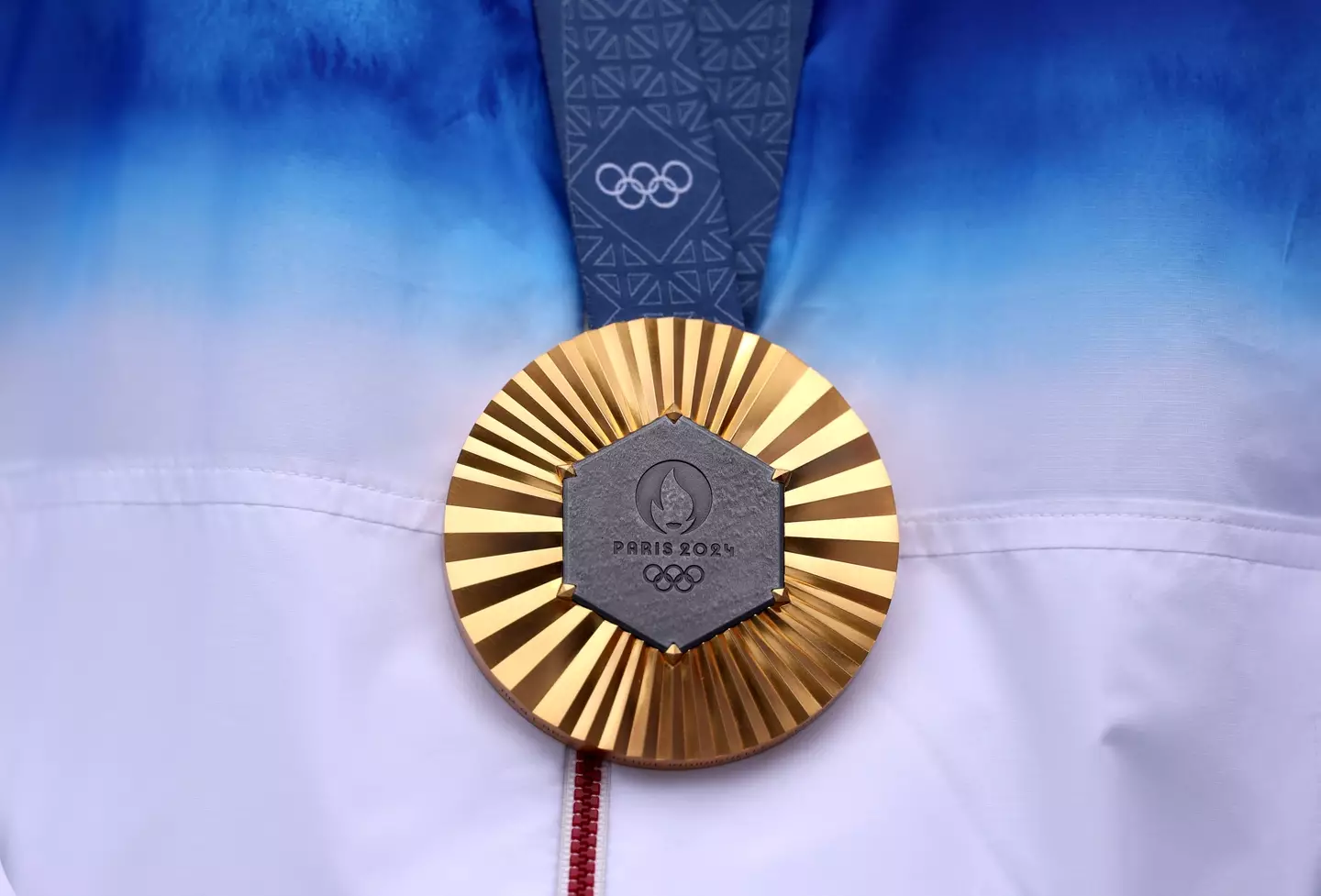






Tags
📧 Get More Articles Like This
Subscribe to receive product reviews and buying guides in your inbox!
We respect your privacy. Unsubscribe at any time.