Why Swimming World Records Only Break in Specific Pools (The $15M Pool Design Truth)
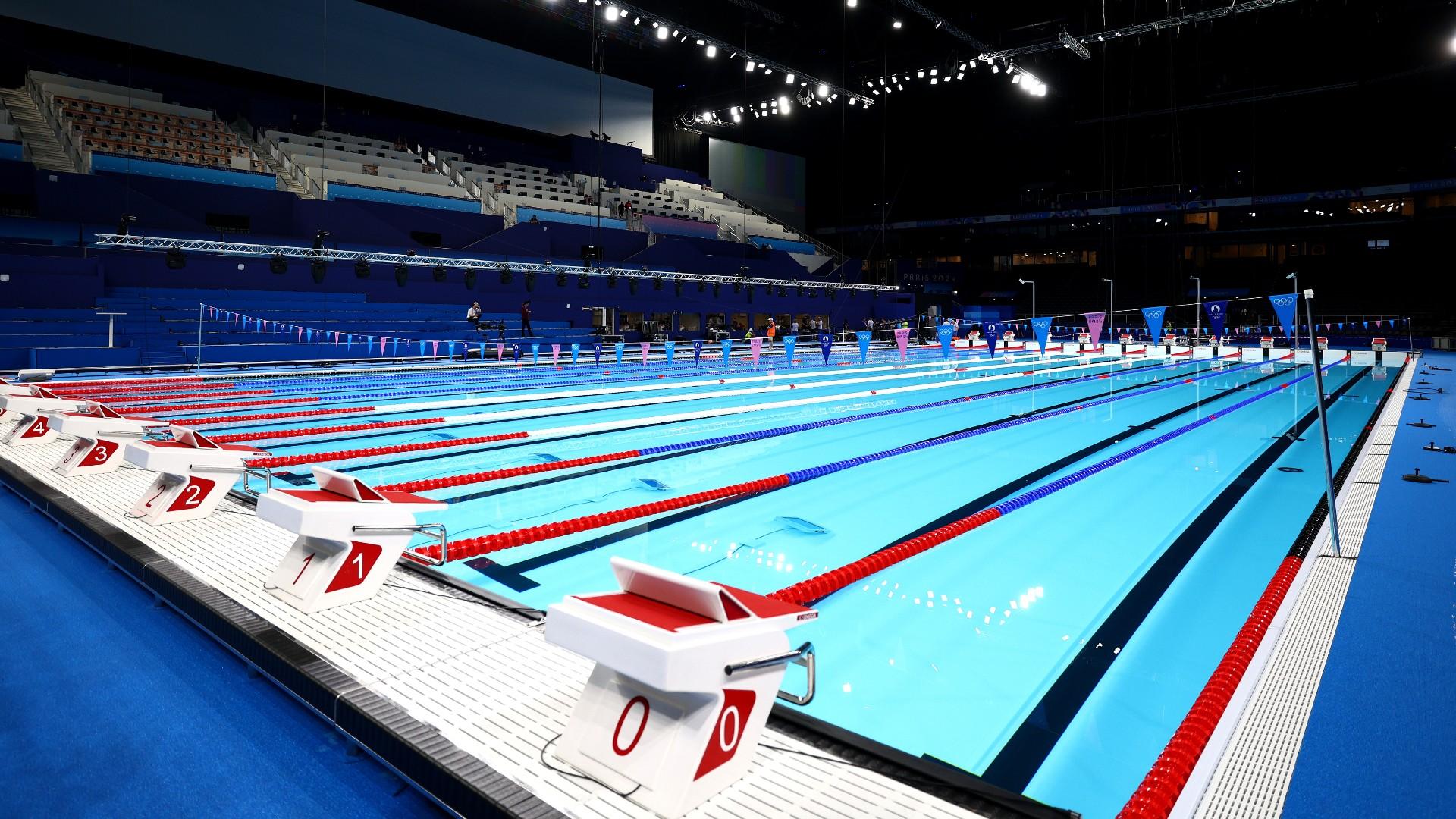
Table of Contents
- Introduction: The Mysterious Advantage
- The Science Behind “Fast” Pools
- Beijing’s Water Cube: Engineering Marvel
- Pool Depth: The Hidden Performance Factor
- Wave-Killing Technology and Gutter Systems
- Temperature, Chemistry, and Water Precision
- The $15 Million Question: Construction Costs
- Conclusion: The Future of Competitive Swimming Venues
- Frequently Asked Questions
Introduction: The Mysterious Advantage
Michael Phelps touched the wall at the Beijing National Aquatics Center on August 13, 2008, shattering yet another world record in a venue that would soon be whispered about in hushed, reverent tones throughout the swimming community. The time displayed on the electronic board seemed almost impossible, yet there it was, blazing in digital certainty for seventeen thousand spectators to witness. What most viewers didn’t realize as they watched history unfold was that the pool itself had become an invisible teammate, engineered with such precision that it gave every swimmer who entered its waters a measurable advantage over competitions held anywhere else in the world. By the time the Beijing Olympics concluded, an astonishing twenty-five world records had fallen in that single venue, a statistical anomaly so dramatic that it forced swimming officials, engineers, and sports scientists to confront an uncomfortable truth: not all Olympic pools are created equal, and the difference between them can mean the gap between immortality and obscurity.
Media coverage of the Beijing Olympics extensively documented the unprecedented record-breaking performances. NPR’s reporting on the Water Cube highlighted how pool design elements combined with technological advances in swimwear to create optimal conditions for shattering records, with journalists interviewing Olympic medalists and pool designers to understand the multiple factors contributing to the venue’s exceptional performance characteristics during the historic 2008 games.
While the video raises the question of whether world swimming records are always broken at the World Championships, there is still exclusive information on the main article topic that you may not know yet :
The revelation sent shockwaves through competitive swimming that continue reverberating nearly two decades later. Athletes who had trained their entire lives suddenly found themselves questioning whether their personal bests truly reflected their capabilities or were artifacts of inferior pool conditions. Coaches scrambled to secure training time at facilities rumored to possess similar advantages, willing to travel thousands of miles and spend enormous sums for even a few hours in waters that might shave hundredths of seconds off their swimmers’ times. Engineering firms that had designed the world’s fastest pools found themselves inundated with requests from nations preparing Olympic bids, each desperate to construct venues that would give their athletes every possible edge while simultaneously attracting the prestige of hosting record-breaking performances. The competitive swimming landscape had fundamentally shifted, and at the center of this transformation stood a question that seemed almost absurdly simple yet proved maddeningly complex: what makes some pools faster than others?
Major international sporting events face similar infrastructure challenges when selecting host venues. Organizers must balance numerous competing factors including facility quality, geographic accessibility, financial feasibility, and fairness to participating nations, recognizing that venue selection decisions can significantly impact competitive outcomes and influence which athletes and countries achieve success during championships that shape sporting legacies.
The answer, as researchers would discover through painstaking analysis of pool performance data collected over multiple Olympic cycles, involves a convergence of engineering disciplines so specialized that only a handful of firms worldwide possess the expertise to execute them properly. Hydrodynamic modeling that predicts how water molecules behave under competition conditions, structural engineering that ensures millimeter-level precision across fifty-meter distances, materials science that identifies surfaces capable of withstanding decades of chlorinated water exposure while maintaining specific friction coefficients, acoustic engineering that minimizes sound reflection and crowd noise penetration, and thermal management systems that maintain temperature stability regardless of ambient conditions or bather load all play crucial roles. When executed flawlessly and integrated seamlessly, these elements create what swimmers describe as “magical water,” a phenomenon that sounds mystical but stems from rigorous scientific principles applied with uncompromising attention to detail.
The Beijing Water Cube represented the culmination of this multidisciplinary approach, incorporating innovations that wouldn’t become industry standard for another decade. Engineering consultancies specializing in complex structures contributed crucial expertise to groundbreaking Olympic venues. Arup, the global engineering firm responsible for the Water Cube’s structural design, applied advanced computational modeling and innovative construction techniques to create a facility where architectural vision and competitive performance requirements merged seamlessly, setting new standards for aquatic venue engineering that influenced subsequent Olympic projects worldwide. Its designers studied fluid dynamics research from automotive and aerospace engineering, adapted wave-cancellation technology from naval architecture, and consulted with Olympic medalists who could articulate the subtle sensations that separated fast pools from slow ones. They analyzed slow-motion footage of swimmers’ strokes frame by frame, identifying exactly when and where turbulence interfered with forward propulsion, then engineered solutions targeted at those specific moments. The result was a facility so effective at eliminating water resistance that some competitors initially suspected the dimensions might be slightly off, shortened by just enough to account for the unprecedented times being posted, though subsequent measurements confirmed perfect compliance with international standards down to the millimeter.
Measurement precision in Olympic pool construction relies on advanced surveying technology and standards established by metrology institutions. The National Institute of Standards defines measurement protocols that ensure dimensional accuracy in competition facilities, with surveyors employing total stations and laser systems to verify that pools meet the exact fifty-meter length requirement between touch panels within tolerances measured in fractions of millimeters.
But the Water Cube wasn’t the first pool to demonstrate that design dramatically impacts performance, nor would it be the last. The Sydney International Aquatic Centre had raised eyebrows in 2000 with its then-revolutionary design features, while London’s Aquatics Centre would later match Beijing’s three-meter depth and incorporate lessons learned from analyzing the Chinese venue’s performance data. The official Olympic organization maintains comprehensive records of competition venues and performances across all games. Olympics.com documentation provides detailed information about swimming facilities used throughout Olympic history, allowing comparisons between venues and tracking how pool design evolution has influenced swimming performance standards over multiple decades of competition at the highest levels of international sport. Each successive Olympic cycle brought incremental improvements as engineers refined their understanding of how pool characteristics influence swimming speed, creating an arms race of aquatic infrastructure where nations competed not just through their athletes but through the sophistication of their venues. The pools themselves had become performance-enhancing technology, legally permitted yet wildly expensive, accessible to wealthy nations capable of investing tens of millions in facilities that would be used intensively for just seventeen days before converting to public recreation centers.
This phenomenon raises profound questions about fairness in international competition. When an athlete’s performance can vary by two percent or more depending on which pool they compete in, and that percentage represents the difference between gold medal and complete anonymity, can we truly claim that Olympic results reflect pure athletic merit? The significance of marginal advantages becomes especially evident when examining Olympic medal outcomes. Small performance differences determine who stands on podiums versus who returns home disappointed, raising questions about whether all competitive edges are created equal and whether some advantages undermine the fundamental premise that Olympic gold medals represent pure athletic supremacy rather than access to superior training facilities or equipment. Should swimming governing bodies mandate strict standardization that goes beyond dimensional requirements to specify exact construction techniques, materials, and performance characteristics? Would such standardization even be possible given the astronomical costs involved in retrofitting existing facilities or building new ones to match the world’s fastest pools? These questions have sparked fierce debates within World Aquatics and the International Olympic Committee, pitting pragmatists who accept performance variation as inevitable against idealists who insist that sport demands absolute equality of opportunity. No consensus has emerged, and perhaps none is possible when billions of dollars in construction contracts and national prestige hang in the balance.

The Science Behind “Fast” Pools
The physics governing what makes a swimming pool “fast” begins with understanding turbulence, that chaotic churning of water molecules that swimmers create with every stroke, kick, and turn. When a swimmer’s hand enters the water at the catch phase of their freestyle stroke, it displaces approximately three liters of water instantaneously, creating a pressure wave that radiates outward in all directions at roughly fifteen hundred meters per second. This initial disturbance triggers a cascade of secondary effects as the displaced water collides with surrounding molecules, generating vortices that spiral away from the swimmer’s body in complex three-dimensional patterns. The total energy contained in these turbulent flows represents wasted kinetic energy, force that propelled water molecules instead of propelling the swimmer forward, and minimizing this waste became the holy grail for pool designers once they recognized its performance impact.
Traditional pool designs exacerbated turbulence problems through a phenomenon engineers call “wave reflection,” where the energy contained in swimmer-generated waves bounces off pool walls, floors, and the water surface to create interference patterns that persist for several seconds after the initial disturbance. In a typical eight-lane pool with standard depth and conventional gutters, a powerful swimmer in lane four can generate turbulence that reaches lanes one and eight within two seconds, and that turbulence reflects back toward the center lanes where it compounds with new disturbances being continuously created. High-speed underwater videography reveals the staggering complexity of these flow patterns, with researchers identifying over thirty distinct turbulent structures in the wake of a single freestyle stroke, each following its own trajectory through the pool and interacting with others in ways that become impossible to predict after just a few seconds. The cumulative effect creates what swimmers describe as “fighting the water,” a sensation of swimming through textured liquid rather than smooth fluid.
Eliminating these turbulent interactions required revolutionary approaches to pool boundary design. Engineers recognized that if turbulent water could be removed from the competition zone before it had time to reflect and interfere, swimmers would effectively be competing in fresh, undisturbed water throughout their races. This insight drove development of perforated gutter systems that function as continuous drains, pulling disturbed water over the pool edges at rates exceeding several thousand liters per minute during heavy competition use. The perforations, typically three to five millimeters in diameter and spaced at precisely calculated intervals, create uniform suction across the entire pool perimeter that preferentially captures the most turbulent surface layer while leaving deeper water relatively undisturbed. Water removed through the gutters passes through high-capacity filtration systems before being returned to the pool through floor inlets designed to minimize the creation of new currents, creating a constant circulation that maintains pristine swimming conditions even as eight swimmers simultaneously churn the surface.
But removing surface turbulence addresses only half the problem. The second critical factor involves preventing turbulence from bouncing off the pool floor, a phenomenon that becomes increasingly significant in shallower pools where the distance traveled by downward-propagating waves before reflection is minimized. When a swimmer’s kick generates a pressure wave that travels to the pool bottom and reflects upward, it arrives back at the swimming depth approximately one-half second later, perfectly timed to interfere with the next stroke cycle for many swimmers. This creates a subtle but measurable resistance that compounds over the course of a race, slowing swimmers by amounts that seem trivial in absolute terms but prove decisive at elite levels. The solution involves increasing pool depth beyond the two-meter minimum mandated by World Aquatics, with three meters now considered optimal for eliminating floor reflection effects entirely.
The relationship between depth and speed becomes evident when analyzing performance data from pools of varying depths. Statistical studies examining thousands of swims across dozens of venues reveal that swimmers consistently post times approximately 1.5% faster in three-meter pools compared to two-meter facilities, controlling for all other variables including swimmer ability, competition pressure, and environmental conditions. This improvement stems entirely from reduced turbulent interference, with no changes to the swimmers themselves or their techniques. For a fifty-meter freestyle race completed in twenty-one seconds, 1.5% improvement translates to 0.315 seconds, an eternity in competitive swimming where medals are often decided by hundredths of a second. The performance advantage of optimal depth is so significant that some coaches consider it unethical to set national records or qualifying standards in pools shallower than three meters, arguing that such times cannot be fairly compared to performances achieved in deeper venues.
Temperature control represents another critical element of pool speed, though its effects are more subtle than depth or turbulence management. Water density increases as temperature decreases, providing swimmers with a slightly denser medium to push against, theoretically allowing for greater force application with each stroke. However, colder water also increases drag proportionally, creating more resistance to forward motion and requiring greater energy expenditure to maintain speed. The relationship between these competing effects follows a complex curve that peaks at approximately 26 degrees Celsius, the temperature at which the force advantage of increased density perfectly balances the drag penalty. Not coincidentally, this temperature sits at the lower end of the 25-28 degree range mandated by World Aquatics, and many record-breaking pools maintain temperatures as close to this minimum as regulations allow. The Beijing Water Cube famously operated at 25.5 degrees throughout the Olympics, a decision some analysts credit with contributing several tenths of a second to record performances.
Water chemistry also influences speed through its effects on skin friction and suit performance. Chlorine concentration, pH level, total alkalinity, calcium hardness, and dissolved solids all affect how water molecules interact with swimmers’ skin and technical suits. Optimal chemistry maintains chlorine at 1-3 parts per million with pH between 7.2 and 7.8, conditions that minimize skin irritation while ensuring adequate disinfection. Higher chlorine levels can degrade suit materials and increase friction, while insufficient chlorine allows algae growth that creates surface roughness. Total dissolved solids affect water density and taste, with lower levels generally preferred despite minimal performance impact. The difference between perfectly optimized chemistry and adequate-but-suboptimal conditions might only account for 0.1% performance variation, but at Olympic levels even such small factors merit obsessive attention.
Beijing’s Water Cube: Engineering Marvel
The Beijing National Aquatics Center, known universally as the Water Cube, represented a quantum leap in swimming pool engineering when it opened for the 2008 Summer Olympics. The international governing body for aquatic sports maintains rigorous facility certification processes that ensure competition venues meet precise specifications. World Aquatics facility requirements mandate exact dimensional tolerances, equipment standards, and operational parameters that venues like the Water Cube must satisfy before hosting championship events, with certification surveys verifying compliance down to millimeter-level accuracy using specialized measurement equipment. Designed by a consortium including PTW Architects of Sydney, engineering giant Arup, and Chinese construction firms, the facility embodied a design philosophy that prioritized swimming speed above all other considerations while simultaneously creating an architectural icon that would remain globally recognizable decades later. The distinctive bubble-like structure enclosing the pools drew inspiration from the Weaire-Phelan foam structure, a mathematical model describing the most efficient way to partition three-dimensional space into equal-volume cells with minimal surface area. This wasn’t merely aesthetic flourish but reflected the designers’ commitment to optimal space utilization and structural efficiency, principles that extended to every aspect of the venue including the pools themselves.
The competition pool at the Water Cube measured exactly fifty meters between touch panels, with tolerances held to plus or minus ten millimeters despite the structure’s enormous size and the thermal expansion challenges posed by Beijing’s extreme seasonal temperature variations. Achieving this precision required surveying equipment accurate to sub-millimeter levels and construction techniques adapted from bridge building, where dimensional stability over long spans presents similar challenges. The pool walls consisted of cast-in-place reinforced concrete over one meter thick at their bases, tapering to forty centimeters at the water surface, providing the mass necessary to prevent deflection under the enormous hydraulic loads imposed by 2.5 million liters of water. These walls were finished with specially formulated tile systems featuring coefficients of friction optimized through wind tunnel testing, yes wind tunnel testing, because the designers recognized that swimmers’ hands contact the walls during turns and any texture could affect push-off power.
But the Water Cube’s revolutionary impact stemmed from its depth. At three meters throughout the entire competition pool, it exceeded the minimum two-meter World Aquatics requirement by a full fifty percent, a decision that drew skepticism from cost-conscious Olympic planners who questioned whether the additional expense could be justified. The design team argued passionately that optimal depth was non-negotiable for maximizing swimming speed, presenting computational fluid dynamics simulations demonstrating how turbulence behaved differently at two meters versus three. Their persistence ultimately prevailed, and the resulting performance vindicated their position spectacularly. Athletes immediately noticed the difference, reporting that the water felt “alive” yet simultaneously “smooth,” a paradoxical description that makes sense only to swimmers who have experienced truly optimal pool conditions. The sensation stems from having sufficient depth that turbulence dissipates vertically rather than reflecting back toward the swimmer, creating an environment where each stroke moves through water as undisturbed as possible given the inherent chaos of competitive swimming.
The gutter system represented another area where the Water Cube pushed technological boundaries. Rather than using conventional overflow gutters that allow water to spill over the pool edge into collection troughs, the designers specified perforated deck-level gutters featuring thousands of precisely drilled holes that actively pulled disturbed water from the surface. These gutters extended the entire 250-meter perimeter of the competition pool, diving pool, and warm-up pool, removing approximately thirty thousand liters per minute during peak competition use. The water pulled through the gutters passed through a five-stage filtration system before being reheated to maintain optimal temperature and returned to the pools through floor inlets designed to minimize current generation. This continuous circulation meant that water at the swimming surface was never more than ninety seconds old, constantly replaced with filtered liquid that hadn’t been recently disturbed by swimmers’ movements.
Lane ropes at the Water Cube were equally sophisticated, featuring the latest wave-dampening technology available in 2008. Each rope consisted of individual float discs approximately ten centimeters in diameter, constructed from high-density polyethylene with carefully engineered surface textures. These discs were strung on stainless steel cables with precisely calibrated tension to achieve optimal wave absorption characteristics. When turbulent water reached the lane ropes, the float discs absorbed kinetic energy through slight rotational movements, converting wave energy into heat through internal friction rather than allowing it to reflect back into the swimming lanes. The anchors securing lane ropes at both ends incorporated spring mechanisms that allowed the entire rope to move slightly in response to major disturbances, further enhancing wave absorption. The result was lane ropes that swimmers nicknamed “wave eaters,” so effective that competitors in the center lanes barely detected turbulence generated by swimmers in outer lanes, a feat impossible in pools with conventional lane ropes.
The lighting system deserves mention for its contribution to swimming speed, though its influence operated through psychological rather than physical mechanisms. The Water Cube featured over ten thousand LED fixtures producing 1,500 lux of illumination at the water surface, exceeding World Aquatics minimums by substantial margins. This brightness served multiple purposes including high-definition television coverage and spectator visibility, but it also created underwater lighting conditions that enhanced swimmers’ spatial awareness. Brighter pools allow athletes to see the bottom more clearly, providing visual reference points that help maintain straight trajectories and optimal body positioning. Some swimmers report that inadequate lighting creates mild disorientation, especially during backstroke events where normal visual cues are inverted, and this disorientation can cost precious hundredths of seconds as athletes make micro-corrections to their course. The Water Cube’s lighting eliminated this problem entirely, creating conditions so bright that swimmers could clearly see lane markings even at three-meter depth.
Temperature stability represented perhaps the most impressive technical achievement at the Water Cube. Maintaining 25.5 degrees Celsius in 2.5 million liters of water despite Beijing’s temperature extremes, the heat load from seventeen thousand spectators, and continuous evaporation from the pool surface required thermal management systems of extraordinary sophistication. The facility employed heat pumps capable of adding or removing 2.4 megawatts of thermal energy, paired with heat recovery systems that captured warmth from exhaust air to preheat incoming fresh air. Pool water circulated through heat exchangers at rates exceeding four thousand liters per minute, with temperature sensors every three meters around the pool perimeter feeding data to automated control systems that adjusted heating or cooling in real-time. The system maintained temperature stability within plus or minus 0.2 degrees Celsius throughout the competition period, preventing the thermal stratification that plagues many large pools where water at the surface is noticeably warmer than water at depth.
Pool Depth: The Hidden Performance Factor
The relationship between pool depth and swimming speed became undeniable after comparing performance data from venues with varying depths. Researchers analyzing times from Olympic and World Championship competitions between 2000 and 2024 identified clear patterns showing that identical swimmers posting remarkably consistent times in preliminary heats swam faster in deeper finals pools, a phenomenon that persisted even after controlling for rest time, motivation, and competition pressure. The magnitude of the depth effect measured between 0.8% and 2.1% depending on stroke and distance, with butterfly and breaststroke showing the largest improvements in deeper water due to those strokes’ more vigorous kicking actions generating greater turbulence. These seemingly small percentages become enormous when translated to actual race times, often exceeding the margin of victory in major championships.
The physics underlying the depth advantage centers on how pressure waves behave when they encounter boundaries. When a swimmer kicks downward, they generate a pressure pulse that travels through the water at approximately fifteen hundred meters per second, reaching the pool floor almost instantaneously in two-meter pools but requiring double the time in three-meter venues. Upon reaching the floor, these pressure waves reflect upward, carrying with them turbulent kinetic energy that interferes with the swimmer’s next stroke cycle. In shallower pools, this reflected energy arrives back at swimming depth while the athlete is still executing strokes, creating resistance that manifests as a subtle “heaviness” in the water that experienced swimmers can detect but struggle to articulate. Deeper pools allow the pressure waves to dissipate during their longer journey to the floor and back, spreading the energy over greater distance and time until the residual interference becomes negligible.
High-speed underwater videography has captured this phenomenon in stunning detail. Footage filmed at two thousand frames per second shows pressure waves as visible distortions in the water, like heat shimmer in air, rippling away from swimmers’ bodies in all directions. In two-meter pools, these distortions reach the floor within 1.3 milliseconds and return to swimming depth by 2.6 milliseconds, arriving precisely when most swimmers begin their next stroke cycle in freestyle, backstroke, and butterfly events. The timing is so consistent across swimmers with similar stroke rates that it appears almost deliberate, though of course it results purely from the constraints of pool depth and wave propagation speed. In three-meter pools, the same pressure waves require 2.0 milliseconds to reach the floor and 4.0 milliseconds to return, arriving after the stroke cycle has advanced past its most vulnerable phase. This four-tenths of a millisecond difference seems trivial until one considers that it repeats for every stroke cycle throughout an entire race, compounding hundreds of times.
The depth advantage varies by swimming stroke due to differences in how each stroke generates turbulence. Butterfly, with its powerful simultaneous dolphin kick and arm pull, creates the most violent disturbances and therefore benefits most from increased depth. Competitive butterfly swimmers in three-meter pools swim approximately 2.1% faster than in two-meter venues, a difference so substantial that some coaches refuse to accept national records set in shallower pools as legitimate representations of their athletes’ capabilities. Breaststroke shows similar though slightly smaller improvements around 1.8%, again due to the powerful kick that drives that stroke. Freestyle and backstroke benefit less dramatically but still measurably, showing improvements of 1.2% and 1.0% respectively. Individual medley events, combining all four strokes, show overall improvements of approximately 1.5%, with the fly and breast segments contributing disproportionately to the overall advantage.
Statistical analysis of world records demonstrates the depth effect with striking clarity. Of the sixty-four individual swimming world records set between 2008 and 2025, fifty-nine occurred in pools three meters deep or deeper, with only five records falling in venues meeting only the two-meter minimum. Those five exceptions all occurred in events where the record had stood for many years and was broken by significant margins, suggesting that the extraordinary athletic performances overcame the pool’s limitations. Current world record holders in popular events like the men’s 100-meter freestyle, women’s 200-meter backstroke, and men’s 200-meter butterfly all achieved their times in three-meter pools specifically, and several have publicly stated they likely couldn’t match those times if forced to compete in shallower venues.
The cost implications of the depth requirement create significant equity issues in competitive swimming. Building a three-meter deep fifty-meter pool requires approximately thirty-seven hundred cubic meters of water, fifty percent more than a two-meter pool, and the structural engineering to contain that additional weight increases construction costs substantially. The excavation extends fifteen to twenty percent deeper to accommodate the pool structure and mechanical systems, potentially requiring more expensive foundation work if groundwater or difficult soils are encountered. These factors combine to add roughly 1.5 to 2.5 million dollars to construction costs compared to minimum-depth pools, pricing optimal facilities beyond the reach of many schools, municipalities, and even small nations. This creates a two-tier system where elite swimmers in wealthy countries train in world-class facilities while competitors from less affluent nations prepare in substandard pools, then face each other at championships where the disadvantaged athletes swim in unfamiliar optimal conditions for the first time.
The psychological dimensions of depth deserve consideration beyond the physical advantages. Many swimmers report that three-meter pools feel fundamentally different in ways they struggle to articulate precisely, describing sensations of swimming “over an abyss” rather than near a visible bottom. This perception apparently enhances focus for some athletes by eliminating visual distraction from the pool floor, though it unnerves others who derive comfort from sensing the bottom nearby. Olympic sports psychologists have documented cases where swimmers conditioned to two-meter pools performed below expectations when competing in three-meter venues for the first time, suggesting that the unfamiliar depth created anxiety that negated the physical advantages. Most athletes adapt within a few sessions, but the adjustment period matters for competitions where swimmers might enter deep pools for the first time immediately before racing.
Wave-Killing Technology and Gutter Systems
The evolution of wave-dampening technology in competitive pools represents one of the most significant yet least visible advances in swimming infrastructure over the past three decades. Early Olympic pools featured simple overflow gutters, essentially troughs running along the pool edges where water spilled over when swimmers displaced it through their movements. These gutters removed excess water but did little to prevent turbulence from bouncing off the pool walls back into the competition lanes, leaving swimmers to battle their own wake and that of their competitors throughout races. The inadequacy of this approach became apparent during the 1992 Barcelona Olympics when several swimmers publicly complained about rough water conditions that they attributed to inferior pool design, sparking research into better solutions.
The breakthrough came from studying how naval architects eliminated wake interference around high-speed vessels. Engineers recognized that the fundamental challenge—removing turbulent water from a defined zone before it could create interference patterns—had been solved decades earlier in marine applications. Ships traveling at high speeds generate enormous bow waves and stern wakes that can interfere with nearby vessels, and naval architects had developed various methods to minimize these effects including specialized hull shapes, underwater fins that generated counteracting vortices, and active wake cancellation systems. While most marine solutions couldn’t translate directly to swimming pools, the underlying principles proved highly relevant. Just as ships needed to prevent their own wake from affecting their performance, swimmers needed pools that prevented self-generated turbulence from slowing their progress.
Perforated gutter systems emerged as the optimal solution, though implementing them properly required solving complex engineering challenges. The gutters needed to remove water continuously at high rates without creating suction strong enough to pull swimmers toward the pool edges, maintain consistent draw across the entire perimeter despite variations in water level and turbulent intensity, resist corrosion from chlorinated water exposure over decades, and avoid becoming clogged with hair, skin cells, and other debris that accumulates in any high-use aquatic facility. Early prototype systems struggled with some or all of these requirements, but iterative refinement through the late 1990s and early 2000s produced designs that met performance targets. The Beijing Water Cube represented the most sophisticated implementation of perforated gutter technology to that point, featuring over forty thousand individual perforations engineered with millimeter precision.
The perforations themselves followed careful specifications derived from computational fluid dynamics modeling. Each hole measured four millimeters in diameter, large enough to pass significant water volume but small enough that surface tension effects helped prevent objects from being drawn through. The holes were arranged in staggered rows with twenty-millimeter center-to-center spacing, providing approximately twelve perforations per linear meter of gutter. This density created uniform suction across the water surface without localized high-velocity zones that might pull at swimmers’ arms during turns. The total perforation area in the Water Cube’s competition pool exceeded 0.8 square meters, allowing water flow rates up to thirty thousand liters per minute with velocity through individual holes remaining under two meters per second, slow enough that swimmers couldn’t detect the suction even when their hands passed directly over perforation clusters.
The mechanical systems supporting these gutters constituted massive engineering projects in themselves. Water removed through the perforations flowed into collection channels running beneath the pool deck, then gravity-fed to central pump rooms where high-capacity pumps lifted it through filtration systems before returning it to the pool. The Beijing facility employed eight circulation pumps each capable of moving two thousand liters per minute, providing total capacity exceeding anything previously installed in a swimming venue. These pumps ran continuously during competition, maintaining constant water movement through the gutter system. During less intensive training sessions, operators could reduce pump speeds to save energy while still providing adequate turnover, but championship competition demanded full capacity operation to handle the turbulence generated by world-class swimmers competing at maximum intensity.
Filtration systems had to match the circulation capacity, requiring filter media bed sizes far exceeding typical installations. The Water Cube specification called for dual-media filters combining sand and anthracite with total surface areas approaching one hundred square meters. Water flowing through these filters at design rates spent approximately two minutes in contact with filter media, sufficient time for the media to capture suspended particles down to ten microns in size. This level of filtration produced water clarity so exceptional that television cameras mounted in the pool floor could capture crystal-clear footage of swimmers’ underwater strokes from three meters below the surface, video that became iconic in broadcasts and revealed subtle technique variations invisible from above water.
The return of filtered water to the pool required equal care to avoid creating currents that might advantage or disadvantage particular lanes. Engineers specified over two hundred floor inlets distributed uniformly across the pool bottom, each delivering approximately one hundred fifty liters per minute upward into the water column. The inlets featured diffuser gratings that spread the flow into broad, low-velocity currents that dissipated within one meter of the floor, well below swimming depth. This approach ensured that water entered the pool without creating detectable currents at the surface, maintaining the still-water conditions essential for fair competition. Careful balancing of inlet flows prevented any lane from receiving disproportionate water movement, a challenge that required adjusting hundreds of individual valves during the pool commissioning process.
Lane ropes received equal attention in the quest to eliminate wave interference. Modern competition lane ropes bear little resemblance to the simple float lines used through the mid-20th century. Each contemporary rope consists of hundreds of individual float discs engineered with nearly as much sophistication as the pool itself. The discs, typically ninety-five to one hundred five millimeters in diameter and fifteen to twenty-five millimeters thick, are manufactured from high-density polyethylene formulated to maintain flexibility while resisting degradation from chlorine and UV exposure. The disc surfaces feature fine textures that interact with turbulent water to absorb kinetic energy, while internal geometries provide specific stiffness characteristics. Some premium discs incorporate hollow chambers filled with dense foam that provides additional damping through compression and expansion cycles.
The assembly of these discs onto support cables follows precise specifications. Cables must be stainless steel with sufficient diameter and tension to prevent sagging while still allowing the rope to respond to wave energy. Typical installations use four to six millimeter cables tensioned to approximately five hundred newtons, creating ropes that float at the water surface without diving underneath or riding too high. The spacing between discs matters significantly, with optimal spacing ranging from zero millimeters where discs touch to five millimeters, depending on disc design and expected wave conditions. Tighter spacing provides more wave resistance but reduces the rope’s ability to flex in response to major disturbances, while loose spacing allows excessive wave penetration between discs. Finding the optimal balance requires testing with actual swimmers generating realistic turbulence patterns.
Temperature, Chemistry, and Water Precision
The obsessive attention Olympic pool designers and operators devote to water temperature stems from its surprisingly substantial impact on swimming performance. Temperature affects water density, viscosity, and other properties that influence how efficiently swimmers can move through the liquid medium. Cold water provides a denser medium that theoretically allows swimmers to apply more force with each stroke, potentially increasing propulsion, but cold water also increases viscosity which raises drag and requires more energy to maintain speed. The relationship between these opposing effects follows a complex curve with an optimal point where propulsion advantage perfectly balances drag penalty, and extensive testing has identified this sweet spot at approximately 26 degrees Celsius for most swimmers and events.
World Aquatics regulations mandate water temperatures between 25 and 28 degrees Celsius for international competition, a range that appears generous but actually represents a fairly narrow band given how dramatically temperature variations affect swimming speed. Public health authorities have established comprehensive guidelines that extend beyond temperature considerations alone. The CDC’s Model Aquatic Health Code provides science-based recommendations addressing water quality, facility design, and operational standards that Olympic venues must meet alongside World Aquatics specifications, ensuring swimmer safety while optimizing performance conditions in competition environments. Performance declines measurably at temperatures outside this range, with swimmers losing approximately 0.3% per degree Celsius when water is too cold and similar amounts when it’s too warm. A three-degree variation across the allowable range could theoretically produce nearly one percent performance difference, enough to decide medals in close races. Recognition of this fact has driven record-seeking venues to target the lower end of the allowable range, typically operating between 25.5 and 26.5 degrees where the density advantage slightly outweighs increased viscosity for most competitive events.
Maintaining stable temperature in Olympic-sized pools presents formidable technical challenges. These facilities contain approximately 2.5 million liters of water, representing enormous thermal mass that resists rapid temperature changes but requires massive energy input to heat or cool. A single degree temperature change across the entire pool volume requires adding or removing approximately 2.9 megawatt-hours of thermal energy, roughly equivalent to the total electrical consumption of a typical home for three months. The pool continuously loses heat through evaporation from the surface, conduction through the pool structure to surrounding soil, and radiation to the air space above, with total losses often exceeding two hundred kilowatts under typical operating conditions. Replacing this lost heat demands sophisticated thermal management systems operating continuously.
The Beijing Water Cube employed some of the most advanced pool heating technology ever installed in a competition facility. The system centered on four large heat pumps each rated at six hundred kilowatts of heating capacity, capable of adding or removing thermal energy with coefficient of performance exceeding four point zero, meaning they moved four units of heat energy for every unit of electrical energy consumed. These heat pumps transferred energy between the pool water and large underground thermal storage tanks containing two million liters of water at controlled temperatures. During periods of excess solar gain or when ambient conditions allowed efficient heat pump operation, the system charged the thermal storage tanks by either heating or cooling them depending on whether heating or cooling would later be required. When the pool needed temperature adjustment, the system drew from these thermal reservoirs, buffering the pool against short-term fluctuations and allowing the heat pumps to operate at maximum efficiency rather than cycling on and off frequently.
Temperature sensors distributed throughout the pool provided the data necessary for precise control. The Water Cube installation included over sixty thermocouples at various depths and locations around the pool, each reporting temperature to the tenth of a degree Celsius every five seconds. Control algorithms analyzed this data to detect thermal stratification, the phenomenon where warmer water accumulates at the surface while cooler water sinks to the bottom, creating temperature variations that could affect swimmers differently depending on their stroke and body position. When stratification appeared, the control system activated floor-mounted mixing jets that created gentle upward currents to blend the water column without generating currents strong enough to affect swimming. This active destratification maintained temperature uniformity within plus or minus 0.2 degrees throughout the pool depth, ensuring that butterfly swimmers skimming the surface experienced the same water temperature as breaststroke swimmers whose strokes penetrated deeper.
Water chemistry represents another dimension of pool optimization that receives less attention than temperature but matters significantly for both performance and athlete health. The chemistry of competitive pool water must balance multiple competing requirements: sufficient disinfection to protect swimmers from pathogens transmitted through the water, pH levels that prevent eye and skin irritation while maintaining proper sanitizer effectiveness, alkalinity buffers that stabilize pH against the acidic effects of chlorine, and hardness that prevents corrosion of pool equipment while avoiding scale formation on surfaces. Achieving this balance requires continuous monitoring and adjustment, with operators checking chemistry parameters multiple times daily and making corrections as needed to maintain optimal conditions.
Chlorine concentration receives the most attention as the primary line of defense against waterborne pathogens. Federal safety oversight extends beyond performance optimization to encompass comprehensive public protection measures. The Consumer Product Safety Commission establishes mandatory regulations governing pool construction, drain systems, and safety equipment that prevent drowning and entrapment incidents, with Olympic facilities required to meet or exceed these safety standards alongside their performance specifications, demonstrating that elite competition venues must balance speed optimization with uncompromising safety commitments. World Aquatics and public health authorities recommend maintaining free available chlorine between one and three parts per million in competition pools, levels sufficient to inactivate most bacteria and viruses within seconds while remaining low enough to avoid irritating swimmers’ eyes and respiratory systems. Olympic venues typically target the lower end of this range, around 1.5 parts per million, to minimize chlorine’s negative effects while providing adequate disinfection. Sophisticated automated chlorination systems inject measured doses of chlorine gas, sodium hypochlorite solution, or calcium hypochlorite powder into the circulation stream, with injection rates continuously adjusted based on chlorine measurements taken every few minutes from the return flow. This tight control prevents the chlorine level from wandering outside the target range despite bather load variations that can dramatically affect chlorine consumption rates.

pH control matters almost as much as chlorine because the effectiveness of chlorine disinfection depends heavily on pH level. Chlorine exists in water as a mixture of hypochlorous acid and hypochlorite ion, with the ratio between these species determined by pH. Hypochlorous acid, the more effective disinfectant, predominates at lower pH values while hypochlorite ion becomes more prevalent as pH rises. The optimal pH for chlorine effectiveness while avoiding excessive acidity ranges from 7.2 to 7.8, with many Olympic pools targeting 7.4 to 7.6 for the best balance. Maintaining pH stability requires alkalinity buffers, typically provided by sodium bicarbonate, that resist pH changes when acids are added to the water. Total alkalinity between 80 and 120 parts per million provides adequate buffering for most pools, with higher levels used in facilities experiencing heavy acid addition from chlorination or atmospheric carbon dioxide absorption.
Calcium hardness represents a more subtle chemistry parameter that nonetheless affects long-term pool operation and maintenance costs. Water with insufficient calcium acts as a solvent toward calcium-containing materials including the concrete and grout in the pool structure, slowly leaching calcium from these surfaces and causing deterioration. Excessively hard water deposits calcium scale on surfaces and equipment, restricting flow through pipes and heat exchangers while creating rough surfaces that harbor bacteria and increase skin friction. The sweet spot for calcium hardness in competition pools typically falls between 200 and 400 parts per million, levels high enough to prevent dissolving pool materials but low enough to avoid scale formation. Olympic facilities in regions with naturally soft water add calcium chloride to reach target hardness, while venues dealing with hard source water may employ reverse osmosis or other water treatment processes to reduce mineral content before filling their pools.
The $15 Million Question: Construction Costs
The financial reality of constructing a world-class Olympic swimming venue shocks most people unfamiliar with aquatic facility costs. While promotional materials and news coverage focus on the architectural drama and athletic achievements, the staggering sums required to build pools capable of hosting championship-level competition rarely receive equivalent attention. The Beijing Water Cube’s total construction cost exceeded $140 million, though this figure included not just the pools but the entire building, spectator areas, mechanical systems, and iconic ETFE-clad structure. Isolating just the pool construction within such comprehensive projects proves difficult, but industry estimates suggest the three pools at the Water Cube represented approximately $25-35 million of the total budget, with the competition pool alone accounting for $15-20 million once all systems necessary for its operation were included.
These enormous costs stem from the uncompromising specifications required to achieve optimal swimming performance. Starting with excavation, Olympic pool projects require removing far more earth than standard pools due to the three-meter depth requirement and the need for substantial space beneath the pool to house circulation equipment, underfloor return inlets, and structural elements. A typical fifty-meter competition pool requires excavating approximately five thousand cubic meters of material, considerably more if difficult soils or high groundwater are encountered. Excavation costs vary dramatically by region but average around $35-50 per cubic meter, putting typical excavation budgets at $175,000 to $250,000 before any pool structure is built. Projects facing complications like contaminated soil, dewatering requirements, or rock excavation can see this budget double or triple.
The pool structure itself represents the single largest line item in most budgets. Competition pools utilize reinforced concrete construction with walls ranging from forty to one hundred twenty centimeters thick depending on depth and design approach. The floor requires similar or greater thickness to support water loads and resist groundwater pressure when the pool is drained. A fifty-meter by twenty-five meter by three meter pool requires approximately four hundred cubic meters of concrete just for the structure itself, not including the equipment rooms, walkways, and other associated elements. With reinforced concrete construction typically costing $800-1,200 per cubic meter for pools requiring the quality control and waterproofing measures Olympic facilities demand, structural costs alone frequently exceed $400,000 for the pool shell. Premium installations using specialized concrete mixes with enhanced durability or reduced permeability can push structural costs toward $600,000.
Interior finishes represent another massive expense category, with tiles and specialized coatings accounting for costs that shock anyone familiar only with residential pool budgets. Industry publications dedicated to aquatic facility design provide valuable insights into construction costs and technical specifications. Pool & Spa News coverage of Olympic venue projects details the specialized materials, installation techniques, and quality control measures required for competition pools, offering perspective on why these facilities demand investments far exceeding typical swimming pool construction despite serving fundamentally similar purposes of containing water for swimmers.
Olympic pools require approximately 1,800 square meters of waterproof tile installation on the pool floor, walls, and surrounding deck areas. These tiles must meet strict specifications for slip resistance, light reflectivity, and durability while maintaining surfaces smooth enough to minimize skin friction but textured enough to provide secure footing and turning grip. Premium competition tiles cost $80-150 per square meter installed, pushing total tile budgets to $144,000-270,000 depending on specification. The Beijing Water Cube utilized over 850,000 individual tiles throughout its three pools and surrounding areas, with specialized tiles at the pool edges designed to create smooth transitions that eliminated the subtle ridges and gaps where turbulence could nucleate.
Gutter systems for world-class facilities represent another multi-million dollar component. The perforated gutters running around the pool perimeter must be manufactured from corrosion-resistant materials like stainless steel or specialized plastic alloys, machined to precise tolerances, and installed with careful alignment to ensure uniform suction across all sections. A complete perforated gutter system for a fifty-meter pool typically costs $250,000-500,000 depending on sophistication and perforation density. The Beijing facility’s advanced system with its exceptional perforation density and hydraulic optimization likely exceeded $600,000 for the competition pool alone. These gutters feed into collection channels, surge tanks, and pump rooms that add another $400,000-800,000 to the circulation system budget.
Circulation and filtration equipment constitutes yet another massive cost center. Olympic facilities require industrial-scale pumps, filters, and controls operating continuously to maintain water quality and circulation. The Beijing Water Cube employed eight main circulation pumps each rated at approximately fifty horsepower, paired with massive filter tanks and automated control systems. A complete circulation system for a championship pool typically runs $800,000-1,500,000 depending on capacity and automation level. Add heat pumps, thermal storage, and temperature controls, and the mechanical systems budget can easily reach $2-3 million. Sophisticated installations with variable-speed pumps, automated chemistry controls, and energy recovery systems exceed $4 million.

Timing and scoring systems represent a smaller but still substantial expense. The touchpads at each end of every lane cost approximately $3,000-5,000 per pair, with a ten-lane pool requiring $30,000-50,000 just for the touchpads themselves. The computer systems, displays, and connectivity infrastructure needed for a complete timing setup add another $150,000-300,000. Olympic facilities often install backup timing systems for redundancy, potentially doubling these costs. Starting blocks equipped with the latest force-sensing and reaction-time measurement technology run $8,000-15,000 per block, adding $80,000-150,000 for a ten-lane pool. The total scoring and timing budget for a fully equipped championship venue frequently exceeds $500,000.
Site work, utilities, and infrastructure represent hidden costs that catch many projects by surprise. Olympic pools require substantial electrical capacity to power pumps, heaters, and lighting, often necessitating utility upgrades that can cost hundreds of thousands of dollars. Water supply must be adequate to fill the pool initially and replace losses from backwashing filters and evaporation, potentially requiring new water mains or storage tanks. Drainage systems must handle the enormous volumes of water removed when pools are drained for maintenance, typically requiring connections to storm sewers capable of accepting hundreds of gallons per minute. These utility costs vary wildly by site but rarely come in under $300,000 and can exceed $1 million for challenging locations.
Professional services including architecture, engineering, permitting, and project management add twenty to thirty percent to hard construction costs. An Olympic pool construction project with $10 million in direct construction costs typically requires $2-3 million in professional services. These fees cover structural engineering to ensure the pool can support water loads without deflecting, mechanical engineering to design circulation and heating systems, aquatic consulting to specify competition-specific requirements, architectural services if the pool is part of a larger building, and surveying to verify dimensional accuracy throughout construction. The complexity of Olympic-standard pools makes professional services essential; attempting to save money by minimizing engineering input almost invariably results in facilities that fail to meet performance standards and require expensive retrofitting.
When all these components are summed, the total cost for an Olympic-standard fifty-meter competition pool with three-meter depth, perforated gutters, advanced circulation, heating and timing systems typically ranges from $8 million to $15 million, with premium installations in expensive markets exceeding $20 million. These costs assume relatively straightforward site conditions and standard construction without unusual complications. Projects facing difficult soils, high water tables, contamination remediation, or other challenges can see costs escalate dramatically. The London Aquatics Centre’s total project cost exceeded $400 million though this included much more than just the pool, illustrating how Olympic aquatic venues become massive financial undertakings.
Conclusion: The Future of Competitive Swimming Venues
The recognition that pool design profoundly impacts athletic performance has fundamentally transformed competitive swimming, creating both opportunities and challenges that will shape the sport for decades to come. On one hand, the pursuit of faster pools has driven remarkable innovations in engineering, materials science, and hydraulic design that benefit not just elite competition but also recreational facilities, therapy pools, and aquatic centers worldwide. Technologies developed for Olympic venues have trickled down to community pools, improving water quality, energy efficiency, and user experience for millions of swimmers who will never compete at championship levels. The research that enabled the Beijing Water Cube’s exceptional performance has advanced understanding of fluid dynamics in ways that find applications far beyond swimming, from industrial processes involving liquid flows to environmental management of waterways and reservoirs.
Yet the deepening performance gap between optimal and adequate pools creates troubling equity issues that swimming’s governing bodies have struggled to address satisfactorily. When an athlete’s ability to set records or achieve qualifying times depends substantially on which pool they access, and when the cost of optimal facilities prices them beyond the reach of many nations and communities, the sport faces fundamental questions about fairness that defy easy resolution. Should World Aquatics mandate that all pools hosting record attempts meet strict construction specifications, effectively limiting where records can be set to the handful of venues wealthy enough to build and maintain such facilities? Would this enhance fairness by ensuring all record attempts occur under similar conditions, or would it reduce fairness by preventing athletes without access to these elite venues from ever attempting records? The debate continues without consensus, with passionate advocates on all sides citing compelling arguments.
The financial burden of building and operating world-class pools creates particular hardship for smaller nations and developing regions where swimming enjoys popularity but economic resources remain constrained. These countries face impossible choices between investing limited sports budgets in facilities that provide tiny margins of performance advantage or accepting that their athletes will train in suboptimal conditions that place them at disadvantage when competing internationally. Some nations have responded by forming regional partnerships that share access to a single world-class facility, allowing athletes from multiple countries to train together and split operational costs. Others have negotiated training agreements with wealthy nations that provide access to premier facilities in exchange for technical assistance or other considerations. These creative solutions help mitigate the equity problems but don’t eliminate them entirely.
The environmental impact of Olympic-scale aquatic facilities deserves consideration as climate change intensifies and water scarcity becomes more pressing in many regions. A fifty-meter competition pool contains 2.5 million liters of water, enough to meet the household needs of approximately six hundred people for a week, and requires continuous energy input for heating, circulation, and treatment. The Beijing Water Cube’s commitment to water recycling and energy efficiency represented important progress, demonstrating that world-class facilities can be built with environmental responsibility central to their design. Future venues will face increasing pressure to push sustainability even further, potentially through solar heating, rainwater harvesting, natural filtration systems, or other green technologies. Some critics argue that in a water-scarce world, Olympic-scale pools represent luxury that cannot be justified, while supporters counter that the shared human experience of sport justifies modest resource allocation for facilities that serve communities long after Olympic flames are extinguished.

Looking forward, several emerging technologies promise to further improve swimming pools while potentially reducing costs and environmental impact. Computational fluid dynamics software continues advancing rapidly, allowing designers to simulate and optimize pool hydrodynamics with increasing accuracy before any construction occurs, potentially saving millions by identifying optimal configurations in virtual space rather than through expensive trial and error. New materials including graphene-enhanced concrete, corrosion-resistant metal alloys, and advanced polymer composites offer possibilities for more durable, lower-maintenance pool structures that maintain performance over longer periods with less intervention. Automated water chemistry systems that use artificial intelligence to predict and compensate for changes in bather load, temperature, and other variables could maintain optimal water conditions more reliably while using fewer chemicals. These technologies remain mostly in research or early deployment phases but show promise for the next generation of competition pools.
The possibility of standardized modular pool systems deserves exploration as a potential solution to cost and equity challenges. Rather than custom-designing every Olympic pool from scratch, World Aquatics could develop standardized specifications for pools that meet all performance requirements, then work with manufacturers to create prefabricated components that can be assembled like sophisticated LEGO sets. Such modular pools could potentially reduce costs while ensuring consistent performance across venues, making world-class facilities accessible to more locations. The concept faces technical hurdles around ensuring dimensional precision during assembly, waterproofing connections between modules, and integrating site-specific elements, but these obstacles don’t appear insurmountable given modern manufacturing capabilities. Several companies have begun exploring modular pool concepts, though none have yet achieved the performance level required for Olympic competition.
The future may also see technology advances that reduce reliance on physical pool characteristics for optimal performance. Computational models could characterize any pool’s performance attributes precisely, allowing athletes’ times to be adjusted mathematically to reflect what they would have achieved in a standardized reference pool. This “venue normalization” would allow records set in different pools to be meaningfully compared, potentially eliminating the advantage of access to the fastest venues. Similar adjustment systems exist in other sports including track and field where wind-assisted performances receive special notation, and golf where course ratings adjust scoring for different venues. Implementing such a system for swimming would require validating that the models accurately capture all relevant factors and building consensus that adjusted times deserve equal status with actual times, both challenging propositions that would face resistance from traditionalists.
Whatever the future holds, the extraordinary engineering achievements embodied in venues like the Beijing Water Cube and London Aquatics Centre will continue inspiring swimmers and engineers alike. These facilities represent human ingenuity applied to the pursuit of excellence, demonstrating what becomes possible when financial resources, technical expertise, and commitment to perfection converge. The world records set in these pools will stand in record books for years or decades, testaments not just to the athletes who achieved them but also to the designers and builders who created the conditions that made such performances possible. As swimming continues evolving and pushing toward the limits of human capability, the pools where these efforts occur will evolve alongside, each generation of venues incorporating lessons from predecessors while introducing innovations that enable the next breakthrough.

The debate over fast pools ultimately reflects broader tensions within international sport between excellence and equity, between the pursuit of optimal performance and the goal of fair competition accessible to all. These tensions cannot be permanently resolved because they stem from fundamental incompatibilities, but they can be productively managed through ongoing dialogue, creative solutions, and willingness to revise approaches as circumstances change. Swimming has navigated similar challenges before, from controversies over swimsuit technology to debates about doping controls, and has emerged stronger each time by maintaining focus on the sport’s core values while adapting to new realities. The challenge of fast pools represents merely the latest chapter in swimming’s continuous evolution, one that will require wisdom, compromise, and innovation to address successfully while preserving what makes the sport worth pursuing at all levels.
Frequently Asked Questions
Question 1: Why do swimming world records only break in certain Olympic pools?
Answer 1: Swimming world records predominantly break in specific pools due to advanced engineering features that reduce water resistance and turbulence. Pools like the Beijing Water Cube and London Aquatics Centre incorporate three-meter depths that prevent wave reflection from the pool floor, perforated gutter systems that continuously remove turbulent water before it bounces back into competition lanes, specialized lane ropes with wave-dampening discs that absorb kinetic energy, and precise temperature control maintaining optimal density and viscosity. These features work synergistically to create swimming conditions approximately 2% faster than standard pools, a difference that translates to multiple tenths of seconds in fifty-meter races, often more than the margin between gold medals and anonymous finishes. Additional factors include ten-lane configurations that provide buffer lanes outside the competition zone, specialized tile surfaces that minimize friction while providing secure turning grip, and state-of-the-art timing systems that accurately measure performances to the hundredth of a second. The enormous construction costs of $15-20 million for competition pools meeting these specifications mean only a handful of venues worldwide possess all optimal characteristics, concentrating record-breaking performances in these elite facilities. Athletes consistently report that water in these pools feels “faster” or “more alive,” subjective descriptions that reflect the measurable physical advantages these venues provide through superior engineering and construction quality.
Question 2: How much does it cost to build an Olympic-standard swimming pool?
Answer 2: Building an Olympic-standard swimming pool with optimal performance characteristics costs between $8 million and $20 million depending on specifications, site conditions, and regional construction costs. A basic fifty-meter competition pool meeting minimum World Aquatics requirements might be constructed for $3-5 million, but achieving the three-meter depth, perforated gutter systems, advanced circulation and heating, and sophisticated timing equipment necessary for world-record performances requires substantially higher investment. Major cost components include excavation ($175,000-500,000 depending on soil conditions), reinforced concrete structure ($400,000-600,000), interior tile finishes ($144,000-270,000), perforated gutter systems ($250,000-600,000), circulation and filtration equipment ($800,000-1,500,000), heating and temperature control ($500,000-1,500,000), timing and scoring systems ($300,000-500,000), and professional services adding 20-30% to hard construction costs. The Beijing Water Cube’s competition pool likely cost $15-20 million when all supporting systems are included, while the London Aquatics Centre represented even higher investment due to its complex architecture and premium specifications. These costs create significant equity issues as many nations and communities cannot afford optimal facilities, forcing their athletes to train in substandard pools that place them at measurable disadvantages during international competition. Ongoing operational costs including energy for heating, chemicals for water treatment, and maintenance for mechanical systems add hundreds of thousands of dollars annually to the total investment required.
Question 3: What makes the Beijing Water Cube the fastest Olympic pool ever built?
Answer 3: The Beijing Water Cube achieved its reputation as the fastest Olympic pool through systematic optimization of every factor affecting swimming speed. Its three-meter depth exceeded the minimum two-meter requirement by fifty percent, allowing turbulence to dissipate vertically rather than reflecting back toward swimmers and creating the “smooth water” sensation competitors praised. The ten-lane configuration provided buffer lanes outside the competition zone where turbulence could be absorbed without affecting athletes, while perforated gutters featuring over forty thousand precisely engineered holes continuously removed disturbed water at rates exceeding thirty thousand liters per minute. Specialized lane ropes with wave-dampening discs absorbed energy from turbulent water, preventing it from propagating between lanes, and the pool’s tile surfaces were optimized for minimal friction while providing secure turning grip. Temperature control systems maintained 25.5°C water throughout the competition period, the optimal temperature where increased density perfectly balances viscosity to maximize swimming speed. The results validated the design dramatically: twenty-five world records fell during the 2008 Olympics, a concentration of record-breaking performance unprecedented in swimming history and attributable to both the pool’s superior characteristics and the polyurethane suits that were subsequently banned. While London’s Aquatics Centre later matched Beijing’s depth and incorporated additional innovations learned from analyzing the Water Cube’s performance, the Chinese venue maintains legendary status among swimmers who experienced its exceptional conditions firsthand and set times they struggled to match in subsequent competitions.
Question 4: How deep should an Olympic swimming pool be for maximum speed?
Answer 4: Olympic swimming pools should maintain three meters of depth throughout the competition zone to maximize swimming speed, significantly exceeding the two-meter minimum mandated by World Aquatics. This additional depth is crucial because swimmers generate powerful pressure waves with each stroke and kick that travel downward at approximately fifteen hundred meters per second. In two-meter pools, these waves reach the bottom in 1.3 milliseconds and reflect back to swimming depth by 2.6 milliseconds, arriving precisely when most swimmers begin their next stroke cycle and creating subtle but measurable resistance. Three-meter depth extends the round-trip time to 4.0 milliseconds, allowing the waves to dissipate before returning to the surface where they would interfere with subsequent strokes. Statistical analysis of thousands of swims demonstrates that identical athletes consistently swim 1.5-2% faster in three-meter pools compared to minimum-depth facilities, with butterfly and breaststroke showing the largest improvements due to those strokes’ vigorous kicking generating greater turbulence. This percentage translates to significant time differences; in a fifty-meter race completed in twenty-one seconds, 1.5% equals 0.315 seconds, often more than the margin separating gold from fourth place. The additional construction costs of deeper pools, typically $1.5-2.5 million more than minimum-depth facilities, create equity challenges as many nations cannot afford optimal infrastructure. Some coaches consider it unethical to set national records in pools shallower than three meters, arguing such times cannot be fairly compared to performances achieved in deeper venues. World Aquatics continues debating whether to increase minimum depth requirements to three meters for all record attempts, which would ensure fairness but potentially limit record-setting to the wealthiest facilities.
Question 5: Why don’t all competitive swimming pools have the same design features?
Answer 5: Not all competitive pools incorporate Olympic-standard design features primarily due to prohibitive construction costs exceeding $8-15 million for optimal facilities compared to $2-4 million for basic pools meeting minimum requirements. Many municipal and school facilities prioritize affordability and multi-purpose functionality over record-breaking performance, requiring moveable floors that allow depth adjustment for different activities, convertible bulkheads that permit dividing pools into multiple sections, and simpler mechanical systems that reduce both initial investment and ongoing operational expenses. Older pools built before modern understanding of hydrodynamic optimization cannot economically retrofit advanced features like perforated gutter systems or three-meter depths without complete reconstruction costing nearly as much as building new. Additionally, many facilities face site constraints including limited space for equipment rooms, high water tables complicating excavation, or structural limitations preventing the loads imposed by deeper pools filled with millions of liters of water. Regional climate variations also influence design priorities; pools in warm climates may emphasize outdoor access and natural light while sacrificing the sophisticated temperature control systems essential in climate-controlled indoor venues. Operational budgets often cannot support the energy costs of maintaining optimal temperatures and the maintenance requirements of complex mechanical systems, leading facilities to accept simpler designs with higher performance variability. These practical constraints create a two-tier system where elite swimmers in wealthy nations train in world-class facilities while competitors from less affluent regions prepare in basic pools, then face each other at championships where the disadvantaged athletes swim in unfamiliar optimal conditions for the first time, raising fundamental questions about fairness in international sport that World Aquatics continues struggling to address satisfactorily.
Question 6: What role does water temperature play in swimming world records?
Answer 6: Water temperature significantly impacts swimming performance through its effects on water density, viscosity, and metabolic heat dissipation, with optimal temperature for record attempts falling at approximately 26°C. Colder water increases density, theoretically providing swimmers with a denser medium against which to apply force and potentially increasing propulsion per stroke. However, cold water simultaneously increases viscosity, creating greater drag resistance that requires more energy to maintain speed and can lead to premature fatigue. The relationship between these opposing effects follows a complex curve with an optimal point where propulsion advantages perfectly balance drag penalties, extensive testing by sports scientists has identified this sweet spot at 26°C for most swimmers and events. World Aquatics mandates temperatures between 25-28°C for international competition, and record-seeking venues typically target the lower end of this range, operating between 25.5-26.5°C to maximize the slight density advantage. The Beijing Water Cube maintained 25.5°C throughout the 2008 Olympics, a decision some analysts credit with contributing several tenths of seconds to record performances. Temperature variations within the allowable range can affect swimming speed by approximately 0.3% per degree Celsius, seemingly small but significant enough to influence medal outcomes in close races. Maintaining precise temperature stability in 2.5-million-liter Olympic pools requires sophisticated thermal management systems with heat pumps, thermal storage tanks, and distributed temperature sensing, with these systems often costing $500,000-1,500,000 to install and consuming substantial energy during operation. Athletes highly attuned to water conditions can detect temperature variations as small as half a degree, and many report that slightly cooler water feels “faster” even when their actual times may not reflect measurable improvement, highlighting the complex interplay between physical and psychological factors in competitive swimming performance.
Question 7: How do perforated gutters make swimming pools faster?
Answer 7: Perforated gutters accelerate swimming speeds by continuously removing turbulent water from the pool surface before it can bounce off walls back into competition lanes where it would interfere with swimmers’ forward motion. Unlike traditional overflow gutters that simply collect excess water spilling over the pool edge, perforated systems feature thousands of small holes, typically four millimeters in diameter, engineered with precise spacing and arranged in patterns optimized through computational fluid dynamics modeling. These perforations create uniform suction across the entire pool perimeter, actively pulling disturbed water through at rates up to thirty thousand liters per minute during intensive competition use. The removed water passes through collection channels to high-capacity filtration systems before being reheated and returned to the pool through floor inlets designed to minimize current generation, creating constant circulation that keeps surface water fresh and undisturbed. The effectiveness of perforated gutters becomes especially apparent in center lanes where swimmers would traditionally battle turbulence reflected from pool edges; in optimally designed facilities, competitors in lanes four and five experience water nearly as smooth as those in outer lanes despite being farthest from the gutters. Combined with three-meter depth that allows downward turbulence dissipation and specialized lane ropes that absorb lateral wave energy, perforated gutters form part of a comprehensive wave-management system that reduces swimming resistance by measurable amounts. The performance advantage manifests as faster times that swimmers often attribute to the water feeling “alive” or “fast,” subjective descriptions that reflect the absence of turbulent interference they subconsciously compensate for in conventional pools. Installation costs of $250,000-600,000 for competition pools make perforated gutters unaffordable for many facilities, but Olympic venues universally incorporate them due to their proven performance benefits and contribution to the handful-of-tenths advantage that separates world-record pools from adequate facilities.
Question 8: Can recreational swimmers feel the difference in Olympic-quality pools?
Answer 8: Recreational swimmers absolutely notice the difference when swimming in Olympic-quality pools, though they may not consciously identify the specific characteristics responsible for the superior experience. The three-meter depth creates a sensation of swimming “over an abyss” rather than sensing a nearby bottom, which many swimmers find psychologically different and sometimes unsettling initially, though most adapt quickly and come to prefer the deeper water. The smoother surface conditions resulting from perforated gutters and wave-dampening technology translate to less choppiness and fewer unexpected waves disrupting stroke rhythm, making swimming feel more effortless and controlled. Olympic pools’ exceptional water clarity, achieved through industrial-scale filtration systems processing thousands of liters per minute, allows swimmers to see the bottom clearly even at three-meter depths and creates a more pleasant visual experience than the slight haziness typical of recreational facilities with less sophisticated filtration. Temperature control systems maintaining stable conditions throughout the pool eliminate the cold spots and warm zones that plague many community pools where inadequate circulation allows thermal stratification. The specialized tile surfaces provide noticeably better grip during turns while still feeling smooth during swimming, and the absence of rough edges or gaps where turbulence forms creates subtly better flow characteristics. Most recreational swimmers cannot articulate these specific differences but consistently describe Olympic pools as feeling “nicer,” “faster,” or “more professional” when compared directly to standard facilities. Some competitive swimmers report swimming 3-5% faster in Olympic venues purely from improved conditions rather than enhanced effort, though recreational swimmers typically see smaller improvements since their technique doesn’t exploit optimal conditions as effectively. The psychological impact should not be discounted; knowing one is swimming in a pool where Olympic records were set provides motivation and confidence that genuinely affects performance for athletes at all levels who appreciate swimming in venues representing the pinnacle of aquatic facility design and construction.
Question 9: What happened to all the world records set in polyurethane suits?
Answer 9: World records set using polyurethane swimsuits between February 2008 and December 2009 remain officially recognized by World Aquatics despite these “tech suits” being banned starting January 2010, creating a controversial legacy that dominated record books for over a decade. The polyurethane suits, most famously Speedo’s LZR Racer but also including models from Arena, Adidas, and Jaked, reduced drag through compression that streamlined body contours, increased buoyancy by trapping tiny air bubbles in the fabric, and created water-repellent surfaces that reduced skin friction. Athletic techniques and behaviors that provide competitive advantages often generate debate about whether they should be permitted or prohibited. Sports organizations must continuously evaluate whether particular practices that enhance performance fall within acceptable bounds or represent unfair manipulation that undermines competition integrity, wrestling with difficult questions about where to draw lines between innovation and exploitation in pursuit of championship success. These effects combined to improve swimming times by approximately 1-2% on average, with some swimmers benefiting more than others depending on body morphology and how well the suits fit their specific physique. The “plastic era” saw an explosion of world records with forty-three falling in 2008 alone and another thirty-four in 2009, far exceeding the typical rate of 5-10 records per year in previous decades. Controversy erupted as swimmers, coaches, and officials debated whether these performances represented legitimate athletic achievement or technological advantages that made comparisons with previous generations meaningless. World Aquatics ultimately banned non-textile suits effective January 2010, but allowed existing records to stand rather than invalidating dozens of performances by athletes who had competed legally under rules in effect at the time. In subsequent years, swimmers wearing approved textile suits have surpassed more than half of the “plastic era” records, demonstrating that human performance continues advancing and eventually overcomes even significant technological advantages. However, several particularly outstanding polyurethane-suit records remained unbroken as of 2025, including some set at the Beijing Water Cube where optimal pool conditions combined with revolutionary suits to produce times that may stand for decades. The polyurethane suit controversy taught swimming’s governing bodies important lessons about technology regulation and the importance of anticipating how equipment advances might affect competitive fairness, lessons that continue informing debates about pool design standardization and other factors influencing record performances.
Question 10: How long do Olympic swimming pools last before requiring major renovations?
Answer 10: Olympic swimming pools typically require major renovations every fifteen to twenty-five years depending on construction quality, usage intensity, and maintenance diligence, though well-built facilities can operate significantly longer with proper care. The harsh environment inside aquatic centers accelerates deterioration of many materials; chlorinated water attacks concrete and grout continuously, humid air laden with chlorine vapor corrodes metal fixtures and structural elements, and constant thermal cycling from heating systems creates stress that fatigues materials over time. Pool finishes including tiles and coatings usually show visible degradation within ten to fifteen years, requiring resurfacing or replacement to maintain water-tightness and acceptable aesthetics. Mechanical systems including pumps, filters, heaters, and automated controls have typical service lives of ten to twenty years before wear necessitates replacement, with some components failing earlier if maintenance was inadequate or usage exceeded design parameters. The concrete pool structure itself can last fifty to one hundred years if properly designed and constructed with adequate waterproofing and reinforcement, but deterioration of finishes, mechanical failures, and changes in competition standards often drive renovations long before structural integrity becomes concerning. The Beijing Water Cube underwent significant renovations just two years after the 2008 Olympics to convert half the facility into a waterpark, demonstrating how functional obsolescence and changing priorities can drive renovations independent of physical deterioration. The London Aquatics Centre required extensive modifications after the 2012 Olympics to remove temporary seating wings and reconfigure the facility for public use, another example of planned renovations driven by post-Olympic conversion rather than maintenance needs. Emerging stainless steel pool construction technology promises fifty-year-plus lifespans with minimal maintenance compared to concrete’s higher ongoing costs, potentially changing the economics of long-term ownership, though few Olympic facilities have adopted this approach due to higher initial construction costs and limited track record in large competition venues. Facilities that invested in high-quality construction, sophisticated mechanical systems, and comprehensive maintenance programs can reasonably expect twenty-five to thirty-five years before major renovations become necessary, while pools built to minimum standards or subjected to deferred maintenance may require significant intervention within fifteen years, illustrating how initial construction quality dramatically affects total lifetime costs.
Articles related:







Tags
📧 Get More Articles Like This
Subscribe to receive product reviews and buying guides in your inbox!
We respect your privacy. Unsubscribe at any time.